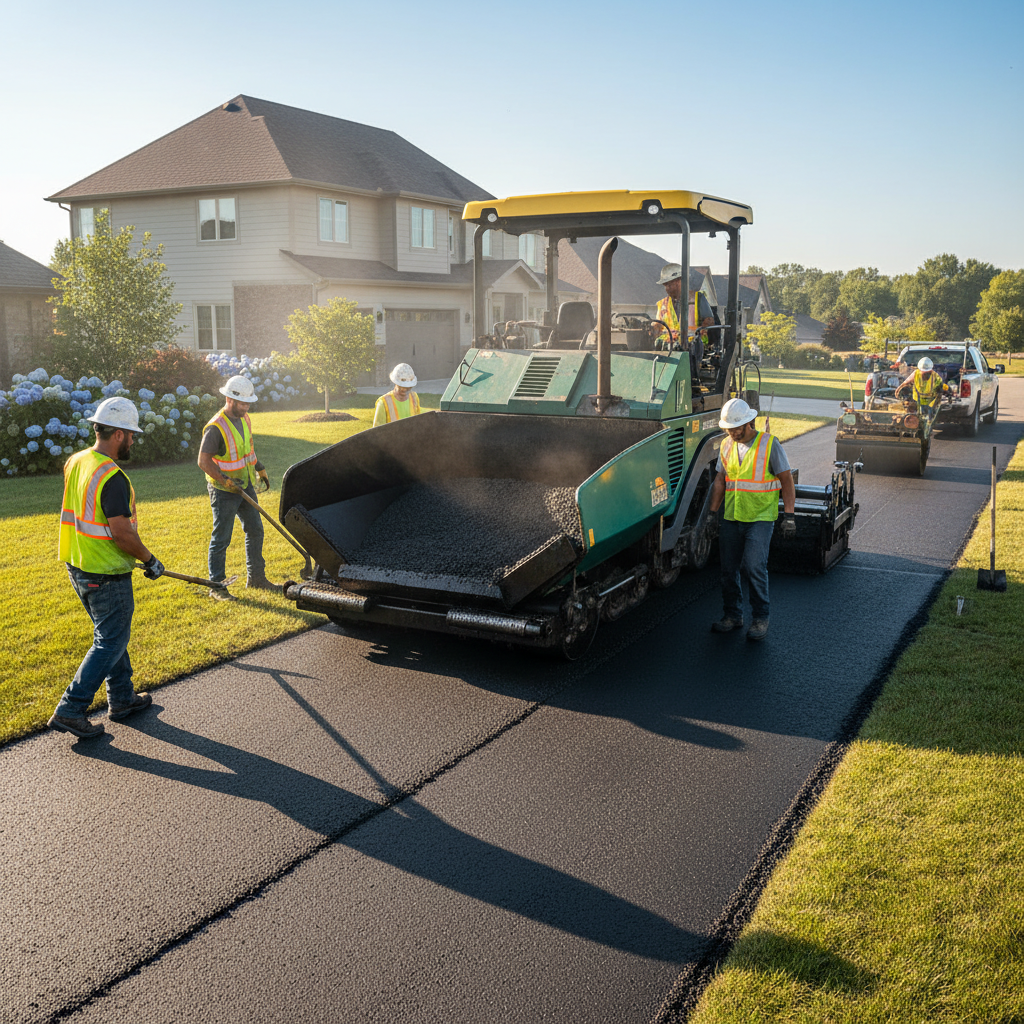
Driveway paving options and costs in Sarnia
Sarnia homeowners have several good driveway paving options, and the right choice usually comes down to how your lot drains, how much base was already built, and how much winter wear you expect. With 21,935 homeowner households in the city (Statistics Canada, 2021 Census) and 67.4% of dwellings being single-detached houses, most driveways are tied to detached homes—so driveway work is a big, steady local market. You’ll see especially high demand in areas like Point Edward and west Sarnia, where older streets and mixed soil conditions show up in many backyards and side yards.
In the Windsor–Sarnia region, costs are shaped by freeze-thaw more than surface look alone. Even though southern Ontario is milder than much of the province, frost still pushes moisture under weak or poorly drained bases, which can lift weak spots and open cracks early. Contractors also price for labour availability and the shorter paving season: hot-mix asphalt needs favourable air conditions to place and compact properly, so spring and late-fall scheduling can run tighter than midsummer. That’s why quotes can swing even on “similar” driveways—access (tight gates, long runs), removal volume, and drainage corrections often do the heavy lifting on total cost.
Below is a practical cost comparison for Sarnia, assuming proper base and workmanship. Use it as a starting point, then refine to your site conditions and drainage needs before you sign.
| Material |
Lifespan |
Maintenance |
Best For |
Price per sq ft |
Price Range |
| Asphalt (new installation, proper base) |
15–25 years |
Seal every 3–5 years |
Best value where drainage and base are done right |
$8–$14 |
$8 – $14 |
| Asphalt (overlay on existing gravel base) |
10–18 years |
Seal every 3–5 years; watch base settlement |
When removal is limited and base is stable |
$10–$16 |
$10 – $16 |
| Interlocking concrete pavers |
25–40 years |
Occasional panel re-leveling; re-sand as needed |
Repairability, curb appeal, and snow-season resilience |
$18–$32 |
$18 – $32 |
| Poured concrete (broom finish) |
25–35 years |
Minimal; occasional joint maintenance |
Clean look and solid, low-maintenance surface |
$12–$20 |
$12 – $20 |
| Exposed aggregate concrete |
25–35 years |
Low; keep sealers based on finish |
Anti-slip texture and higher-end appearance |
$16–$26 |
$16 – $26 |
| Gravel / crushed stone (budget option) |
3–7 years |
Regrade and top up every 1–3 years |
Temporary solution or low-cost drainage-minded base |
$3–$7 |
$3 – $7 |
Prices are estimates only and vary by project scope, site access and material selection.
What affects the price of paving in Sarnia
In Windsor–Sarnia, it’s common to see quotes for “the same driveway” differ by 30–50% once excavation, drainage, and removal are fully scoped. Two yards can look identical from the street, yet one subgrade holds water and the other stays firm—frost turns that moisture into the big problem. Frost line depth and freeze-thaw cycles are decisive cost factors: deeper frost risk generally means you need a thicker compacted granular base to prevent heaving and cracking, not just a thicker surface. Contractors typically build deeper granular thickness in Ontario than you’d expect on milder coastal sites, because moisture under the pavement is what freezes and expands. In practice, that means more stone, more compaction lifts, and more time on the grading plan.
The paving season also tightens scheduling. Asphalt placement requires air temperatures typically above 10°C for best compaction results, so demand often peaks in spring and summer. When crews are booked, mobilization costs can rise and curing timelines can push adjacent work later—this shows up in the labour portion. For homeowners, the choice between asphalt at roughly $8 – $14 and pavers at roughly $18 – $32 can be justified quickly when base conditions require additional drainage work.
Here are a few Sarnia-specific examples of how cost can move up or down:
- Older homes built before 1981 are common in the city (Statistics Canada, 2021 Census shows 71.0% of dwellings are pre-1981), and those driveways often have older fill, clay pockets, or undersized culverts that need correction before any overlay.
- Driveways that slope toward a yard low spot can require subdrain and additional base, while a well-drained site may stay within the lower end of the asphalt band.
- If your current driveway is all asphalt, tear-out can be quicker than removing thick, cracked slabs with rebar; that difference alone changes hauling and labour time.
| Price Factor |
Why It Matters |
Cost Impact |
| Driveway area in sq ft |
Surface material and labour scale directly with area |
Often the biggest driver (commonly 40%–70% of total) |
| Base depth required |
Frost protection depends on subgrade moisture and exposure |
Can add 10%–25%+ |
| Grading and drainage work |
Correct slope and manage water to reduce freeze-thaw damage |
Typically 5%–20% depending on drainage complexity |
| Tear-out of existing surface |
Breaking, loading, and hauling vary by material and condition |
Often 8%–30%+ |
| Edge restraints and curbing |
Prevents paver spread and stabilizes asphalt edges |
Usually 3%–15% |
| Sealing requirement |
Asphalt performs best with timely seal coat after initial cure |
Ongoing cost; commonly 2%–6% per project year equivalent |
| Site access |
Narrow entrances slow equipment movement and add labour time |
Often 5%–15% |
| Asphalt mix specifications |
Freeze-thaw-rated mixes and proper binder content cost more |
May add 2%–10% depending on design |
Permits & regulations in Ontario
In Ontario, paving a private driveway within your own property usually does not require a building permit. That said, work that touches municipal infrastructure can trigger approvals. If your project includes changing the boulevard, installing or modifying curb cuts, altering storm drainage, or rebuilding any area in the municipal right-of-way, you should expect municipal approval. Some municipalities also have lot-grading by-laws that limit how close hard surfaces can be to property lines and how water must be managed. These rules matter in Sarnia because water flow patterns influence freeze-thaw performance—contractors should not only pave, they should fix the drainage plan.
Step-by-step, here’s how a Sarnia homeowner should verify a contractor:
- Utility locate: confirm they will call Ontario One Call before excavation and follow the locate marks on site.
- Licensing: ask for their Ontario credentials (as applicable for asphalt/paving contracting under the relevant provincial framework) and confirm they are actively in good standing.
- Liability insurance: request a current certificate of insurance naming you (or your property/owner entity if required by your agreement).
- WSIB/WCB: obtain confirmation of workers’ compensation coverage (WSIB for Ontario work) showing the account is current.
- Keep paperwork: store the certificate, clearance documents, and the signed scope with your quote.
If a contractor is vague about permits, locates, or coverage, pause and ask for the documents in writing before excavation starts. It’s your protection if something is damaged or if a worker is injured.
Asphalt vs pavers vs concrete for Sarnia driveways
For Sarnia’s freeze-thaw winters, asphalt, interlocking pavers, and concrete can all work—if the base and drainage are correct. Asphalt usually wins on upfront cost because it’s one continuous surface, but it needs regular sealing to slow water penetration. Interlocking concrete pavers cost more initially, yet they’re the most forgiving in local conditions because individual blocks can be removed and reset if you ever need to access a drainage line. Poured concrete sits in the middle and can be long-lasting when it’s air-entrained and properly jointed, but it is more susceptible to cracking if drainage is poor or the base shifts.
In the Windsor–Sarnia market, the base and frost protection plan matter across all three options—contractors generally treat moisture control as non-negotiable. Expect a drainage-first approach: correct slope, solid granular base, and water management that prevents pooling. Asphalt typically holds up well to salt and plowing when it’s sealed on schedule (often every 3–5 years). Pavers generally resist salt better because the system doesn’t rely on a single monolithic slab; however, paver performance depends on edge restraints and proper bedding sand. Concrete’s ability to handle winter maintenance is heavily tied to air entrainment, curing, and joint spacing.
A concrete example: for a driveway around 400 sq ft, asphalt might land near $8 – $14 per sq ft, while pavers often fall near $18 – $32. If your site has drainage uncertainty (clayey subgrade or a downspout discharge near the driveway), spending the extra on pavers can be justified because localized repairs are cheaper than replacing a full asphalt or concrete failed section after base movement.
| Material |
Frost Resistance |
Curb Appeal |
Repair Method |
Lifespan |
Price Band |
| Asphalt (sealed regularly) |
Good when drainage and base are engineered |
Medium to good |
Patch and re-seal; possible overlay |
15–25 years |
$8–$14 |
| Interlocking concrete pavers |
Excellent with proper bedding and edge restraint |
High |
Remove and replace affected units |
25–40 years |
$18–$32 |
| Poured concrete (air-entrained) |
Good when properly jointed and drained |
Medium |
Patch; larger failures may require section replacement |
25–35 years |
$12–$20 |
| Exposed aggregate concrete |
Good to very good with correct mix and finishing |
Very high |
Patch and match finish where feasible |
25–35 years |
$16–$26 |
| Permeable pavers (drainage grid) |
Very good when paired with a proper base/drain system |
High |
Spot repairs to units; clean-out access if needed |
20–35 years |
$22–$38 |
| Chip seal / tar-and-chip |
Fair to good for light-use driveways |
Low to medium |
Spot patch; periodic re-seal |
6–12 years |
$6–$12 |
How to choose a paving contractor in Sarnia
Choosing the right paving contractor in Sarnia is mostly about verifying coverage and getting a scope you can trust. Start with Ontario licence information (as applicable), then ask for liability insurance and WSIB coverage. You can check coverage documentation on their certificate of insurance and WSIB clearance/confirmation—request the documents dated for the current work period and verify the company name matches the quote/contract. If a contractor won’t provide paperwork up front, that’s a red flag for your job and your risk.
Next, get 2–3 itemised written quotes. You want a breakdown that separates labour, excavation/removal, base materials, drainage corrections, and surface material—not just a single lump sum per square foot. Read the exclusions: will they include disposal of old asphalt/concrete, saw cutting/joint work, and protection for your lawn and edging? Confirm whether permits are required and, if so, whether the contractor pulls them or assists you. For warranty, ask for the workmanship warranty length (and what it covers), plus any manufacturer warranty on mix or pavers. Clarify whether warranties are transferable if you sell your home.
Finally, manage payment. In Ontario residential projects, a safe rule is to keep deposits modest—never pay more than about 10%–15% upfront—and hold back remaining funds until completion and final cleanup are confirmed. Get a start date and completion estimate in writing, because Sarnia’s weather windows can be tight in shoulder seasons.
- Ask for WSIB coverage confirmation and a current clearance letter (not a screenshot).
- Request a current certificate of liability insurance with limits shown.
- Verify the quote includes utility locate responsibility (Ontario One Call) before excavation.
- Get itemised pricing: labour, stone/base, asphalt mix or concrete materials, and disposal.
- Confirm base thickness and compaction method in writing—not just “proper base.”
- Ask how they handle drainage: slope targets, subdrains, and where runoff goes.
- Clarify tear-out scope: how thick, how deep, and what gets hauled away.
- For pavers, confirm edge restraint type and bedding/sanding specs.
- For asphalt, confirm cure time and when the first seal coat is recommended.
- Ask about jointing (for concrete) and whether the slab includes control joints.
- Confirm warranty details: duration, exclusions, and whether it’s in the contract.
- Lock the schedule: proposed start date, weather contingency, and completion target.
Red flags I commonly see in Sarnia: quotes that don’t describe base depth or drainage; contractors who won’t provide insurance/WSIB paperwork; “cash only” or payment terms that demand large upfront deposits; vague disposal language (no mention of hauling debris); and no written start/completion timeline. If you see these, keep shopping.
Frequently asked questions — paving in Sarnia
How often should I seal my asphalt driveway?
In Sarnia and the wider Windsor–Sarnia area, most properly installed asphalt driveways benefit from sealing every 3–5 years. If your driveway is heavily exposed to meltwater, salt spray from winter roads, or you run frequent snow-plough passes, sealing can lean toward the earlier end. The exact timing depends on how well your base drains and whether the surface is staying intact—water under the asphalt is what accelerates freeze-thaw damage. After a new asphalt pour, most crews recommend waiting for full cure before the first seal coat, then sticking to a schedule. If your paving company quoted asphalt around $8 – $14, ask whether their plan includes a recommended sealing window in your first year so you protect the investment.
Why does my driveway crack and heave in winter?
Cracking and heaving in Sarnia usually come from moisture and frost working together. When the subgrade or granular base is weak or holds water, freeze-thaw cycles lift and stress the surface. Even in southern Ontario’s milder climate, frost can still push water under the pavement; once that happens repeatedly, you’ll see cracking, edge breakup, and sometimes “bumpy” areas. Poor slope and drainage around downspouts, low spots, or a driveway that drains toward clay can worsen the situation. Older driveways (and especially those associated with homes built before 1981) often have unknown base conditions, which is why the same square footage can produce very different repair needs. Fixing drainage and re-building base typically matters more than resurfacing alone.
Do I need a permit to pave my driveway in Ontario?
Typically, paving a private driveway within your own property in Ontario does not require a building permit. However, you may need municipal approval if your project affects the municipal right-of-way—examples include adding or modifying a curb cut, changing boulevard drainage, or altering stormwater flow across municipal land. Some municipalities also enforce lot-grading rules that impact how you can place hard surfaces near property lines and how water must run off. In Sarnia, this is especially important where drainage patterns influence freeze-thaw performance. Before the contractor digs, confirm utility locates through Ontario One Call, then ask your contractor whether any right-of-way work is part of the plan. A solid quote should identify what’s included and what approvals, if any, are required.
How long before I can drive on new asphalt?
After asphalt is placed, you generally want to allow time for cooling and early curing before driving on it. Many contractors allow light vehicle traffic after the mat has cooled (often the same day for certain conditions), while full cure and optimal performance usually take longer—particularly if temperatures are cool or there’s rain risk. If the job includes a base repair or significant lift, follow the contractor’s instructions for traffic limits. For homeowners, the bigger issue is avoiding rutting or disturbing the surface before it properly sets. Also note that sealing usually happens later—often after a period of curing, commonly within the 6–12 month window depending on the product system—because sealing too early can trap moisture. If you’re planning asphalt in the $8 – $14 range, ask for a written traffic-and-seal schedule.
What causes potholes and how are they repaired?
Potholes almost always start with water. In Sarnia winters, water seeps into cracks or weak spots, freezes and expands, and then the pavement breaks under traffic and snow-plough impacts. In some driveways, the base may be compacted unevenly or have drainage issues that keep moisture near the surface. Repair depends on the cause: a simple patch can work when the damage is small, but if the base is saturated or frost-heaved, the patch will often return. Good repairs include cleaning out loose material, cutting to stable edges, assessing base condition, placing and compacting granular material, and then applying asphalt in layers. Ask your contractor whether the repair includes base stabilization or is just surface patching.
How do I prepare for a paving project?
Preparation helps the job go smoothly and reduces change orders. Clear vehicles, trailers, and portable items from the driveway path and move garden beds or ornaments that could be damaged by equipment. Make sure you know where your utilities run and confirm the contractor will call Ontario One Call before excavation. If you have a landscaping plan, mark any trees, sprinklers, or delicate features you want protected. Review access: if you have a narrow gate or tight turn, tell the contractor early so they can plan equipment movement. Get your scope in writing and confirm what’s included—tear-out depth, disposal, drainage corrections, and whether any permits are needed. Finally, plan your payment schedule: keep upfront payments modest (about 10%–15%) and hold a portion until completion and cleanup are verified.