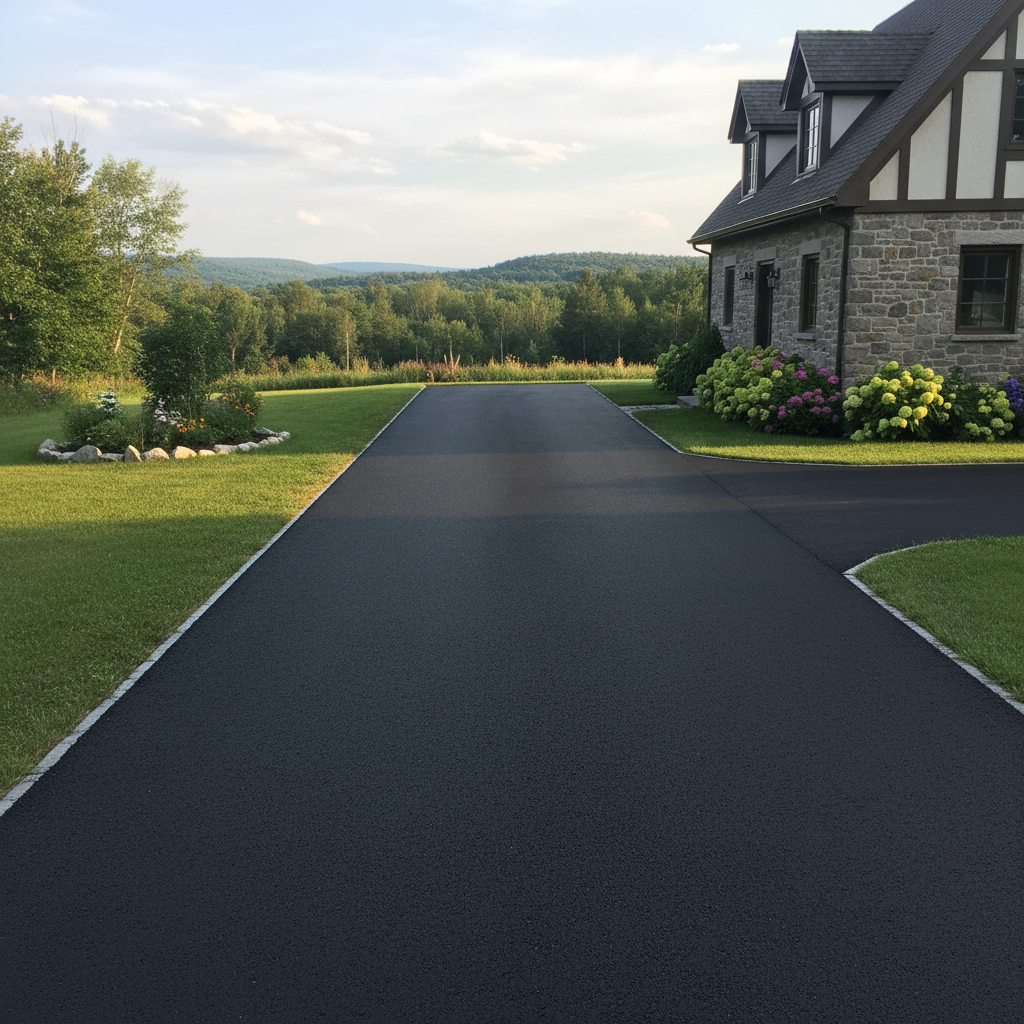
Driveway paving options and costs in Forest Hills
In Forest Hills, Ontario, homeowners typically choose between asphalt, interlocking concrete pavers, and concrete based on winter performance and curb appeal. With Forest Hills’ population at 6,238 (Statistics Canada, 2021 Census), the market is smaller than downtown Toronto, so contractor scheduling can tighten during peak paving weeks. That said, most private driveways here serve detached homes—an important point because driveway size and access vary a lot when you’re working in established neighbourhood blocks.
Toronto-area frost depth and freeze–thaw cycles are a major reason costs can swing between quotes. In practice, ground freezing to roughly 3–4 feet means you’re not just paying for the surface—you’re paying for excavation, granular base thickness, and drainage so water doesn’t sit under the pavement. The workable paving window is also shorter (late spring through early fall), which can raise pricing for prime dates when crews are busy across the wider Toronto economic region.
In Forest Hills, trade demand is especially steady around older residential pockets near the main arterial corridors, where homeowners often refresh driveways after years of plowing wear and early winter salt exposure. If your goal is the lowest upfront cost, asphalt usually wins; if your priority is curb appeal and easier spot repairs, interlock is a common upgrade. Next, compare typical options and unit pricing so you can sanity-check your quote against a reasonable range.
| Material |
Lifespan |
Maintenance |
Best For |
Price per sq ft |
| Asphalt (new installation, proper base) |
15–25 years |
Seal every 3–5 years; patch as needed |
Balanced cost, smooth ride, fast installation |
$6.50–$12.00 |
| Asphalt (overlay on existing gravel base) |
10–18 years |
Seal regularly; expect more patching if base is weak |
Re-surfacing where the base is confirmed to be solid |
$5.00–$9.50 |
| Interlocking concrete pavers |
25–35 years |
Re-sand joints every few years; reset/replace individual stones |
Premium curb appeal and repairability |
$14.00–$26.00 |
| Poured concrete (broom finish) |
20–30 years |
Sealant as recommended; control joints and crack monitoring |
Low visual fuss, clean modern lines |
$12.00–$20.00 |
| Exposed aggregate concrete |
20–30 years |
Occasional sealing; cleanings to prevent surface staining |
Slip resistance and upgraded look |
$15.00–$25.00 |
| Gravel / crushed stone (budget option) |
3–10 years (varies with grading) |
Top up annually; re-grade; weed control |
Temporary solution or very tight budgets |
$3.00–$6.00 |
Prices are estimates only and vary by project scope, site access and material selection.
What affects the price of paving in Forest Hills
If you’re comparing quotes for the same driveway in the Toronto economic region, it’s normal to see differences of 30–50%. The surface material may be similar on paper, but the hidden variables—how deep we have to excavate, how much drainage correction is needed, and how access affects labour time—drive the real cost. In winter-heavy markets like Forest Hills, we also engineer the subgrade so freeze–thaw doesn’t pump water upward and break the structure.
Frost line depth and freeze–thaw cycles are decisive cost factors. With ground freezing to roughly 3–4 feet, deeper frost typically requires a thicker, properly compacted granular base (commonly 6–12 inches in Ontario/Alberta) than you’d see in milder coastal climates. That base thickness helps prevent heaving and cracking by reducing the amount of water available to freeze under your driveway. Asphalt mix design matters too—your asphalt needs to be built for Toronto-area freeze–thaw conditions, which can cost more than a generic mix.
Ontario’s paving season is effectively concentrated into late spring through early fall because hot-mix asphalt placement is best above certain temperatures (air temperature requirements are a real scheduling constraint). Shorter workable seasons mean crews are booked and disposal/crew labour costs tend to rise during peak weeks, particularly for “rush” dates.
Concrete can be higher if your soil needs more subbase preparation, but it can be lower when footing-like base conditions already exist and the formwork is straightforward. For example, a 500 sq ft asphalt project might land in the $3,500–$8,000 range, while the same footprint with interlocking often moves into the $9,000–$20,000 band because of base, bedding sand, and paver installation time. If your driveway is older and already failing, tear-out and haul-away can push both asphalt and concrete toward the upper end of those ranges.
| Price Factor |
Why It Matters |
Cost Impact |
| Driveway area in sq ft |
Materials and labour scale directly with square footage |
Usually the largest line item; can change total cost by thousands |
| Base depth required |
Frost line determines granular thickness needed to resist heaving |
More excavation and more compacted stone; often adds significant cost |
| Grading and drainage work |
Proper slope and drainage stop water pooling under pavement |
May require re-grading, swales, or drain correction |
| Tear-out of existing surface |
Breaking, removal, and disposal take labour and equipment time |
Concrete/asphalt removal can noticeably increase project totals |
| Edge restraints and curbing |
Prevents paver spread and maintains asphalt/concrete shape |
Often essential in freeze-thaw; adds materials and install labour |
| Sealing requirement |
Asphalt needs protective sealing to limit water intrusion |
Small near-term cost with big payoff; plan for recurring work |
| Site access |
Narrow lots slow equipment movement and staging |
May require extra labour time and careful material handling |
| Asphalt mix specifications |
Freeze–thaw-rated mix improves durability in Toronto winters |
Higher materials cost; protects against premature rutting and cracking |
Permits & regulations in Ontario
In Ontario, paving a private driveway within your own property typically does not require a building permit—especially when you’re replacing an existing driveway surface and keeping the work inside your lot lines. Where permits and approvals usually become relevant is when the work affects municipal infrastructure or site drainage in a way that touches municipal property. That includes work in the municipal right-of-way such as new curb cuts, modifications to the boulevard, changes to storm drainage routing, or any alteration that impacts how water leaves the road allowance.
Before anyone digs, you should always ensure utility locates are completed using Ontario One Call. This is non-negotiable for safe excavation, and a reputable contractor will arrange it or provide proof they did. Also confirm whether your municipality has lot-grading rules or restrictions on how close you can place hard surfaces to certain property lines and drainage features—these rules can affect how far you can excavate and where you can place subbase materials.
To verify an Ontario contractor in Forest Hills, ask for: (1) proof of Ontario licence where applicable for paving/excavation activities, (2) a current certificate of liability insurance showing your address or coverage details, and (3) WSIB/WCB coverage status if they use Ontario-covered workers. Then check the certificate dates before work starts, and request a clearance letter where required for your area/employer verification process. Finally, verify all contact info matches their quote and contract—if something is missing, pause until it’s provided.
Asphalt vs pavers vs concrete for Forest Hills driveways
For Forest Hills driveways, your choice usually comes down to freeze–thaw durability, winter maintenance (salt, sand, and plough impact), and whether you want the lowest upfront cost or easier repairs later. Asphalt is typically the lowest-cost installed option. In Ontario, the trade is that asphalt needs sealing every 3–5 years to keep water from penetrating tiny surface voids that freeze and expand. With the right granular base and proper drainage, asphalt performs well, but it won’t last as long as interlock if it’s neglected.
Interlocking concrete pavers have the highest upfront cost, but they shine in our winter reality because you can lift and replace only the affected stones if you get localized settlement or damage. That repairability matters when plough routines or driveway thawing bring out weak spots. In a Toronto-area climate where frost can reach around 3–4 feet, base preparation and edge restraints are crucial; with those done well, pavers can keep curb lines crisp for decades. For many homeowners, this is the “pay more once for looks and flexible repairs” approach.
Poured concrete sits in the middle price band. If the concrete is air-entrained and the control joints are placed and finished correctly, it can do very well in Ontario winters. The risk is cracking from freeze–thaw and, in some driveways, de-icing salt exposure if the surface and curing weren’t engineered properly. Exposed aggregate improves traction, but it still depends on base quality and proper jointing.
Here’s a practical dollar example: if a 500 sq ft driveway is quoted for asphalt at the $3,500–$8,000 range, moving to interlocking often lands in the $9,000–$20,000 band. The difference is justified when you expect frequent salt contact, want a premium finish that matches neighbourhood curb appeal, and value the ability to repair a section instead of replacing the whole surface.
| Material |
Frost Resistance |
Curb Appeal |
Repair Method |
Lifespan |
Price Band |
| Asphalt (sealed regularly) |
Good with proper base and drainage |
Clean, simple look (varies by edging) |
Cut and patch localized areas |
15–25 years |
$3,500–$8,000 |
| Interlocking concrete pavers |
Very good with engineered base and restraints |
High—strong visual upgrades |
Lift/reset and replace individual pavers |
25–35 years |
$9,000–$20,000 |
| Poured concrete (air-entrained) |
Good with air entrainment and correct joints |
Modern and tidy, depends on finish |
Spot repair is limited; often requires patching |
20–30 years |
$6,000–$15,000 |
| Exposed aggregate concrete |
Good with proper base and curing |
Very high—textured premium look |
Patch matching finish can be tricky but possible |
20–30 years |
$7,000–$18,000 |
| Permeable pavers (drainage grid) |
Very good when drainage is designed correctly |
High—modern drainage-focused look |
Replace affected sections; maintain infill system |
25–35 years (system-dependent) |
$10,000–$22,000 |
| Chip seal / tar-and-chip |
Moderate—best as a top surface for specific sites |
Low to moderate visual finish |
Re-seal / recoat; patching limited |
5–10 years |
$3,000–$6,500 |
How to choose a paving contractor in Forest Hills
Start with verification. For Ontario work in Forest Hills, ask for: (1) proof they’re properly licensed/registered for the type of work they’re doing, (2) current liability insurance (request the certificate of insurance and confirm your address is covered/endorsed where applicable), and (3) WSIB/WCB coverage if they use Ontario-covered workers. You should be able to review the certificate dates before work begins—expired insurance is a dealbreaker. If they can’t provide documentation quickly, that’s usually a sign of risk.
Next, request 2–3 itemised written quotes, not a single lump-sum number. You want a breakdown that shows labour and materials (excavation depth, granular base thickness, asphalt thickness or paver bedding sand depth, edging/restraints, and disposal/hauling). Carefully read what’s excluded: does the quote include utility locating coordination, saw-cutting, breaking and hauling, sweeping/clean-up, and permit or municipal approval handling if any right-of-way changes apply? Make sure disposal is stated clearly.
Warranty matters in winter climates. Ask for the workmanship warranty length (what it covers), the product/manufacturer warranty (if any), and whether it’s transferable to the next owner. Payment schedule should protect you: never agree to more than about 10–15% upfront. Hold back the remaining balance until key milestones are complete and the final walk-through is done. Finally, get the start date and an estimated completion timeframe in writing, because weather delays in Ontario can affect the schedule.
- Confirm licensing/registration for the specific paving/excavation scope
- Request liability insurance certificate and verify coverage details
- Verify WSIB/WCB coverage status with proof/clearance letter if required
- Get at least 2–3 itemised quotes (labour + materials breakdown)
- Ask for specified base depth and compaction approach (not just “good base”)
- Confirm drainage plan (slope, subdrain, and water routing away from the pad)
- Check whether tear-out, breaking, and disposal/hauling are included
- Ask who supplies and installs edge restraints/curbs (especially for pavers)
- Ensure asphalt includes freeze–thaw-rated mix specs when relevant
- Clarify cleanup and final grading/topsoil restoration scope
- Read warranty wording: workmanship duration, exclusions, and transferability
- Use a payment schedule with a small deposit and a holdback until completion
Red flags I see in Forest Hills: vague “lump sum” quotes with no base or thickness details, contractors who won’t show insurance/WSIB paperwork, proposals that skip edge restraints on interlock, promises of “same-day” paving without proper base compaction, and payment terms demanding large upfront cheques before any excavation begins.
Frequently asked questions — paving in Forest Hills
How deep should the base be for Forest Hills's frost?
In Forest Hills and the Toronto economic region, frost can reach roughly 3–4 feet, so base design has to account for deeper freezing and freeze–thaw cycles. In Ontario projects, that commonly means a thicker, properly compacted granular base (often around 6–12 inches depending on subgrade condition and driveway build-up) so water doesn’t migrate and freeze beneath the surface. Your contractor should confirm base depth after site evaluation—not just copy a “standard driveway” template. The exact depth can vary based on soil type, existing gravel performance, and whether drainage is corrected. If your quote is only about surface thickness and doesn’t mention granular layers and compaction, ask questions before signing.
How often should I seal my asphalt driveway?
For asphalt driveways in Ontario, sealing is typically done every 3–5 years, starting after the new asphalt has cured and you’ve met the contractor’s timing requirements. The reason is simple: sealcoating adds a protective barrier that reduces water intrusion. In a freeze–thaw climate, water that gets into asphalt voids can expand when it freezes, accelerating raveling and cracking over time. If your driveway sees heavy ploughing and salt (common in Forest Hills winters), you may lean toward the shorter end of that range. If you’re comparing quotes, remember that sealing is part of the long-term cost—repairs and overlays later usually cost more than early protection.
Why does my driveway crack and heave in winter?
Cracks and heaving in Forest Hills are usually caused by water and frost working together. When drainage is off—either the driveway doesn’t shed water properly or the base isn’t built to stop water movement—freeze–thaw cycles can push the pavement upward (heaving) and create stress cracks. Another common cause is inadequate granular base depth or weak subgrade compaction, which allows settlement and then differential freeze. Salt and frequent freeze cycles can also worsen surface deterioration, especially if the asphalt surface hasn’t been sealed. If you’re seeing repeated issues, it’s often worth paying for a proper base and drainage fix instead of only patching. In asphalt-only solutions, expect shorter performance unless the underlying build-up is corrected.
Do I need a permit to pave my driveway in Ontario?
Typically, replacing or paving a private driveway within your own property generally does not require a building permit in Ontario—so long as you’re not changing municipal drainage or working in the municipal right-of-way. However, permits and municipal approvals are commonly required when you’re altering things like a curb cut, changing boulevard grading, modifying storm drainage flow, or making changes that affect municipal infrastructure. For Forest Hills homeowners, also confirm any lot-grading bylaws or restrictions that may limit how close hard surfaces can be placed to certain lines or drainage features. Regardless of permits, always require utility locates before excavation. A good contractor should tell you whether your project scope triggers municipal approvals before quoting.
How long before I can drive on new asphalt?
It depends on the weather and the asphalt temperature when placed, but in Ontario a common rule is to limit traffic for at least 24–48 hours and avoid heavy turning/parking until the asphalt has cooled and set sufficiently. After that, light vehicle use is usually acceptable, but you should still avoid sharp loads and prolonged parking on fresh surface. Rain or cool snaps can extend curing time, and dense-surface driveways may need more attention. Your contractor should specify the exact cure and access timing in writing. If your project is in the busy late-spring to early-fall window, crews are also managing schedules tightly—so confirm the date you’ll actually get full access. If you’re budgeting, know that a typical asphalt driveway can fall in the $3,500–$8,000 range depending on size and base work.
What causes potholes and how are they repaired?
Potholes form when water gets into a weak spot—often around cracks, edges, or areas with poor drainage—then freeze–thaw expands the damage and breaks up the asphalt. Over time, traffic and plough impacts remove the surrounding material, turning a small failure into a deeper void. In the Toronto area, the freeze cycle is the accelerator. Repairs usually involve cutting back to stable material, removing failed asphalt, compacting the base, and then patching with new hot-mix asphalt. If the base is still weak, patching alone won’t last; that’s when an overlay or a base correction is more cost-effective. When you request quotes in Forest Hills, ask whether repairs are “patch-only” or whether they include base remediation where needed.