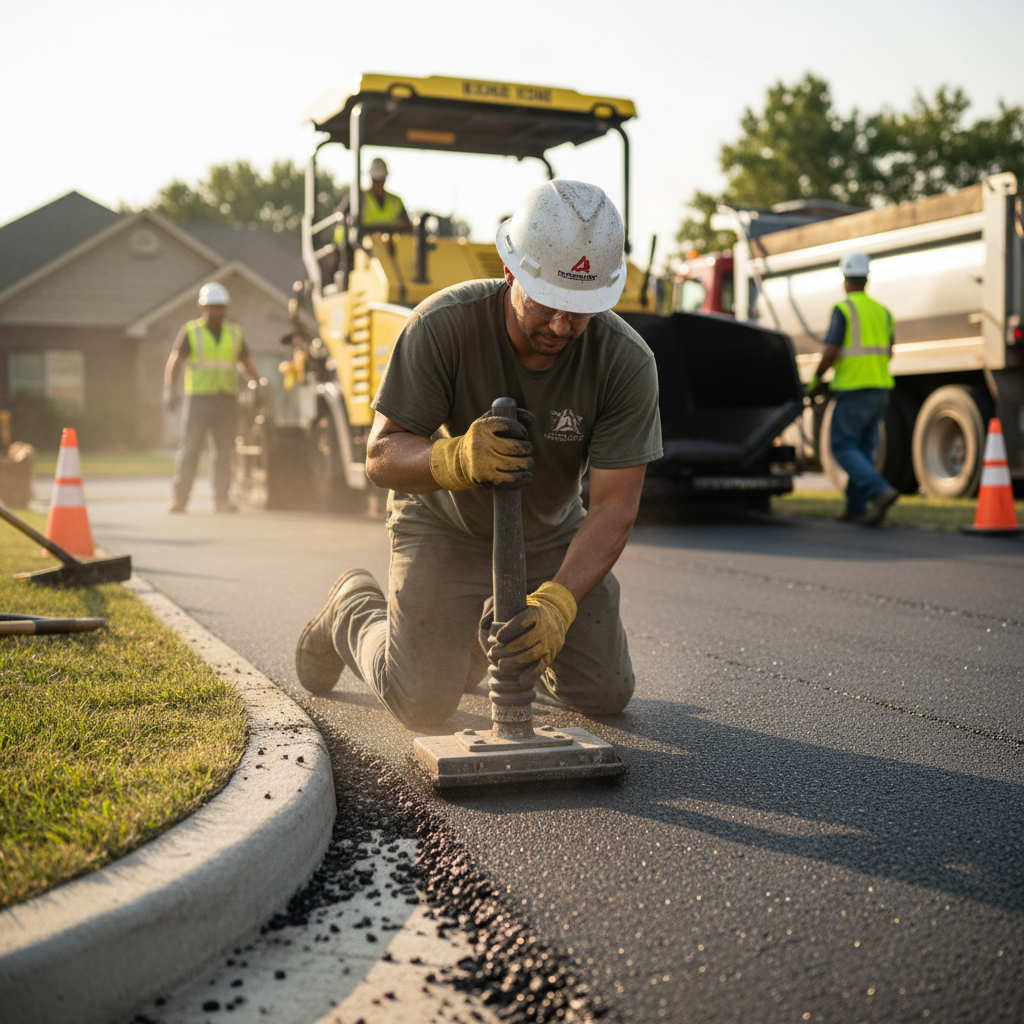
Driveway paving options and costs in Bayview Village
Bayview Village, Ontario is one of those neighbourhoods where driveways get real stress: long, salted winters, snowplough impacts, and freeze–thaw cycles that can punish weak base work. With a 2021 population of 21,396 in the area (Statistics Canada, 2021 Census), demand is steady and contractors stay busy—especially around the late-spring to early-fall window when asphalt placements and base curing are safest. Most private driveways here sit beside established homes (including older housing stock in parts of the village), so you’ll often see a mix of tear-outs, overlays, and full reconstructions during a single paving season.
In the Toronto economic region, frost depth and repeated winter cycling are a primary cost driver. Local ground freezing to roughly 3–4 feet means the granular base and drainage matter as much as the surface choice. If water can’t move away from the pavement, it freezes in the wrong place and can lead to heaving and cracking. That’s why two projects that look similar—same driveway size, same surface colour—can land at different price points once base depth, subgrade stability, and disposal/treatment of old material are considered.
We see particularly strong demand in the Bayview Village area around the Bayview/Sheppard corridor, where many properties have older asphalt or failing edges that need rebuilding before winter. From there, it’s easier to compare options side-by-side—starting with asphalt and moving up to pavers and concrete.
| Material |
Lifespan |
Maintenance |
Best For |
Price per sq ft |
| Asphalt (new installation, proper base) |
15–25 years |
Seal coat every 3–5 years; keep edges clean and drained |
Best value when base is engineered for freeze–thaw; smooth driving surface |
$10 – $20 |
| Asphalt (overlay on existing gravel base) |
8–15 years |
Seal coat every 3–5 years; monitor for settlement/ponding |
When existing base is sound and you want lower upfront cost |
$8 – $15 |
| Interlocking concrete pavers |
25–35 years |
Periodic joint sand; re-leveling if needed |
High curb appeal and easier localized repairs without replacing the whole driveway |
$18 – $35 |
| Poured concrete (broom finish) |
20–30 years |
Crack monitoring; resealing optional depending on finish |
Clean, modern look with fewer joints than pavers (when properly designed) |
$14 – $28 |
| Exposed aggregate concrete |
20–30 years |
Reseal as recommended; keep drainage working |
Slip-resistant texture and strong appearance retention |
$18 – $35 |
| Gravel / crushed stone (budget option) |
5–12 years |
Re-grade and add stone as it migrates; weed control |
Short-term or low-budget access while planning a full rebuild |
$4 – $9 |
Prices are estimates only and vary by project scope, site access and material selection.
What affects the price of paving in Bayview Village
In Bayview Village and across the Toronto region, quotes for the “same” driveway can swing by 30–50% once you account for site conditions and the engineering behind the surface. Two contractors can propose different base specifications, different edge restraint styles, or different drainage solutions—and each choice responds to Ontario frost depth and water management, not just materials. Labour and equipment costs are also sensitive to schedule; Toronto’s paving season is effectively late spring through early fall, so prime dates get priced up when crews are booked.
Frost depth and freeze–thaw cycles are decisive cost factors. With ground freezing to roughly 3–4 feet, driveways need a deeper compacted granular base and reliable drainage so water can’t sit under the pavement and freeze in place. In practice, that typically means building out a thicker granular section and carefully compacting lift-by-lift. If your driveway needs more excavation and a stronger base profile, that added material and labour can push a project from the lower end of the asphalt band (around $3,500–$8,000 for asphalt driveway paving) toward the higher end—especially if tear-out and haul-off are included.
Concrete pricing can also move quickly based on design details. For example, an air-entrained concrete mix and proper jointing strategy for freeze–thaw can add cost, but it helps reduce random cracking after winters. On the other hand, a simpler broom-finish placement with straightforward forms and minimal grading may keep poured concrete closer to the mid-range (often $6,000–$15,000). In Bayview Village, older driveways that slope toward the garage or create low spots often require extra grading and subsurface drainage—this is a common “hidden” reason invoices change.
| Price Factor |
Why It Matters |
Cost Impact |
| Driveway area in sq ft |
Surface material and base quantities scale directly with square footage |
High: larger areas typically move total cost within the main price bands |
| Base depth required |
Frost line depth determines granular thickness needed to prevent heaving and cracking |
High: deeper frost design increases excavation, aggregate, and compaction labour |
| Grading and drainage work |
Slope correction and drainage repairs prevent ponding and freeze-up |
Medium–High: can add significant labour and install costs |
| Tear-out of existing surface |
Breaking, removing, and hauling away old asphalt or concrete adds equipment time |
Medium–High: disposal and labour often become major line items |
| Edge restraints and curbing |
Prevents paver spread and keeps asphalt from raveling at the sides |
Medium: required for longevity and a clean winter edge |
| Sealing requirement |
Asphalt needs sealing after initial curing to protect from oxidation and salt exposure |
Low–Medium: adds a near-term step that improves service life |
| Site access |
Narrow driveways, gate restrictions, or soft shoulders slow equipment movement |
Medium: can require smaller equipment or extra staging time |
| Asphalt mix specifications |
Freeze–thaw-rated mix design costs more but resists cracking better in Ontario cycles |
Medium: influences both material cost and installation method |
Permits & regulations in Ontario
For homeowners in Bayview Village, most private driveway paving on your own property typically does not require a building permit. In plain terms: if the contractor is working within your property line—replacing or resurfacing the driveway slab/surface without altering municipal assets—permits are usually not involved. However, work in the municipal right-of-way changes that equation.
Permits or municipal approvals are commonly required when your project affects the road allowance or municipal infrastructure. Examples include installing or changing curb cuts, modifying boulevard areas, altering storm drainage patterns, or making changes that impact how water leaves the property into municipal systems. Some municipalities also enforce lot-grading rules that restrict how close hard surfaces can be to property lines and how water must be directed—so a “simple re-slope” can become a compliance item if it changes runoff behaviour.
Before any excavation, confirm utility locates through Ontario One Call. Then verify your contractor in a practical, step-by-step way:
- Check the contractor’s Ontario business licence status (if applicable locally) and ensure they provide a valid licence/registration reference.
- Request a current certificate of insurance (general liability) showing the contractor is insured for paving activities.
- Confirm WSIB coverage (or the appropriate coverage status) before work starts—ask to see documentation.
- Ask for a clear written scope tied to your lot-grading/drainage expectations and how they will handle any municipal interface area.
Doing the verification up front helps prevent job delays caused by missing coverage, unknown grading constraints, or incomplete right-of-way approvals.
Asphalt vs pavers vs concrete for Bayview Village driveways
For Bayview Village driveways in Toronto’s freeze–thaw climate, the “best” choice depends on how you want to balance upfront cost, winter maintenance tolerance, and long-term appearance. Asphalt is usually the lowest upfront option (often landing in the $3,500–$8,000 asphalt band) and provides a smooth drive, but it needs a quality seal plan. With proper base prep and the right freeze–thaw-rated mix design, asphalt can perform well through Ontario winters; still, sealing is typically done every 3–5 years to slow oxidation and protect against salt and grit.
Interlocking concrete pavers cost more upfront (commonly $9,000–$20,000), but they’re a favourite in Bayview Village where homeowners want curb appeal and easier repair. If a section settles, pavers can be lifted, base can be corrected, and the surface reinstalled—without replacing the entire driveway. That matters when a winter plough repeatedly impacts the same track or when older homes have minor subgrade issues beneath one wheel path.
Poured concrete usually sits mid-range ($6,000–$15,000), but it needs careful mix design, air entrainment, control joints, and drainage planning to handle freeze–thaw. Without that, you can see cracking patterns sooner—especially where de-icing salt accumulates near garage edges.
A real budgeting example: if your driveway is similar in size and base condition, choosing asphalt at about $5,500 can be justified if you’re comfortable with sealing and targeted repairs. If you expect higher vehicle traffic, want a premium look near the Bayview/Sheppard corridor, or want the ability to fix localized issues later, the added spend to reach the paver band can be money well spent.
| Material |
Frost Resistance |
Curb Appeal |
Repair Method |
Lifespan |
Price Band |
| Asphalt (sealed regularly) |
Good with engineered base and proper drainage |
Low–Medium (clean, uniform finish) |
Patch/overlay of affected areas; seal to restore protection |
15–25 years |
$3,500 – $8,000 |
| Interlocking concrete pavers |
Very good when base is compacted and edged properly |
High (wide colour/pattern options) |
Lift-and-replace localized pavers; re-level base as needed |
25–35 years |
$9,000 – $20,000 |
| Poured concrete (air-entrained) |
Good with air-entrained mix and correct joints |
Medium (broom finish; can be upgraded) |
Crack repair/patching; larger repairs may require sections replacement |
20–30 years |
$6,000 – $15,000 |
| Exposed aggregate concrete |
Good with proper base, drainage, and curing |
Very High (texture and appearance longevity) |
Limited localized patching; often section-focused rather than full overlay |
20–30 years |
$8,000 – $18,000 |
| Permeable pavers (drainage grid) |
Very good when designed for infiltration and subgrade conditions |
High (modern look) |
Maintain drainage function; replace affected units if needed |
20–30 years |
$10,000 – $22,000 |
| Chip seal / tar-and-chip |
Moderate; depends heavily on base and maintenance |
Low–Medium |
Spot repairs; re-seal cycles more frequent |
8–15 years |
$4,000 – $9,000 |
How to choose a paving contractor in Bayview Village
Choosing the right contractor in Bayview Village is less about flashy brochures and more about proof of coverage, workmanship, and clarity. First, verify Ontario coverage and licensing details: request the contractor’s certificate of insurance showing general liability, confirm they carry the required WSIB/WCB coverage for workers, and make sure the paperwork is current and matches the company name that will be on the work order. If a contractor can’t produce documents promptly, that’s a warning sign.
Next, don’t accept vague estimates. Get 2–3 itemised written quotes that separate labour and materials (excavation, base aggregate, compaction, asphalt/concrete/pavers, edge restraints, sealing, disposal). A good quote explains what’s included and what’s excluded—especially tear-out, hauling, and disposal of old asphalt or concrete. Ask whether the quote includes any necessary permit or municipal approval work if your driveway ties into curb cuts or right-of-way changes.
Warranty matters in Toronto’s climate. Ask for a workmanship warranty length (for example, base and installation work) and whether the manufacturer product warranty applies to the materials used. Confirm if warranties are transferable to future owners, which can matter if you sell.
For payment schedule, be cautious: never pay more than about 10–15% upfront. Hold back the final amount until the job is complete, cleaned, and inspected, so you have leverage if corrections are needed. Finally, ask for a start date and completion estimate in writing; in Ontario, scheduling depends on ground and air temperatures, so flexibility is part of the process.
- Confirm WSIB/WCB coverage and ask to see documentation before work starts.
- Request an up-to-date certificate of insurance (general liability).
- Get the contractor’s business details and confirm the address on the quote matches the insured entity.
- Use itemised quotes (no “lump sum only” for base and surface).
- Ask for disposal/haul-away line items for old asphalt/concrete.
- Confirm base depth and compaction requirements in writing.
- Clarify drainage/grading responsibility and whether you’ll get a positive slope away from the garage.
- Ask what edge restraint is included (rubber/metal/plastic systems versus proper curbing).
- For asphalt, confirm sealing timing and whether seal coat is included in year one.
- Verify paver joint sand type and the jointing/compaction method.
- Insist on photos of completed subbase/compaction before surface placement.
- Confirm the warranty terms and what failures they cover (settlement, cracking, heaving).
Common red flags in Bayview Village include: skipping utility locates, refusing to itemise base and drainage scope, quoting an unrealistically low price without explaining frost-depth base design, starting work without proof of WSIB/WCB and insurance, and giving only a verbal warranty with no written terms.
Frequently asked questions — paving in Bayview Village
How do I maintain my driveway through Bayview Village winters?
In Bayview Village and across Ontario, winter maintenance is mostly about protecting the pavement edges and preventing water from turning into freeze damage. Keep the surface reasonably clear after ploughing; prolonged snowpack against the driveway edges can accelerate deterioration. Avoid scraping too aggressively—steel blades can chip interlock edges and gouge asphalt surface binders. Use de-icing carefully: salt works, but over-application can accelerate wear on asphalt and concrete surfaces. For asphalt, plan your seal coat cycle (typically every 3–5 years) so the binder is protected before the coldest months. For pavers, watch for joint sand washing out—once joints start to empty, water can migrate into the base and cause movement.
Is it worth sealing a new driveway right away in Bayview Village?
Typically, sealing right away isn’t the goal—timing matters. Fresh asphalt needs time to cure so the sealer bonds properly and doesn’t trap moisture. In Bayview Village’s freeze–thaw climate, most contractors target sealing after the asphalt has sufficiently cured and dried, then schedule the next maintenance coat based on how the driveway performs. If you paid for new asphalt around the lower end of the band (for example, closer to $3,500–$8,000 total depending on size and base), sealing is often the cost-effective step that extends the service life. A properly sealed asphalt surface tends to resist oxidation and salt exposure better, reducing early raveling and minor cracking. Always ask your contractor for the exact curing/season schedule in writing.
What is a chip seal driveway and is it suited to Bayview Village?
Chip seal (sometimes called tar-and-chip) is a sprayed binder topped with aggregate. It can be a budget option where full-depth pavement isn’t necessary, but it’s not always the best match for a typical Bayview Village residential driveway—especially where ploughing marks and salt exposure are frequent. Chip seal is more sensitive to base preparation quality and maintenance cycles; if the base isn’t engineered for Toronto’s frost depth and freeze–thaw, the surface can rock or shed aggregate. Some homeowners consider it for low-traffic access lanes, parking pads, or temporary solutions. If your expectation is a long service life with minimal upkeep, asphalt or pavers (within their respective bands) usually provide more predictable performance in Ontario winters.
How much does driveway crack repair cost in Bayview Village?
Crack repair pricing varies by crack type (hairline shrinkage vs. wider, frost-related movement), surface material, and how much prep is required (cleaning, routing, and sealing). In Bayview Village, minor asphalt crack sealing is often a small-ticket item compared with full replacement, typically priced within a general range of about $300–$1,500 for sealing and spot repair, depending on length and access. Concrete crack repair can be higher if you’re dealing with vertical displacement or edge spalling rather than a simple surface crack. The key is whether the underlying drainage and base are sound—if water still ponds, repairs may only last a season or two. A reputable contractor will recommend whether you’re seeing “surface-only” cracking or a symptom of deeper base issues.
What base thickness do I need for pavers in Bayview Village?
For Bayview Village, paver base design has to account for Toronto’s frost depth and freeze–thaw cycles, which is why installers rarely treat base as a one-size-fits-all detail. In general terms, you should expect a properly compacted granular base thicker than what you’d see in milder climates, built in compacted lifts to achieve stable support. If frost is reaching deeply (Toronto’s ground freezing is roughly 3–4 feet), the granular layers and drainage must be engineered to prevent water from sitting underneath. Many driveway failures in older neighbourhoods come from insufficient excavation, poor compaction, or missing drainage—issues that don’t show up until a winter cycle has happened. Ask your contractor to specify base depth, compaction method, and drainage plan in the quote before you sign.
How do I get the most accurate paving quote in Bayview Village?
To get an accurate quote in Bayview Village, share details that affect excavation and base design. Provide photos from multiple angles (including any ponding spots), measure your driveway width and approximate length, and tell the contractor what material you’re replacing (asphalt, concrete, gravel) and whether there’s movement or heaving. Ask for the quote to be itemised: excavation/ttear-out, granular base depth and compaction, drainage/grading work, disposal, base stabilization, and the surface type. In Ontario’s freeze–thaw climate, the most important number is usually how the base is built, not just the surface. Confirm whether sealing is included for asphalt and what warranty is provided for workmanship. Finally, request the start date range in writing—Toronto scheduling can affect costs when crews are booked.