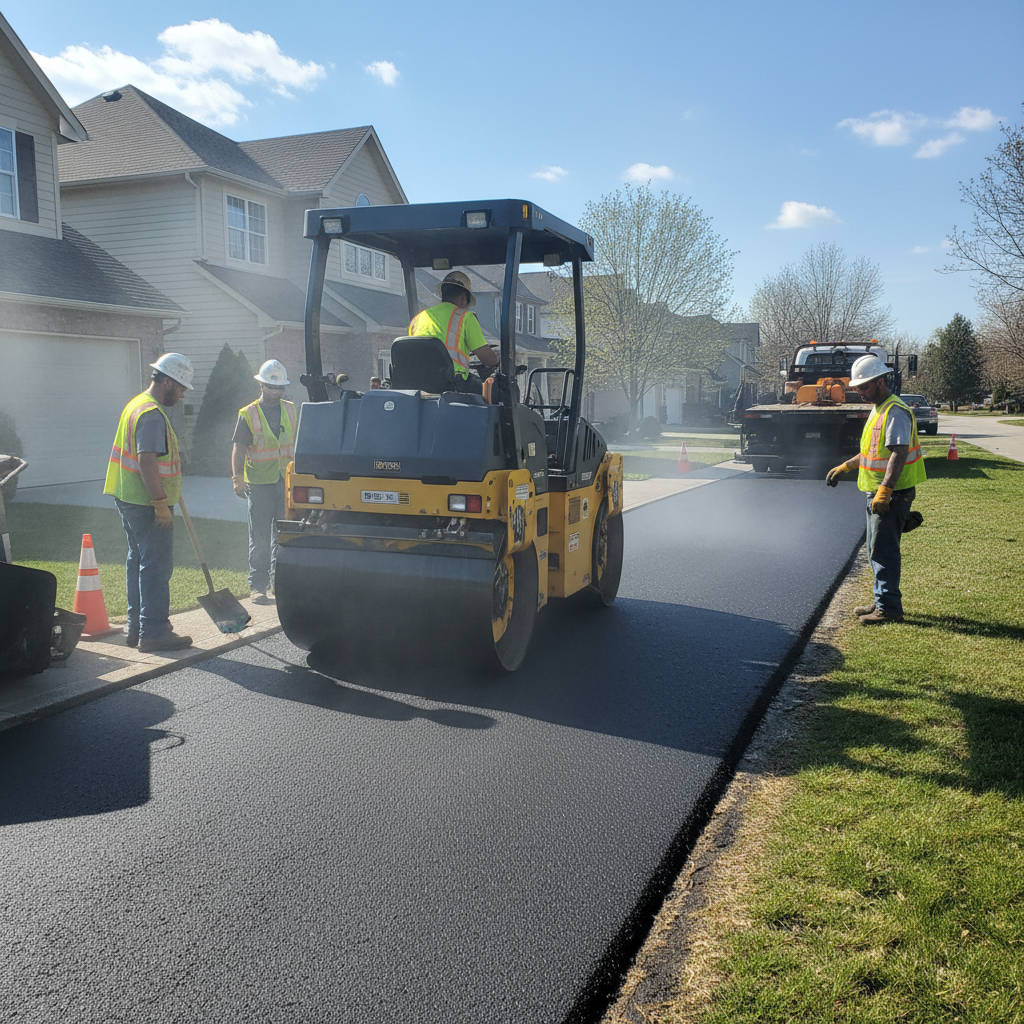
Driveway paving options and costs in Stonegate-Queensway
In Stonegate-Queensway, your driveway choice usually comes down to balancing upfront cost, winter toughness, and how quickly you want it to look “finished.” With a population of 25,051 people (Statistics Canada, 2021 Census), the Toronto economic region has a steady stream of homeowner projects, especially around busy arterial corridors where access and timing matter. Most private driveways here are for detached and semi-detached homes, and that’s important because driveway replacement is a labour-heavy job: excavation, hauling, base compaction, and the final surface all scale with the square footage and site conditions.
Toronto’s freeze–thaw pattern is a major cost driver. Ground freezing can run roughly 3–4 feet, so contractors need a deeper, well-compacted granular base and reliable drainage to reduce water pooling under the pavement. On top of that, the paving season is effectively late spring through early fall, and asphalt placement needs warm enough conditions. That compressed schedule can push pricing toward the mid-to-high end of the range if you’re trying to book prime dates.
If you’re in the area around The Queensway and Islington Avenue, or closer to the inner-ring streets with older lots, demand is often higher because many properties are due for surface upgrades and base correction. Below is a practical comparison table to help you anchor your expectations before you request a quote and lock in a schedule.
| Material |
Lifespan |
Maintenance |
Best For |
Price per sq ft |
Price Range |
| Asphalt (new installation, proper base) |
15–25 years |
Seal every 3–5 years; patch as needed |
Lowest upfront cost with good long-term performance when built on a corrected base |
$6.50–$12.00 |
$3,500–$8,000 |
| Asphalt (overlay on existing gravel base) |
8–15 years |
Seal as required; pothole/edge patching |
Shorter timeline fixes when base is sound enough to build on |
$5.75–$10.50 |
$2,800–$6,500 |
| Interlocking concrete pavers |
25–35+ years |
Re-screed and replace individual stones; seal optional |
Curb appeal and easy spot repairs in winter road-salt conditions |
$14.00–$25.00 |
$9,000–$20,000 |
| Poured concrete (broom finish) |
20–30 years |
Crack monitoring; sealing optional |
Clean, straight lines and a durable hard surface if joints/drainage are designed well |
$10.50–$20.00 |
$6,000–$15,000 |
| Exposed aggregate concrete |
20–30 years |
Seal periodically; stain/efflorescence control |
Slip resistance and “premium” curb look |
$12.00–$24.00 |
$7,500–$17,000 |
| Gravel / crushed stone (budget option) |
3–7 years |
Top up and re-grade annually; weed control |
Lowest cost interim surface where appearance is secondary |
$3.00–$7.00 |
$1,500–$4,000 |
Prices are estimates only and vary by project scope, site access and material selection.
What affects the price of paving in Stonegate-Queensway
In Stonegate-Queensway, you can see the same “average driveway” priced 30–50% differently across Toronto-area quotes because the hidden drivers are often base conditions and access—not just the top surface. One contractor might propose full depth excavation and a properly engineered granular base; another might assume the existing base is adequate. In freeze–thaw country, those choices matter. A driveway that’s built on marginal base often looks fine for a season or two, then starts to heave, crack, or develop raveling at the edges.
Toronto’s frost line depth and freeze–thaw cycles are decisive cost factors. With ground freezing roughly 3–4 feet, contractors typically need a thicker compacted granular base (commonly on the order of 6–12 inches for many Ontario driveway builds, depending on soil and design) to reduce movement. If water can reach the subgrade, it expands when it freezes and undermines the surface. That’s why drainage corrections (adding proper slope, ensuring ties into existing drainage, and rebuilding low spots) can push total cost into the higher end of the asphalt band—especially when asphalt is targeting the $3,500–$8,000 range.
Concrete pricing can swing too. If your driveway has tree roots, poor original compaction, or the formwork must be rebuilt due to irregular grades, poured concrete can become harder to place correctly. Conversely, if you already have a stable, well-drained base and clean edges, concrete costs often land closer to the lower end of the $6,000–$15,000 band. Even small differences in reinforcement strategy and joint layout, plus premium mix requirements for freeze–thaw durability, can add meaningful dollars.
| Price Factor |
Why It Matters |
Cost Impact |
| Driveway area in sq ft — the primary cost driver |
More square footage means more excavation, base material, and surface. |
Often the largest swing; can change totals by thousands of dollars. |
| Base depth required — frost line determines granular thickness |
Deeper frost needs a thicker compacted granular section to prevent heaving. |
Can add major material + labour; common jump between “thin base” vs “frost-ready base.” |
| Grading and drainage work — slope or drainage corrections add cost |
Proper slope and drainage keep water from sitting under the pavement. |
Moderate to high; can include additional excavation and re-compaction. |
| Tear-out of existing surface — breaking and hauling concrete or old asphalt |
Demolition and disposal are time-consuming, especially for reinforced concrete. |
Often adds 10–30% depending on depth and disposal logistics. |
| Edge restraints and curbing — needed to prevent paver spread |
Edges control movement during freeze–thaw and preserve final geometry. |
Low to moderate; crucial for pavers and long drive edges. |
| Sealing requirement — asphalt must be sealed after 6–12 months |
Seal timing protects the asphalt binder from moisture and oxidation. |
Adds a future line item, typically a few hundred dollars for many driveways. |
| Site access — narrow or tight lots slow equipment movement |
Smaller access means more manual handling and slower machine cycles. |
Can increase labour; also affects scheduling for machine delivery. |
| Asphalt mix specifications — freeze-thaw-rated mix costs more |
Toronto-area freeze–thaw durability requires appropriate mix design. |
Moderate; can move the quote toward the upper asphalt band. |
Permits & regulations in Ontario
For paving a private driveway within your own property in Ontario, you often do not need a building permit. In many cases, you can proceed with workmanship like asphalt, pavers, or concrete on your driveway footprint, as long as you’re staying within your lot and respecting municipal requirements. However, the moment the work touches the municipal side of things, approvals can come into play.
Work that typically does require municipal approval includes: creating or changing a curb cut, altering the boulevard area, modifying storm drainage patterns that tie into the municipal system, and changing how water leaves the property (for example, if your regrading redirects runoff toward a municipal catch basin or neighbouring property improperly). Some municipalities also enforce lot-grading rules, which may restrict how close a hard surface can be to lot lines or how water must be managed along property edges.
Step-by-step, here’s how a Stonegate-Queensway homeowner can verify your contractor properly: (1) Ask for their Ontario business details and confirm their licensing/business registration status where applicable; (2) Request a current certificate of insurance for liability and ensure the certificate lists your address or at least shows coverage; (3) Ask for proof of WSIB coverage (or an approved clearance letter). (4) Before excavation, confirm they arrange utility locates through Ontario One Call so you don’t risk damages to buried services.
Asphalt vs pavers vs concrete for Stonegate-Queensway driveways
For Stonegate-Queensway, the “best” driveway material depends on how you handle winter maintenance and whether you want the lowest upfront cost or the easiest repair. Asphalt is usually the most cost-effective option: it’s fast to install and the driveway looks clean right away, but it needs sealing typically every 3–5 years to protect against moisture and oxidation. In Toronto’s freeze–thaw cycle (with ground freezing about 3–4 feet), asphalt performs best when the granular base is engineered and drainage is correct—otherwise you’ll see edge breakdown, cracking, and sometimes pothole formation after freeze events.
Interlocking concrete pavers cost more upfront (often within the interlocking pavers band of $9,000–$20,000), but they’re highly forgiving for repairs. If one section lifts or a settlement spot develops, stones can be reset without replacing the entire surface, which is a big advantage after severe winters and heavy plowing/salt exposure. Poured concrete is mid-range and can look great, but it can be susceptible to cracking from freeze–thaw if air entrainment, joint spacing, and drainage aren’t planned carefully. Exposed aggregate offers slip resistance and premium appearance, while permeable pavers can help manage water—though the under-base design still has to be engineered.
To put the pricing in context: if you’re comparing asphalt at roughly $3,500–$8,000 to pavers at around $9,000–$20,000, the extra cost is often justified when curb appeal matters (front elevation), when you expect spot repairs, or when your driveway edges have complex geometry that benefits from paver adaptability. For many Toronto-area homeowners, the long-term win is the combination of a frost-ready base and a surface system that handles winter traffic and de-icing routines without “locking in” movement.
| Material |
Frost Resistance |
Curb Appeal |
Repair Method |
Lifespan |
Price Band |
| Asphalt (sealed regularly) |
Good when built on a frost-ready base and proper drainage |
Moderate (clean, uniform look) |
Patch and re-compact; seal area or full resurface later |
15–25 years |
$3,500–$8,000 |
| Interlocking concrete pavers |
Excellent with proper edge restraints and bedding sand |
High (wide colour/shape options) |
Lift/replace individual units; re-screed bedding |
25–35+ years |
$9,000–$20,000 |
| Poured concrete (air-entrained) |
Good to very good with joints and air-entrainment |
Moderate to high (clean lines, can be broom finished) |
Crack repair and patching; occasionally section replacement |
20–30 years |
$6,000–$15,000 |
| Exposed aggregate concrete |
Good with correct mix and curing; surface is durable |
Very high (premium texture) |
Patch and repair sections; cosmetic touch-ups |
20–30 years |
$7,500–$17,000 |
| Permeable pavers (drainage grid) |
Very good for managing water under freeze–thaw conditions |
High (modern drainage look) |
Targeted repairs—lift/reset pavers and check infiltration layer |
20–35 years |
$10,000–$22,000 |
| Chip seal / tar-and-chip |
Variable; can wear faster under heavy plowing and salt |
Low to moderate (more rustic finish) |
Spot patch or partial re-cover |
5–12 years |
$2,500–$6,000 |
How to choose a paving contractor in Stonegate-Queensway
Choosing the right paving contractor in Stonegate-Queensway comes down to documentation, transparent scope, and scheduling reality in the Toronto climate window. Start with Ontario coverage verification: ask for a certificate of liability insurance (confirm coverage limits and that the certificate is current) and request proof of WSIB. If the company is using subcontractors, ensure the subcontractors have their own WSIB coverage or clearance letters. Your best protection is having those documents in writing before any excavation begins.
Next, get 2–3 written, itemised quotes—not just a lump sum. A good quote breaks out labour and materials: excavation and hauling, compacted granular base, asphalt or concrete quantities, reinforcement (if applicable), edging/restraints, and the final surfacing. Clarify what’s excluded: permit fees (if any), disposal, overnight storage, saw cutting, reinforcement for concrete, or repairs to the driveway approach. Ask whether they include utility locating coordination and whether debris disposal is part of the scope.
Warranty should be specific: workmanship warranty length (and what it covers), plus product/manufacturer warranty details. Confirm whether the warranty transfers if you sell the property. For payment, never pay more than 10–15% upfront; use a progress payment schedule and hold back a final portion until the job is completed and cleaned up. Finally, request a written timeline with start date and completion estimate—Toronto’s short paving window can make dates shift, and you want that communicated upfront.
- Verify WSIB clearance letter or WSIB number (for Ontario work).
- Confirm liability insurance certificate is current and includes your job address (or at least the project location).
- Ask for Ontario business details and reference past Stonegate-Queensway or Toronto-area driveway jobs.
- Require an itemised scope: excavation, granular base, compaction lifts, bedding, and surfacing.
- Confirm disposal is included (broken concrete/old asphalt haul-away).
- Specify base thickness and drainage plan for freeze–thaw performance.
- For pavers: confirm edge restraints/curb locks and jointing sand plan.
- For asphalt: confirm curing/seasonal sealing timing (seal after 6–12 months).
- For concrete: confirm air-entrainment, joint plan, and whether expansion/control joints are included.
- Ask who will arrange utility locates and whether a locate ticket will be provided.
- Review warranty terms in writing, including workmanship and exclusions.
- Keep a payment schedule with a holdback until completion and walkthrough sign-off.
Red flags in Stonegate-Queensway: quotes that skip base thickness details; “we’ll put asphalt over anything” wording without assessing drainage and subgrade; no WSIB proof or outdated insurance certificates; vague timelines that ignore Ontario’s seasonal temperature constraints; and payment terms that request a large upfront deposit with no contract breakdown.
Frequently asked questions — paving in Stonegate-Queensway
Why does my driveway crack and heave in winter?
In Ontario and specifically Stonegate-Queensway, driveway heaving and cracking are commonly linked to water and freeze–thaw movement. When water can reach the subgrade, it expands as it freezes, and that pressure can lift the surface or break it at edges. Toronto-area ground freezing depth (roughly 3–4 feet) means a driveway needs a properly compacted granular base and correct drainage—if the base is too thin or slopes trap water, you’ll often see problems after repeated cold cycles. Another frequent cause is inadequate compaction or missing edging/settlement correction, so the driveway can shift slightly and then crack over seasons. If your asphalt was sealed late or never, oxidation can also reduce flexibility, making thermal cracking worse under snowplow impacts.
Do I need a permit to pave my driveway in Ontario?
For most Stonegate-Queensway homeowners, paving within your own lot footprint usually does not require a building permit. However, if you’re altering work in the municipal right-of-way—such as changing a curb cut, regrading the boulevard area, or modifying storm drainage—municipal approval may be required. There can also be lot-grading rules that restrict how you manage runoff and how close hard surfaces can be to lot lines. Before work starts, confirm whether your project affects curb/boulevard elements. A reputable contractor should ask the right questions and tell you what they handle versus what the homeowner must confirm with the city. Regardless of permit needs, make sure utility locates are done before excavation to reduce risk and delays.
How long before I can drive on new asphalt?
New asphalt curing time depends on the product and weather, but in Stonegate-Queensway you should plan for a minimum of 24–48 hours before normal vehicle traffic, with access often limited sooner if temperatures are cool. Contractors will typically schedule placement during the warmer part of the season because asphalt needs air and surface conditions to achieve proper compaction. If it’s placed in borderline temperatures, it can take longer to cool and set. The driveway should also be kept free of sharp turning movements and heavy loads while it fully cools. After installation, sealing is usually recommended after 6–12 months—so if you’re planning ahead, build that future step into your maintenance budget. Your contractor should confirm the curing timeline in writing along with weather-based adjustments.
What causes potholes and how are they repaired?
Potholes are usually the result of water getting under the pavement, then freeze–thaw cycles expanding the problem. In Stonegate-Queensway, repeated winter freezing and thawing can undermine asphalt around cracks, joints, or edges—especially where drainage is weak or where plowing/salt accelerates wear. Once a small void forms, traffic and load cycling enlarge it quickly. Repairs typically involve saw cutting to remove loose material, excavating to reach stable base, re-compacting a granular sub-base (or base correction if needed), and then replacing asphalt in proper lifts for compaction. For asphalt, a targeted patch can be very cost-effective compared to resurfacing, but if multiple failures are happening, it may signal broader base drainage issues. Good quotes will address whether patching alone will last or whether base correction is needed.
How do I prepare for a paving project?
Start by clearing access: park vehicles off-site and ensure equipment can reach the work area safely—tight driveways in Stonegate-Queensway can increase labour and time. Mark any landscaping you want protected and remove hoses, planters, and decorative items. If you’re paving over an existing surface, confirm whether the contractor will do full tear-out and disposal. That matters for cost and schedule, particularly in a short Toronto paving season. Before excavation, ask how utility locates are arranged (Ontario One Call) and whether you need to coordinate anything with neighbours or condo/HOA rules (if applicable). If you have drainage issues already—like puddling—tell the contractor upfront so they can design slope corrections rather than just covering the symptom. Finally, plan for sealing timing after asphalt is installed (often after 6–12 months) if that’s part of the recommendation.
How do I compare paving quotes fairly?
To compare quotes fairly in Ontario, match scope first, then compare price. Ask each contractor to provide itemised line items: excavation depth, granular base thickness, compaction lifts, drainage/grading corrections, edging restraints, disposal, and the final surface thickness. Make sure materials are comparable—especially asphalt mix design for freeze–thaw durability and concrete air-entrainment. Watch for quotes that fall far below the market band, such as asphalt coming in under the typical $3,500 – $8,000 range without explaining base correction. Also compare the warranty: workmanship length, what’s covered, and whether product warranties apply. Finally, confirm payment schedules (avoid large upfront deposits beyond about 10–15%) and get start/completion dates in writing because Toronto-area scheduling can shift with weather. If scope isn’t equal, the cheapest quote usually isn’t the best value.