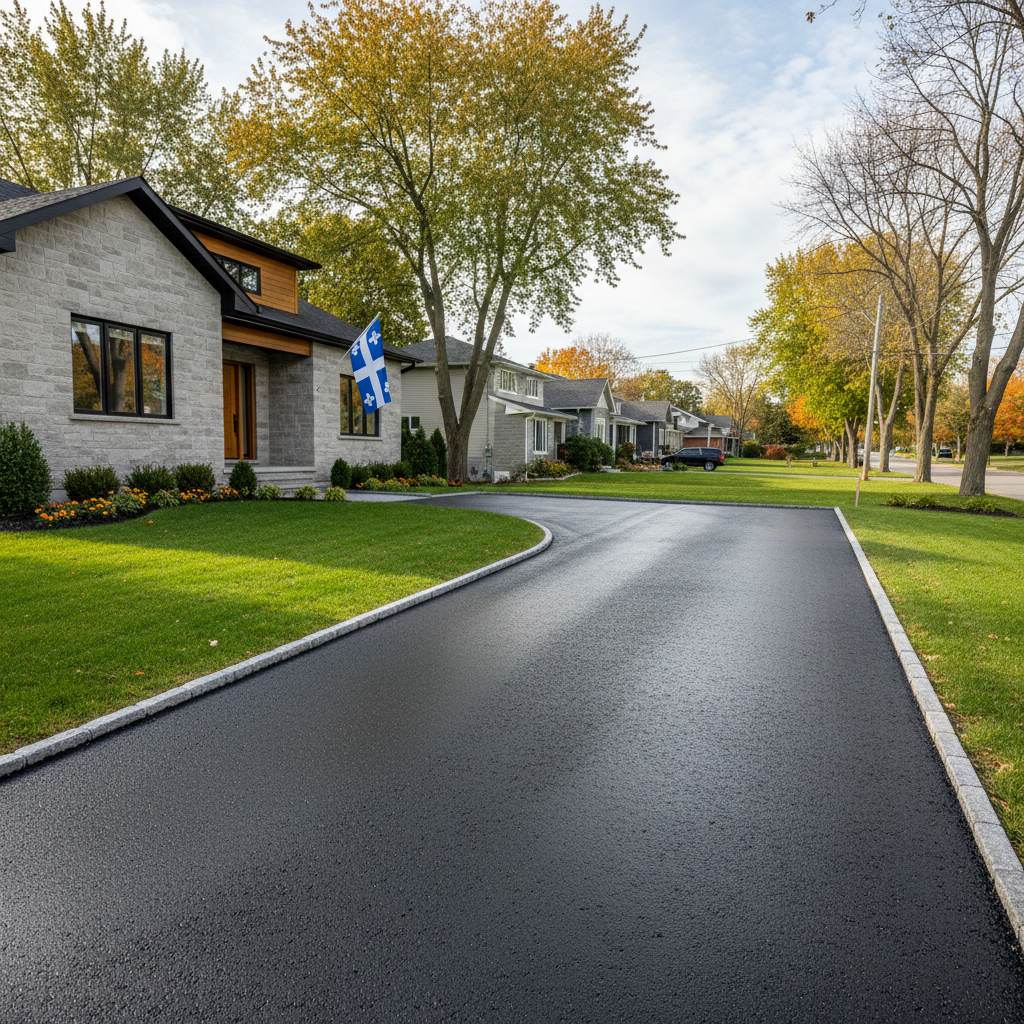
Driveway paving options and costs in Greater Sudbury
In Greater Sudbury, choosing the right driveway surface is largely about how well it survives deep seasonal freeze, repeated freeze–thaw, and winter maintenance. With a population of 166,004 (Statistics Canada, 2021 Census), the city has a steady mix of older neighbourhoods and newer subdivisions where homeowners often upgrade from gravel to asphalt or concrete. The majority of private driveways in the residential market are tied to detached homes and established lots, which is why contractor demand is especially strong around family-oriented areas such as New Sudbury / West End.
Because Sudbury’s winters are tough on pavement, your “lowest bid” is rarely just the asphalt or concrete cost. In practice, the quote depends heavily on subgrade condition, drainage, and the thickness of the compacted granular base needed to limit frost heave. In colder regions, the paving season is also shorter: hot-mix asphalt needs warm, dry conditions (commonly air temperatures above 10°C), so crews price in weather risk, mobilization costs, and tighter spring scheduling. That’s why two driveways with the same width can land in noticeably different price bands.
Use the table below to compare materials and realistic lifespan expectations, then match your situation to the option that best fits your winter routine (ploughing, sanding and salt use) and your tolerance for future maintenance.
| Material |
Lifespan |
Maintenance |
Best For |
Price per sq ft |
| Asphalt (new installation, proper base) |
15–25 years |
Seal after 6–12 months, then every 3–5 years |
Lower upfront cost with a strong base and routine sealing |
$10 – $18 |
| Asphalt (overlay on existing gravel base) |
10–18 years |
Seal every 3–5 years; watch for base settlement |
When you’re limited on excavation but can improve drainage |
$9 – $15 |
| Interlocking concrete pavers |
25–40 years |
Re-leveling of small areas as needed; occasional joint sand |
High curb appeal and “repair by section” convenience |
$18 – $30 |
| Poured concrete (broom finish) |
25–35 years |
Light cleaning; consider crack control plan and sealing only if needed |
Durability with a relatively simple, clean surface |
$17 – $28 |
| Exposed aggregate concrete |
25–35 years |
Periodic cleaning; sealing sometimes used for stain resistance |
Slip resistance and premium look for Sudbury driveways |
$19 – $32 |
| Gravel / crushed stone (budget option) |
3–8 years (typical before major regrading) |
Re-grade and top up; manage washboarding and potholes |
Temporary solution or low-budget staging |
$3 – $7 |
Prices are estimates only and vary by project scope, site access and material selection.
What affects the price of paving in Greater Sudbury
Even when homeowners request the same “new driveway” outcome, quotes in the Northeast and across Ontario can vary by roughly 30–50%. The biggest reasons are not just surface choice—it’s the amount of excavation, granular base design, drainage corrections, and how the contractor manages weather-window risk. Two contractors may price different scope assumptions, such as whether haul-away disposal is included, how much shoulder material is brought back, and what depth is actually achievable once you account for frost-prone soils and existing utilities.
In Sudbury’s freeze climate, frost line depth and freeze–thaw cycles are decisive. Deeper frost means you need a thicker compacted granular base to prevent heaving and surface cracking. In practice, many projects land in a 6–12 inch base range once the subgrade is corrected and compacted, which is why base work can dominate the budget. Asphalt mix design also matters: a freeze-thaw-rated asphalt needs the right binder and gradation so the mat doesn’t ravel under winter brine and traffic.
Concrete pricing can move as well. For example, a poured slab with adequate air entrainment and proper joints generally costs in the Concrete driveway: $9,000–$18,000 band, but the final number shifts depending on reinforcement detailing and how much old pavement must be removed. Similarly, if your driveway is in New Sudbury / West End and the subgrade is already stable with good slope and drainage, asphalt can land toward the lower end of the Asphalt driveway paving: $4,500–$8,500 range; if drainage is poor and there’s groundwater pooling, expect higher costs due to more excavation and granular replacement.
Lastly, the shorter paving season affects availability and scheduling. Crews often price mobilization premiums and carry risk for spring delays, which can be especially noticeable on larger re-surfacing jobs where multiple vehicles and forms are staged in limited warm periods.
| Price Factor |
Why It Matters |
Cost Impact |
| Driveway area in sq ft |
Labour, base, and asphalt/concrete quantities scale directly with area |
High (typically the #1 driver) |
| Base depth required |
Frost heave resistance depends on adequate compacted granular thickness |
High in frost-prone soils |
| Grading and drainage work |
Fixing slope, ditches and water flow reduces freeze-related deterioration |
Medium to high |
| Tear-out of existing surface |
Breaking, hauling, and disposal are time-consuming and equipment-dependent |
Medium to high |
| Edge restraints and curbing |
Interlock and asphalt edges need restraint to prevent lateral movement |
Medium |
| Sealing requirement |
Asphalt needs sealing after curing, then periodically to slow oxidation |
Low upfront; ongoing over time |
| Site access |
Narrow lots or soft ground slow equipment movement and affect production |
Medium |
| Asphalt mix specifications |
Freeze-thaw-rated mix and correct binder increase material cost |
Low to medium (but noticeable on larger mats) |
Permits & regulations in Ontario
For most Greater Sudbury homeowners, paving a private driveway on your own property typically doesn’t require a building permit. However, the moment the work touches municipal infrastructure or alters drainage patterns, approvals often come into play. In Ontario, new curb cuts, changes to the boulevard, or modifications to storm drainage in the municipal right-of-way usually require municipal approval before excavation. If your project also affects how water flows toward catch basins or swales, expect extra scrutiny.
Some municipalities also maintain lot-grading expectations (often through by-laws or engineering standards) that restrict how close a finished hard surface can be to property lines and how stormwater should be directed. Because Sudbury’s freeze–thaw performance depends heavily on drainage, it’s smart to confirm grading direction before the first load of aggregate arrives.
Step-by-step verification you can do as a homeowner:
- Call for utility locates before any digging (in Ontario, use Ontario One Call). Don’t rely on “we’ve done it before” assurances.
- Ask the contractor for a copy of their Ontario business registration/licence information and verify it through the applicable online registries.
- Request a current certificate of insurance (liability) showing they’re insured for your project scope and dates.
- Confirm WSIB/WCB clearance or coverage documentation for their workers before work starts.
- For right-of-way or drainage-related work, ask what municipal approval is needed and who applies (and whether it’s included in the quote).
Asphalt vs pavers vs concrete for Greater Sudbury driveways
In Greater Sudbury, the “best” driveway material depends on how you expect the driveway to perform through winter: plowing frequency, whether you use salt/brine, and how much you want to repair versus replace later. With Sudbury’s freeze–thaw cycles, a driveway lives or dies on base preparation and drainage first—then the surface choice.
Asphalt usually offers the lowest upfront cost and a smooth ride. The trade-off is maintenance: sealing typically needs to be done after curing (often within the first season) and then about every 3–5 years. Interlocking concrete pavers cost more to install, but they’re repairable—if a section settles or heaves, you can lift and re-set smaller areas instead of replacing the whole surface. Poured concrete lands in the middle-to-upper range and can be long-lasting, but it’s more sensitive to cracking if not properly air-entrained and jointed for freeze–thaw. In Northern Ontario winters, air entrainment and correct jointing details matter more than many homeowners expect.
For Sudbury projects, base thickness often ends up in the same ballpark—what changes is the surface build-up and the detailing. Drainage design (positive slope away from the house, controlled runoff, and avoiding ponding) helps all three. In winter maintenance routines, pavers and well-built asphalt usually tolerate sanding/snow traffic better than untreated concrete surfaces, and concrete can perform extremely well when it’s correctly specified and cured.
Example: if you’re deciding between asphalt and concrete on a driveway that’s roughly 600 sq ft, asphalt may land closer to the Asphalt driveway paving: $4,500–$8,500 band, while concrete frequently lands in the Concrete driveway: $9,000–$18,000 band. The difference is justified when you want a longer service life with fewer recurring maintenance visits, and when your contractor can show proper base, air-entrainment (for concrete), and jointing plans for Sudbury’s freeze–thaw.
| Material |
Frost Resistance |
Curb Appeal |
Repair Method |
Lifespan |
Price Band |
| Asphalt (sealed regularly) |
Good with thick granular base and proper drainage |
Medium |
Patch the affected area; seal whole driveway as needed |
15–25 years |
$4,500 – $8,500 |
| Interlocking concrete pavers |
Excellent when base and restraints are engineered |
High |
Lift pavers, correct base, re-install |
25–40 years |
$8,000 – $16,000 |
| Poured concrete (air-entrained) |
Very good with air entrainment and joints |
Medium to High |
Crack repair or slab patch; may require larger repairs if widespread |
25–35 years |
$9,000 – $18,000 |
| Exposed aggregate concrete |
Very good when specified for freeze–thaw |
High |
Localized patching; finish matching can be limited |
25–35 years |
$10,000 – $20,000 |
| Permeable pavers (drainage grid) |
Good where drainage is carefully designed and soils permit |
High |
Re-compact and re-install sections; cleaning may be required |
20–35 years |
$10,000 – $22,000 |
| Chip seal / tar-and-chip |
Moderate; relies heavily on base quality |
Low to Medium |
Spot repairs and re-surfacing over time |
8–15 years |
$4,000 – $7,500 |
How to choose a paving contractor in Greater Sudbury
Choosing the right contractor in Greater Sudbury is less about flashy photos and more about proof: the right coverage, a clear scope, and realistic pricing tied to frost-proof base work. Start by verifying the contractor’s ability to operate in Ontario and to cover your project. Ask for their WSIB/WCB clearance (for worker coverage) and check their liability insurance certificate so it lists your project dates and applicable work. Confirm the company’s Ontario registration/business information, then match the certificate name to the contracting entity that will appear on your agreement.
Next, request 2–3 itemised written quotes rather than a single lump-sum number. You want a breakdown that shows excavation and disposal, granular base depth and compaction, any geotextile or stabilization (when recommended), surface thickness, edge restraints, and paving method. Also look for whether a permit or municipal approval is included if the work touches boulevard/curb cuts or drainage. Ask what’s excluded (tree removal, rock blasting, utility modifications, temporary drainage protections), and insist on clarity.
Warranty matters too: ask for the workmanship warranty length and whether it covers delamination, premature cracking, or settlement, and whether the warranty is tied to the installed product. Finally, keep the payment schedule controlled—typically no more than 10–15% upfront and hold a portion until the job is complete and the final grading is accepted. Make sure you receive a start date and a completion estimate in writing, especially because Sudbury’s season can tighten quickly.
- Confirm Ontario business details and that the legal entity on the quote matches the contract.
- Require a current certificate of liability insurance and verify coverage limits.
- Request WSIB/WCB clearance (or coverage proof) before any excavation.
- Insist on utility locates being done before digging (Ontario One Call).
- Get itemised line items: excavation, base depth, compaction, disposal, and surface thickness.
- Ask whether geotextile/insulation is included for wet or frost-susceptible soils.
- Clarify drainage responsibility: slope, tie-in points, and avoiding ponding.
- For asphalt: confirm sealing plan for year one and future recoating expectations.
- For pavers: confirm edge restraints, bedding sand, and joint sand plan.
- Confirm tear-out disposal is included (hauling and tipping fees vary).
- Ask for warranty terms in writing and what conditions void coverage.
- Use a written schedule with weather contingencies, not just “weather permitting.”
In Greater Sudbury, red flags include contractors who won’t provide WSIB/WCB paperwork, who refuse itemised base-depth details, who quote without inspecting drainage and subgrade, who ask for large upfront payments, or who won’t explain what happens if spring weather compresses the paving window.
Frequently asked questions — paving in Greater Sudbury
Asphalt vs interlocking pavers vs concrete — which is best in Greater Sudbury?
For most Greater Sudbury homeowners, asphalt is the best value when the base is built properly and you commit to sealing. If you want a premium look and the ability to repair just one disturbed section after settlement, interlocking pavers are hard to beat. Poured concrete can be excellent if it’s correctly air-entrained, jointed, and poured with proper curing—this matters a lot in our freeze–thaw winters and when salt or brine is used during plowing. In terms of typical budgets, asphalt often falls into the Asphalt driveway paving: $4,500 – $8,500 band, while pavers and concrete commonly rise into the $8,000 – $18,000 range depending on scope. The “best” choice is the one your site can support with drainage-first base prep.
How long does a paved driveway last in Greater Sudbury?
Longevity in Greater Sudbury is mainly determined by base construction and drainage, then by how the surface is maintained through winter. With proper granular base and good slope control, asphalt typically lasts about 15–25 years when it’s sealed on schedule (usually starting in the first season and then every 3–5 years). Interlocking pavers can often provide 25–40 years because localized repairs are feasible without removing the entire driveway. Poured concrete is commonly in the 25–35 year range when air entrainment and jointing are done correctly for freeze–thaw. If water is allowed to pond or if the base is underbuilt, even high-end materials can fail early—so ask your contractor to explain how they prevent frost heave and surface cracking.
When is the best time of year to pave in Greater Sudbury?
The best window is late spring through early fall—when temperatures are consistently suitable and the ground is thawed enough to excavate, compact, and pave without trapping moisture. Asphalt work generally requires warm, dry conditions (commonly air temperatures above 10°C), and Sudbury’s shorter paving season can concentrate demand in a few weeks. If you’re replacing an old driveway, plan to have base excavation and drainage corrections completed ahead of paving day. Many homeowners also choose to pave early enough in the season to allow the asphalt to cure properly before winter stress. Your contractor should provide a written schedule with weather contingencies rather than relying on vague “seasonal” timelines.
How deep should the base be for Greater Sudbury's frost?
There isn’t one universal depth, because base thickness depends on your subgrade condition, drainage, and frost-susceptible soil. But in Greater Sudbury, base depth is commonly increased to resist frost heave from repeated freeze–thaw cycles—often landing around 6–12 inches of compacted granular material once the subgrade is corrected. If the site has poor drainage or wetter soils, contractors may recommend additional excavation, geotextile, or stabilization to keep water from migrating into the frost zone. A good quote will explain how they assess your soil and how they manage runoff so the driveway stays dry during thaw periods. If a contractor won’t talk about base depth and compaction, treat that as a major concern.
How often should I seal my asphalt driveway?
Sealing is one of the most important “small” maintenance tasks for asphalt in Ontario winters. Typically, contractors recommend sealing after the new asphalt has cured—often within 6–12 months of installation—then re-sealing about every 3–5 years depending on sun exposure, traffic, and how aggressively salt is applied. In Greater Sudbury, winter sanding and plowing are normal, so keeping water out is key to slowing oxidation and minimizing raveling. If you skip seal coats, you can accelerate surface wear and expose more binder to moisture and freeze cycles, which leads to earlier cracking. Ask for the exact product and schedule in your contract so you know what “done correctly” looks like.
Why does my driveway crack and heave in winter?
Cracking and heaving usually come down to water and frost working together. When water gets into the base or near the surface—through poor drainage, inadequate slope, or tiny ponding spots—it can freeze and expand, creating frost heave. Once the freeze–thaw cycle repeats, the pavement loses uniform support and you see cracking, alligatoring, or “bumps.” Salt and brine don’t help, either: they can worsen deterioration when the pavement is already thin or the binder is aging. A common cause is an underbuilt or poorly compacted base that wasn’t designed for local frost conditions. If you’re evaluating repairs, ask whether the contractor will address base depth and drainage, not just patch the surface.