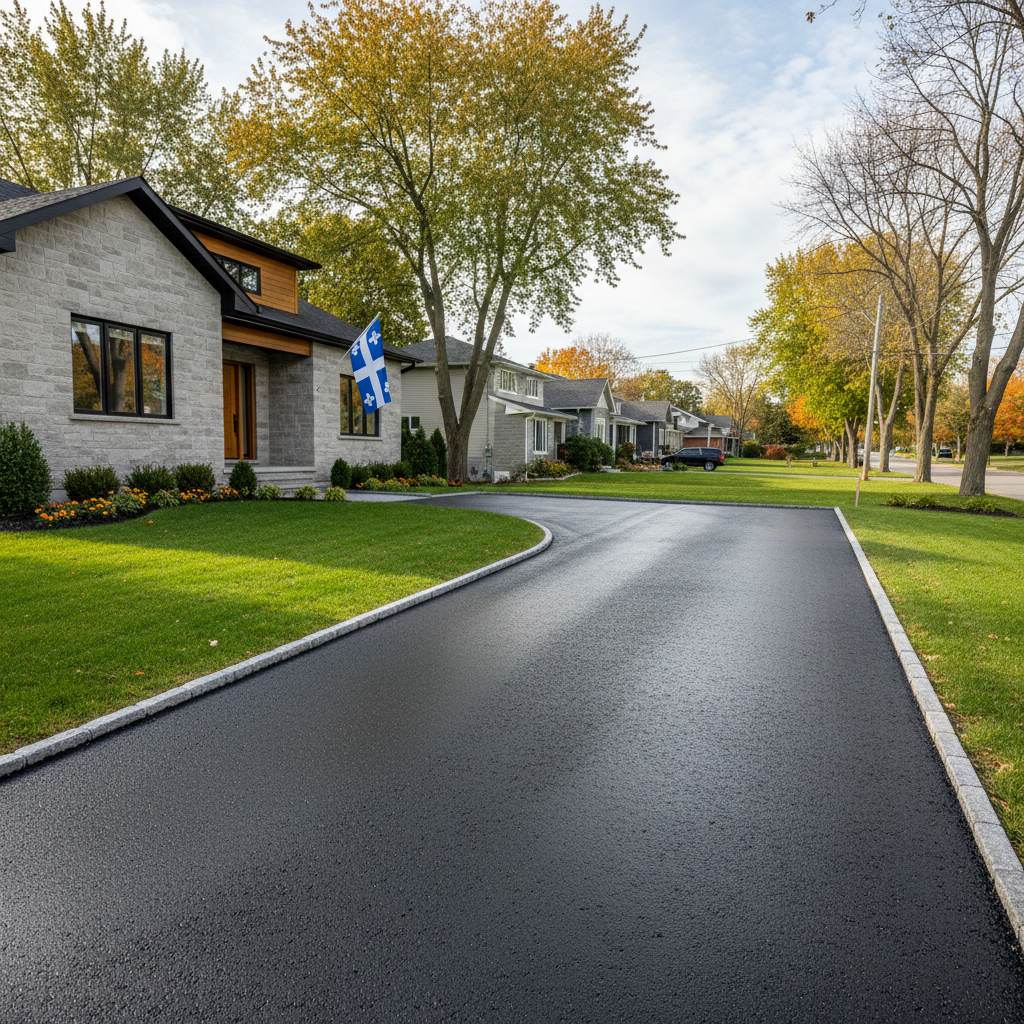
Driveway paving options and costs in Alliston
Alliston homeowners typically have three main choices when it’s time to pave: asphalt, interlocking concrete pavers, or concrete. With Alliston’s population sitting at 18,809 (Statistics Canada, 2021 Census), there’s steady demand for durable driveways, especially around growing residential pockets near the downtown core and the commuter routes that feed into the Greater Toronto Area. Most private driveway installs are tied to detached housing, which means driveways are often wide, heavily used, and exposed to years of winter traffic and salt.
In the Toronto economic region, pricing is driven by frost depth and freeze–thaw cycles. Ground freezing to roughly 3–4 feet means the paving system only performs as well as the granular base, drainage, and compaction. Compared with milder climates, this adds excavation, base material, and labour—so you’ll see total installed costs come in higher than in warmer areas. Timing also matters: paving works best late spring through early fall, and the shorter season pushes more jobs into peak months, which can tighten scheduling and lift rates for prime dates.
If you’re comparing materials, it helps to separate “best-looking” from “best value.” In many Alliston bids, asphalt lands on the low end of the Toronto market, while pavers usually carry the highest upfront cost but offer easier spot repairs and strong curb appeal. Concrete sits in the middle, but its success depends on mix design, air entrainment, jointing, and good drainage—otherwise freeze–thaw can still create cracking over time.
Here’s a practical cost comparison to use when you review quotes and line items.
| Material |
Lifespan |
Maintenance |
Best For |
Price per sq ft |
| Asphalt (new installation, proper base) |
15–25 years |
Seal every 3–5 years; patch as needed |
Best upfront value with a smooth, quiet ride |
$3.50–$7.50 |
| Asphalt (overlay on existing gravel base) |
10–20 years |
Seal within the first year; monitor edges and drainage |
Budget-conscious driveways when base is sound |
$3.25–$6.25 |
| Interlocking concrete pavers |
20–30 years |
Weed control; replace individual stones if needed |
High curb appeal and repair flexibility |
$9.00–$18.00 |
| Poured concrete (broom finish) |
25–35 years |
Joint maintenance; seal only if specified |
Clean, simple look with strong long-term structure |
$6.50–$13.00 |
| Exposed aggregate concrete |
25–35 years |
Occasional sealing depending on finish |
Upgraded appearance with textured slip resistance |
$9.00–$16.00 |
| Gravel / crushed stone (budget option) |
3–8 years (varies widely) |
Re-grade, top up, and edge control every 1–3 years |
Short-term solution or low-budget staging |
$2.00–$4.50 |
Prices are estimates only and vary by project scope, site access and material selection.
What affects the price of paving in Alliston
It’s common to see driveway paving quotes vary by 30–50% in the Toronto economic region even when the driveway “looks similar” from the street. The biggest reasons are usually what isn’t visible: subgrade conditions, drainage, frost protection depth, and how much teardown and haul-away is included. Two contractors can quote the same asphalt square footage, but one may price a full engineered base to handle freeze–thaw, while another may assume the existing ground can be compacted without adding adequate granular thickness.
In this region, frost depth and freeze–thaw cycles are decisive cost factors. Toronto-area freezing down roughly 3–4 feet means you typically need a thicker, properly compacted granular base so water can’t sit under the pavement and expand when it freezes. Depending on what you uncover on site, deeper frost protection can translate to additional excavation and base placement. In colder Ontario conditions, the base thickness is often in the 6–12 inch range for the compacted granular layer to help manage heaving and cracking (site-specific engineering and material gradation apply). Mix design also matters: asphalt should be freeze–thaw rated for our winter cycles.
Seasonality is another cost lever. Hot-mix asphalt placement generally requires air and surface conditions above workable thresholds (commonly above 10°C), so the paving season is effectively compressed into late spring through early fall. When schedules tighten, prime dates can raise pricing—especially for busy locations like major routes in Alliston where multiple crews are competing for the same weeks. Concrete examples: driveways with tight corners and thickened edges often cost more because of additional formwork and joint detailing; conversely, a straightforward rectangular driveway with easy haul access can reduce labour. If your driveway is older, the difference between a $3,500–$8,000 asphalt project and a $6,000–$15,000 concrete job often comes down to tear-out depth and whether drainage corrections are required.
| Price Factor |
Why It Matters |
Cost Impact |
| Driveway area in sq ft |
The more square footage, the more asphalt/concrete, base, and finishing labour |
High (typically the largest line item) |
| Base depth required |
Frost line determines granular thickness to reduce heaving and cracking |
High in Alliston; can add significant excavation and material |
| Grading and drainage work |
Correct slope and add drainage paths so water doesn’t sit under the surface |
Medium to high depending on soil and existing drainage |
| Tear-out of existing surface |
Removing and hauling concrete slabs or distressed asphalt affects disposal and labour time |
Medium (often increases more on older, failed bases) |
| Edge restraints and curbing |
Proper restraints prevent paver spread and keep asphalt edges from breaking down |
Medium; higher if curbs/retainers are required |
| Sealing requirement |
Asphalt performs better with timely sealcoating in Ontario conditions |
Low per season, but adds cost over the first few years |
| Site access |
Narrow drives, overhead obstacles, or long equipment movement increase labour and time |
Medium; can add mobilization/extra handling |
| Asphalt mix specifications |
Freeze–thaw rated mix (and thickness) costs more but helps prevent early deterioration |
Low to medium; usually worth it in our climate |
Permits & regulations in Ontario
In Ontario, paving a private driveway within your own property typically does not require a building permit—especially when you’re resurfacing an existing driveway and not changing drainage patterns or municipal assets. However, if your project touches anything in the municipal right-of-way (for example, new curb cuts, changes to the boulevard, or alterations to storm drainage), that work usually does require municipal approval. Some municipalities also have lot-grading rules that restrict how close hard surfaces and drainage setups can be to property lines, and how water must be directed away from neighbouring lots.
Before excavation in Alliston, you should always start with utility locates using Ontario One Call. This is non-negotiable for safe digging and helps prevent costly delays when crews hit buried services. Then, confirm lot-grading requirements with the municipality—particularly if you’re lowering/raising the driveway elevation or adding drainage swales.
Here’s a practical way to verify your contractor, step by step:
- Ask for their Ontario business licence information (where applicable) and confirm they’re operating as a legitimate contractor in Ontario.
- Request proof of liability insurance and ensure the certificate clearly lists the insured party and your project location (or is job-addressable).
- For work crews, confirm WSIB coverage (or proper exemption status if applicable to the specific contractor structure).
- Look for a clearance letter where required by job specs or municipal/owner requirements.
- Get these documents before work starts, not after.
If you keep the scope strictly on your property and maintain existing drainage direction, permitting is often straightforward. If the job involves municipal curb/boulevard changes, plan extra lead time for approvals.
Asphalt vs pavers vs concrete for Alliston driveways
For Alliston winters, the “right” driveway material is the one that’s built on the correct base, engineered for drainage, and matched to how you maintain the surface. Asphalt is typically the lowest upfront option and offers a smooth ride, but it needs sealcoating every few years to protect it from salt, water, and freeze–thaw damage. Interlocking concrete pavers usually cost the most to install, yet they perform well in a freeze–thaw climate because individual units can be lifted and reset if a localized section settles or drainage needs adjustment—without replacing the entire driveway. Poured concrete often lands in the mid-range, but it must be air-entrained and properly jointed; without the right mix and spacing, freeze–thaw can lead to cracking and spalling, especially around edges where water concentrates.
Toronto-area frost depth (about 3–4 feet) is the reason base prep is so critical across all materials. Drainage design matters as much as material choice: if the slope directs water toward the garage apron or toward low spots, any pavement system is at risk. Interlock and asphalt can tolerate minor movement when the base is correctly compacted and edged properly, while concrete’s joints and air entrainment are what allow it to cope with seasonal expansion and contraction. With winter maintenance in mind—plowing, sand/salt—pavers generally hold up well because damage is localized and curb appeal stays high.
As a simple cost example: if your quote for a properly built asphalt driveway comes in around $3,500–$8,000, switching to interlocking might move you into the $9,000–$20,000 band. That jump is justified when you want curb appeal now, anticipate future drainage/grade adjustments, or prefer the ability to repair a section rather than resurface the full area later. If you want a balanced mid-cost approach with a clean finish and long-term structure, concrete can make sense—provided the contractor plans joints and drainage properly.
| Material |
Frost Resistance |
Curb Appeal |
Repair Method |
Lifespan |
Price Band |
| Asphalt (sealed regularly) |
Good with proper base and freeze–thaw-rated mix |
Moderate (smooth, clean finish) |
Patch and re-seal spot areas |
15–25 years |
$3,500–$8,000 |
| Interlocking concrete pavers |
Very good with engineered base and restraints |
High (varied patterns and colours) |
Remove and replace individual stones |
20–30 years |
$9,000–$20,000 |
| Poured concrete (air-entrained) |
Good with correct mix design and jointing |
Moderate to high (clean, modern look) |
Patch cracks/joints; major failure may require replacement |
25–35 years |
$6,000–$15,000 |
| Exposed aggregate concrete |
Good to very good with proper finishing and curing |
High (textured, premium look) |
Limited patching (can be more noticeable) |
25–35 years |
$8,000–$18,000 |
| Permeable pavers (drainage grid) |
Very good when base and drainage are engineered correctly |
High (modern, eco-focused look) |
Spot repair by replacing affected units |
20–30 years |
$10,000–$22,000 |
| Chip seal / tar-and-chip |
Fair to good; sensitive to base quality and winter traffic |
Low to moderate (rougher texture) |
Re-surface when worn; limited patching |
5–12 years |
$3,000–$7,000 |
How to choose a paving contractor in Alliston
Choosing the right paving contractor in Alliston comes down to proof: proof they can legally work in Ontario, proof they’re insured, and proof they understand freeze–thaw construction. Start with Ontario licensing/registration documents (where applicable) and verify liability insurance before any site work. Ask for the certificate of insurance and confirm it covers the work type and includes your address/project details when possible. Next, check WSIB/WCB coverage status: request their current clearance letter or documentation showing active coverage (or appropriate exemption status, if their corporate setup qualifies). If they won’t provide documents promptly, that’s a major red flag.
Then get 2–3 itemised written quotes. You want a breakdown that includes labour and materials, not just a lump sum per square foot. Look for specific line items: excavation, haul-away/disposal, base material type and depth, compacting requirements, geotextile (if used), asphalt/concrete placement thickness, edging/restraints, and any sealing allowance. Confirm whether a permit pull is included if any curb cut or right-of-way work is involved, and whether disposal is included or billed separately.
Warranty matters in our climate. Ask for the workmanship warranty length and whether it covers settlement/cracking related to base preparation. Also ask about product/manufacturer warranty and whether it’s transferable to the homeowner. Payment schedule should be conservative: never pay more than about 10–15% upfront. Hold back final payment until the job is complete, cleaned up, and any corrections are addressed. Finally, request the start date and a completion estimate in writing—Toronto-area schedules can compress in peak months.
- Ask what base depth they’re designing to, based on your site conditions.
- Confirm drainage plan (slope, outlets, and how they prevent ponding).
- Require a written scope that lists excavation, compaction method, and material specs.
- Verify liability insurance and request WSIB/WCB documentation/clearance.
- Check for a clear disposal/haul-away line item.
- Confirm edging/restraints are included (especially for pavers).
- For asphalt, require sealcoating timing and whether it’s included or an allowance.
- Ask for a temperature/season policy so work isn’t rushed during cold snaps.
- Get details on joint spacing for concrete (and air-entrainment confirmation).
- Clarify what’s excluded: permits, locates, tree removal, or restoring sod/landscaping.
- Ask who performs quality checks (base compaction verification, thickness checks).
- Use a clear change-order process in writing if the scope changes after excavation.
In Alliston, red flags I’ve seen include: (1) refusing to show insurance/WSIB documents, (2) quoting a “standard thickness” without assessing frost-protection base needs, (3) skipping or minimizing drainage work, (4) taking large upfront deposits without a contract timeline, and (5) only discussing total price while avoiding itemized base/disposal details.
Frequently asked questions — paving in Alliston
How often should I seal my asphalt driveway?
In Alliston and across Ontario’s freeze–thaw cycle, most asphalt driveways should be sealed about every 3–5 years, depending on traffic, sun exposure, and how much salt and sand hit the surface. If your driveway is newly paved, many crews recommend waiting through the first service season and then sealing within the next reasonable window—timing depends on the asphalt’s curing condition. Sealing helps slow oxidation, reduces water absorption, and improves resistance to winter damage. Typical contractor allowances often fall into the $300–$1,500 band for sealing & repair, but pricing varies by driveway size and prep (cleaning, patching, and crack treatment). If you see raveling or a dark, dull surface that looks “dry,” it’s usually time to plan sealing.
Why does my driveway crack and heave in winter?
Cracking and heaving in Ontario usually trace back to water plus freeze–thaw. When water gets into the base or along edges and then freezes, it can expand and push the surface up (heave), or it can weaken the pavement structure until cracks form. The most common contributors in Alliston are inadequate granular base depth, poor compaction, weak drainage/slope, or missing edge restraints that let material shift. Settlement can also occur if the subgrade wasn’t properly prepared before paving. If a driveway was paved over a problematic area without frost protection, cracks often show near seams, low spots, or where meltwater collects after storms. That’s why quotes should describe base depth, compaction, and drainage—those line items matter as much as whether the finish is asphalt or concrete.
Do I need a permit to pave my driveway in Ontario?
For many Alliston homeowners, paving a private driveway on your own property typically doesn’t require a building permit in Ontario—especially if you’re resurfacing without changing drainage patterns or touching municipal right-of-way. However, if you’re altering curb cuts, modifying the boulevard, or changing storm drainage connected to municipal infrastructure, municipal approval is commonly required. Also, some municipalities have lot-grading rules that limit how close hard surfaces and drainage features can be to property lines and how water must be managed. Before anyone digs, confirm utility locates through Ontario One Call. When you review a contractor quote, ask whether any municipal right-of-way work is included and whether they plan to handle approvals—or if you’ll be responsible. Keep drainage direction unchanged unless approved for changes.
How long before I can drive on new asphalt?
After asphalt is placed, it needs time to cool and set properly so the surface isn’t damaged by vehicle weight. In general, light vehicle traffic is often allowed sooner than heavy equipment, but the exact timing depends on mix type, temperature, thickness, and weather conditions. In Ontario’s short paving season, contractors may also manage placement carefully to avoid cold overnight conditions. A good contractor will schedule so you have clear guidance in writing, including what temperature conditions allow traffic. If the job includes multiple lifts, final set-up may take longer than a single pass. If you’re planning a family schedule around it, ask your contractor what “drive-on time” and “fully cured time” mean for your specific install. If you’re comparing quotes, watch for contractors who won’t provide a written timeframe.
What causes potholes and how are they repaired?
Potholes form when water penetrates through cracks or weak seams, undermines the base, and then freeze–thaw cycles enlarge the damage. In Alliston, plowing impacts can accelerate failure where the surface is already thin or where edges weren’t properly restrained. Poor compaction or a base that didn’t meet frost-protection needs can also lead to repeated failures in the same spots. Repairs are usually done by saw-cutting the failing area into a stable perimeter, removing failed asphalt and any undermined base, and then rebuilding with compacted material before placing hot-mix asphalt. For asphalt driveways, a contractor may patch and then recommend sealing on a schedule (often every 3–5 years). If potholes are widespread, an overlay may be more cost-effective than repeated patching—especially if the base is still strong.
How do I prepare for a paving project?
To prepare for a driveway paving project in Alliston, start with site access and planning. Clear vehicles, trailers, and portable basketball hoops from the area and confirm where equipment and trucks will park. Mark sprinkler heads and note any buried services you’re aware of. Before excavation, ensure Ontario One Call locates are completed and ask your contractor when that will happen. Review your scope for what’s included: disposal/haul-away, grading/drainage corrections, and whether topsoil restoration and sod cutting are part of the contract. Get the start date and completion estimate in writing, and confirm the temperature/weather policy given asphalt placement needs suitable conditions above workable thresholds (often around 10°C). Finally, don’t sign a contract that lacks itemized details—base depth, compaction, and drainage are what protect your investment from winter freeze–thaw in Ontario.