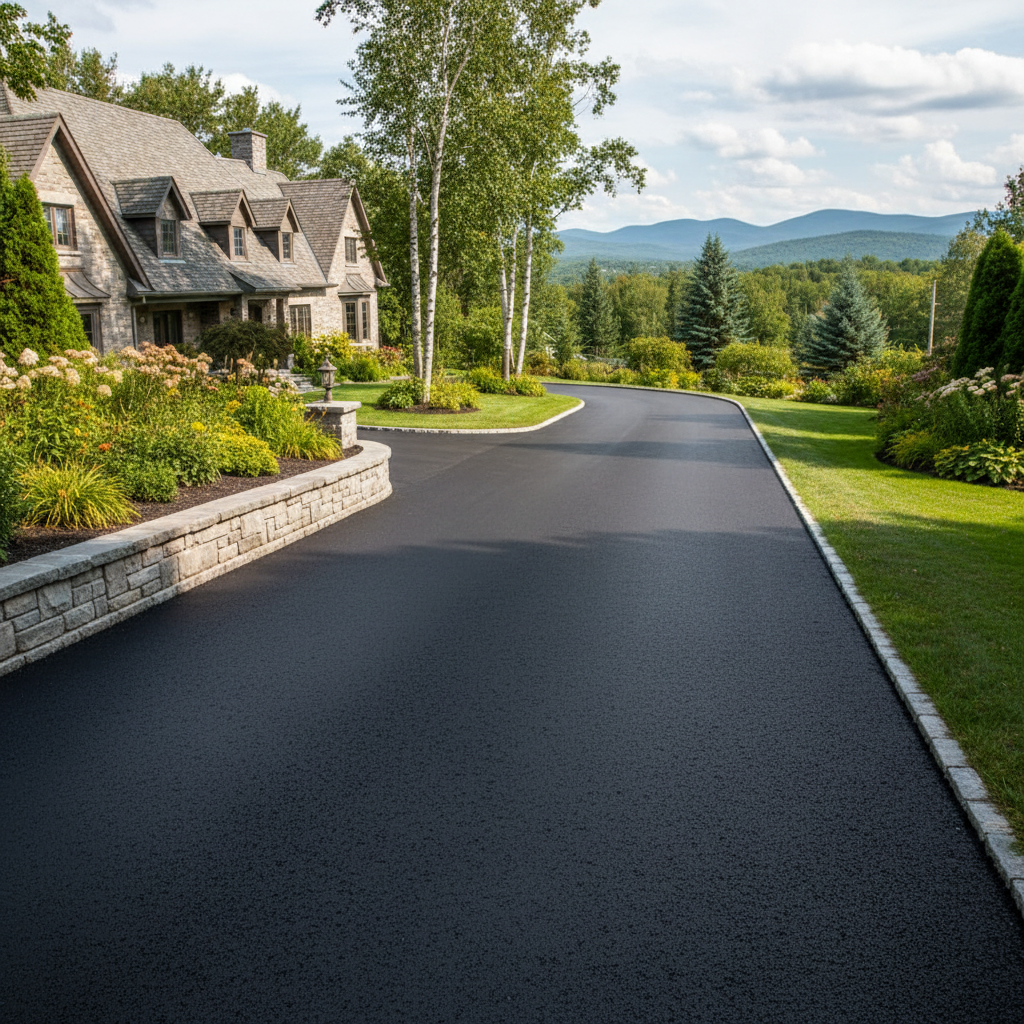
Driveway paving options and costs in Deep River
Deep River homeowners usually face the same decision—whether to pave with asphalt, install interlocking pavers, or build a concrete driveway. In Deep River, most homes are single-detached (75.1% of dwellings), and a large share of households own their homes (79.9% of households are homeowner households per the Statistics Canada, 2021 Census), so private-driveway projects are a common upgrade.
In the Kingston–Pembroke economic region, pricing is strongly influenced by frost penetration and freeze–thaw cycling. Frost penetration is commonly around 4 feet (about 1.2 m) in much of Eastern Ontario, and contractors typically design and compact a deeper granular base to reduce heaving and cracking. That means excavation and imported aggregate are often some of the largest line items, and the paving window is tighter because hot-mix asphalt needs air temperatures above about 10 °C. When spring is wet and shoulder seasons are long, scheduling demand can tighten up and push pricing toward the higher end of local ranges.
Where it’s especially in demand is along the older, mature residential pockets near the downtown core and the flatter streets that see frequent plowing passes—driveways there tend to be wider and exposed to repeated snow removal impacts. As a result, contractors often prioritize durable base construction and proper drainage detailing before surface work.
Use the comparison table below as a budgeting starting point for Deep River, then we can dial in a more exact figure based on your driveway size, base condition, and site access.
| Material |
Lifespan |
Maintenance |
Best For |
Price per sq ft |
| Asphalt (new installation, proper base) |
15–25 years |
Seal coating every 3–5 years |
Good value with strong performance when drainage and base are correct |
$4.75–$8.00 |
| Asphalt (overlay on existing gravel base) |
10–20 years |
Monitor settlement; seal as needed |
Upgrading a driveway where the base is still serviceable after prep |
$3.25–$6.50 |
| Interlocking concrete pavers |
25–40 years |
Occasional re-leveling of limited sections |
Curb appeal and repairability without replacing the whole driveway |
$7.50–$13.50 |
| Poured concrete (broom finish) |
25–35 years |
Sealer optional; manage de-icing |
A clean, long-lasting surface with straightforward maintenance |
$8.00–$14.50 |
| Exposed aggregate concrete |
25–35 years |
Sealer typically recommended; keep salt off the surface |
Higher slip resistance and a textured finish |
$10.00–$17.50 |
| Gravel / crushed stone (budget option) |
3–10 years (varies by traffic and maintenance) |
Top up 1–2 times per year in heavy use areas |
Low initial cost while you plan future resurfacing |
$2.00–$4.50 |
Prices are estimates only and vary by project scope, site access and material selection.
What affects the price of paving in Deep River
In Deep River and across the Kingston–Pembroke economic region, two quotes for what looks like the “same driveway” can differ by 30–50% once you account for frost-depth-based base thickness, drainage corrections, and excavation volume. Even within Ontario, contractor availability and hauling distances affect labour and aggregate costs—so a rural site with a long pull from the road can come in higher than a nearer, easier-access neighbourhood.
Frost line depth and freeze–thaw cycles are decisive. In this region, contractors commonly plan for frost influence around 4 feet (≈1.2 m). That typically means a thicker, well-compacted granular base than you’d expect in milder climates. If the base isn’t built to suit, the driveway can heave or crack—then you’re paying for repairs sooner. To keep asphalt performing in winter, the mix design also matters: asphalt needs to meet freeze–thaw performance expectations, and higher-spec mixes generally cost more.
The paving season also drives cost. Hot-mix asphalt placement is usually timed for days with air temperatures above 10 °C, and colder nights or wet spring conditions can delay work. In a shorter window, demand concentrates, which tightens schedules and often pushes pricing toward the mid-to-upper ranges—commonly aligning new asphalt driveway paving with the local band of $4,500–$9,000 depending on base work.
Concrete pricing can move similarly. For example, a driveway built on older subgrade (common in homes built before 1981—84.5% of homes in Deep River per the Statistics Canada, 2021 Census) may require additional subgrade stabilization before a $7,000–$15,000 concrete pour can perform. On the flip side, a straightforward site with good existing drainage may keep costs closer to the lower end because less excavation is required.
| Price Factor |
Why It Matters |
Cost Impact |
| Driveway area in sq ft |
Most materials and labour scale directly with square footage |
Often the biggest variable (commonly 50–70% of total cost) |
| Base depth required |
Frost line dictates granular thickness to prevent heaving and cracking |
Deeper base can add substantial excavation and imported aggregate costs |
| Grading and drainage work |
Proper slope, ditching, swales, and sometimes French drains reduce water saturation |
Can materially increase cost, especially on clay pockets or low spots |
| Tear-out of existing surface |
Concrete breaking/hauling and asphalt removal add labour and disposal fees |
Often a major add-on when full removal is required |
| Edge restraints and curbing |
Stabilizes pavers and prevents lateral movement/spread under plow impacts |
Increases materials and formwork, but protects the finish |
| Sealing requirement |
Asphalt performance depends on sealing after initial cure |
Adds future cost of routine maintenance (plan every 3–5 years) |
| Site access |
Narrow lanes slow equipment and increase setup time |
Can raise labour costs and affect how quickly crews can stage materials |
| Asphalt mix specifications |
Freeze-thaw-rated mixes help durability under Deep River winters |
Higher-spec mix may increase unit cost |
Permits & regulations in Ontario
For a homeowner in Deep River, the permitting picture is usually straightforward when you’re working entirely within your own property limits. In Ontario, paving a private driveway within your own property typically does not require a building permit. However, work that touches the municipal “right-of-way” generally does require municipal approval. That includes new or altered curb cuts, changes to the boulevard, modifications to storm drainage patterns, and any work that affects how water flows across the road allowance.
Some areas also use lot-grading bylaws that can restrict how close hard surfaces can come to property lines and may influence where you can place swales, catch basins, or certain drainage features. Because those rules can vary by municipality, the safest step is to confirm in writing with the City/municipal clerk or engineering department before excavation if you’re changing drainage or grading at/near the road.
Step-by-step verification is where homeowners protect themselves:
- Ask the contractor for their Ontario business details and licence information (if applicable to their scope) and confirm it through the relevant online registry.
- Request a current certificate of insurance (general liability) showing your project address as applicable.
- Confirm worker coverage via WSIB/WCB documentation—don’t rely on verbal assurances.
- Have them show a clearance letter or proof of coverage status, where applicable.
- Keep the paperwork with your signed contract and specs.
Asphalt vs pavers vs concrete for Deep River driveways
In Deep River’s freeze–thaw climate, asphalt, interlocking pavers, and concrete can all work—but they shine under different priorities. Asphalt is usually the lowest upfront option and can look clean and dark for years, but it needs sealing every 3–5 years to slow oxidation and surface raveling. In the Kingston–Pembroke region, asphalt also depends heavily on base quality because frost influence around 4 feet (≈1.2 m) can telegraph through weak or wet subgrade.
Interlocking concrete pavers cost more upfront (often aligning with $6,500–$14,000 for many driveway sizes), but they offer excellent curb appeal and a repair advantage: if a utility trench ever gets opened, pavers can be lifted, repaired, and reset without replacing the whole driveway. That repairability matters in older housing stock—84.5% of homes in Deep River were built before 1981 (Statistics Canada, 2021 Census), and older neighbourhoods often see more service work.
Poured concrete is mid-range in overall cost, typically around $7,000–$15,000, yet it can still crack under freeze–thaw if not properly designed. The key is air-entrainment, correct base preparation, and contraction joint planning—plus careful de-icing practices. Poured concrete can hold up well under plowing when built correctly, but heavy salt exposure can accelerate surface wear.
A realistic example: if your driveway is straightforward and drainage is already good, an asphalt install may land closer to the lower end of the $4,500–$9,000 band and be a strong value. But if your driveway is prone to settlement or you want the option to replace sections later, pavers can be worth the premium because you’re reducing future “whole-surface” replacement risk.
| Material |
Frost Resistance |
Curb Appeal |
Repair Method |
Lifespan |
Price Band |
| Asphalt (sealed regularly) |
Good when base and drainage are engineered for frost |
Moderate to high (clean, uniform black finish) |
Mill/patch localized areas; re-lift if needed |
15–25 years |
$4,500–$9,000 |
| Interlocking concrete pavers |
Excellent when installed over a stable, compacted base |
High (variety of colours/patterns) |
Lift and replace single paver sections |
25–40 years |
$6,500–$14,000 |
| Poured concrete (air-entrained) |
Good with air-entrainment, joints, and drainage |
Moderate (clean, solid appearance) |
Crack repair/patching for small areas |
25–35 years |
$7,000–$15,000 |
| Exposed aggregate concrete |
Good with proper mix design and base |
High (textured, decorative look) |
Targeted patching; seamless replacement is tougher |
25–35 years |
$9,000–$17,000 |
| Permeable pavers (drainage grid) |
Good with correct sub-base design and underdrain |
High (modern drainage-friendly look) |
Replace sections; keep base free of fine clogging |
25–40 years |
$8,000–$16,500 |
| Chip seal / tar-and-chip |
Fair to good; dependent on base and maintenance |
Low to moderate (more “utility” look) |
Spot repairs or re-seal cycles |
8–15 years |
$4,000–$7,500 |
How to choose a paving contractor in Deep River
Choosing the right contractor in Deep River is mostly about verification and clarity. Start by confirming Ontario coverage details: ask for their liability insurance certificate (general liability) and current WSIB/WCB coverage information for their workers. How to check: (1) read the certificate for limits and validity dates, (2) ensure the address is covered where applicable, and (3) confirm coverage status documents match the time of your project. For licensing and registrations, ask for their business details and confirm using the relevant online registry when available for their scope.
Next, get 2–3 itemised written quotes that break down labour and materials. Avoid “lump sum” only—ask for line items like excavation, hauling/disposal, base granular type and thickness, compaction passes, asphalt thickness and mix type (freeze-thaw rated where applicable), paver bedding sand, edge restraints, and drainage adjustments. Also ask what’s excluded: permit fees (if any), utility locating, restoration of grass/seed, and whether tear-out disposal is included.
Warranty matters. Look for a clear workmanship warranty length (often tied to base prep and installation methods), product/manufacturer warranty details, and whether coverage is transferable if you sell the home. Payment schedules should be conservative: never pay more than 10–15% upfront, and hold back a portion until completion and punch-list items are finished. Finally, insist on a start date and a completion estimate in writing—spring weather and the short hot-mix asphalt window can shift schedules.
- Request proof of general liability insurance with valid dates.
- Confirm WSIB/WCB coverage for all crew working onsite.
- Verify the company’s business identity and contact information.
- Ask for an itemised scope: excavation, base, drainage, surface, and restraints.
- Confirm base thickness targets for frost protection and compaction requirements.
- Include utility locate responsibility (Ontario One Call process) in the scope.
- Clarify disposal/hauling for existing asphalt or concrete.
- Specify slope targets and drainage method (ditching, swales, French drains if needed).
- For asphalt: confirm seal coat timing and who schedules/handles it (or include it).
- For pavers: confirm edge restraints and the bedding/compaction procedure.
- Ask about warranty length, exclusions, and whether it’s in writing.
- Sign a contract that sets payment milestones and a completion date estimate.
Red flags I commonly see in Deep River include: quotes that don’t mention base thickness or compaction, contractors who won’t provide insurance/WSIB/WCB paperwork, “too good to be true” pricing with no tear-out plan, vague warranty language, and a payment request that exceeds 10–15% upfront without a detailed schedule.
Frequently asked questions — paving in Deep River
How do I prepare for a paving project?
Preparation in Deep River starts with clearing access: move vehicles, trailers, and stored items so equipment can work safely and efficiently. If you have low spots that pond after rain or melt, document them with photos—good contractors will use that to plan grading and drainage. Schedule utility locates through Ontario One Call before excavation, and confirm who is responsible in the contract. If you’re replacing existing asphalt or concrete, ask what the plan is for tear-out, hauling, and disposal, because that can change the final cost. Finally, protect landscaping (tree roots, beds, and lawns near edges). Since Kingston–Pembroke winters are tough on surfaces, insist on base design that suits frost influence—this is often what separates a driveway that lasts from one that fails early.
How do I compare paving quotes fairly?
Compare quotes line by line, not by the total. For fair comparison, ask for the same items in each quote: base granular type and depth, compaction method, drainage corrections (swales/French drains if needed), asphalt thickness and mix specs, or for pavers the bedding sand and edge restraints. Confirm whether tear-out and disposal are included; missing disposal costs are a common cause of surprise invoices. Also check if sealing is included or scheduled—new asphalt typically needs a seal coat after initial cure, which affects long-term cost. As a sanity check, driveway paving in this area commonly fits local bands like $4,500–$9,000 for asphalt and $6,500–$14,000 for interlocking pavers, but your numbers can move based on drainage work and access.
Can asphalt be laid in cold weather in Deep River?
In Deep River, cold weather is one of the biggest reasons projects shift. Hot-mix asphalt placement generally needs air temperatures above about 10 °C, and crews are cautious about wind chill and surface moisture. Laying too cold can lead to poor compaction, weak lift bonding, and early raveling—problems that show up in spring freeze–thaw cycles. If the forecast turns early, reputable contractors will delay or reschedule within the paving window rather than compromise quality. That’s also why Kingston–Pembroke demand can tighten during spring: the better weather days fill quickly. If you’re offered an “instant” asphalt install on very cold days, ask how they’re meeting temperature and curing requirements and what the plan is if conditions don’t comply.
What is a driveway apron and do I need one in Deep River?
A driveway apron is the transition area at the driveway entrance where the driveway surface meets the municipal road/boulevard area. Whether you need one depends on drainage, elevation changes, and the condition of the existing curb cut area. In Ontario, if you’re changing work within the municipal right-of-way—like altering curb cuts or storm drainage—municipal approval is usually required, and that scope can trigger apron-related requirements. Even when permits aren’t needed, an apron can improve performance by smoothing the approach, reducing ramped settlement, and helping plows and snow-clearing equipment manage the transition. For older homes (many in Deep River are built before 1981, Statistics Canada, 2021 Census), driveway entrances sometimes need grading corrections because the subgrade was never designed for today’s heavier plowing and vehicles.
How do I maintain my driveway through Deep River winters?
For Deep River winters, maintenance is mostly about controlling water and minimizing surface damage. For asphalt, plan for routine sealing—typically every 3–5 years—because sealing helps slow oxidation and surface breakdown under salt and sand. Use de-icing carefully: heavy salt use can accelerate surface wear, while sand is often safer for traction (though it can work into joints if you have pavers). After plowing, check for ruts, edge scouring, and pooled water; small drainage issues often become freeze–thaw problems. If you notice settlement or raised edges, address them early—repairs are usually cheaper than waiting for wide-area failure. For a repair budget reference, driveway sealing & repair commonly falls around $400–$1,800, depending on the problem size.
Is it worth sealing a new driveway right away in Deep River?
Usually, no—“right away” is often too soon. Asphalt needs time to cure so the sealant bonds properly; sealing too early can trap moisture and reduce adhesion, which can lead to premature peeling. In Deep River’s climate (wet spring shoulder seasons and freeze–thaw cycling), the best approach is to follow the contractor’s cure window and weather conditions. A typical plan is to schedule sealing after the initial cure period, then stay consistent with maintenance every 3–5 years rather than trying to do it once and forget it. If your contractor is proposing sealing immediately without discussing cure time, ask what product they’re using, when it can be applied based on temperatures and moisture, and whether it’s included in the quote. This small decision can protect a driveway that would otherwise trend toward earlier raveling.