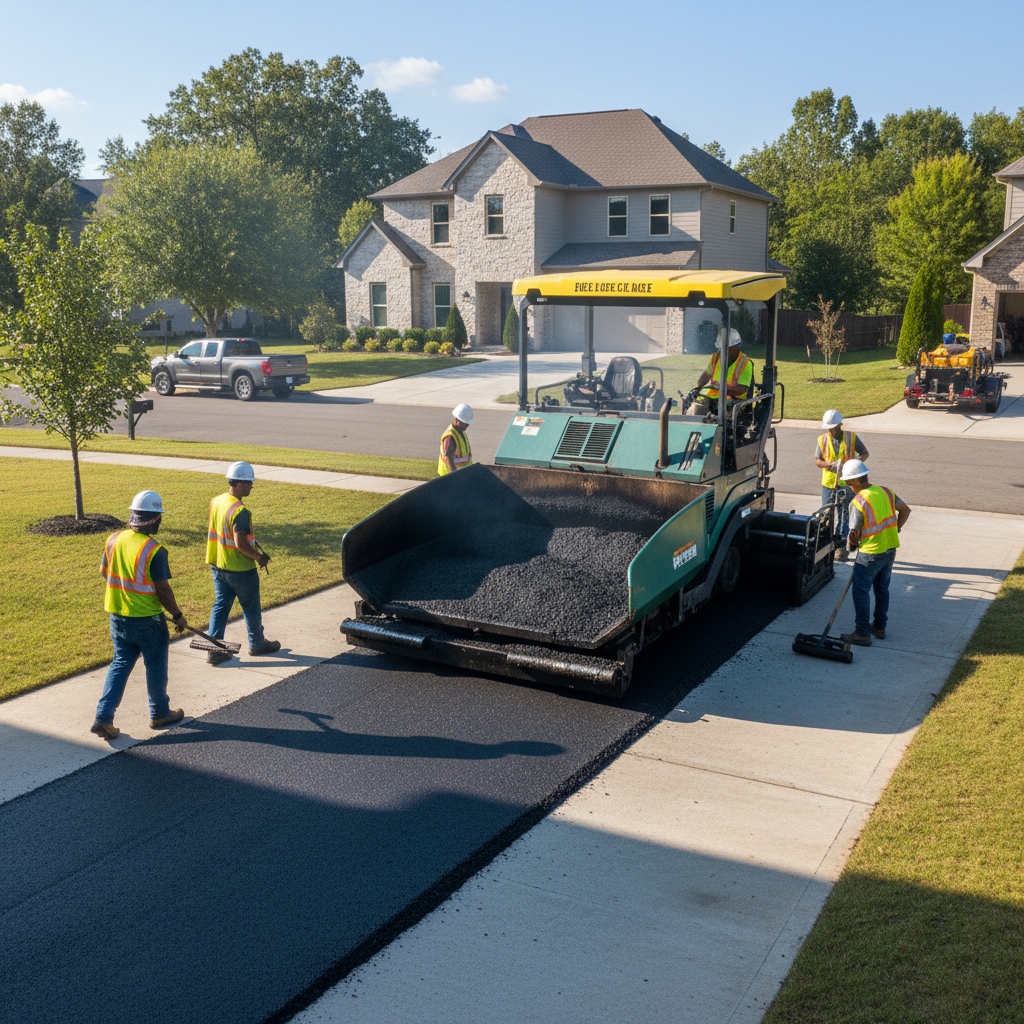
Driveway paving options and costs in Sioux Lookout
Sioux Lookout homeowners typically choose their driveway material based on how it will handle deep frost and freeze–thaw cycles, while fitting a practical budget. With 67.9% of dwellings in the area being single-detached homes (Statistics Canada, 2021 Census), most private driveways are tied to detached properties—meaning there’s steady local demand for new installs, overlays, and concrete work in neighbourhoods like Birchwood Drive and the downtown corridor around Second Avenue. In the Northwest, pavement costs are higher than southern Ontario because contractors have a shorter paving window (late spring through early fall) and must build stronger granular bases and drainage to control frost heave. That deeper frost protection mindset also affects material selection: asphalt needs freeze–thaw-rated mix design, and concrete should be air-entrained to reduce freeze damage.
Because Sioux Lookout’s housing stock includes a large share of homes built before 1981 (49.6%), many driveways have older base conditions, soft spots, or poor runoff direction. That’s why two people can get quotes for “the same driveway size” and still see different totals—one may only need a surface course, while another needs full tear-out, regrading, and upgraded base depth.
Below are realistic price ranges for common driveway options so you can compare quotes apples-to-apples, then we’ll break down what drives the biggest variations in cost.
| Material |
Lifespan |
Maintenance |
Best For |
Price per sq ft |
Price Range |
| Asphalt (new installation, proper base) |
10–20 years |
Seal coat every 3–5 years; patch as needed |
Best balance of price and performance when base and drainage are designed for frost |
$7–$14 |
$7–$14 |
| Asphalt (overlay on existing gravel base) |
8–15 years |
Seal coat every 3–5 years; more frequent patching if base is weak |
When the current gravel base is well-compacted and drainage is acceptable |
$7–$12 |
$7–$12 |
| Interlocking concrete pavers |
25–35 years |
Periodic joint sand top-ups; individual stone replacement if damaged |
Curb appeal and repairability; good choice where driveway edges are complex |
$18–$35 |
$18–$35 |
| Poured concrete (broom finish) |
20–30 years |
Caulk/seal joints as required; patch spalls early |
Low visual upkeep with a solid, well-supported base and proper jointing |
$14–$28 |
$14–$28 |
| Exposed aggregate concrete |
20–30 years |
Seal periodically; manage salt/ice with proper plowing technique |
Slip resistance and a decorative finish |
$16–$30 |
$16–$30 |
| Gravel / crushed stone (budget option) |
3–10 years |
Regrade and add top material every 1–3 years |
Short-term solution or remote access where paving timing is uncertain |
$5–$10 |
$5–$10 |
Prices are estimates only and vary by project scope, site access and material selection.
What affects the price of paving in Sioux Lookout
In Sioux Lookout and across the Northwest economic region, quotes for the same driveway can swing by 30–50% because the “hidden work” varies: subgrade condition, drainage, base depth, and how much tear-out is required. Even when the final surface looks similar, freeze–thaw performance depends on what’s underneath. Here, deep frost penetration and frequent freeze–thaw cycles push contractors to design a thicker, well-compacted granular base and to keep water moving away from the driveway. In practice, that often means base and excavation costs drive the total more than the surface material itself.
The paving season is also shorter in colder regions, and hot-mix asphalt typically needs warm air temperatures for consistent compaction—generally above about 10°C. When the window is tight, crews may schedule overtime or mobilize sooner, and that increases labour costs. Asphalt mix design must also be freeze–thaw rated, which can raise the asphalt cost side even before you count base work. That’s why you’ll commonly see asphalt budgeting in the Ontario Northwest range of roughly $7,XXX – $14,XXX per square foot equivalent (depending on thickness, base scope, and whether it’s a new install versus an overlay).
Concrete examples from local sites: a driveway poured over an uneven, older base with poor runoff direction will cost more because we have to regrade, add base, and improve drainage before placing concrete—often pushing the job into the higher $14,XXX – $28,XXX band. On the other hand, a newer detached home with a relatively stable base and clean edge line can sometimes keep costs closer to the lower end because we may only need surface corrections rather than full replacement.
| Price Factor |
Why It Matters |
Cost Impact |
| Driveway area in sq ft |
More square footage means more excavation, base, asphalt/concrete, and labour time |
Usually the biggest driver; small changes in dimensions can add up quickly |
| Base depth required |
Frost line depth determines how thick the compacted granular layers must be to prevent heaving |
Can materially change price; weak/soft subgrade often forces a deeper build-up |
| Grading and drainage work |
Slope direction and water control affect long-term cracking and rutting |
Extra excavation, regrading, and drainage adjustments add labour and materials |
| Tear-out of existing surface |
Removing old asphalt or concrete plus hauling/disposal costs time and equipment |
Often increases job cost significantly versus “overlay only” scenarios |
| Edge restraints and curbing |
Edges keep pavers from spreading and hold asphalt/concrete geometry |
Materials and extra forming/base prep can add notable cost |
| Sealing requirement |
Asphalt needs sealing after placement and periodically to protect from water and oxidation |
Not always included in “initial” pricing; planned maintenance affects true lifecycle cost |
| Site access |
Narrow approaches slow equipment movement and may require smaller equipment |
Higher labour hours and sometimes extra truck trips |
| Asphalt mix specifications |
Freeze–thaw rated mix design and binder choice can raise mix costs |
Typically pushes asphalt jobs toward the upper end when stricter specs are required |
Permits & regulations in Ontario
In Ontario, paving a private driveway within your own property usually does not require a building permit. However, work that affects the municipal right-of-way can require municipal approval. That includes new curb cuts, changes to the boulevard, modifications to the ditch line or storm drainage, or altering municipal drainage that impacts how water flows from public areas. Some municipalities also have lot-grading rules that restrict how close hard surfaces can be to property lines or ditches, especially where drainage direction could affect neighbouring lots.
Before excavation, always arrange utility locates through Ontario One Call. This step is non-negotiable even for “minor” work like saw-cutting and base excavation, because buried services can exist deeper than you expect. Then, if your project touches the boulevard or drainage, ask the municipality about any forms, inspections, or approvals needed.
To verify contractor compliance for Ontario homeowners in Sioux Lookout, use a simple checklist: (1) confirm the contractor’s business registration and trades/contracting status where applicable, (2) request a certificate of insurance for liability (with adequate coverage for driveway work), (3) confirm WSIB coverage/clearance for workers—ask for the clearance letter or equivalent proof—and (4) keep a signed contract with a defined scope and start/completion dates.
If a contractor can’t provide insurance and WSIB proof up front, treat that as a major warning sign.
Asphalt vs pavers vs concrete for Sioux Lookout driveways
For Sioux Lookout, the “best” driveway material is the one that survives deep frost, freeze–thaw cycles, and winter maintenance realities like plowing and salt/sand. Asphalt is usually the lowest upfront option and can look sharp when freshly placed, but it relies on consistent sealing to protect the binder and resist water infiltration. Interlocking concrete pavers cost more to install, yet they’re often the most forgiving for repairs because individual stones can be replaced without tearing up the whole driveway. Poured concrete falls mid-range and can last decades when properly air-entrained and jointed, but it’s more sensitive to incorrect base prep—if the base shifts or drainage is wrong, cracking can show up where water collects.
In Northwestern Ontario, frost protection design typically needs a thicker, well-compacted granular base to reduce heaving. That means all three options depend on excavation, grading, and drainage before the surface goes down. Where winter routine is heavy (regular plowing, mixed sand and salt), pavers often hold up extremely well at the surface because damaged units are replaceable. Asphalt, by comparison, typically performs best when sealed after installation and then resealed every 3–5 years. A real example: if an asphalt driveway quotes at the lower end of the local asphalt range, you might pay around $7,XXX – $14,XXX per square foot equivalent, while pavers commonly land around $18,XXX – $35,XXX. That extra investment is justified when you value curb appeal and want repairability instead of full-surface replacement after a section deteriorates.
| Material |
Frost Resistance |
Curb Appeal |
Repair Method |
Lifespan |
Price Band |
| Asphalt (sealed regularly) |
Good with proper base and freeze–thaw rated mix |
Moderate (clean and smooth, fewer design options) |
Remove/patch localized areas |
10–20 years |
$7,XXX – $14,XXX |
| Interlocking concrete pavers |
Excellent when installed on a well-prepared base with edge restraint |
High (colour/shape options) |
Replace individual pavers or sections |
25–35 years |
$18,XXX – $35,XXX |
| Poured concrete (air-entrained) |
Good to very good with air entrainment and correct base/jointing |
Moderate (clean lines; can be finished broom or decorative) |
Patch/repair spalls; joints may need maintenance |
20–30 years |
$14,XXX – $28,XXX |
| Exposed aggregate concrete |
Good with correct mix, base prep, and sealing |
High (decorative, textured look) |
Patch with matching mix; cosmetically more noticeable |
20–30 years |
$16,XXX – $30,XXX |
| Permeable pavers (drainage grid) |
Very good for water control when drainage is designed correctly |
High (functional and attractive) |
Remove/rebuild affected grid sections |
25+ years (design-dependent) |
$22,XXX – $45,XXX |
| Chip seal / tar-and-chip |
Moderate; can ravel without good base/drainage |
Low to moderate (texture varies) |
Spot rework and re-seal as it ages |
6–12 years |
$6,XXX – $10,XXX |
How to choose a paving contractor in Sioux Lookout
Choosing the right paving contractor is about verification and clarity, not just the lowest line on the estimate. In Ontario, ask for the contractor’s liability insurance certificate (so you’re protected if there’s damage on site), and request proof of WSIB coverage/clearance for workers. You should also be able to show up-to-date documentation on request—don’t accept vague statements like “we’re covered” without seeing the certificate or clearance letter.
Next, get 2–3 itemised, written quotes that break down labour and materials separately. Look for scope details: what’s included for tear-out, base depth, compaction testing, edge restraints, and drainage corrections. A proper quote should also say whether disposal is included (hauling and landfill fees), and whether permits/approvals are the homeowner’s responsibility or the contractor’s. In Sioux Lookout, if your driveway ties into boulevard drainage or needs work near the ditch line, make sure you understand who is handling municipal approval steps.
Warranty matters locally because freeze–thaw performance shows up over multiple seasons. Confirm the workmanship warranty length, what product/manufacturer warranty applies (if any), and whether it transfers if you sell the home. For payment schedule, never allow more than about 10–15% upfront; hold a portion until base prep, surface install, and any required cleanup/seasonal reinstatement are complete. Finally, request a written start date window and a completion estimate—late-spring scheduling pressure is real in Northwestern Ontario.
- Verify liability insurance certificate (coverage amount suitable for driveway work).
- Request WSIB clearance or proof of WSIB coverage for workers.
- Ask if they have a written base design for frost conditions (not “same as last time”).
- Confirm whether compaction testing is included and who supplies the documentation.
- Require itemised pricing: excavation, base material, labour, paving/concrete/pavers, restraints.
- Check whether tear-out and disposal are included (and how thick they plan to remove).
- Confirm drainage/grading scope: slope direction, ditch tie-in, and culvert protection.
- Ask what edge restraint is included (especially for pavers).
- For asphalt, confirm tack coat, asphalt thickness, and sealing expectations.
- Review warranty terms in writing, including exclusions and workmanship vs materials coverage.
- Confirm payment milestones (keep final holdback until the job is fully complete).
- Get start/completion dates in writing to avoid missed seasonal windows.
Common red flags in Sioux Lookout include: quoting without discussing base depth and drainage, refusing to provide insurance/WSIB proof, offering only a single “lump sum” with unclear exclusions, suggesting overlays when the base is clearly soft or pumping, and asking for large upfront payments (more than 10–15%) before any material is on site.
Frequently asked questions — paving in Sioux Lookout
How do I prepare for a paving project?
Start by clearing the driveway and any work area so equipment can access the site safely. In Sioux Lookout, snow storage and spring melt can also affect subgrade—so keep an eye on standing water and ask the contractor to evaluate base stability after thaw. Before excavation, ensure you have utility locates done through Ontario One Call and confirm where buried services are on your property. If your driveway ties into boulevard drainage or impacts a ditch line, ask the contractor whether municipal approval is needed as part of grading or storm drainage changes. Finally, gather photos of existing conditions (cracks, soft spots, rutting) and keep the contract scope handy so you can confirm what’s being repaired vs replaced.
How do I compare paving quotes fairly?
Compare quotes line-by-line, not by the bottom total alone. Make sure each quote includes the same scope for tear-out, disposal, base depth, drainage/grading, and edge restraints. Ask whether the driveway is being prepared as a full new base versus an overlay, because that’s where major price differences come from. For asphalt, confirm mix specifications and asphalt thickness, and whether sealing is included or listed as a recommended next step. In Sioux Lookout, it’s normal to see asphalt pricing broadly in the local range of about $7,XXX – $14,XXX per square foot equivalent depending on base work. For concrete options, check that both quotes match air-entrainment and finishing (broom vs decorative) so you’re comparing comparable durability.
Can asphalt be laid in cold weather in Sioux Lookout?
Asphalt placement in Sioux Lookout is strongly temperature-dependent. Hot-mix asphalt needs suitable air temperatures (commonly above roughly 10°C) and weather conditions that allow proper compaction. In late fall or early spring, crews may only be able to do limited work or must delay until conditions support quality. If a contractor tries to push paving in clearly cold weather, you risk poor compaction and earlier surface deterioration—especially with freeze–thaw cycles. That’s why schedules tighten in Northwestern Ontario and why mobilization costs can be higher during the short season. If you’re considering a spring install, ask about forecast planning and whether they’ll monitor weather/temperature compliance the day of placement.
What is a driveway apron and do I need one in Sioux Lookout?
A driveway apron is the transition area where your driveway meets the street, curb, or boulevard—often shaped and built so water doesn’t channel toward the property foundation and so vehicles don’t create edge damage at the connection. In Sioux Lookout, whether you need one depends on how your current access is built and whether you’re changing grades or drainage near the boulevard/ditch line. If the work involves a curb cut, boulevard adjustment, or storm drainage changes in the municipal right-of-way, municipal approval may be required. Your contractor should explain whether an apron is included in the grading plan, how it’s tied into drainage, and how it protects the edges of the pavement where plows and vehicle turns put stress.
How do I maintain my driveway through Sioux Lookout winters?
Maintenance is mostly about protecting the surface and managing water/ice. For asphalt, plow carefully to avoid scraping the surface—don’t let metal edges chew the asphalt lip. Use sand for traction when possible and avoid aggressive salt overuse where it’s not needed, because repeated chemical exposure can accelerate surface aging. For concrete, plowing technique matters too: keep blades set to avoid chipping the surface and joints. If you get minor spalls or joint separation, address them early so water doesn’t infiltrate underneath. For all materials, keep an eye on drainage: if meltwater ponds near the edge, that’s a sign the slope may be off and could lead to frost heave. Regular sealing schedules (where applicable) also support winter durability.
Is it worth sealing a new driveway right away in Sioux Lookout?
For asphalt, sealing is usually worth it, but timing must be right. Typically, asphalt needs time after installation to cure before sealing so moisture and volatiles can dissipate; sealing too early can trap issues under the surface. For Sioux Lookout, where freeze–thaw cycles and moisture drive deterioration, a good seal helps slow water intrusion and surface breakdown, extending the service life. As a planning reference, many homeowners budget asphalt sealing as part of lifecycle maintenance every 3–5 years after the initial period. If your contractor offers sealing, ask when they recommend applying it based on weather and cure time, and confirm whether the quote includes that first required seal or lists it as a separate option.