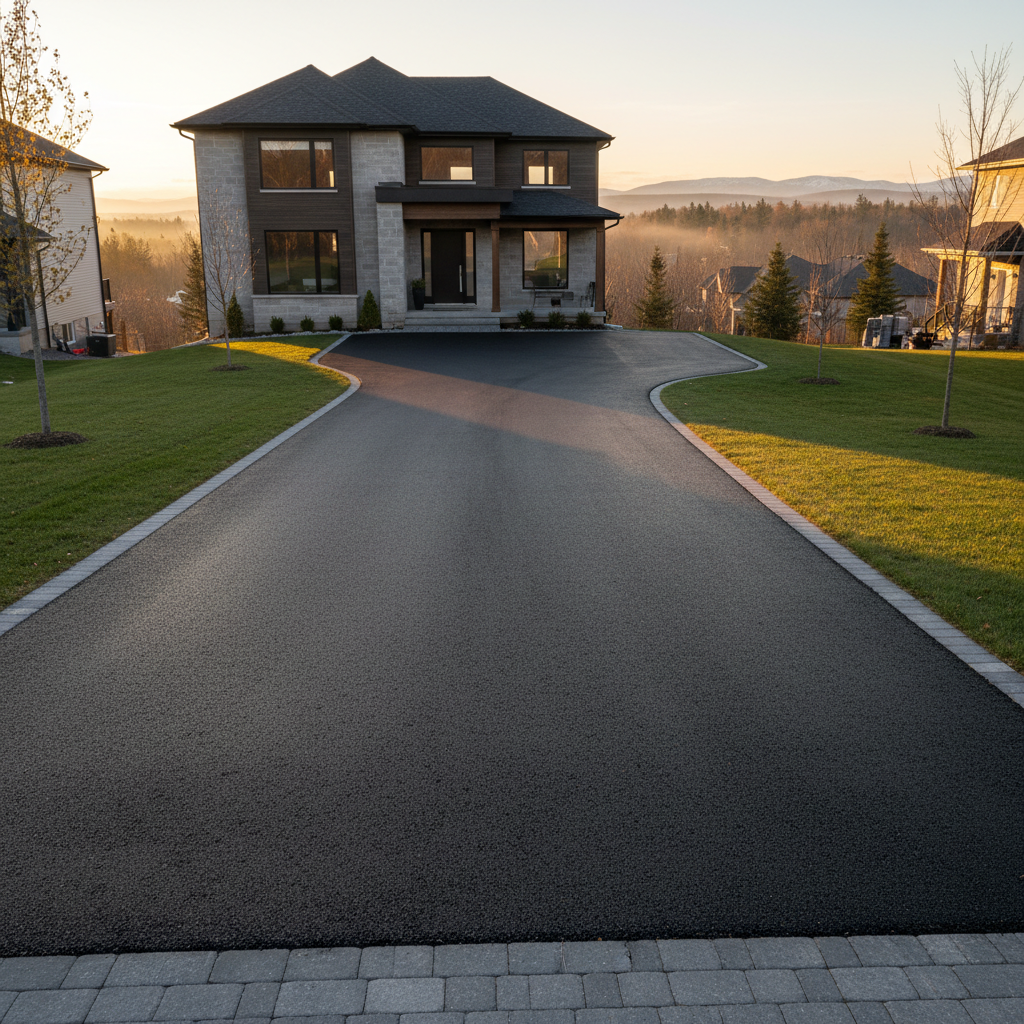
Driveway paving options and costs in Willowdale
Driveway paving in Willowdale is typically a mix of asphalt, interlocking pavers, and concrete, with decisions driven by winter performance and curb appeal. With Willowdale sitting inside the Toronto economic region, local homeowners are also making choices in a neighbourhood profile shaped by a large, long-established housing base—there are 79,440 residents in the area (Statistics Canada, 2021 Census), which translates into steady demand for resurfacing and “refresh” projects each year. A lot of driveway work here services detached-home properties and older lots where the base and drainage may not have been designed for modern freeze–thaw stress.
Toronto’s cold-season ground movement is a major reason quotes can swing. Frost depth in this region is commonly around 3–4 feet, and repeated freeze–thaw cycles in late fall, winter, and early spring push water up and under surfaces if drainage is imperfect. That means contractors typically recommend a deeper, well-compacted granular base, plus proper slope and sub-drain where needed—often with more excavation and labour than homeowners expect. Because the effective paving season is concentrated from late spring through early fall, prime dates can fill quickly in areas like Newtonbrook and nearby parts of the Thornhill/Willowdale corridor, which can also affect scheduling and pricing.
Below are realistic typical ranges for Willowdale projects. Use them as a starting point before comparing itemised proposals in your street-level conditions and access constraints.
| Material |
Lifespan |
Maintenance |
Best For |
Price per sq ft |
Price Range |
| Asphalt (new installation, proper base) |
15–25 years |
Seal every 3–5 years, minor crack patching |
Best value where base/drainage are engineered for frost |
$6–$12 |
$3,500–$8,000 |
| Asphalt (overlay on existing gravel base) |
8–15 years |
Seal every 3–5 years; watch for settlement |
When removal is limited and the base is confirmed solid |
$5.50–$10 |
$3,200–$7,000 |
| Interlocking concrete pavers |
25–35 years |
Re-screed and replace individual stones as needed |
Premium curb appeal and easiest spot repairs |
$10–$18 |
$9,000–$20,000 |
| Poured concrete (broom finish) |
20–30 years (with correct mix + drainage) |
Joint maintenance; sealant optional depending on de-icing use |
Clean, low-profile look with durable all-season traction |
$8–$14 |
$6,000–$15,000 |
| Exposed aggregate concrete |
20–30 years |
Seal only if specified; spot patching for chips |
Textured traction and “higher-end” driveway look |
$10–$16 |
$7,500–$16,500 |
| Gravel / crushed stone (budget option) |
3–10 years |
Top up 1–2 times; re-grade periodically |
Shortest-term budget solution with good drainage |
$4–$7 |
$2,000–$4,500 |
Prices are estimates only and vary by project scope, site access and material selection.
What affects the price of paving in Willowdale
Even when two homeowners describe the “same” driveway, Willowdale and the wider Toronto market can still produce 30–50% quote differences. The big reason is that the cheaper option often assumes less excavation, thinner base, or a driveway that drains well already. In practice, Toronto-area frost depth (roughly 3–4 feet) and frequent freeze–thaw cycles make base and drainage engineering decisive. When water is allowed to sit under a slab or asphalt, it freezes, expands, and heaves—leading to cracking, settlement, and edge failures that force earlier repairs.
On many Ontario projects, the granular base thickness needs to be built up and compacted properly (commonly in the 6–12 inch range depending on soil conditions and existing grade). That requirement can directly affect pricing versus milder climates. The paving season is also effectively compressed into late spring through early fall because hot-mix asphalt placement needs favourable air/soil temperatures (often above about 10°C). When contractors are busiest—particularly in high-demand zones like the Bayview/Sheppard vicinity—prime-date scheduling can add labour cost and overhead, and asphalt may be higher to secure crews and delivery slots.
Concrete costs can also rise with local conditions. For example: (1) older driveways with shallow or poorly draining soils may require deeper subgrade corrections and more excavation before concrete can be poured; (2) sites with heavy salt exposure from winter maintenance can increase the need for correct air-entrainment and joint planning; and (3) driveways built on uneven grades can trigger additional grading and forms. If you’re comparing an asphalt driveway at about $3,500–$8,000 to interlocking pavers at around $9,000–$20,000, the price jump is usually justified only when the base is engineered well enough to prevent settlement and when you want the long-term “repair one section” benefit.
| Price Factor |
Why It Matters |
Cost Impact |
| Driveway area in sq ft |
Most material and labour scale directly with surface area |
High (often the biggest difference between quotes) |
| Base depth required |
Frost line determines granular thickness needed to prevent heaving |
High (deep excavation + more aggregate) |
| Grading and drainage work |
Proper slope and drainage reduce water infiltration |
Medium to High (digging, hauling, possible sub-drain) |
| Tear-out of existing surface |
Breaking/hauling concrete or old asphalt adds time and disposal fees |
Medium (can add major labour day cost) |
| Edge restraints and curbing |
Prevents paver spread and maintains clean asphalt/concrete edges |
Medium (often underestimated by homeowners) |
| Sealing requirement |
Asphalt typically needs sealing after 6–12 months to manage water intrusion |
Low to Medium (small yearly cost, big performance benefit) |
| Site access |
Narrow lanes slow equipment and can require smaller equipment + more labour |
Medium (crew time increases) |
| Asphalt mix specifications |
Freeze–thaw-rated mixes can cost more but resist cracking and moisture damage |
Medium (material premium) |
Permits & regulations in Ontario
In Ontario, paving a private driveway within your own property usually doesn’t require a building permit when it’s replacing an existing hard surface and staying within your lot boundaries. However, if your driveway work touches municipal infrastructure or changes how stormwater flows, you may need municipal approval. For Willowdale homeowners, the common “permit/approval” trigger is any work in the municipal right-of-way—such as adding or changing a curb cut, modifying the boulevard area, altering catch basins, changing storm drainage patterns, or adjusting ditch/municipal grading where the city is responsible.
Step one for verification is to ask the contractor to confirm whether their scope includes any right-of-way work or storm drainage changes. If it does, request the municipality approval/permit process details before they schedule excavation. Step two is utility locates: always call Ontario One Call before digging so utilities are marked on-site; reputable paving crews won’t proceed without confirmed locates.
Step three is contractor credibility. For an Ontario job, verify the contractor’s licence (where applicable through the appropriate Ontario registry or trade designation they operate under), then confirm liability insurance that covers your property and job site. Ask for proof of WSIB/WCB coverage so you’re not exposed if a worker is injured. Finally, confirm the contractor can provide a clearance letter/coverage status (or equivalent proof) and that it matches the project address and job dates. If they won’t share documentation upfront, that’s a major caution sign.
Asphalt vs pavers vs concrete for Willowdale driveways
For Willowdale driveways, the “best” material is the one that’s matched to freeze–thaw performance, drainage, and how you maintain winter traction. In this climate zone, asphalt usually wins on upfront cost, but it works best when the base is engineered and when you seal it on schedule—typically every 3–5 years—to slow water infiltration. Interlocking concrete pavers cost more at the start, yet they handle Toronto’s movement better because individual units can be lifted and reset if the sub-base ever settles. Poured concrete sits in the middle price-wise, but it needs correct mix design, good joint spacing, and drainage planning to manage cracking risk during freeze–thaw cycles and repeated de-icing.
Base preparation is the common thread: Toronto-area frost depth (often 3–4 feet) means shallow foundations are a recipe for heaving and patch failures. Where homeowners see the biggest performance difference is drainage. If your driveway drains toward the foundation or pools near the garage edge, any finish system will struggle—especially in early spring when meltwater meets still-frozen subgrade.
Here’s a practical pricing example. If you’re comparing a new asphalt driveway budget around $3,500–$8,000 to interlocking pavers at roughly $9,000–$20,000, the added cost is justified when you want curb appeal and the ability to repair a section without replacing the entire driveway. Asphalt can be the better choice when you’re prioritising value and you’re comfortable budgeting for sealing. Concrete can be a strong option where you want a smooth, permanent surface, but only if the contractor designs joints and air-entrainment for freeze–thaw and salt exposure.
| Material |
Frost Resistance |
Curb Appeal |
Repair Method |
Lifespan |
Price Band |
| Asphalt (sealed regularly) |
Good to very good with proper base and drainage |
Medium (smooth black finish) |
Patch and re-seal localized areas |
15–25 years |
$3,500–$8,000 |
| Interlocking concrete pavers |
Very good; modular system tolerates movement |
High (variety of colours/patterns) |
Remove and replace individual pavers |
25–35 years |
$9,000–$20,000 |
| Poured concrete (air-entrained) |
Good when joints and drainage are engineered |
Medium to high (clean, solid look) |
Cut-out and patch or replace slab sections |
20–30 years |
$6,000–$15,000 |
| Exposed aggregate concrete |
Good with correct mix and curing |
Very high (textured premium finish) |
Spot patch for chips; slab replacement if severe |
20–30 years |
$7,500–$16,500 |
| Permeable pavers (drainage grid) |
Very good when detailed properly for base layers |
High (clean look with drainage advantage) |
Replace pavers and maintain drainage layers |
20–30 years |
$10,000–$22,000 |
| Chip seal / tar-and-chip |
Moderate (performance varies with base and maintenance) |
Low to medium (texture, colour options limited) |
Re-spray/re-surface; rework when aggregate loosens |
8–12 years |
$2,800–$6,500 |
How to choose a paving contractor in Willowdale
Choosing the right paving contractor in Willowdale comes down to documentation, clarity, and how they explain the base. First, verify Ontario licensing (where applicable for their trade), then confirm liability insurance. Ask for an up-to-date certificate of insurance showing the contractor’s company name and coverage that applies to your address. Next, confirm WSIB coverage (or equivalent coverage status documentation) so you’re protected if a worker is injured on your site. Many homeowners miss this step until something goes wrong—so request proof early, before you sign anything.
Second, get 2–3 itemised written quotes. You want breakdowns for labour and materials: excavation/disposal, base course and compaction, geotextile if used, asphalt or concrete quantity, forms/edge restraints, and final finishing. Avoid “lump sum only” proposals with vague allowances. Read the exclusions: is permit pull included if right-of-way work is involved? Is disposal included for removed concrete/asphalt? Are any taxes or freight included?
Third, review warranty details. Ask about workmanship warranty length and what it covers (e.g., settlement, premature cracking, edge failures). Also ask about product/manufacturer warranty for asphalt mix, interlock components, or concrete materials—then confirm whether it’s transferable to you as the homeowner.
Fourth, talk payment schedule. A responsible contractor typically keeps upfront payment around 10–15%. Hold back a portion until the job is fully complete and touch-ups are done, especially after any final seal cure period. Lastly, insist on a start date and a completion estimate in writing; in Toronto’s compressed late-spring to early-fall season, crews can shift, so the schedule should be documented.
- Request licence/trade documentation and verify it matches the legal company name.
- Confirm liability insurance with a certificate listing your job site address.
- Verify WSIB/WCB coverage proof before work starts; don’t accept “we’ll get it later.”
- Get 2–3 itemised quotes with separate lines for excavation, base, and finishing.
- Ask how they will protect your lawn/landscape during excavation and compaction.
- Confirm compaction method and base layers (and request thickness targets in writing).
- Verify drainage plan: slope direction, daylights, and whether sub-drain is needed.
- Ask for edge restraint design (curbing or proper restraint) for pavers and concrete.
- Check disposal inclusions for removed asphalt/concrete and spoiled soil.
- For asphalt: confirm that sealing is scheduled (or how you’ll budget for it).
- Review warranty terms in plain language, including transferability and exclusions.
- Set payment milestones: keep upfront around 10–15% and retain a holdback until completion.
In Willowdale, four common red flags are: (1) they won’t discuss base depth and drainage specifics; (2) they quote a low price but exclude tear-out or haul-away; (3) they pressure you to pay most of the amount upfront; and (4) they provide no insurance/coverage documentation or a vague warranty letter.
Frequently asked questions — paving in Willowdale
What is a chip seal driveway and is it suited to Willowdale?
Chip seal (also called tar-and-chip) is a layered surface where asphalt emulsion/tar is sprayed and aggregate is spread and rolled into place. In Willowdale and the Toronto area, it can work on certain low-traffic lanes or as a short-to-mid-term driveway finish, but it’s not the “set it and forget it” choice many homeowners want. Toronto’s freeze–thaw cycles and winter sanding/salting can loosen aggregate if the base isn’t engineered and compacted well. If your goal is a long service life with consistent winter performance, asphalt with proper base and sealing or interlocking pavers tend to hold up better. If chip seal is proposed, ask specifically about base construction, grade control, and how they manage water so it doesn’t sit under the membrane.
How much does driveway crack repair cost in Willowdale?
Crack repair pricing depends on how many cracks there are, how wide/deep they are, and whether they’re just sealing or require cut-and-repair. In Willowdale, small asphalt crack sealing jobs are often priced as a minimum call-out plus material, while larger failures typically mean patching areas after a partial tear-out. As a planning reference, homeowners usually see minor repair work land in the same general “sealing & repair” range of $300–$1,500 when it’s limited to surface-level cracks. If the driveway is heaving due to drainage or base failure, the true fix is more than sealing—base correction and resurfacing may be needed, which is why two quotes can differ by thousands even when the visible cracks look similar.
What base thickness do I need for pavers in Willowdale?
For pavers in Willowdale, base thickness isn’t one-size-fits-all; it depends on soil conditions, frost exposure, and whether the existing subgrade is stable. Because Toronto’s frost depth is commonly around 3–4 feet, contractors usually build a properly compacted granular base (often in the 6–12 inch range in Ontario) plus bedding sand and correct geotextile where needed. The key is that the base must manage water—drainage and slope—so freeze–thaw doesn’t pump moisture upward and move the paver edge. If your current driveway settles at the garage threshold, expect additional base and grading, not just re-laying pavers. Ask your contractor to state proposed layer thicknesses in writing and explain how they’ll verify compaction.
How do I get the most accurate paving quote in Willowdale?
To get the most accurate paving quote in Willowdale, you need apples-to-apples scope. Start by measuring the driveway area (length x width) and provide photos, then request a site visit so they can assess base stability and drainage. Ask for an itemised estimate that breaks out excavation and disposal, granular base type and thickness, compaction process, edging/restraints, and the final surfacing material. Make sure tear-out scope is clear: will they remove the full existing asphalt/concrete or only patch? Confirm whether disposal and any right-of-way impacts (like curb cut changes) require municipal approval and whether that’s included. For asphalt, ask about freeze–thaw-rated mix and sealing timing after installation. Better quotes typically cost a little more to prepare, but they prevent surprises.
How much does it cost to pave a driveway in Willowdale?
Typical driveway paving costs in Willowdale vary most by surface area, base excavation, and whether the existing surface can stay in place. For asphalt driveway paving, many Ontario homeowners land in the range of $3,500–$8,000 for a properly built installation with proper base and drainage. Concrete options usually sit higher depending on finish: poured concrete commonly tracks around $6,000–$15,000, while interlocking pavers typically start higher due to materials, labour, and restraint systems, commonly in the $9,000–$20,000 range. If your driveway requires major tear-out and drainage correction due to pooling, expect the higher end of those bands.
Asphalt vs interlocking pavers vs concrete — which is best in Willowdale?
In Willowdale, the “best” choice depends on your priorities and how the base/dainage will be designed for freeze–thaw. Asphalt is usually best when you want the lowest upfront cost and you’re comfortable budgeting for sealing every few years; done right, it can last 15–25 years, with asphalt driveway paving commonly around $3,500–$8,000. Interlocking concrete pavers are best when curb appeal and easier section repairs matter most, especially if you anticipate future adjustments; they’re commonly around $9,000–$20,000. Poured concrete can be a strong mid-range option if it’s air-entrained, properly jointed, and built on a stable, drained base; it often trends around $6,000–$15,000. For any material, poor drainage is what usually causes premature failure in Ontario.