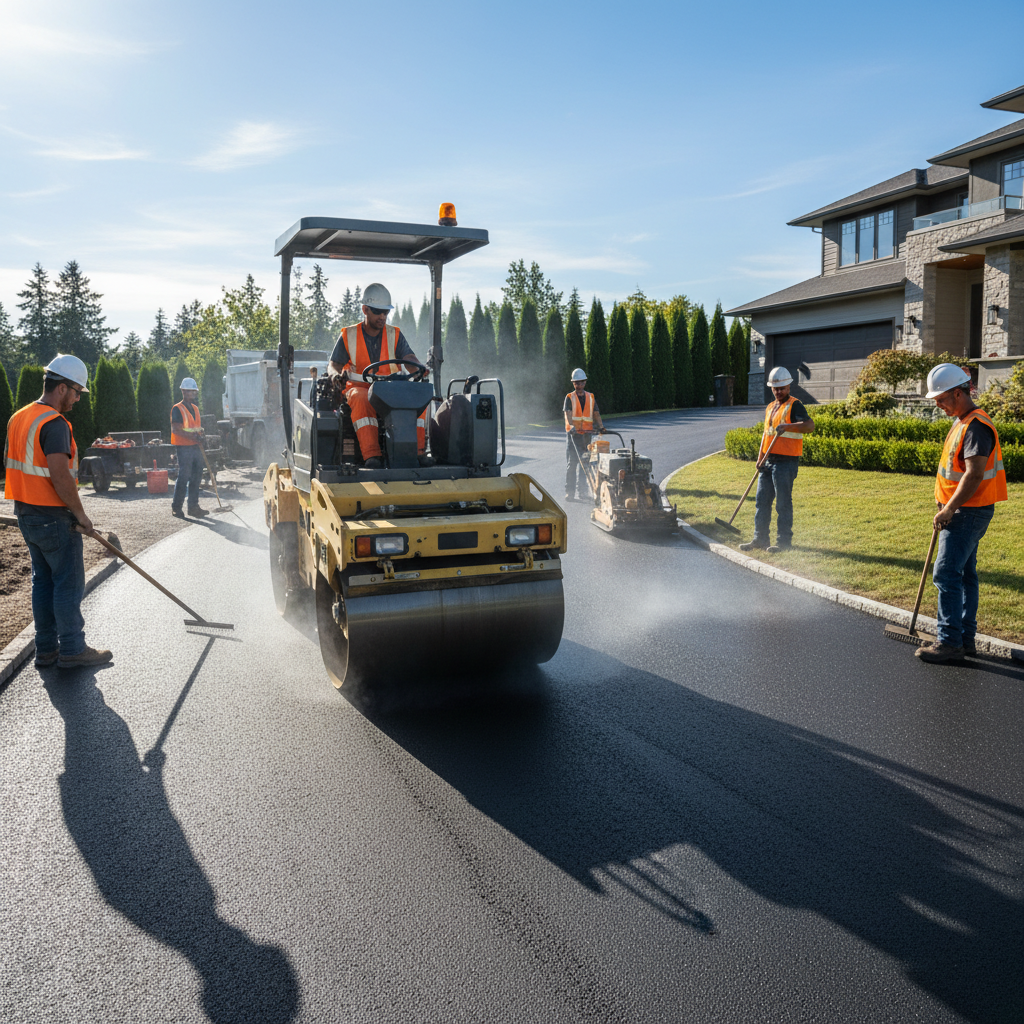
Driveway paving options and costs in West End
In West End, Ontario, choosing the right driveway finish comes down to balancing upfront cost, winter durability, and how much maintenance you’re willing to do between snow seasons. West End is home to 4,142 people (Statistics Canada, 2021 Census), and while that’s a small snapshot of the overall Toronto region, it mirrors the reality homeowners face locally: many private driveways connect to single-family homes, where parking patterns and plough lines can be hard on edges and joints.
Toronto’s freeze–thaw cycle is the main reason driveway quotes can swing. Ground freezing is roughly 3–4 feet deep in the Toronto economic region, so contractors typically build a deeper, well-compacted granular base and engineer drainage so water can’t sit under the pavement. That base work is labour-heavy and material-intensive, and it contributes to the higher installed cost you’ll see in peak spring through early fall scheduling. The short workable paving season also tightens availability for prime dates, which can push pricing toward the top of the asphalt and concrete ranges.
Demand is especially steady in neighbourhood pockets like the Humber Bay/Marie Curtis area and the broader Etobicoke-adjacent corridors, where many lots have older services, mature trees, and limited access for equipment—three things that can add cost.
Use the comparison table below to set expectations for common driveway finishes and typical per-square-foot pricing in West End before you request itemised quotes.
| Material |
Lifespan |
Maintenance |
Best For |
Price per sq ft |
| Asphalt (new installation, proper base) |
15–25 years |
Seal coat every 3–5 years |
Lowest upfront cost with good winter performance when base/drainage are correct |
$3.50–$6.50 (approx.) |
| Asphalt (overlay on existing gravel base) |
10–18 years |
Seal coat every 3–6 years; monitor edge settlement |
When demolition is limited and the subgrade is still solid |
$4.00–$7.50 (approx.) |
| Interlocking concrete pavers |
25–40 years |
Replace individual stones; re-sand joints as needed |
Curb appeal and easier repairs without replacing the whole driveway |
$10.00–$18.00 (approx.) |
| Poured concrete (broom finish) |
20–30 years |
Crack monitoring; reseal only if specified |
Clean, low-maintenance look with strong long-term potential |
$7.00–$12.00 (approx.) |
| Exposed aggregate concrete |
20–30 years |
Periodic cleaning; protect joints and edges |
Texture/traction plus high-end curb appeal |
$9.00–$15.00 (approx.) |
| Gravel / crushed stone (budget option) |
3–10 years |
Top-ups 1–2 times per year; edging to prevent spread |
Short-term solution or seasonal access needs |
$2.00–$4.50 (approx.) |
Prices are estimates only and vary by project scope, site access and material selection.
What affects the price of paving in West End
In the Toronto economic region, two homeowners can receive quotes that differ by 30–50% for the “same” driveway because the hidden work is where the cost lives: excavation depth, base thickness, drainage corrections, and how much removal and hauling is needed. In West End, the biggest driver is the freeze environment. With ground freezing to roughly 3–4 feet, deeper, properly compacted granular base is required to reduce heaving and cracking. In practice, that means thicker base and better moisture control than you’d see in milder parts of Ontario, and it’s a key reason asphalt in this market tends to land anywhere from the lower end near $3,500–$8,000 depending on conditions and prep.
Freeze–thaw also affects scheduling. Hot-mix asphalt placement needs suitable soil and air temperatures (often above 10°C), so the paving season concentrates demand into late spring through early fall. When crews are booked, prime dates can raise costs, especially for neighbourhoods with frequent road salt access and routine ploughing impacts.
Concrete pricing can move for several West End reasons. First, if the existing slab is deteriorating, tear-out and disposal can push the job toward the upper end of concrete bands (commonly $6,000–$15,000 for typical driveways). Second, if your driveway slopes toward a foundation or garage door, drainage and grading corrections may be required before any new concrete is poured to avoid future ponding and surface spalling. Finally, if your winter service includes heavy plough passes over the edges, your base and joint detailing become more important—adding labour but reducing long-term failure costs.
| Price Factor |
Why It Matters |
Cost Impact |
| Driveway area in sq ft |
Materials and base thickness scale directly with square footage |
High (often the biggest swing) |
| Base depth required |
Frost line demands thicker, compacted granular layers to reduce heave |
High; deeper frost increases excavation and materials |
| Grading and drainage work |
Slope corrections and subdrainage prevent water pooling under the surface |
Medium to high depending on site |
| Tear-out of existing surface |
Breaking, loading, and hauling concrete or old asphalt adds equipment time |
Medium to high |
| Edge restraints and curbing |
Restraints prevent paver spread and asphalt edge breakdown under ploughing |
Medium |
| Sealing requirement |
Asphalt needs sealing after curing to protect binder from winter damage |
Low to medium; impacts total lifecycle cost |
| Site access |
Narrow lots slow down skid-steer access and increase staging time |
Medium (more time, more labour) |
| Asphalt mix specifications |
Freeze–thaw-rated mixes cost more and need proper placement practices |
Low to medium, but affects durability |
Permits & regulations in Ontario
For Ontario homeowners in West End, most driveway paving within your own property typically does not require a building permit. However, if your project touches the municipal right-of-way, or changes how stormwater flows, you may need approval before work begins. Examples of work that often requires municipal approval include installing or changing a curb cut, altering boulevard drainage, modifying catch basins or storm leads near the street line, or adjusting grading where it affects municipal drainage. Even if paving itself is “private,” the connection points to the street can trigger extra steps.
Before any digging, always plan utility locates. In Ontario, use Ontario One Call (formerly part of the 1 Call system) so the contractor can locate buried gas, hydro, telecom, and other services. If you’re adding deeper base (common in Toronto’s frost conditions), the locate step becomes even more important.
To verify a contractor’s credentials step-by-step, ask for documents and check them yourself:
- Ontario licence: confirm the paving/contracting registration using the contractor information available through Ontario’s public business/contractor listings.
- Certificate of Insurance: request general liability with coverage limits appropriate for driveway work and ensure it lists your address as an additional insured where possible.
- WSIB clearance (or WCB equivalent coverage): ask for a current clearance letter and confirm the dates.
- Review scope before signing: ensure tear-out, drainage corrections, disposal, and compaction testing (where applicable) are explicitly included.
- Ask who handles permits/approvals: if your job needs municipal sign-off, confirm it in writing.
Asphalt vs pavers vs concrete for West End driveways
For West End, asphalt is usually the most budget-friendly route and can perform very well in Toronto’s freeze–thaw climate when the base is engineered correctly and the driveway is sealed on schedule. Asphalt’s flexibility helps it tolerate some movement, but it relies on a robust granular base, proper drainage away from the garage, and routine sealing every 3–5 years to protect the binder from winter moisture and salt exposure.
Interlocking concrete pavers cost more upfront, but they shine for homeowners who value curb appeal and easier spot repairs. In West End winters—where ploughing and road salt can stress edges—pavers can be re-leveled and individual stones replaced without demolishing the whole surface. The key is restraint and joint sand depth so pavers don’t shift or open over time.
Poured concrete sits in the middle price-wise and can look excellent with a broom finish, but it’s more sensitive to cracking if drainage and jointing aren’t planned for Toronto’s frost. Concrete needs air-entrainment and well-designed control joints so it can move safely when it freezes. Exposed aggregate adds traction and style, but it still depends on correct base and curing.
A practical dollar example: if your driveway is a typical 400 sq ft area, asphalt might fall around $3,500–$8,000, while pavers could push you toward the upper part of the interlocking band (often $9,000–$20,000). That difference is justified when you want “repairability,” expect edge impacts from winter maintenance, or have a property layout that makes future drainage correction more likely.
| Material |
Frost Resistance |
Curb Appeal |
Repair Method |
Lifespan |
Price Band |
| Asphalt (sealed regularly) |
Good when base drainage is engineered |
Medium (clean, modern look) |
Patch and re-tar/seal areas or overlay later |
15–25 years |
$3,500–$8,000 |
| Interlocking concrete pavers |
Very good with proper edging and base |
High (wide style options) |
Remove/replace individual stones or sections |
25–40 years |
$9,000–$20,000 |
| Poured concrete (air-entrained) |
Good with joints and proper drainage |
Medium to high (clean, durable surface) |
Crack repair and targeted patching |
20–30 years |
$6,000–$15,000 |
| Exposed aggregate concrete |
Good with engineered base and curing |
Very high (texture and premium look) |
Surface sealing/patching; limited deep repair |
20–30 years |
$8,500–$16,000 |
| Permeable pavers (drainage grid) |
Very good if subgrade is designed correctly |
High (modern look, drainage benefits) |
Re-level and replace pavers; clean filters as needed |
20–30+ years |
$12,000–$22,000 |
| Chip seal / tar-and-chip |
Variable; needs correct base and maintenance |
Low to medium (rustic/utility finish) |
Spot repairs and re-chip/maintenance cycles |
7–12 years |
$2,500–$6,500 |
How to choose a paving contractor in West End
Choosing the right paving contractor in West End starts with verifying Ontario coverage and doing it the right way. Ask for their Ontario licence/business registration details (where applicable), a current certificate of general liability insurance, and proof of workers’ compensation coverage (WSIB/WCB). To check the insurance, look at the policy limits, effective dates, and who the certificate is issued to. For coverage, request a current clearance letter and confirm it’s valid at the time work starts and that it covers paving activities, not just office work.
Next, get 2–3 itemised written quotes. You want a labour + materials breakdown—not just a lump sum. Make sure the quote lists excavation and disposal, granular base thickness and compaction requirements, any drainage work (slope corrections, subdrain tie-ins if included), edge restraints/curbing, and the asphalt mix or concrete mix requirements that fit Toronto’s freeze–thaw conditions.
Read the scope carefully for what’s excluded: permit pulls (if needed for right-of-way work), sawcutting, hauling, restoration of landscaping, and whether compaction testing or coring is included when required. Confirm warranty terms: workmanship warranty length, whether the product/manufacturer warranty applies, and if it transfers if you sell the home. Finally, payment schedule matters—never pay more than about 10–15% upfront. Hold back the remainder until the job is complete and clean-up is verified, and get the start date plus completion estimate in writing.
- Ask for a project-specific schedule and finish date, not just “summer 2026.”
- Request base depth and compaction method in the quote.
- Confirm drainage plan: slope direction and where water goes after paving.
- Ensure disposal/hauling of removed material is included.
- Check whether utility locates are arranged or your responsibility.
- Verify edge restraints/curbing are included where needed.
- For asphalt, confirm seal coat timing (typically after curing) and responsibility.
- For pavers, confirm joint sand type and restraining system.
- For concrete, confirm air-entrainment and control joint spacing.
- Ask about compaction tolerances and how they address soft subgrade.
- Get warranty coverage details in writing (workmanship vs material).
- Confirm payment terms and keep a holdback until punch-list completion.
Concrete red flags I commonly see with less-prepared contractors in the West End: no written itemised scope, vague base thickness (“we’ll do it properly” without numbers), refusing to show insurance/WSIB clearance, quoting without discussing drainage and frost-depth requirements, and asking for large upfront payments with no signed start/completion timeline.
Frequently asked questions — paving in West End
What is a chip seal driveway and is it suited to West End?
Chip seal is a surface treatment where hot binder is sprayed over prepared base, followed by a layer of aggregate chips that lock in as it cures. In West End and across Ontario’s Toronto frost environment, it can be suitable for utility-focused driveways when the base is engineered to handle freeze–thaw and water is directed away—otherwise the chips can loosen and surface wear accelerates. It’s not the first choice for homeowners seeking a long-lived, premium finish compared to asphalt or pavers, but it can be a practical budget option if the site has good drainage and you’re comfortable with maintenance cycles. If you’re comparing costs, chip seal often lands below common asphalt ranges; however, think lifecycle, not just the first invoice.
How much does driveway crack repair cost in West End?
Crack repair pricing in West End depends on crack type and extent: hairline surface cracks are usually less involved (cleaning and crack seal), while wider cracks with signs of base movement may require partial patching or sawcut-and-repair. For typical homeowner-scale repairs, expect “small job” mobilization costs even when the crack itself is short. In many cases, crack sealing and targeted patching is priced as a repair visit plus material, and it’s common to see repair totals in the several hundred to low-thousand range depending on how many areas need attention. If the crack is widespread, it can be more cost-effective to plan a future asphalt overlay (within the $3,500–$8,000 driveway paving band) than to keep doing repeat spot repairs.
What base thickness do I need for pavers in West End?
For pavers in West End, base thickness is determined by frost depth risk, drainage, and your existing subgrade condition. Because the Toronto economic region sees ground freezing to roughly 3–4 feet, contractors generally specify a deeper, well-compacted granular base to reduce heaving and cracking at the edges where ploughing and de-icing salt hit hardest. In practice, a typical paver build-up includes a compacted subbase layer plus a bedding course under the pavers, with the exact granular thickness varying by soil strength and whether drainage corrections are needed. The right answer for your lot comes from a site assessment: if your subgrade is soft or drains poorly, you should expect more excavation and additional base—cost increases, but it protects the long-term performance.
How do I get the most accurate paving quote in West End?
To get an accurate paving quote in Ontario—especially in West End—schedule a site visit where the contractor measures your driveway area, checks slope, and evaluates the existing base/subgrade before quoting. The most accurate quotes are itemised: show excavation, base depth, drainage/grading work, disposal, edge restraints, and the surface material and thickness. Ask whether the quote includes utility locates, and confirm what happens if they uncover weak soil during excavation. If you can, provide photos of drainage issues (ponding in spring) and tell them how you maintain in winter (plough direction, salt amount). Because Toronto’s freeze–thaw cycles add work and material, a contractor who doesn’t discuss frost-resilient base and drainage is likely under-scoping.
How much does it cost to pave a driveway in West End?
Driveway paving costs in West End typically fall within the Toronto-area price bands, largely driven by driveway size, base preparation, and drainage complexity tied to frost depth and freeze–thaw. For asphalt, many projects land between $3,500–$8,000, with higher pricing when excavation is deeper or when drainage corrections and tear-out are needed. Interlocking pavers usually run higher, commonly $9,000–$20,000, because of more labour and materials and the need for proper edge restraints. Poured concrete is often in the $6,000–$15,000 band, with variations based on jointing, air-entrainment specifications, and whether your site requires re-grading or significant tear-out. Always confirm scope so you’re comparing “apples to apples.”
Asphalt vs interlocking pavers vs concrete — which is best in West End?
In West End, all three can work in Ontario’s freeze–thaw climate, but “best” depends on how you want the driveway to age. Asphalt is typically the best match for homeowners who want the lowest upfront cost within the $3,500–$8,000 band, accept that sealing every 3–5 years is part of the plan, and want good performance when drainage and base are engineered for frost. Interlocking pavers are often the best for long-term flexibility and curb appeal because you can remove and replace sections if a spot fails. Concrete can be a solid mid-range option in the $6,000–$15,000 band, but it needs air-entrainment, correct jointing, and drainage planning to manage freeze expansion and winter salt. If you share your driveway size and current drainage/ponding issues, I can suggest the most cost-effective option to target.