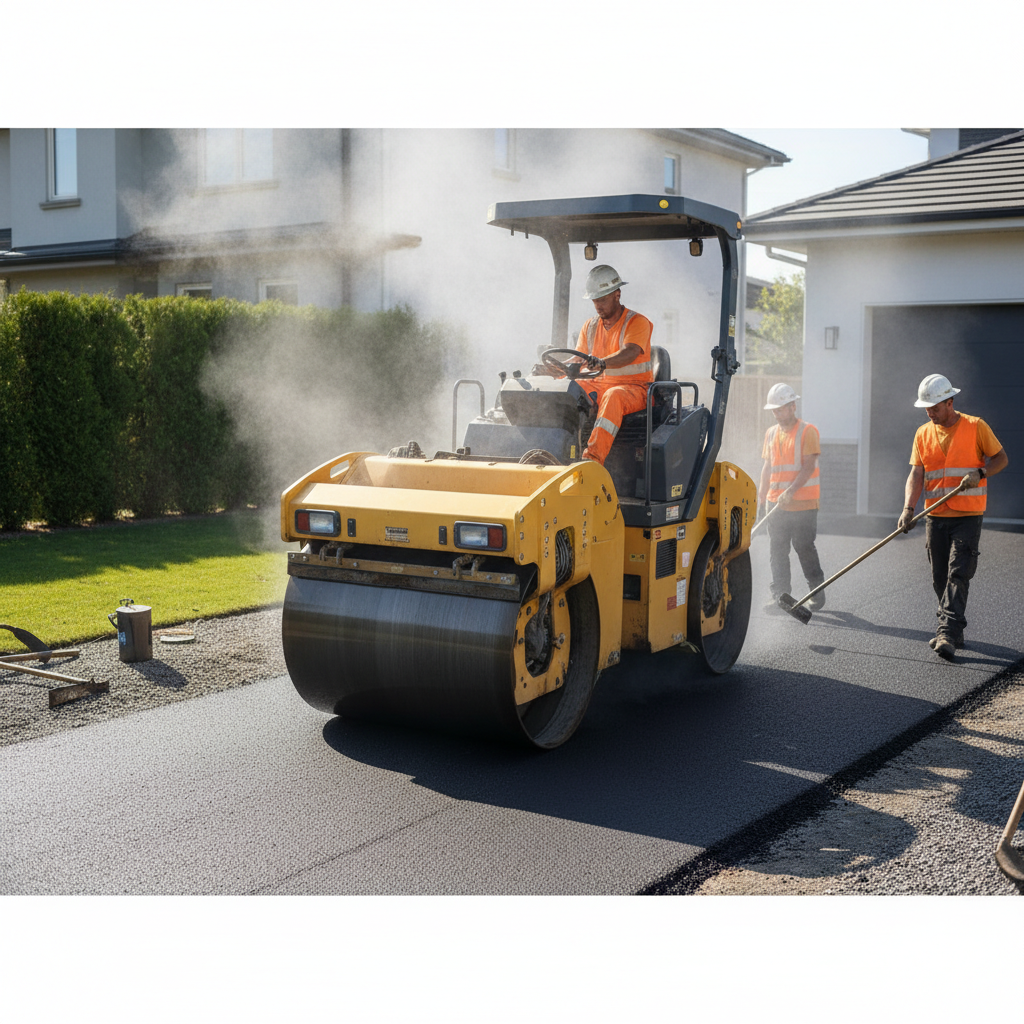
Driveway paving options and costs in Cornwall
Cornwall homeowners typically have a handful of practical driveway choices, and the right one depends on how your site freezes, how your lot drains, and how long you want to go between repairs. With Cornwall’s housing stock skewing older—70.4% of homes were built before 1981 (Statistics Canada, 2021 Census)—many driveways are retrofits on established grades and drainage, which can add excavation and rebuild costs. At the same time, Cornwall has a large portion of single-detached housing (49.0% of dwellings), so most private driveways serve detached homes and carry regular winter traffic from plows, salt, and daily use.
In the Ottawa economic region, pricing is strongly shaped by frost depth and repeated freeze–thaw cycles. Local frost penetration is commonly modeled around 1.8 m, so contractors in Cornwall typically design for a deeper, well-compacted granular base and drainage that keeps water moving away from the structure. That usually costs more than milder areas, and it’s also why interlock and asphalt both need edge restraint, proper subgrade prep, and controlled runoff. Another factor pushing prices is the shorter paving season: asphalt generally needs warm weather for compaction and curing (often requiring air temperatures above 10°C), which concentrates demand into a tighter scheduling window.
If you’re in high-demand areas like the West end (near the St. Lawrence River corridor) and in older neighbourhoods where many properties are due for driveway replacement, contractors see similar patterns: more tear-out, more base rebuild, and more attention to drainage. Below is a realistic comparison of material choices and expected lifespan, which you can use as a baseline when reviewing quotes.
| Material |
Lifespan |
Maintenance |
Best For |
Price per sq ft |
Price Range |
| Asphalt (new installation, proper base) |
15–25 years |
Sealcoat every 3–5 years; patch as needed |
Lower upfront cost with good performance |
$6.50–$11.00 |
$4,500–$9,000 |
| Asphalt (overlay on existing gravel base) |
10–18 years |
Sealcoat every 3–5 years; monitor for reflection cracking |
When you want a faster, less invasive upgrade |
$6.00–$9.50 |
$4,200–$7,500 |
| Interlocking concrete pavers |
25–35+ years |
Occasional re-sanding and panel resetting |
Curb appeal, easy localized repairs |
$12.00–$22.00 |
$6,000–$15,000 |
| Poured concrete (broom finish) |
20–30 years |
Seal every 5–8 years; crack monitoring |
Clean, durable surface with low routine upkeep |
$10.00–$18.00 |
$7,000–$16,000 |
| Exposed aggregate concrete |
20–30 years |
Seal every 5–8 years; patching limited to sections |
Better texture/grip and enhanced look |
$12.00–$20.00 |
$8,000–$17,500 |
| Gravel / crushed stone (budget option) |
3–7 years |
Top up and re-grade annually; weed control |
Short budget timeline or temporary driveway |
$3.50–$6.50 |
$2,500–$6,000 |
Prices are estimates only and vary by project scope, site access and material selection.
What affects the price of paving in Cornwall
In Cornwall (and across the Ottawa economic region), two quotes for what looks like the same driveway can easily differ by 30–50% once you total the real scope. The biggest drivers are excavation depth, the engineered base and drainage details, the amount of tear-out, and whether the contractor is quoting a robust frost-beating section or a leaner assembly that may fail earlier under repeated freeze–thaw cycles. Asphalt and pavers also respond to timing: because the paving season is tighter in colder regions, scheduling in spring and early summer can tighten contractor availability and increase labour demand.
Frost line depth is decisive. In Ottawa-area designs, frost penetration is commonly modeled around 1.8 m, so contractors protect the surface by building a thicker, well-compacted granular base so the system stays below the frost zone. While Ontario/Alberta guidance often results in roughly 6–12 inches of compacted granular base for many residential applications (depending on soil and drainage), the exact thickness still depends on your subgrade, groundwater risk, and how water currently sheds off your property. More base and more granular material means a higher ticket.
Local examples that raise cost in Cornwall include: (1) a driveway that slopes toward the house, requiring regrading and added drainage to move meltwater away; and (2) older sites where previous repairs left soft spots, leading to extra base rebuild. If you already have a stable gravel subbase and the grading is correct, asphalt may fall closer to the lower end of the asphalt bands (for example, $4,500–$9,000) because less excavation is needed.
Conversely, if you need curbing or edge restraints to stop interlock from spreading and to manage water flow, interlocking often shifts upward toward $6,000–$15,000. In Cornwall’s older neighbourhoods, it’s common for drainage upgrades and tear-out to be the cost “surprises,” not the surface material itself.
| Price Factor |
Why It Matters |
Cost Impact |
| Driveway area in sq ft |
Most materials and labour scale with square footage. |
Large driver; can change total by thousands. |
| Base depth required |
Frost control depends on granular thickness and compaction. |
Deeper base increases haul, excavation and rock costs. |
| Grading and drainage work |
Slope and water management reduce freeze–thaw damage. |
Regrading and drainage add labour and potential plumbing ties. |
| Tear-out of existing surface |
Old asphalt or concrete must be broken and hauled properly. |
Concrete/asphalt disposal and breaking equipment increase cost. |
| Edge restraints and curbing |
Prevents paver movement and asphalt edge failures. |
Often adds materials, forms, and extra labour. |
| Sealing requirement |
Asphalt needs sealcoat after curing to slow oxidation and raveling. |
Adds future maintenance budget (typically every 3–5 years). |
| Site access |
Tight lots slow equipment movement and increase time. |
More labour hours and possible smaller-batch handling. |
| Asphalt mix specifications |
Freeze–thaw-rated mixes can cost more but improve durability. |
Higher material cost and sometimes different binder content. |
Permits & regulations in Ontario
For Cornwall homeowners, most driveway paving within your own property typically does not require a building permit because you’re improving an existing private surface. However, when work touches the municipal right-of-way, approvals are often required. That includes new or modified curb cuts, changes to boulevard areas, altering or connecting storm drainage, and any work that affects how water leaves the property line. If you’re changing the driveway apron where it meets the street, treat it as a permit/approval scenario—don’t assume it’s “just paving.”
Here’s a practical step-by-step you can follow before excavation starts:
- Request Ontario One Call locates before any digging (even for “shallow” base work).
- Confirm lot-grading and hard-surface rules with the municipality, especially if your current drainage doesn’t comply.
- Ask for the contractor’s Ontario licence details (and confirm it matches the company name doing the work).
- Request a certificate of insurance for liability coverage; verify it’s active.
- Confirm WSIB/WCB coverage: ask for documentation showing the work is covered for employees (or that the contractor’s status is properly compliant).
- Get all approvals/permit responsibilities in writing—who pulls permits, who covers fees, and what’s included.
As a homeowner, your goal is simple: ensure the contractor is legally set up to excavate, haul, and pave—and that any right-of-way or drainage changes are approved before the first load of stone arrives.
Asphalt vs pavers vs concrete for Cornwall driveways
Choosing between asphalt, interlocking concrete pavers, and concrete in Cornwall comes down to upfront cost, how you want repairs handled, and how your driveway will survive Ottawa-region freeze–thaw cycles. In this climate, drainage and base engineering are the real foundation—without them, any surface can crack, heave, or ravel. That said, each material behaves differently under winter use (salt, sand, and plowing).
Asphalt is usually the lowest upfront option. A properly built asphalt driveway—new installation on a well-compacted granular base—can deliver strong value, but it depends on maintenance. Expect sealcoat planning every 3–5 years to slow oxidation and raveling in Cornwall winters. Interlocking concrete pavers are the highest upfront in most quotes, but they shine when you want curb appeal and easy, localized repairs. If a panel area settles, you can lift and reset without replacing the whole surface—important in older, variably compacted sites common to Cornwall. Poured concrete sits in the mid-range and is durable when air-entrained and properly finished, but it’s more susceptible to visible cracking under freeze–thaw, especially if the base or drainage is undersized. Exposed aggregate is similar but offers a textured look and traction.
Base depth and drainage design should be built to stay below the frost zone around the ~1.8 m model used locally. In practice, that often means more granular base thickness and careful slope control than homeowners expect. For a concrete example of value: if asphalt comes in near $4,500–$9,000 and interlock is near $6,000–$15,000, the $2,000–$6,000 difference is often justified when you want curb appeal and repairability for the long haul—especially on driveways that take plow impacts or have challenging drainage. If you prefer a clean, monolithic finish and you’re budgeting for air-entrained concrete and good base work, concrete can be a practical choice.
| Material |
Frost Resistance |
Curb Appeal |
Repair Method |
Lifespan |
Price Band |
| Asphalt (sealed regularly) |
Good with engineered base and drainage; sensitive to poor subgrade |
Medium (clean, dark finish) |
Patch and re-surface locally |
15–25 years |
$4,500–$9,000 |
| Interlocking concrete pavers |
Very good when base is stable and edges are restrained |
High (variety of colours/patterns) |
Lift/reset individual paver sections |
25–35+ years |
$6,000–$15,000 |
| Poured concrete (air-entrained) |
Good with proper air entrainment and base prep |
Medium to high (especially exposed options) |
Crack repair/seal; sections may require patching |
20–30 years |
$7,000–$16,000 |
| Exposed aggregate concrete |
Good traction and durability; depends on base and finishing |
High (textured premium look) |
Limited to patching/sections; may be more visible |
20–30 years |
$8,000–$17,500 |
| Permeable pavers (drainage grid) |
Very good for water management; still needs frost-safe base |
High/modern look |
Replace grid stones/pavers locally |
20–30 years |
$9,000–$18,000 |
| Chip seal / tar-and-chip |
Moderate; relies on correct binder and traffic control |
Lower (more utilitarian finish) |
Spot repairs and re-seal treatments |
7–15 years |
$3,500–$7,000 |
How to choose a paving contractor in Cornwall
Choosing a contractor in Cornwall is about verifying compliance and controlling scope. First, confirm Ontario licensing for the business doing the work (not just the “person you met”). Next, ask for liability insurance documentation and verify it covers the type of work being performed. For worker protection, request WSIB/WCB coverage proof—then check the document shows the contractor’s current status and that it relates to the crew doing your job.
When you request quotes, insist on 2–3 itemised written estimates rather than a single lump-sum number. You want a breakdown of excavation, granular base depth, geotextile (if specified), asphalt/concrete thickness, edge restraints/curbing (if needed), disposal, and any paving apron work. Also clarify inclusions and exclusions: Is permit or right-of-way approval included if needed? Who handles disposal tickets? Is site grading and drainage correction included or excluded? A strong quote will also list the intended asphalt mix or concrete specs at least at a practical level (e.g., freeze–thaw-rated asphalt design approach and air-entrainment for concrete).
For warranty, ask for the workmanship warranty length and whether the manufacturer covers materials separately. Confirm whether warranty transfers to a new homeowner if you sell. On payment, a healthy schedule is typically not more than 10–15% upfront; hold back a portion until the final inspection and cleanup are complete. Finally, get a start date and completion estimate in writing so the work is scheduled within the short paving window.
- Verify Ontario business licence details match the quoting contractor.
- Request certificate of insurance and confirm it’s current.
- Confirm WSIB/WCB coverage for employees and provide proof.
- Use itemised quotes: base, thickness, materials, labour, disposal.
- Ask if geotextile is included where soils require separation.
- Clarify drainage and grading scope (slopes, swales, outlets).
- Confirm edge restraints/curbing are included for pavers and transitions.
- Specify tear-out limits and whether backfill/compaction is included.
- Ask what asphalt/concrete cure requirements are and how they affect scheduling.
- Verify warranty wording: workmanship vs materials; duration and exclusions.
- Confirm payment schedule and holdback terms in writing.
- Request a written timeline tied to the warm-weather curing window.
Red flags I often see in Cornwall include vague quotes that don’t list base depth or disposal, contractors who won’t provide WSIB/WCB proof, “cash only” pressure for large upfront payments, no written warranty terms, and skipping or minimizing drainage/grading because “it’s not necessary.”
Frequently asked questions — paving in Cornwall
How do I compare paving quotes fairly?
Start by comparing the engineering scope, not just the finish. In Cornwall and the wider Ottawa region, quotes can swing 30–50% based on excavation depth, granular base thickness, and drainage corrections—those items protect your driveway through freeze–thaw. Ask each contractor for an itemised breakdown (base depth, asphalt/concrete thickness, edge restraints, disposal, and any geotextile). Make sure the price includes tear-out and proper compaction, and confirm whether the driveway apron or any right-of-way work is included if your design changes where it meets the street. If one quote lands near the asphalt band of $4,500–$9,000 but another is higher, you should be able to point to specific added scope (like drainage or deeper base), not just “higher-quality material” claims.
Can asphalt be laid in cold weather in Cornwall?
Not comfortably. In Ontario’s colder stretches like Cornwall, cold, wet conditions can prevent proper compaction and curing. Asphalt typically needs warm, dry weather for the mix to place and compact correctly—commonly aiming for air temperatures above 10°C, with practical limits depending on wind, damp subgrade, and paving crew setup. If a contractor promises asphalt in “freezing temps,” that’s a major concern because inadequate curing and poor density can lead to early raveling and cracking under Ottawa-area freeze–thaw cycles. The better approach is to schedule within the paving season and confirm curing procedures in writing. If you’re seeing springtime quotes, ask how they handle temperature and subgrade moisture and whether they’ll postpone if conditions won’t support proper density.
What is a driveway apron and do I need one in Cornwall?
A driveway apron is the paved transition section where your driveway meets the roadway—often including the curb cut area and the surface immediately adjacent to the street. In Cornwall, it matters because the interface between the private drive and municipal curb/boulevard is where drainage and right-of-way rules can apply. If your project changes the existing curb cut, alters the boulevard, or connects/redirects storm drainage, you may need municipal approvals before work starts. Even when a permit isn’t required for work entirely on your property, apron-related changes are more likely to fall under municipal oversight. Your contractor should clarify whether they’re pricing just the driveway area or also the apron/transition works—and what approvals are included.
How do I maintain my driveway through Cornwall winters?
Maintenance is mainly about protecting the surface from water and abrasion. For asphalt, plan sealcoat maintenance after the initial cure period (commonly every 3–5 years) and patch small areas before they expand. Use salt in moderation and avoid scraping aggressively—plow blades can chip edges and joints, especially near transitions and driveway apron areas. For pavers, keep the surface clean of sand that can shift jointing material and check that edges remain tight with proper restraints. In all cases, reduce trapped water: make sure downspouts and meltwater drain away from the driveway rather than onto it. If you notice soft spots after spring thaw, have them assessed early—settlement problems often come from base/drainage issues that simple surface repairs can’t fix.
Is it worth sealing a new driveway right away in Cornwall?
Usually, yes—but not immediately. Asphalt needs time to cure before sealcoat so the surface can properly bind and release moisture. In Cornwall’s freeze–thaw conditions, sealcoating is still one of the most cost-effective ways to extend asphalt life by slowing oxidation and raveling. Your contractor should tell you the recommended waiting period based on weather and mix type; it’s commonly within the first 6–12 months depending on curing and temperature. If you’re budgeting, sealing is often part of long-term asphalt ownership—so compare quotes that include future maintenance guidance. For example, if your paving is in the asphalt range of $4,500–$9,000, ask how sealcoat timing is handled and whether any patching is included before sealing.
What is a chip seal driveway and is it suited to Cornwall?
Chip seal (tar-and-chip) is a surface treatment that combines a binder and small aggregate chips. It can be a budget-friendly way to improve traction and shed some water, and it’s sometimes used for lower-traffic residential or as a temporary/secondary option. In Cornwall, it can work, but performance depends heavily on correct binder application, stone embedment, and how well the underlying base is engineered for Ottawa-area frost. If drainage or base compaction isn’t robust, freeze–thaw can loosen aggregate and accelerate surface wear. Many homeowners who want a “set it and forget it” driveway often prefer asphalt with proper base prep or interlock for repairability. If you’re considering chip seal, ask for a clear base design and a realistic lifespan expectation before you commit.