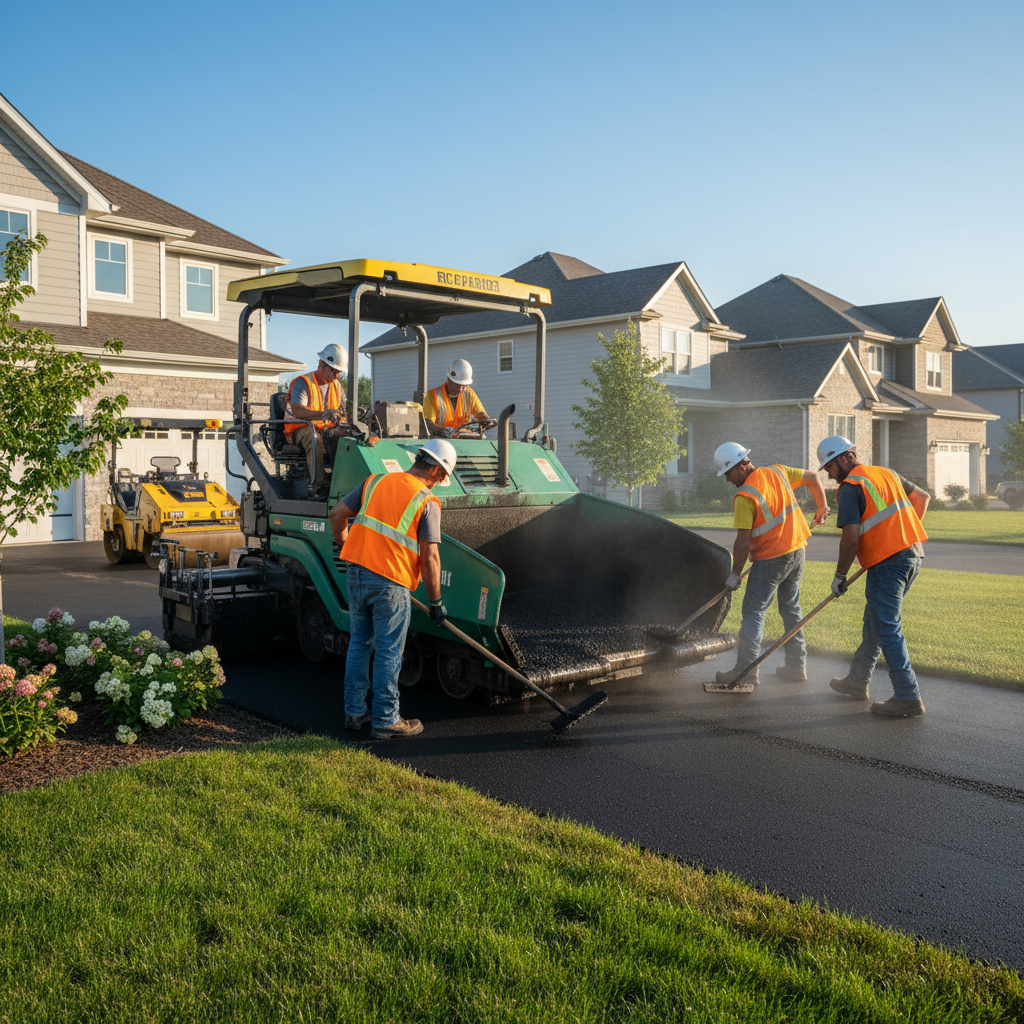
Driveway paving options and costs in Penetanguishene
Penetanguishene driveways are a little different than the “big city” pricing you may see online, mainly because our winters bring frequent freeze-thaw cycles and a real need for a well-built granular base. With 3,015 homeowner households in town (Statistics Canada, 2021 Census) and many driveways serving single-detached homes—68.0% of local dwellings (Statistics Canada, 2021 Census)—there’s strong demand for roads and driveway work that can handle thawing and re-freezing. In the Kitchener–Waterloo–Barrie economic region, colder pavement conditions are a cost driver: contractors typically excavate deeper, compact more granular layers, and pay more attention to drainage to reduce heaving and settlement. The paving season is also shorter than in milder parts of Ontario, which can concentrate scheduling into spring and summer and slightly lift labour and plant availability when crews are busy.
You’ll especially notice this demand around mature neighbourhoods and older housing stock—over half of local homes were built before 1981 (Statistics Canada, 2021 Census)—where driveways often need full tear-out and base correction, not just a surface patch. In practice, that’s why two quotes for the same width can diverge: one contractor may rebuild the base and drainage; another may simply pave over questionable subgrade.
Below are realistic cost ranges homeowners typically see for Penetanguishene projects, followed by what those choices usually mean for your maintenance and long-term performance.
| Material |
Lifespan |
Maintenance |
Best For |
Price per sq ft |
Price Range |
| Asphalt (new installation, proper base) |
10–15 years |
Seal every 3–5 years; patching as needed |
Best value when you want the lowest upfront cost and can maintain sealing |
$6.50–$10.50 |
$3,500–$7,000 |
| Asphalt (overlay on existing gravel base) |
8–12 years |
Seal every 3–5 years; more frequent crack patching |
When subgrade can be improved with limited excavation |
$5.75–$9.25 |
$3,200–$6,200 |
| Interlocking concrete pavers |
20–30+ years |
Spot repair by replacing units; joint sand top-ups |
Curb appeal and repairability without full replacement |
$13.00–$18.00 |
$12,000–$22,000 |
| Poured concrete (broom finish) |
15–25 years |
Crack monitoring; occasional caulking; sealing if desired |
A clean, durable surface where proper joints are installed |
$10.50–$15.00 |
$9,000–$16,000 |
| Exposed aggregate concrete |
20–30 years |
Reseal occasionally; crack repair as needed |
Anti-slip texture and premium look |
$12.50–$18.00 |
$10,500–$18,000 |
| Gravel / crushed stone (budget option) |
3–7 years (varies with drainage) |
Re-grade and top up annually or seasonally |
Temporary solution or low-budget pad |
$3.25–$5.50 |
$2,000–$4,500 |
Prices are estimates only and vary by project scope, site access and material selection.
What affects the price of paving in Penetanguishene
Homeowners in Penetanguishene can see quote differences of 30–50% for what looks like the “same” driveway because pricing is mostly driven by what’s under the surface: excavation depth, base thickness, drainage correction, and how much old material must be removed. In the Kitchener–Waterloo–Barrie market, frost depth and freeze-thaw cycles are decisive cost factors. Deeper frost means contractors must build a thicker, well-compacted granular base to prevent heaving, settlement, and reflective cracking. In Ontario, that typically translates to more granular thickness—often in the 6–12 inch range total (depending on soil conditions and design)—plus more effort ensuring the subgrade is stable and not pumping with moisture. At the same time, hot-mix asphalt placement requires adequate air and surface temperatures (commonly above 10°C), so a shorter paving season concentrates demand and can raise scheduling pressure during spring and early summer.
Concrete costs also respond to site conditions. For example, if your existing driveway is from the pre-1981 housing era—common in older Penetanguishene areas—subgrade can be inconsistent and may require additional undercutting before poured concrete. Another driver is drainage: if water currently flows toward a garage or low spot, contractors may need to re-slope and add drainage improvements, which can push an asphalt project toward the higher end (closer to the $3,500–$7,000 band) or move a concrete option into the $9,000–$16,000 band once proper base and joints are done right. Conversely, a newer site with good drainage and stable subgrade can reduce excavation and keep pricing closer to the lower end.
| Price Factor |
Why It Matters |
Cost Impact |
| Driveway area in sq ft |
Most material and labour costs scale directly with surface area |
High (primary driver) |
| Base depth required |
Frost resilience depends on granular thickness and compaction |
High |
| Grading and drainage work |
Slope corrections and water management reduce heaving and washouts |
Medium to high |
| Tear-out of existing surface |
Breaking, hauling and disposal add labour and equipment time |
Medium to high |
| Edge restraints and curbing |
Prevents paver spread and keeps asphalt/concrete edges stable |
Medium |
| Sealing requirement |
Asphalt sealing protects against moisture and oxidation in freeze-thaw weather |
Low to medium (recurring) |
| Site access |
Narrow driveways slow equipment movement and extend setup time |
Low to medium |
| Asphalt mix specifications |
Freeze-thaw-rated mix and correct binder selection can cost more |
Low to medium |
Permits & regulations in Ontario
In Ontario, paving a private driveway within your own property usually does not require a building permit. That’s the common situation when the work stays on your lot—excavating and building up the driveway surface, installing asphalt or pavers, and matching grades within your property lines. However, work in the municipal right-of-way often does require municipal approval. That includes new curb cuts, changes to boulevard areas, or any alteration that impacts storm drainage patterns (for example, redirecting runoff in a way that affects municipal infrastructure). Some municipalities also have lot-grading or stormwater expectations that can restrict how close hard surfaces can be built to property lines or how water must be managed. In Penetanguishene, where many properties are older and drainage may already be challenged, it’s smart to clarify grading expectations before excavation begins.
Step-by-step, here’s how a homeowner should verify a contractor and avoid surprises. First, confirm the contractor’s Ontario licence/credentials (many contractors list their business registration and licensing details on their site; you can also verify through appropriate government or registry channels). Second, request a current certificate of insurance for general liability (and request WSIB/WCB coverage—commonly WSIB in Ontario—showing the contractor is compliant for workers on your site). Third, ensure they can provide a clearance letter or proof of account status if requested. Finally, always call utility locates (Ontario One Call) before any digging, then confirm how they plan to protect existing services, sidewalks, and landscaping.
Asphalt vs pavers vs concrete for Penetanguishene driveways
For Penetanguishene driveways, the “best” material depends on how you want the driveway to age through freeze-thaw winters and how you handle maintenance like sealing, plowing, and de-icing. Asphalt is the lowest upfront option and can be very cost-effective long-term if you maintain it—think sealing every 3–5 years, plus routine crack patching. In a freeze-thaw corridor like Kitchener–Waterloo–Barrie, asphalt performance is strongly tied to base quality and a freeze-thaw-rated mix; when that’s done, many homeowners keep asphalt in the $3,500–$7,000 range for typical residential projects.
Interlocking concrete pavers cost more upfront, but they’re the most repair-friendly. If a section settles or a drain line is serviced later, individual pavers can be lifted and reset without tearing out the whole driveway—important in older neighbourhoods where underground issues sometimes surface. Pavers also handle minor surface movement better, and their curb appeal is excellent. Poured concrete sits in the middle to higher range, and with proper air entrainment and correctly installed joints, it performs well; the challenge is that concrete is more susceptible to cracking when water doesn’t drain properly or when joints aren’t spaced/finished correctly.
For example, if an asphalt driveway is quoted near $4,800–$5,800 and pavers come in around $14,000–$16,500, the price gap can be justified if you want longer service life, the ability to do spot repairs, and a surface that tolerates seasonal movement without needing full replacement. If your priority is minimizing first cost and you’re comfortable with sealing maintenance, asphalt is often the better value. If you’re dealing with a drainage problem, spend on base and water management first—material choice won’t fix poor runoff.
| Material |
Frost Resistance |
Curb Appeal |
Repair Method |
Lifespan |
Price Band |
| Asphalt (sealed regularly) |
Good with proper base and seal maintenance |
Moderate |
Patch and seal; milling and resurfacing when needed |
10–15 years |
$3,500–$7,000 |
| Interlocking concrete pavers |
Very good; flexible surface resists minor movement |
High |
Replace individual stones/units and re-sand joints |
20–30+ years |
$12,000–$22,000 |
| Poured concrete (air-entrained) |
Good with air entrainment and proper joints |
Moderate to high |
Caulk joints and repair cracks; resurfacing for wear |
15–25 years |
$9,000–$16,000 |
| Exposed aggregate concrete |
Good to very good with correct mix and curing |
High (textured, premium look) |
Crack repair with patching; occasional re-seal |
20–30 years |
$10,500–$18,000 |
| Permeable pavers (drainage grid) |
Very good when subbase/drainage are designed properly |
High (modern look) |
Replace units; maintain joints and drainage system |
15–25+ years |
$13,500–$20,500 |
| Chip seal / tar-and-chip |
Moderate; relies on good aggregate lock-in |
Low to moderate |
Spot repairs and re-seals |
6–10 years |
$3,000–$5,500 |
How to choose a paving contractor in Penetanguishene
Choosing the right contractor in Penetanguishene is mostly about proof—proof they’re insured, properly set up to excavate and pave safely, and able to back their workmanship. Start with Ontario licensing credentials for paving/excavation trades where applicable, then confirm general liability insurance (you should be named or your property protected as required on the certificate). For worker coverage, request WSIB clearance/proof of coverage in Ontario before any excavation begins. If they can’t provide current documents, that’s not a “small delay”—it’s a major risk to you.
Next, get 2–3 itemised written quotes rather than a single lump sum. A good quote breaks out labour and materials (excavation, hauling/disposal, granular base, asphalt or concrete supply, forms/finishing, edge restraints, and compaction). Carefully read what’s excluded: disposal, saw-cutting, permit/municipal approvals, drainage adjustments, replacements of failed subgrade, and any rework if slopes don’t drain correctly. For asphalt, ask whether they include proper tack coat, joint sealing, and whether sealing is included or recommended after 6–12 months.
Warranty matters too. Ask for the workmanship warranty length, what product/manufacturer warranty covers (and whether it’s transferable to you as the homeowner). Confirm the payment schedule: never pay more than 10–15% upfront, and hold back a portion until the job is fully complete and cleaned. Finally, put the timeline in writing—start date and a completion estimate—because weather delays are common in Ontario.
- Request proof of WSIB clearance/proof of coverage and general liability before signing.
- Ask for an Ontario business registration and confirm who is responsible for the work order on your site.
- Get itemised quotes (not just “supply and install asphalt/pavers”).
- Confirm excavation depth and total base thickness in inches/feet, based on site conditions.
- Verify drainage/grading scope: slopes, swales, and any added drainage corrections.
- Ask how they handle soft spots or saturated subgrade—what’s the process and cost rule?
- For pavers, confirm edge restraints type and joint sand specification.
- For concrete, confirm air-entrained mix and joint layout (spacing and sealing plan).
- Clarify tear-out and disposal: how much is included, where debris goes, and what happens to excess material.
- Ask whether utility locates are done (Ontario One Call) and who confirms locates.
- Use a written schedule and weather plan (what temperatures trigger delays).
- Require photos: pre-excavation condition, base compaction proof, and final surface checks.
Red flags I often see in Penetanguishene: a contractor who won’t provide WSIB/insurance documentation, “one price covers everything” quotes with no base-depth or drainage detail, refusal to itemise tear-out/disposal, poor communication on sealing timelines for asphalt, and pressure to pay most of the amount up front or before the base is complete.
Frequently asked questions — paving in Penetanguishene
Can asphalt be laid in cold weather in Penetanguishene?
In Penetanguishene, you can sometimes place asphalt later in spring or early fall, but true “cold weather paving” is limited. Hot-mix asphalt placement generally requires air temperatures (and a workable surface temperature) commonly above 10°C, and crews still avoid conditions where moisture or frost may interfere with compaction. If a contractor pressures you to pave during temperatures that are too low, you risk poor bond, uneven compaction, and early surface breakdown—especially with freeze-thaw cycles. A properly built granular base is also critical; asphalt can’t compensate for a weak or wet subgrade. If your quote is in the typical asphalt band of $3,500–$7,000, ask how they schedule placement to match weather, and what protections they use if rain or cold snaps move the work.
What is a driveway apron and do I need one in Penetanguishene?
A driveway apron is the transition area where your driveway meets the road edge or the curb area (often the portion near a curb cut or where the boulevard is involved). In Penetanguishene, whether you “need” an apron depends on how your driveway ties into the municipal drainage and the condition of the approach area. If the work affects the municipal right-of-way—such as creating or modifying a curb cut or altering storm drainage—municipal approval may be required. Many homeowners discover that the apron/approach area has to be rebuilt to match grades so water doesn’t run under the driveway. Even when the driveway itself is on your property, the apron is part of the performance system. Ask your contractor to describe the limits of the work and confirm if any right-of-way approvals apply before excavation.
How do I maintain my driveway through Penetanguishene winters?
Winter maintenance is mostly about protecting the surface and preventing water intrusion. In Penetanguishene, plowing is hard on edges and joints, so keep blade height correct and avoid scraping the surface. Use sand rather than aggressive de-icing salts when possible; salt can accelerate wear and contribute to moisture movement at cracks. For asphalt, monitor for small cracks and patch early so water doesn’t get into the base during thaw cycles. Plan to seal asphalt in the 6–12 months window after installation (when recommended by the contractor) and then typically every 3–5 years depending on traffic and weather. For pavers, refill joint sand if it washes out, and ensure the surface slopes drain away from the garage. Concrete benefits from sealing if advised, and prompt crack caulking/joint sealing to limit water movement.
Is it worth sealing a new driveway right away in Penetanguishene?
For asphalt, “worth it” comes down to timing and product choice. Sealing immediately after paving is usually not recommended; most contractors wait until the asphalt has cured enough for the sealer to bond properly, and many advise waiting within a 6–12 month timeframe. Sealing too early can trap moisture, which is a problem in freeze-thaw weather. In Penetanguishene, that matters because water intrusion can lead to raveling, widened cracks, and accelerated deterioration. If you’re building an asphalt driveway in the typical $3,500–$7,000 range, plan sealing as part of the life-cycle cost, not an afterthought. Ask your contractor for the exact sealing schedule they recommend based on temperature, moisture, and mix type.
What is a chip seal driveway and is it suited to Penetanguishene?
Chip seal (tar-and-chip) is a surface treatment where a binder coat is spread and then covered with aggregate chips, creating a textured surface. It’s generally less expensive upfront than full asphalt paving, and it can work on low-traffic rural or secondary routes when the base is well-prepared. In Penetanguishene, it can be suitable for certain driveways, but it’s not as durable as a properly built asphalt surface for heavy vehicle traffic and long-term freeze-thaw exposure. Areas with significant thaw water and poor drainage are especially risky. If a contractor offers chip seal, ask about base thickness, compaction, and whether the surface is expected to be maintained with re-seals or spot repairs. Chip seal is often used as a budget approach, with typical costs falling in the broader low-end range (not the same level as pavers or poured concrete).
How much does driveway crack repair cost in Penetanguishene?
Crack repair pricing depends on crack width, length, whether it’s sealing (crack filler/caulking) versus patching, and how much edge cleaning is required before materials go in. For Ontario residential driveways, minor sealing and crack filling commonly falls around the low end of the typical maintenance band, while larger repairs are closer to the upper end. As a reference point, homeowners often see sealing and repair work priced roughly from $250–$1,500 for manageable repairs, with larger or multiple areas costing more due to labour time and surface prep. In freeze-thaw conditions like Penetanguishene’s, repairing early usually costs less than letting water reach the base. If you send photos and crack measurements to a contractor, you’ll get a much tighter estimate.