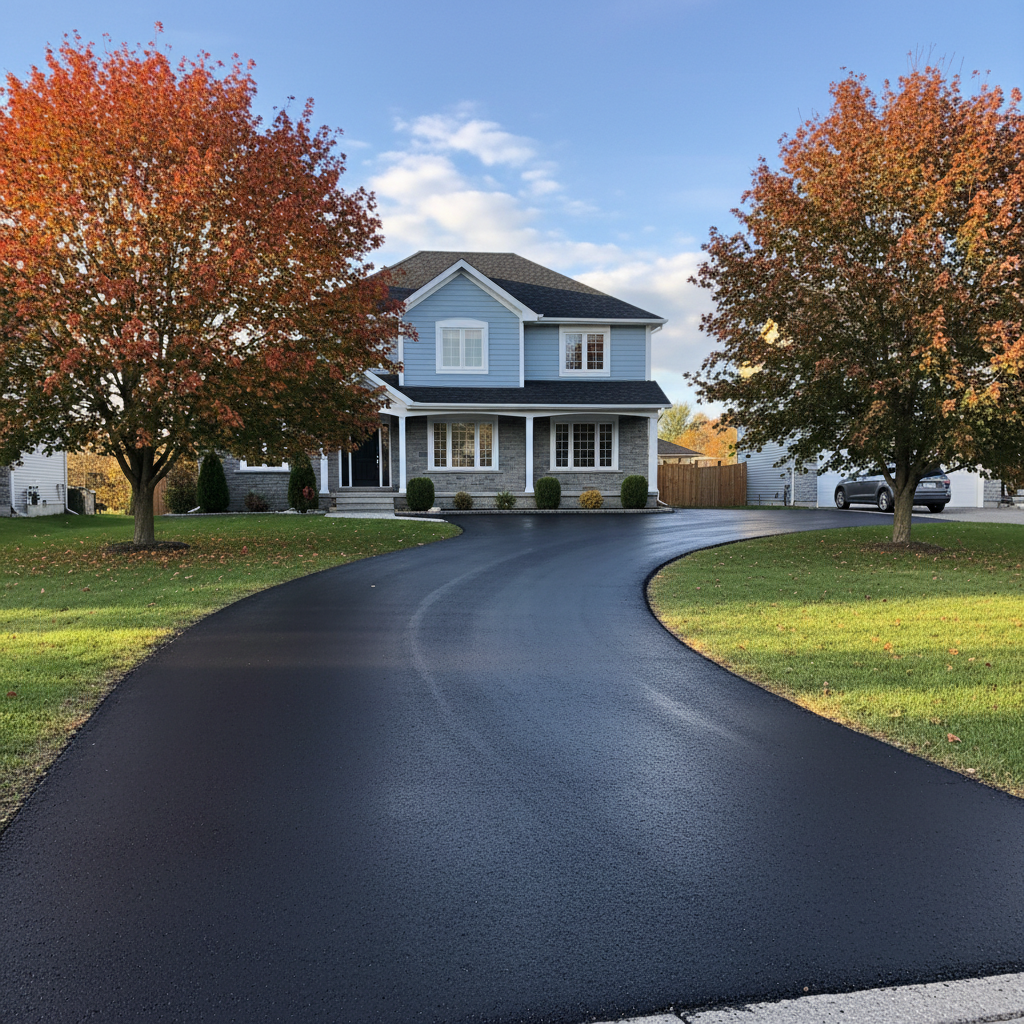
Driveway paving options and costs in Ottawa South
In Ottawa South, driveway paving decisions usually start with your budget and your tolerance for maintenance, but they’re also strongly shaped by winter. Ottawa South is home to about 125,090 people (Statistics Canada, 2021 Census), and most driveways in the neighbourhoods around Herongate and Abbeyhill serve detached homes—meaning longer private driveways, more turning traffic, and higher exposure to salt and plough throws. That matters because Ottawa’s freeze–thaw cycles push water through weak spots, and once the base isn’t fully stabilized, you’ll see raveling, joint movement (for pavers), or cracking sooner.
Cost in this area can’t be compared to milder climates without considering frost depth. Local pavement designs typically rely on a deeper, properly compacted granular base and well-planned drainage to keep the structure working below the frost zone. Also, the paving season is shorter—hot-mix asphalt needs sufficiently warm, dry conditions for compaction and curing—so scheduling pressure in spring and early summer can affect pricing.
Below is a practical comparison of the most common materials homeowners request in Ottawa South, including what you typically get with a properly built system (good excavation, compaction, and drainage). Use it to sanity-check your quote before we talk site-specific details like access, tear-out, and base replacement.
| Material |
Lifespan |
Maintenance |
Best For |
Price per sq ft |
Price Range |
| Asphalt (new installation, proper base) |
15–25 years |
Sealcoat at 3–5 years; crack repair as needed |
Best value for a smooth, dark, traditional driveway look |
$4.50–$8.50 |
$4,500–$9,000 |
| Asphalt (overlay on existing gravel base) |
10–20 years |
More frequent crack sealing if drainage isn’t improved |
When existing gravel is stable and you want lower upfront cost |
$4.00–$7.50 |
$4,500–$8,000 |
| Interlocking concrete pavers |
25–35 years |
Re-leveling and localized replacement (not full replacement) |
High curb appeal and easier repairs to specific areas |
$10.00–$16.00 |
$6,000–$15,000 |
| Poured concrete (broom finish) |
20–30 years |
Joint maintenance; sealant optional depending on salt exposure |
Clean lines and low visual maintenance |
$9.00–$14.00 |
$7,000–$16,000 |
| Exposed aggregate concrete |
20–30 years |
Sealant recommended; patching limited to localized repairs |
Slip-resistant finish and decorative curb appeal |
$10.00–$15.50 |
$8,000–$17,500 |
| Gravel / crushed stone (budget option) |
3–8 years (varies heavily by drainage) |
Annual re-grade and top-ups |
Short-term solution or low-cost interim access |
$2.00–$4.00 |
$1,200–$3,500 |
Prices are estimates only and vary by project scope, site access and material selection.
What affects the price of paving in Ottawa South
In Ottawa South, it’s common to see quotes for the “same-looking” driveway come in 30–50% apart—and most of that spread is rooted in what’s happening under the surface. Two contractors can use the same asphalt or the same paver size, but if one quote includes a full-depth granular base, geotextile, proper drainage corrections, and a proper tear-out/disposal allowance, the end result will cost more upfront because the structure is being built to survive Ottawa’s winters.
Frost depth and freeze–thaw cycles are the decisive cost factors here. In the Ottawa region, frost penetration is commonly modeled around 1.8 m. That means your driveway can’t “just be paved” on weak soils: the granular base typically needs to be thick and compacted to resist heaving and cracking. Contractors often build deeper granular sections and may include geotextiles or edge restraints, especially on paver jobs. The shorter paving season also matters: hot-mix asphalt generally requires air temperatures above 10°C for reliable placement and compaction, so spring and early summer scheduling pressure can tighten availability and raise labour rates.
Concrete costs can swing based on thickness and drainage. For example, a driveway that needs extensive grading to shed water away from the garage will cost more than a “straight replacement.” Similarly, if you’re adding salt-prone approaches near a garage apron, you may pay more for air-entrained concrete and properly sized joints to reduce cracking risk. Asphalt, meanwhile, often lands in the $4,500–$9,000 range when the base is rebuilt, but a cheap approach to base work can lead to earlier repair cycles and effective lifetime costs that climb quickly.
| Price Factor |
Why It Matters |
Cost Impact |
| Driveway area in sq ft |
Labour and material scale mostly by square footage |
Largest variable; expect big swings with length/width changes |
| Base depth required |
Frost line depth determines granular thickness to prevent heaving |
More depth = more excavation, stone, and compaction time |
| Grading and drainage work |
Slope and storm drainage control water movement and freeze–thaw pressure |
Can add substantial labour/material if regrading is needed |
| Tear-out of existing surface |
Breaking/hauling concrete or removing old asphalt affects disposal and labour |
Often a meaningful add-on, especially with heavy slabs |
| Edge restraints and curbing |
Pavers need confinement to stop lateral movement |
Higher material and install time, but improves long-term stability |
| Sealing requirement |
Asphalt needs sealcoat to reduce oxidation and water ingress |
Typically scheduled after 6–12 months; adds a recurring cost |
| Site access |
Narrow lots slow equipment movement and loading/unloading |
More labour hours; sometimes different equipment is required |
| Asphalt mix specifications |
Freeze-thaw-rated mixes cost more and perform better in Ottawa conditions |
Can raise per-sq-ft cost but reduces early raveling and cracking |
Permits & regulations in Ontario
For Ottawa South homeowners, most driveway paving work on your private property typically doesn’t require a building permit. That includes replacing or installing a driveway surface within your lot lines—so long as you’re not changing municipal infrastructure. Where permits and approvals become relevant is when the work touches the municipal right-of-way or affects drainage in a way the municipality must review.
Work that usually DOES require municipal approval can include: cutting new asphalt/curb for a new driveway entrance, changing a curb cut, altering boulevard grading in the municipal area, or modifying storm drainage patterns that affect how water is managed in the street area. In those cases, you’ll generally need municipal direction before excavation begins.
Work that typically does NOT require a building permit includes: new asphalt or interlocking installation within your property limits, concrete pours within your lot, and base improvements that stay within the private drive footprint (assuming you’re not disturbing municipal services or right-of-way boundaries).
Before anyone excavates, confirm utility locates through Ontario One Call. Then verify your contractor’s credentials step-by-step: (1) check their Ontario business/licensing information via the appropriate online sources for contractors, (2) request a current certificate of insurance showing liability coverage, and (3) confirm WSIB coverage (clearance or proof) and that subcontractors are covered where applicable. Keep copies—if there’s a roadside or utility hit, you want documentation you can rely on.
Asphalt vs pavers vs concrete for Ottawa South driveways
Choosing between asphalt, interlocking concrete pavers, and concrete in Ottawa South mostly comes down to upfront cost, how you like the driveway to look, and how your property handles water during melt and rain. Ottawa’s freeze–thaw cycles and salt exposure punish weak drainage and undersized base sections, so base design and compaction matter more than the surface material alone.
Asphalt is usually the lowest upfront option and typically lands in the $4,500–$9,000 range when the base is properly rebuilt. It stays smooth and quiet under tires, but it needs sealcoat (often every 3–5 years) and timely crack maintenance—otherwise water gets in, then freeze–thaw accelerates raveling and cracking. Interlocking pavers cost more upfront—commonly in the $6,000–$15,000 band—yet they’re repair-friendly. If a section settles, contractors can lift, fix the base, and reinstall the pavers without tearing out the entire driveway. That’s a real advantage in Ottawa South where lots often have older soils and where winter sanding/salting can stress edges. Poured concrete sits in the mid-range, but it’s only as good as its joints and freeze-thaw resistance. If it isn’t air-entrained and properly jointed, cracking can appear faster under Ontario winter maintenance.
A practical example: if your driveway needs tear-out and regrading, asphalt and concrete might price similarly at first glance—but pavers can become worth it when you want long-term repairability in the curb-edge zone near a garage. In many Ottawa South homes, the “extra” paver cost is justified by fewer total tear-outs over the driveway’s life, especially after freeze-season settlement reveals weak spots.
| Material |
Frost Resistance |
Curb Appeal |
Repair Method |
Lifespan |
Price Band |
| Asphalt (sealed regularly) |
Good when base/drainage are engineered |
Moderate (clean, uniform look) |
Patch and seal localized areas |
15–25 years |
$4,500–$9,000 |
| Interlocking concrete pavers |
Very good with correct base and restraints |
High (many colours/patterns) |
Lift-and-relay targeted sections |
25–35 years |
$6,000–$15,000 |
| Poured concrete (air-entrained) |
Good with air entrainment and joints |
Moderate to high (varies by finish) |
Localized patching; major issues may require replacement |
20–30 years |
$7,000–$16,000 |
| Exposed aggregate concrete |
Good with proper mix/joints |
High (textured, decorative) |
Patch matching texture can be limited; often localized repairs |
20–30 years |
$8,000–$17,500 |
| Permeable pavers (drainage grid) |
Very good when subgrade drainage works |
High (modern look) |
Targeted repairs with stone/media replacement |
25–35 years |
$9,000–$20,000 |
| Chip seal / tar-and-chip |
Moderate; depends heavily on maintenance and base |
Low to moderate |
Re-seal or spot patch with overlays |
7–15 years |
$3,500–$7,000 |
How to choose a paving contractor in Ottawa South
To choose the right contractor in Ottawa South, start by confirming the basics—then read the fine print of the quote. In Ontario, verify your contractor’s Ontario licensing status (as applicable to the work they perform), request a current certificate of insurance showing liability coverage, and confirm WSIB coverage (or clearance/proof, if they provide it). Ask whether they also manage subtrades and whether their subcontractors carry their own WSIB and insurance. You’re protecting yourself if there’s an accident, damage to buried services, or a jobsite injury during excavation.
Next, get 2–3 itemised written quotes. Not just one lump sum—ask for a breakdown showing excavation/haul, granular base (depth and type), geotextile if used, compaction, drainage/grading work, the surface material, and any reinforcement (for concrete). Also check exclusions: Is permit/municipal approval included if the work touches the boulevard or right-of-way? Is disposal included? Are utility locates and potholing included or “by others”?
Warranty matters too. Look for a clear workmanship warranty length and whether product/manufacturer warranties apply to the materials. If the product warranty is involved, ask if it’s transferable to future owners and how claims are handled. Finally, payment schedule: don’t pay more than 10–15% upfront. Hold back funds until the job is complete, including final cleanup and sealcoat timelines where required. Ask for a start date and completion estimate in writing—Ottawa’s shorter season means delays can ripple quickly.
- Request itemised pricing (base, drainage, tear-out, surface, and disposal separately).
- Confirm base thickness plan in writing to address Ottawa frost depth and drainage.
- Ask if geotextile is included where soil separation is needed.
- Verify edge restraints/curbing for pavers (required for stability).
- Check that asphalt quotes include sealcoat timing (typically after 6–12 months).
- Ensure concrete quotes mention air-entrainment and jointing plan.
- Ask how they handle sloped entrances and water routing away from foundations.
- Confirm disposal/hauling is included (or priced separately).
- Request proof of liability insurance and WSIB clearance/proof.
- Ask who pulls permits/approvals if the work touches right-of-way.
- Get a schedule with start date and target completion date.
- Use a payment schedule with 10–15% maximum upfront and a holdback at completion.
Local red flags in Ottawa South include: quotes that ignore base depth and drainage, “cash discount” offers that don’t come with a written scope, vague warranties (no workmanship term or coverage details), missing insurance/WSIB proof when requested, and rushing you to sign without an explained schedule—especially during the busy spring paving window.
Frequently asked questions — paving in Ottawa South
What is a chip seal driveway and is it suited to Ottawa South?
Chip seal (also called tar-and-chip) is an asphalt binder followed by a layer of aggregate broadcast over top. It’s generally used for lower-cost resurfacing and some rural-style applications, and it doesn’t provide the same “tight, smooth” finish as new hot-mix asphalt or interlocking. In Ottawa South, chip seal can work for certain properties, but it’s highly dependent on the condition of the existing base and how water drains away from the driveway. Ottawa’s freeze–thaw cycles and spring melt can expose weak base areas quickly, so a poorly prepared foundation will lead to raveling and patching sooner than homeowners expect.
As a price reference, chip seal options are often below the typical asphalt band, with many projects starting around the lower end of paving costs (for example, well under $4,500–$9,000 for full asphalt replacements). If you go this route, ask your contractor how they’ll prepare and compact the base and whether you’re looking at a maintenance plan rather than a one-time install.
How much does driveway crack repair cost in Ottawa South?
In Ottawa South, crack repair pricing usually depends on crack width, crack length, whether water is getting through, and how much patching is required (sealant-only versus cutting, cleaning, and adding patch material). Small, surface-level sealing is typically at the low end of repair costs. For budgeting, sealing & repair commonly runs about $400–$2,000 for repairs on typical residential driveway areas, assuming the issue is localized and the base is still stable.
If cracks are accompanied by settlement, pumping, or widespread raveling, the “true” fix often involves more than a cosmetic seal—expect the contractor to address drainage/grade and potentially lift and rework sections (especially with pavers). Ottawa’s freeze–thaw cycles mean cracks are often a symptom; sealing without improving the underlying drainage can lead to repeat repairs in a couple of seasons.
What base thickness do I need for pavers in Ottawa South?
Paver performance in Ottawa South depends on having the right base depth and compaction so the pavement assembly stays below the frost-sensitive zone. While exact thickness must follow your site soil conditions and frost design, typical Ontario residential driveway builds rely on a deeper compacted granular base because frost depth around the region is commonly modeled near 1.8 m. That’s why properly built paver systems usually include significant excavation, crushed stone in lifts, and careful compaction rather than a thin base over existing soils.
Homeowners should ask for the base section details in writing—granular type, total depth, and whether geotextile separation is included. If a contractor can’t explain the base plan clearly, you’re taking on a risk of future settlement and joint movement during freeze–thaw. The cost increase for a thicker base is often what keeps you out of the “constant repairs” cycle.
How do I get the most accurate paving quote in Ottawa South?
To get an accurate quote in Ottawa South, start by ensuring your contractor sees the driveway in person and measures the area. Ask for an itemised quote with a breakdown of excavation/haul, granular base depth, drainage/grading corrections, tear-out, and the surface material and thickness. For asphalt, confirm the mix and that compaction and curing conditions are planned for Ottawa’s shorter season. Asphalt generally needs favourable warm conditions (often above 10°C) for best results, so scheduling and weather windows affect the final quality and schedule.
Also confirm access constraints—tight lots can raise labour time—and ask whether disposal is included. Most importantly, request proof of insurance and WSIB/WCB coverage (as applicable) and ensure the scope matches what you actually want, including any needed municipal approval if you’re altering anything near the boulevard/right-of-way.
How much does it cost to pave a driveway in Ottawa South?
Typical Ottawa South driveway paving costs depend mainly on area (square footage), base depth needed for Ottawa’s frost environment, tear-out requirements, and drainage/grading complexity. As a quick reference for residential jobs with proper base work: asphalt driveway paving commonly falls in the $4,500–$9,000 band, interlocking pavers often land in the $6,000–$15,000 range, and poured concrete is commonly $7,000–$16,000 depending on thickness, finishing, and access.
If your driveway needs extensive regrading or a full tear-out, you can be closer to the upper end of those ranges. If it’s a straightforward install with stable subgrade and good drainage, the lower end is more realistic. Always compare quotes on the included scope—many “cheaper” bids omit base depth or drainage work, which costs more later.
Asphalt vs interlocking pavers vs concrete — which is best in Ottawa South?
There isn’t one “best” for every Ottawa South home, but each option fits different priorities in our freeze–thaw climate. Asphalt is usually best for homeowners wanting the lowest upfront cost and a smooth, traditional look; plan for sealcoat (often after 6–12 months and then every few years) and keep crack maintenance current—otherwise freeze cycles can accelerate raveling. Asphalt commonly fits the $4,500–$9,000 budget when base work is done properly.
Interlocking concrete pavers are the best choice when curb appeal and repairability matter. If a localized area settles from water issues, pavers can be lifted and reset instead of replacing the whole driveway. Pavers often fit $6,000–$15,000. Concrete can be a strong mid-range option when it’s air-entrained and properly jointed; however, freeze–thaw and salt demand good detailing—especially if your driveway is near a garage apron.
For most Ottawa South properties, the real “winner” is whichever system is built on an engineered base with proper drainage and edge stability.