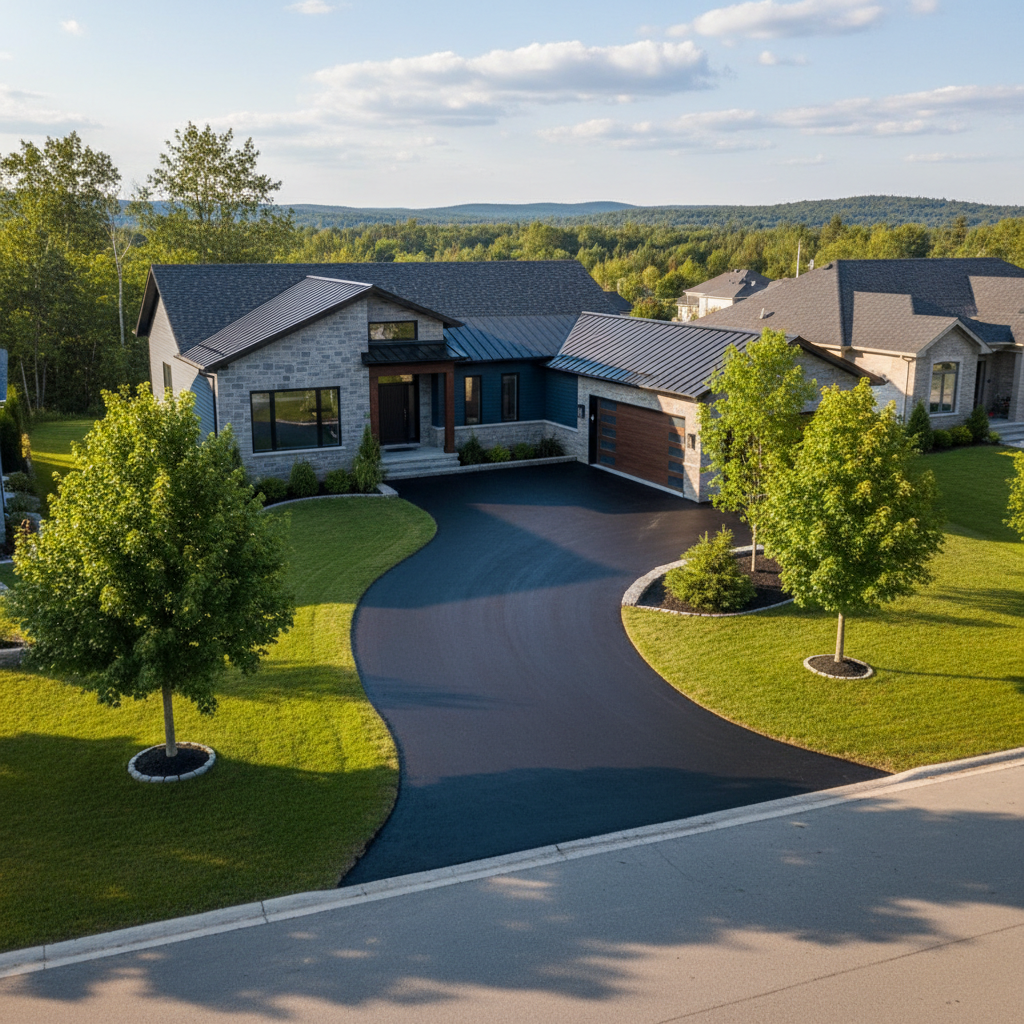
Driveway paving options and costs in Markham
Markham homeowners have several solid driveway paving options, and the “right” choice usually comes down to how you use the space, how long you want to wait before the next major repair, and how your site handles winter in the Toronto area. With Markham having 338,503 residents (Statistics Canada, 2021 Census) and a very high share of owner households, it’s common to find private driveways at detached homes—single-detached dwellings make up 56.2% of housing stock, so there’s strong demand for driveways across neighbourhoods like Unionville and parts of Cornell. Most projects also start with the same reality: Toronto’s frost depth and freeze–thaw cycles push costs higher than in milder climates because the base and drainage must be engineered to stop water from sitting under the pavement. Work is further compressed into late spring through early fall, which tightens scheduling and can raise rates for prime dates.
That said, you’ll still see wide differences in pricing depending on what’s being done—new installation versus overlay, how deep the granular base needs to be for frost protection, and whether the contractor must tear out an existing surface. In the Toronto market, asphalt new installation often lands somewhere around the lower end of the paving bands (for example, Asphalt driveway paving: $3,500–$8,000), while interlocking typically commands a higher upfront budget (Interlocking pavers: $9,000–$20,000). Concrete options usually sit between these bands, depending on finish and site conditions.
Use the table below as a practical starting point for comparing materials before you ask for an itemised quote that matches your driveway size and site conditions.
| Material |
Lifespan |
Maintenance |
Best For |
Price per sq ft |
Price Range |
| Asphalt (new installation, proper base) |
10–20 years |
Seal coat typically every 3–5 years; patching as needed |
Lowest upfront cost with good performance if base/drainage are engineered |
$6–$12/sq ft |
$3,500–$8,000 |
| Asphalt (overlay on existing gravel base) |
8–15 years |
More frequent patching; still plan for sealing |
When the existing base is sound and excavation is limited |
$5.50–$11/sq ft |
$3,000–$7,000 |
| Interlocking concrete pavers |
20–30+ years |
Joint sand top-ups; individual paver replacement if damaged |
High curb appeal and easier spot repairs after winter damage |
$14–$22/sq ft |
$9,000–$20,000 |
| Poured concrete (broom finish) |
15–25 years |
Sealing every few years; crack monitoring and patching |
Durable, low-maintenance look with straight runs and good drainage |
$10–$17/sq ft |
$6,000–$15,000 |
| Exposed aggregate concrete |
15–25 years |
Sealing for stain control; patching if needed |
Slip resistance and a more decorative surface |
$12–$19/sq ft |
$7,000–$16,500 |
| Gravel / crushed stone (budget option) |
3–8 years (varies widely) |
Ongoing top-ups; regrading; weed control |
Temporary solution or low-budget approach with easier maintenance tolerance |
$3–$6/sq ft |
$1,800–$4,500 |
Prices are estimates only and vary by project scope, site access and material selection.
What affects the price of paving in Markham
In Markham (and across the Toronto economic region), the same driveway size can come in anywhere from 30% to 50% apart between quotes. The biggest reason is that contractors aren’t always pricing the same engineering reality: frost protection, drainage, and the depth/quality of compacted base. Asphalt, concrete, and pavers all perform better when the subgrade is stable and water is managed—yet some estimates treat base as an “allowance” rather than a requirement. In a housing market where 81.7% of households own (Statistics Canada, 2021 Census), competition is high and homeowners often request different finish levels, which also shifts scope.
Toronto-area frost depth and freeze–thaw cycles are decisive cost factors. When ground freezing is roughly 3–4 feet, your driveway needs a deeper compacted granular base and reliable drainage so water can’t sit under the pavement and create heaving and cracking. As a rule of thumb, deeper frost protection often means thicker granular build-ups (often 6–12 inches in colder Ontario conditions) compared with milder regions. Costs rise not only for extra material and excavation, but also for labour time to compact in lifts and verify grade and crossfall.
Scheduling pressure matters too: hot-mix asphalt placement generally needs air temperatures above about 10°C, so the paving season is effectively late spring through early fall. That concentrates demand and can push labour rates and prime-date scheduling. For concrete, crews also have to manage placement timing and finishing windows—especially where de-icing salt and snow storage can batter edges and joints.
To ground this in dollars, an asphalt job might be around Asphalt driveway paving: $3,500–$8,000, while paver projects that include full base reconstruction commonly align closer to Interlocking pavers: $9,000–$20,000. Homes built before 1981 make up 18.5% of Markham’s housing stock (Statistics Canada, 2021 Census), and older lots sometimes have older drainage patterns, tree-root impacts, or settled subgrades—issues that can add tear-out and regrading cost.
| Price Factor |
Why It Matters |
Cost Impact |
| Driveway area in sq ft |
Most materials and machine time scale directly with surface area. |
High |
| Base depth required |
Frost line protection drives excavation and granular supply/compaction. |
High |
| Grading and drainage work |
Slope/crossfall and drainage corrections prevent water from pooling under the surface. |
Medium–High |
| Tear-out of existing surface |
Breaking concrete or milling/removing old asphalt and hauling debris costs labour and disposal. |
Medium–High |
| Edge restraints and curbing |
Restraints stop paver spread and help asphalt/concrete edges stay square under freeze pressure. |
Medium |
| Sealing requirement |
Asphalt benefits from sealing after installation/curing to slow oxidation and water intrusion. |
Low–Medium |
| Site access |
Narrow driveways, gate limits, or steep approach can slow equipment and increase hand work. |
Medium |
| Asphalt mix specifications |
Freeze–thaw rated mixes and correct binder content help performance in winter conditions. |
Medium |
Permits & regulations in Ontario
In Ontario, paving a private driveway within your own property usually doesn’t require a building permit, because you’re improving an existing surface on private land. However, work that affects the municipal right-of-way typically needs municipal approval—especially if you’re changing curb cuts, altering the boulevard, modifying how water drains into the street, or making any changes to storm drainage patterns. If your driveway project touches the curb/sidewalk area, assumes a connection to municipal drainage, or involves regrading toward the road allowance, treat it as “permit/approval possible” and ask the contractor to confirm what’s required for your location in Markham.
Step 1 (before you sign): confirm lot-grading rules with the municipality. Some areas restrict how close a hard surface can be to property lines or how runoff can be directed to avoid impacting neighbours and municipal drainage. Step 2: call utility locates before excavation. In Ontario, use Ontario One Call so buried services are marked; this is critical when adding base depth, installing edge restraints, or improving drainage. Step 3: verify the contractor properly.
To check Ontario licence and coverage, ask for (and review) their Ontario business details and registration, then request a certificate of insurance showing liability coverage. For workers, confirm they have WSIB clearance where applicable (or the appropriate coverage status). Most reputable paving firms can provide proof quickly—so if they can’t, that’s a risk you don’t want on a freeze–thaw heavy driveway project.
Asphalt vs pavers vs concrete for Markham driveways
For Markham’s Toronto freeze–thaw climate, the three most common choices are asphalt, interlocking concrete pavers, and concrete. Asphalt is typically the lowest upfront option and can perform very well when the base is rebuilt to suit frost protection and drainage is corrected. The trade-off is maintenance: plan for sealing every 3–5 years to slow water penetration and oxidation, and expect patch repairs over time—especially near where snowplows and de-icing salts concentrate wear.
Interlocking concrete pavers have the highest upfront cost in the usual budget bands, but they’re also the most flexible in winter. When a frost heave or settlement issue occurs, pavers can be lifted, base corrected, and reset without replacing the entire driveway. This “repair without total replacement” approach is especially valuable on older lots where drainage may not have been designed for today’s storm intensity or where subsurface conditions shift after decades.
Poured concrete is often a mid-range price point and can look great with the right finish, but freeze–thaw control depends on air-entrainment, proper curing, and joint planning. Concrete is also more sensitive to surface scaling if de-icing practices are rough and if drainage is poor—so contractor workmanship and mix design matter. Exposed aggregate adds traction, but still relies on good base and drainage to prevent edge deterioration and cracking.
Here’s where pricing becomes justifiable: if asphalt is about $3,500–$8,000 for a typical driveway scope, you might spend toward $9,000–$20,000 for interlocking when curb appeal, long-term repairability, and the expectation of winter disturbance are top priorities. In Markham, that decision often comes down to whether you want “lowest first cost” or “lowest long-term disruption” under Ontario winter conditions.
| Material |
Frost Resistance |
Curb Appeal |
Repair Method |
Lifespan |
Price Band |
| Asphalt (sealed regularly) |
Good with deep base and drainage |
Medium (clean, dark finish) |
Patch and re-level localized areas |
10–20 years |
$3,500–$8,000 |
| Interlocking concrete pavers |
Very good; tolerates movement with correct bedding |
High (varied colours/patterns) |
Lift-and-reset individual pavers |
20–30+ years |
$9,000–$20,000 |
| Poured concrete (air-entrained) |
Good with joints and air entrainment |
Medium–High (finish options) |
Crack repair and patching; slab replacement if severe |
15–25 years |
$6,000–$15,000 |
| Exposed aggregate concrete |
Good when base/drainage are correct |
High (decorative, textured) |
Patch blend-in areas; larger repairs may require panel cuts |
15–25 years |
$7,000–$16,500 |
| Permeable pavers (drainage grid) |
Excellent for water management when designed properly |
High (modern look) |
Replace grid/pavers as needed; address clogged layers |
20+ years (if maintained) |
$10,000–$22,500 |
| Chip seal / tar-and-chip |
Moderate; can ravel in heavy plow/traffic without upkeep |
Low–Medium (utility look) |
Spot re-chip or re-seal |
5–10 years |
$2,500–$6,500 |
How to choose a paving contractor in Markham
Choosing the right paving contractor in Markham starts with verifying Ontario-required business basics and the insurance/coverage that protects you if something goes wrong. Ask for their Ontario registration details (and confirm them using the appropriate online business/registration sources). Then request a certificate of insurance showing general liability for the work. For worker coverage, ask about WSIB clearance (or the applicable coverage status). You don’t want a contractor whose workers aren’t properly covered; it’s one of the fastest ways homeowners end up stuck with a dispute during or after a winter-damage call-back.
Next, get 2–3 itemised written quotes—don’t accept a single lump-sum with vague “materials and labour included.” A good quote breaks out excavation, granular base depth and type, compaction lifts, geotextile (if needed), asphalt/concrete/pavers supply, edge restraints/curbs, and finishing. It should also list disposal/hauling and specify whether permits (if any) and utility locates are included. Keep an eye on exclusions: snow removal protection, replacing damaged landscaping, repairing existing settling, or additional tear-out once they uncover subgrade issues.
Warranty should be clear: separate workmanship warranty length from product/manufacturer warranty, and confirm whether it’s transferable to a new owner if you sell. For payment schedule, never pay more than 10–15% upfront; hold back a meaningful amount until the job is complete and you’ve received final walk-through notes. Finally, demand a written start date and a realistic completion estimate—especially because Markham’s work window is late spring through early fall.
- Verify Ontario registration/business details before signing.
- Request a certificate of insurance with your project address listed where possible.
- Confirm WSIB clearance (or applicable worker coverage status) in writing.
- Get 2–3 itemised quotes with base depth and materials specified (not “allowance”).
- Confirm tear-out scope: what is removed, what is reused, and what is hauled away.
- Ask how they handle drainage: slope/crossfall and any drainage corrections.
- Confirm edge restraints/curbing details (especially for pavers and asphalt edges).
- Ask whether a geotextile fabric is used and why (site-dependent).
- Review the asphalt mix spec for freeze–thaw performance (binder and thickness).
- Check concrete details: air entrainment, curing process, and joint layout.
- Clarify warranty terms and what actions void coverage (e.g., de-icing types).
- Set a payment schedule with only 10–15% upfront and a holdback until final acceptance.
Red flags I see in Markham: (1) quotes that don’t specify base depth or compaction, (2) “we’ll match your existing grade” without discussing drainage, (3) no WSIB clearance or inability to provide a current insurance certificate, (4) refusal to put the start/completion timeline in writing, and (5) high upfront payments without a contract schedule or material list.
Frequently asked questions — paving in Markham
How do I prepare for a paving project?
Start by clearing the driveway and staging access for equipment. In Markham, winters leave a lot of debris behind, so remove loose salt/sand buildup and any plants or landscaping that sit right at the edge where contractors need to dig for base and restraints. If you have an older driveway (and Markham includes 18.5% homes built before 1981), expect crews may find settlement or drainage issues under the surface—so be prepared for additional excavation if the subgrade isn’t stable. Review your contract for tear-out limits and confirm whether disposal is included. Also, ensure there’s room for a dumpster or hauling path. Lastly, ask the contractor about utility locates and confirm Ontario One Call marking is part of their pre-job plan before excavation begins.
How do I compare paving quotes fairly?
Comparing quotes in Markham is mostly about making sure you’re comparing the same scope. Look for base depth, materials, and compaction requirements listed item-by-item—not just “asphalt and labour.” Ask whether the quote includes grading/drainage corrections, edge restraints, and the tear-out/haul-away of the existing surface. Confirm curing/finishing steps (for concrete) and whether asphalt sealing is included as a separate future line item. If one quote lands at Asphalt driveway paving: $3,500–$8,000 and another is much lower, verify whether they’re using the right base design for Toronto-area freeze–thaw cycles. If the higher quote includes deeper granular protection and drainage engineering, it may be the more reliable value.
Can asphalt be laid in cold weather in Markham?
It’s technically possible only under controlled conditions, but standard asphalt placement in Markham needs weather windows. In the Toronto area, asphalt placement generally requires air temperatures above about 10°C and a dry surface so the mat can be placed and compacted properly. If it’s too cold, asphalt won’t compact to spec and can trap moisture—leading to early raveling or patch failure. If the contractor proposes work during borderline temperatures, ask what method they’ll use (and get it in writing): surface drying plan, heating and compaction specs, and how they protect the mat while it cools. The right mix design for freeze–thaw is also important, because Markham winter conditions are tough on water and weak base layers.
What is a driveway apron and do I need one in Markham?
A driveway apron is the transition section at the road edge/curb where your driveway meets the street-side grade. In many Markham projects, it’s needed when the approach area is broken, sloped improperly, or not draining correctly—especially if plowing causes repeated impacts or if the transition creates ponding. Whether you “need” one depends on where water collects and whether municipal right-of-way is affected. Work that changes the curb cut or alters storm drainage patterns may require municipal approval. Ask your contractor to show you the plan: where the apron begins and ends, the base build-up there, and how the slope ties into the existing driveway so it doesn’t create a future freeze–thaw stress point.
How do I maintain my driveway through Markham winters?
Winter maintenance is about reducing water intrusion and preventing mechanical damage. For asphalt, keep an eye on small cracks and patch quickly rather than waiting—water is the enemy during freeze–thaw cycles. Use sand or salt carefully: salt can accelerate surface deterioration, and heavy salt/sand buildup right along the edges and near the apron can roughen the surface faster. Avoid using sharp metal scrapers that gouge the surface. For pavers, brush sand back into joints if you notice joint loss after plowing seasons, and don’t fill joints with materials that won’t lock properly. After the heaviest freeze periods, do a quick visual check for edge lifting or settled spots. Catching movement early can prevent bigger base problems.
Is it worth sealing a new driveway right away in Markham?
For asphalt, sealing right away is usually not the goal; you want the asphalt to cure first. Most sealcoat schedules are based on getting the surface ready and letting it reach appropriate dryness and stability. Many contractors recommend sealing after the initial curing window (commonly within the first 6–12 months) because it helps limit water penetration and slows oxidation—both important in Markham’s freeze–thaw winter. If you delay too long, you may lose some of the benefit and need more aggressive patching sooner. In terms of budgeting, sealing is typically part of maintenance planning within the overall project lifecycle, often not the same cost as full resurfacing. When you get your quote, ask when sealing should be scheduled and whether that cost is included or will be a separate line item.