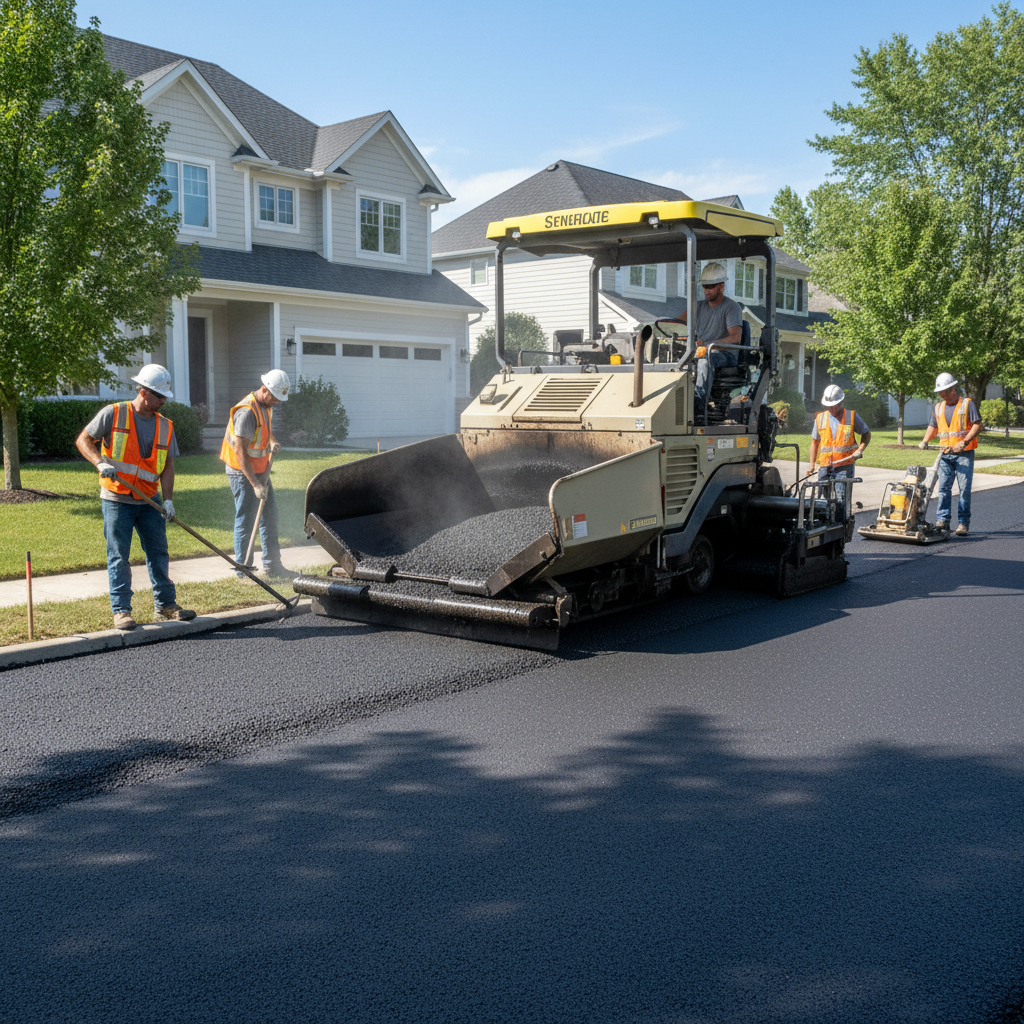
Driveway paving options and costs in Kennedy Park
Kennedy Park, Ontario is a great place to invest in a durable driveway, especially because many households here are single-detached homeowners who rely on their front drive year-round. With a population of 17,123 (Statistics Canada, 2021 Census), the Toronto economic region consistently has enough demand that pricing can firm up quickly when contractors’ schedules tighten. In practice, that means you’ll see faster turnarounds for projects in high-traffic streets closer to the Parkside Village and Victoria Park–Kennedy Road area, while late-season changes can cost more.
Driveway costs in Kennedy Park are shaped heavily by Toronto’s freeze–thaw cycles and frost depth. Ground freezing to roughly 3–4 feet means the base has to be engineered and compacted so water can drain away and the pavement doesn’t heave or crack during winter and early spring. Because the paving season is effectively late spring through early fall (best placed when air temperatures are high enough), prime dates can come at a premium.
Below is a homeowner-friendly comparison of the most common driveway surfacing choices—so you can match upfront cost, expected lifespan, and maintenance to how you actually live (snow clearing, salt use, and whether you want “repairable” sections). Use it as a planning baseline, then we’ll help you narrow the right system for your site conditions and budget.
| Material |
Lifespan |
Maintenance |
Best For |
Price per sq ft |
Price Range |
| Asphalt (new installation, proper base) |
10–20 years |
Seal every 3–5 years; patch as needed |
Value-focused driveways with good drainage |
$5–$12 |
$3,500–$8,000 |
| Asphalt (overlay on existing gravel base) |
8–15 years |
Seal every 3–5 years; more frequent spot repairs |
Budget refresh where base is sound and excavated as needed |
$4.50–$10.50 |
$3,000–$7,000 |
| Interlocking concrete pavers |
20–30 years |
Weed control; joint sand top-up; targeted re-laying if needed |
Curb appeal + the ability to repair sections |
$10–$18 |
$9,000–$20,000 |
| Poured concrete (broom finish) |
20–30 years |
Crack monitoring; occasional patching; reseal if desired |
Clean, low-maintenance look with proper joints |
$9–$15 |
$6,000–$15,000 |
| Exposed aggregate concrete |
20–30 years |
Periodic cleaning; patching as needed |
Slip resistance and a decorative finish |
$12–$18 |
$7,500–$16,000 |
| Gravel / crushed stone (budget option) |
2–5 years (surface only) |
Re-grade and add stone annually; weed control |
Short-term solution or overflow parking |
$2.50–$6 |
$1,500–$4,500 |
Prices are estimates only and vary by project scope, site access and material selection.
What affects the price of paving in Kennedy Park
In Kennedy Park and across the Toronto economic region, two quotes for “the same size driveway” can easily diverge by 30–50% because the real drivers aren’t just the surface—they’re the unseen base, excavation, drainage, and how the contractor sequences work during a compressed paving season. When crews have multiple jobs queued up for late spring through early fall, prime-date scheduling can push labour and equipment costs upward, especially for larger lots or properties that need significant re-grading.
Frost depth and freeze–thaw cycles are decisive cost factors here. With ground freezing roughly 3–4 feet in the Toronto area, contractors typically need a thicker compacted granular base so the driveway doesn’t heave or crack when water in the layers freezes and expands. In practical Ontario terms, that often means deeper excavation and a properly compacted granular section (commonly around 6–12 inches of base depending on design and subgrade), plus reliable drainage so water can’t sit under the pavement. Asphalt also has to be engineered with freeze–thaw-rated hot-mix design, which can cost more than a generic mix.
Concrete pricing can rise or fall based on how much jointing and subbase preparation is required. For example, a “simple” broom-finished pour can cost more if the site needs extra dowels, saw cuts at the right spacing, and better drainage to limit reflective cracking. Exposed aggregate can also be pricier because of the finish system and additional labour.
To put it in dollars: many Kennedy Park asphalt projects land in the broader asphalt driveway band of about $3,500–$8,000 depending on how much base and grading you need. If you’re comparing to interlocking pavers, the higher upfront band of $9,000–$20,000 is usually justified when the base is built right for freeze movement and the homeowner values section-by-section repairs over full replacement.
| Price Factor |
Why It Matters |
Cost Impact |
| Driveway area in sq ft |
Surface quantity drives asphalt, concrete, paver material and placement time |
Often the single largest variable (+/– 25–60%) |
| Base depth required |
Frost line determines granular thickness needed to reduce heaving and cracking |
Can add significant excavation and hauling (+/– 15–35%) |
| Grading and drainage work |
Proper slope and drainage prevent water pooling under the pavement |
May increase costs if swales, pipe, or regrading is needed (+/– 10–30%) |
| Tear-out of existing surface |
Breaking, trucking disposal, and new base rebuild are labour-intensive |
Commonly adds a noticeable line-item (+/– 10–25%) |
| Edge restraints and curbing |
Edges lock the system so pavers don’t spread and asphalt edges don’t ravel |
Typically a moderate add (+/– 3–12%) |
| Sealing requirement |
Asphalt needs sealing after the curing period to slow oxidation from cycles |
Extra lifecycle cost (+/– 2–6% of project value annually/over time) |
| Site access |
Narrow/tight lots slow equipment moves and increase manual handling |
Can add labour and time (+/– 5–20%) |
| Asphalt mix specifications |
Freeze-thaw-rated mix and proper thickness affect cracking and rut resistance |
Higher material and QA (+/– 5–15%) |
Permits & regulations in Ontario
In Ontario, paving a private driveway within your own property usually does not require a building permit. Where things change is if the work touches anything in the municipal right-of-way—such as creating or changing a curb cut, altering boulevard areas, modifying storm drainage, or changing the grading that affects municipal drainage. In those cases, you’ll typically need municipal approval before any excavation or construction starts.
Some areas in Ontario also have lot-grading bylaws or rules that limit how close hard surfaces can be built to property lines and how drainage must be directed so water doesn’t run onto neighbouring properties. If your driveway ties into a walkway, sidewalk, or catch basin area, it’s especially important to confirm requirements with the municipality.
Before excavation, require utility locates through Ontario One Call (the request goes out so contractors and homeowners can avoid hitting buried services). Step one for homeowners in Kennedy Park: ask the contractor to show their plan for locates, excavation limits, and how they’ll manage drainage during construction.
Step two is contractor verification: check the company’s Ontario business presence, confirm they carry liability insurance (you’ll want to see a current Certificate of Insurance naming you if required), and verify WSIB coverage for workers. Step three: request a clearance letter/documentation as applicable and keep it with your contract paperwork.
Asphalt vs pavers vs concrete for Kennedy Park driveways
For Kennedy Park, your decision usually comes down to the trade-off between upfront cost and how well the system tolerates freeze–thaw movement. Asphalt is often the lowest upfront choice and performs well when the granular base is built for Toronto’s frost depth (roughly 3–4 feet freezing) and drainage is corrected—however, it needs routine sealing every 3–5 years to protect against oxidation from the winter cycles and salt exposure. Interlocking concrete pavers cost more initially, but they handle movement better because each unit can be lifted and reset if a section settles. That makes them a strong fit for homeowners who want long-term curb appeal and easier repairs without full replacement.
Poured concrete is mid-range to higher cost, and it can last decades if the mix is air-entrained, joints are placed properly, and the subbase is compacted and drained. In Toronto-area winters, de-icing salt and repeated freeze–thaw can contribute to surface scaling or cracking if the design doesn’t account for it. Exposed aggregate can improve slip resistance, but it still relies on proper base preparation and drainage to control cracking risk.
A practical example: if your asphalt driveway quote is around $3,500–$8,000 and the interlocking paver option is in the $9,000–$20,000 band, the price difference is usually justified when you (1) expect to keep the home long-term, (2) want a “repair a panel” approach if a corner heaves, and (3) value the appearance during the years you’ll actually park and host visitors.
| Material |
Frost Resistance |
Curb Appeal |
Repair Method |
Lifespan |
Price Band |
| Asphalt (sealed regularly) |
Good with engineered base and drainage |
Moderate (clean black finish) |
Cut and patch localized areas |
10–20 years |
$3,500–$8,000 |
| Interlocking concrete pavers |
Very good (units tolerate movement) |
High (design flexibility) |
Lift/reset individual stones and re-sand joints |
20–30 years |
$9,000–$20,000 |
| Poured concrete (air-entrained) |
Good if air-entrained and properly jointed |
Moderate to high |
Patch spalls/cracks; section replacement if needed |
20–30 years |
$6,000–$15,000 |
| Exposed aggregate concrete |
Good with correct mix and drainage |
High (decorative surface) |
Patch with matching mix/finish where possible |
20–30 years |
$7,500–$16,000 |
| Permeable pavers (drainage grid) |
Good when designed for local subgrade and maintenance |
High (modern look) |
Clear debris; re-level/reset limited sections |
15–25 years |
$10,000–$22,000 |
| Chip seal / tar-and-chip |
Fair to good (surface wears with traffic cycles) |
Low to moderate (utility look) |
Spot re-chip/maintenance recoats |
5–12 years |
$2,500–$6,500 |
How to choose a paving contractor in Kennedy Park
Choosing the right contractor in Kennedy Park starts with proof of coverage and competence. First, verify Ontario licensing/registration where applicable for the company, and ask for their liability insurance certificate—make sure it’s current. Second, confirm WSIB/WCB coverage for their workers (not just the vehicle or equipment coverage). The simplest practical step: request the documents up front, then match the name on the COI/clearance letter to the company on the contract. If you have to chase paperwork after you sign, that’s a warning sign.
Next, get 2–3 itemised written quotes, not lump sums. You want breakdowns for excavation, hauling/disposal, granular base depth, compaction method, thickness of asphalt or concrete, reinforcement/joints (for concrete), and edging/restraints. Ask whether the price includes permit/municipal approvals if your work touches the right-of-way, and confirm what’s excluded (topsoil restoration, lawn re-sodding, or regrading of adjacent areas). Confirm whether disposal of old asphalt/concrete is included.
Look at warranty details: workmanship warranty length and what it covers, product/manufacturer warranty details, and whether any coverage is transferable if you sell the home. Agree on a timeline in writing: a start date and a completion estimate. Finally, payment should be controlled—never more than 10–15% upfront, with progress payments tied to measurable stages and a holdback until the job is complete and surfaces are accepted.
- Ask for the quote to show base depth and materials (not just “asphalt supply and install”).
- Confirm compaction approach (rolling/validation, not guesswork).
- Require drainage plan notes (slope and where water goes).
- Check that edge restraints/curbing are included where needed.
- Make sure tear-out and disposal are clearly itemised.
- For asphalt: confirm tack coat, lift thickness, and sealing plan/curing window.
- For concrete: confirm air entrainment and joint layout and saw-cut timing.
- Verify warranty in writing, including workmanship and exclusions.
- Confirm WSIB/WCB coverage and liability insurance certificates match the contract party.
- Request references for similar Toronto-area freeze–thaw projects.
- Clarify schedule flexibility and whether weather downtime affects the price.
- Keep a written record of all changes and change orders.
Red flags I commonly see with paving contractors in the Kennedy Park area: vague quotes with no base depth; refusing to provide WSIB/WCB proof or an up-to-date insurance certificate; promising “no need for sealing” on new asphalt; starting work without utility locates or proper drainage planning; and requesting large upfront payments before any measurable work is completed.
Frequently asked questions — paving in Kennedy Park
How much does it cost to pave a driveway in Kennedy Park?
In Kennedy Park and the broader Toronto region, pricing depends most on driveway size and how much base excavation and drainage correction is needed for freeze–thaw performance. As a planning baseline, asphalt driveway paving commonly runs in the $3,500–$8,000 band for many typical residential driveways, while interlocking concrete pavers often land in the $9,000–$20,000 range. Concrete is commonly somewhere between those two, often around $6,000–$15,000 depending on thickness, finish, and jointing. If your existing surface needs tear-out or if your subgrade is soft, expect the higher end—Toronto’s frost depth and water management requirements aren’t optional if you want fewer cracks and less heaving.
Asphalt vs interlocking pavers vs concrete — which is best in Kennedy Park?
There isn’t one “best” for every Kennedy Park driveway, but asphalt is often the best match for homeowners who want the lowest upfront cost and don’t mind maintenance. If you choose asphalt, plan on sealing every 3–5 years—this is important in Ontario’s freeze–thaw cycles and salt use. Interlocking pavers usually win for curb appeal and repairability: if a section settles, it can be lifted and re-set without replacing the whole driveway. Poured concrete can be a strong long-term choice when the mix is air-entrained, the base is compacted, and joints are placed correctly. For many Toronto-area sites, proper drainage is the deciding factor regardless of material.
How long does a paved driveway last in Kennedy Park?
Lifespan depends on how the driveway is built for Toronto-area conditions—especially frost depth and drainage. With a properly compacted granular base and correct slopes, asphalt commonly lasts about 10–20 years, with sealing helping extend service life. Interlocking concrete pavers typically last 20–30 years because they can tolerate minor movement and be repaired at the panel/stone level. Poured concrete (air-entrained and properly jointed) is also often 20–30 years, though poor base prep or missing joints can shorten that. If your neighbourhood experiences heavier winter salt and you plow aggressively, maintenance and edge details matter more because freeze–thaw plus chemicals can accelerate deterioration.
When is the best time of year to pave in Kennedy Park?
For Kennedy Park, the best time is late spring through early fall—when air temperatures support proper asphalt curing and placement. Asphalt performance is strongly tied to warm conditions; crews generally need air temperatures above about 10°C for reliable installation and compaction. Wet or frozen subgrade can lead to soft base layers, which then become a problem during winter heaving. Concrete can also be placed only within workable temperature ranges and with correct curing protection. If you’re aiming for a specific contractor, booking earlier in the season is smart because the Toronto region’s paving schedule tightens into the best-weather months.
How deep should the base be for Kennedy Park's frost?
Because Toronto’s frost line can reach roughly 3–4 feet, base depth and design are critical to resisting heaving and cracking. A typical Ontario approach involves removing unsuitable material and rebuilding with a properly compacted granular base system designed to manage water and frost penetration. In many residential projects, base and aggregate thicknesses often land in the range of about 6–12 inches of granular base (exact design varies with subgrade conditions, drainage, and driveway thickness). The key is not just “depth”—it’s compaction quality and drainage so water can’t sit under the driveway. Your contractor should explain their section design and how they’ll verify compaction.
How often should I seal my asphalt driveway?
For Kennedy Park driveways, sealing is usually scheduled after the asphalt has cured—then typically every 3–5 years depending on traffic, sun exposure, and winter maintenance. Toronto-area freeze–thaw cycles and salt use can speed surface oxidation, so sealing helps slow deterioration and keeps water out of surface pores. If your asphalt was installed recently, don’t seal immediately; you want it to cure properly first. A reputable contractor will tell you the expected cure window and recommend whether to do a light repair/patching round first. If you see raveling, fine cracks that expand after freeze–thaw, or dark spots that drain poorly, address it promptly rather than waiting a full cycle.