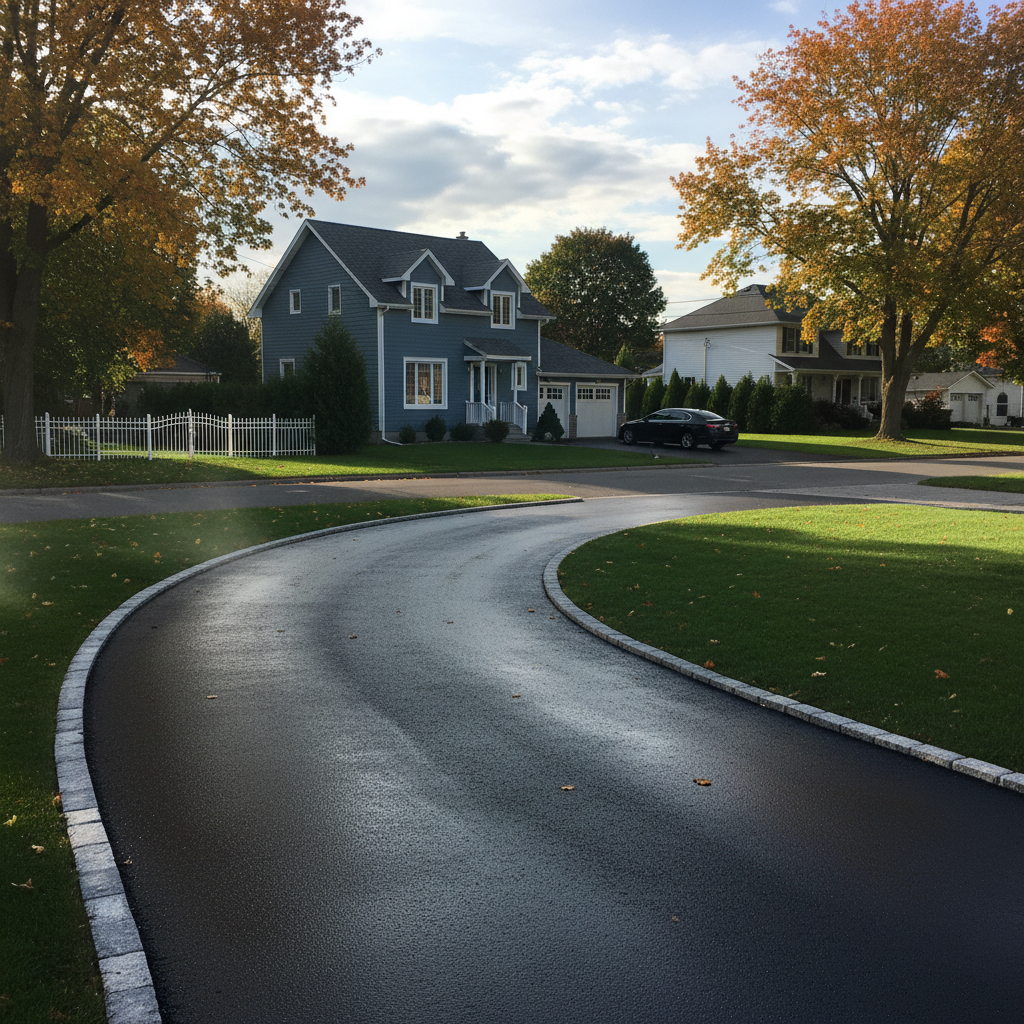
Driveway paving options and costs in Willowdale West
In Willowdale West, Ontario, homeowners typically choose between asphalt, interlocking pavers, and concrete—each with a different upfront cost and winter performance profile. With a population of 16,936 (Statistics Canada, 2021 Census), this neighbourhood supports a steady mix of driveway sizes tied to established residential streets near Finch Avenue and Sheppard Avenue. In practice, many private driveway jobs are at single-family homes, where aesthetics and day-to-day usability matter, but durability through Toronto’s freeze–thaw swings is the deciding factor. That climate is a major reason why driveway quotes can feel “all over the map”: Toronto’s short paving window pushes labour into late spring through early fall, and prime scheduling can tighten pricing. On top of that, frost depth in the Toronto area is commonly around 3–4 feet, which means the base and drainage design must be engineered to hold up when water expands during freezing and contracts during thaw.
Driveway work is especially in demand around high-traffic residential corridors like the Sheppard Ave W area, where contractors often run into access constraints from narrower lots and mature landscaping. If your subgrade is disturbed, drainage is poor, or the existing surface must be removed, your total installed price shifts quickly. Use the table below to compare realistic price bands for common installation scopes, then treat your contractor’s site-specific recommendations—especially around base thickness and edge restraints—as the part that protects your money in winter.
| Material |
Lifespan |
Maintenance |
Best For |
Price per sq ft |
Price Range |
| Asphalt (new installation, proper base) |
15–25 years |
Seal every 3–5 years |
Fast install, good value, smooth ride |
$7–$13 |
$3,500–$8,000 |
| Asphalt (overlay on existing gravel base) |
10–18 years |
Seal every 3–5 years; monitor edges |
Upgrading a gravel drive with limited tear-out |
$6–$12 |
$3,200–$7,500 |
| Interlocking concrete pavers |
25–35 years |
Occasional re-laying of a few stones; joint sand top-ups |
Curb appeal and repairability without full replacement |
$16–$28 |
$9,000–$20,000 |
| Poured concrete (broom finish) |
20–30 years (well-drained) |
Seal when recommended; patch cracks as needed |
Clean, uniform look; long straight runs |
$12–$20 |
$6,000–$15,000 |
| Exposed aggregate concrete |
20–30 years |
Seal periodically; patch spalls quickly |
Slip resistance and upgraded appearance |
$14–$24 |
$7,000–$17,000 |
| Gravel / crushed stone (budget option) |
5–12 years |
Top up annually; re-grade; weed control |
Temporary solution or low-budget access way |
$4–$8 |
$2,000–$5,500 |
Prices are estimates only and vary by project scope, site access and material selection.
What affects the price of paving in Willowdale West
In Toronto’s broader market, you can see 30–50% swings between quotes for what looks like the “same” driveway. The biggest reason is that asphalt and concrete costs are strongly tied to what’s under the surface: excavation, subgrade preparation, base thickness, and drainage design. Two driveways with the same square footage can price very differently if one requires deeper granular base to manage Toronto’s typical 3–4 feet of frost depth, while the other has stable, well-drained soil. In Willowdale West, the demand for spring and early-summer install dates is intense because hot-mix asphalt placement depends on warm air and soil conditions (often above 10°C). When schedules compress, labour availability tightens and contractors may allocate more crews to “prime-date” work—pushing total installed cost toward the upper end of the $3,500–$8,000 asphalt band or higher if drainage and tear-out are extensive.
Concrete pricing can also climb when freeze–thaw management requires careful mix design, proper air entrainment, and joint planning. A poured drive that’s exposed to heavy salt from winter maintenance can require additional planning so it doesn’t crack early. For example, a driveway with a low spot that traps water before freezing often needs added grading and subdrainage; that can move a project from the mid range of $6,000–$15,000 to the higher end. Conversely, if your existing base is sound and drainage is already corrected, an overlay or partial rebuild can keep costs closer to the lower end. Asphalt mix design also matters: freeze–thaw-rated mix spec can cost more, but it helps resist winter surface deterioration.
| Price Factor |
Why It Matters |
Cost Impact |
| Driveway area in sq ft |
Most pricing scales directly with paved square footage and haul volume. |
High |
| Base depth required |
Frost line dictates granular thickness and compaction to prevent heaving/cracking. |
High |
| Grading and drainage work |
Correct slope and route water away so it can’t sit under pavement. |
Medium–High |
| Tear-out of existing surface |
Breaking/hauling concrete or removing old asphalt adds equipment and disposal. |
Medium–High |
| Edge restraints and curbing |
Proper restraints prevent paver spread and asphalt edge failure in freeze–thaw. |
Medium |
| Sealing requirement |
Asphalt needs sealing after installation (commonly after 6–12 months) to reduce water ingress. |
Low–Medium (ongoing) |
| Site access |
Narrow lots and tight turning radii slow equipment movement and increase staging time. |
Medium |
| Asphalt mix specifications |
Freeze–thaw-rated mix design improves performance in Toronto winters. |
Medium |
Permits & regulations in Ontario
In Ontario, paving a private driveway within your own property typically does not require a building permit. For most Willowdale West homeowners, replacing asphalt or concrete where the driveway already exists—assuming there’s no change to municipal infrastructure—can proceed as a private improvement without the same level of municipal permitting. That said, you do need municipal approval when the work touches the municipal right-of-way or alters stormwater/boulevard systems. This includes creating or changing a curb cut, doing modifications to the boulevard/sidewalk area, or altering storm drainage flows tied to the street. Some municipalities also enforce lot-grading rules that restrict how close a hard surface can come to property lines and may require water to be directed properly so it doesn’t drain onto neighbours.
Before excavation, insist on utility locates. In Ontario, contractors commonly submit locate requests through Ontario One Call so you don’t hit buried services like gas, hydro, or telecom. As a homeowner, you can verify your paving contractor’s compliance with three practical checks: (1) confirm the contractor’s Ontario licence/registration where applicable via official online directories; (2) ask for a Certificate of Insurance showing liability coverage that matches the job scale; and (3) request proof of WSIB coverage (or appropriate clearance letter). If the job involves subcontractors, ask who they are and confirm their coverage too. Doing these checks early prevents delays and protects you if something goes wrong on site.
Asphalt vs pavers vs concrete for Willowdale West driveways
For Willowdale West driveways, the “best” material depends on how you want to manage Toronto’s freeze–thaw cycle, salt, and ploughing—while still fitting your budget. Asphalt is usually the lowest upfront option, and when it’s built on a well-compacted granular base (critical with frost depth around 3–4 feet), it delivers a smooth ride and relatively quick installation. The trade-off is routine maintenance: plan on sealing every 3–5 years to reduce water penetration. Interlocking concrete pavers typically cost more upfront, but they win on curb appeal and repairability. If a section shifts from a localized drainage issue or a utility event, pavers can be lifted, corrected, and reset without replacing the whole driveway. Poured concrete sits in between on price and can look clean, but it is more sensitive to cracking if it’s not properly air-entrained and jointed for winter movement and water drainage.
In Toronto-area winters, de-icing salts plus freeze–thaw can accelerate surface deterioration if the base drains poorly. That’s why drainage design and base prep are non-negotiable across all three options. As a budget example: if your driveway paving quote is around the $3,500–$8,000 asphalt band, switching to pavers that land in the $9,000–$20,000 range may be justified if you prioritise long-term curb appeal, want individual-stone repair, or have an awkward shape where pavers perform better aesthetically. If you’re choosing for lowest maintenance hassle, asphalt on a properly engineered base usually fits—provided you’re willing to seal when recommended.
| Material |
Frost Resistance |
Curb Appeal |
Repair Method |
Lifespan |
Price Band |
| Asphalt (sealed regularly) |
Good with proper base, drainage, and freeze–thaw-rated mix |
Medium |
Patch at localized failures; reseal/overlay as needed |
15–25 years |
$3,500–$8,000 |
| Interlocking concrete pavers |
Very good when installed over engineered base with correct edging |
High |
Lift-and-reset individual units; re-sand joints |
25–35 years |
$9,000–$20,000 |
| Poured concrete (air-entrained) |
Good with air entrainment, joints, and controlled drainage |
Medium–High |
Crack patching/patch removal; partial repairs where feasible |
20–30 years |
$6,000–$15,000 |
| Exposed aggregate concrete |
Good with correct mix and crack/joint planning |
High |
Surface patching; localized grinding/repair as needed |
20–30 years |
$7,000–$17,000 |
| Permeable pavers (drainage grid) |
Very good when the drainage layer is designed correctly |
High (modern look) |
Lift-and-reset units; clean/restore drainage layer |
20–30 years |
$10,000–$22,000 |
| Chip seal / tar-and-chip |
Fair to good; can be less ideal for heavier driveways |
Low–Medium |
Spot resurfacing and rejuvenation |
6–12 years |
$2,500–$5,500 |
How to choose a paving contractor in Willowdale West
Choosing the right contractor matters more in Willowdale West than many homeowners expect, because Toronto frost and drainage details are what determine whether your driveway holds up for 10 years or closer to 20+. Start with licensing and coverage checks. In Ontario, ask for the contractor’s Ontario registration/licence information (where applicable), then verify their liability insurance by requesting a Certificate of Insurance listing adequate limits for your project. Next, confirm WSIB/WCB coverage: ask for proof of WSIB coverage or a current clearance letter. If a contractor can’t provide clear documentation, treat it as a red flag.
Then get 2–3 itemised written quotes. Not a single lump-sum number—ask for a breakdown that shows labour and materials separately (excavation, base material, compaction, asphalt/concrete, edging, disposal, and any drainage corrections). Read the scope carefully: is permit pulling included if the job affects the boulevard or storm drainage? Is equipment mobilization and disposal included? Is the quote for a full tear-out and rebuild, or an overlay?
Warranty should be clear about workmanship length and what it covers. Ask whether the warranty applies to installation only, whether there’s a separate manufacturer product warranty, and whether coverage is transferable to a future owner. For payment, never agree to more than 10–15% upfront; hold back the balance until the driveway is completed, cleaned, and accepted. Finally, get your start date and estimated completion date in writing so you can plan around the compressed paving season.
- Ask for WSIB clearance letter or proof of coverage before work starts.
- Request a current Certificate of Insurance and confirm limits match the job size.
- Get licence/registration details in writing (not just “we’re registered”).
- Require an itemised quote: base, asphalt/concrete, edging, drainage, disposal, labour.
- Confirm whether an engineering-style base thickness is included for frost depth conditions.
- Ask how they handle drainage corrections (slope, outlets, subdrain if needed).
- Confirm compacted base specs and whether they’ll test/verify compaction.
- Clarify tear-out scope: what’s removed and what’s left in place (and why).
- Verify edge restraints/curbing are included for pavers or asphalt edges.
- Ask about asphalt seal timing (often 6–12 months) and whether it’s recommended.
- Review warranty terms for workmanship and product, including exclusions.
- Use a payment schedule that keeps 80–90% tied to completion and quality checks.
Concrete red flags I commonly see in Willowdale West: contractors who won’t show insurance/WSIB documents; quotes that only provide a single lump-sum without base thickness or drainage details; skipping edge restraints or compacted base specs to “save cost”; agreeing to large upfront payments (above 10–15%); and promising a “quick” install date without confirming you’re actually in the warm-weather window required for asphalt placement.
Frequently asked questions — paving in Willowdale West
How long does a paved driveway last in Willowdale West?
In Willowdale West, driveway life depends less on the brand name and more on base depth, drainage, and how water behaves during Toronto’s freeze–thaw cycles. With a properly built asphalt driveway on the right compacted granular base, a typical lifespan is about 15–25 years, and you can protect that timeline by sealing every 3–5 years. Interlocking pavers often last 25–35 years because individual sections can be lifted and corrected if something shifts. Poured concrete commonly targets 20–30 years when joints and air entrainment are done correctly. If your driveway is repeatedly salted and ploughed, the quality of drainage and edging becomes even more important—otherwise you’ll see heaving or cracking sooner, regardless of whether you paid in the lower or upper part of the asphalt $3,500–$8,000 band.
When is the best time of year to pave in Willowdale West?
The best time in Ontario for driveway paving is typically late spring through early fall, when soil and air temperatures are warm enough for hot-mix asphalt placement and proper compaction. Asphalt performance can suffer if laid too cold because the mix won’t compact to spec and bond can be weaker. In practice, Toronto-area paving schedules compress into a narrower window, so booking earlier helps you avoid rush pricing. If you’re doing concrete, timing still matters for finishing and curing, especially in the shoulder seasons. Plan around the weather and ask your contractor for a start date that accounts for warm conditions and drainage preparation. In Willowdale West, waiting through repeated freeze–thaw events can also mean more subgrade moisture, which raises base and drying time costs.
How deep should the base be for Willowdale West's frost?
Toronto-area frost conditions (often roughly 3–4 feet) are why base and drainage design are central in Willowdale West. While exact depths depend on soil conditions and whether you need subdrainage, a common Ontario approach is to build a deeper, well-compacted granular base in the 6–12 inch range (often layered) to help prevent heaving and cracking. The real key is not only “how deep,” but how consistently that depth is achieved and compacted, and whether water is kept moving away from the subgrade. If you have soft spots, poor drainage, or water pooling, expect the contractor to recommend extra excavation and granular replacement rather than simply adding surface material. That’s also where asphalt and concrete quotes diverge—two driveways of the same size can require different base depths based on site conditions.
How often should I seal my asphalt driveway?
For asphalt in Willowdale West, sealing is usually done on a maintenance cycle of about every 3–5 years, assuming you keep drainage clear and don’t let water sit against the driveway edges. There’s also timing right after installation: many contractors recommend waiting roughly 6–12 months before sealing so the asphalt has cured and is ready for proper adhesion. Sealing helps reduce water infiltration and slows surface aging from winter cycling and de-icing salts. If your driveway sits in the shade most of the year or gets heavy vehicle traffic, you may need to reseal on the earlier side of the window. Ask your contractor what seal product they recommend and whether they’ll confirm the driveway is clean and dry enough before application.
Why does my driveway crack and heave in winter?
Cracking and heaving in Ontario winters usually trace back to water and movement beneath the surface. If water gets into the granular layers or subgrade and isn’t drained away, it freezes and expands, creating upward pressure that can split asphalt or lead to settlement and cracking. Freeze–thaw cycles are especially tough when base compaction is inconsistent, drainage doesn’t match the driveway slope, or edging is missing so materials migrate. Salt and ploughing can also worsen the surface over time by accelerating surface deterioration, even if the base is decent. The fix often isn’t a simple patch—if the underlying drainage or base is flawed, the problem returns. A well-designed rebuild often costs more up front than a quick repair, but it typically prevents repeat failures that can make your driveway feel like it failed “too early,” even when the paving price fell within the $3,500–$8,000 asphalt range.
Do I need a permit to pave my driveway in Ontario?
In most cases, paving within your own property (like resurfacing an existing driveway with similar footprint) typically does not require a building permit in Ontario. However, you may need municipal approval if the work affects the municipal right-of-way—for example, if you’re changing a curb cut, modifying the boulevard, or altering storm drainage related to the street. In Willowdale West, that distinction matters because access and drainage interfaces can be part of the driveway scope. Before excavation, confirm utility locates through Ontario One Call, and ensure your contractor clarifies whether any municipal approvals are needed. Your contractor should also follow any lot-grading rules that restrict how water and surface material relate to property lines. If your quote is vague on permits or right-of-way impacts, ask for the specific responsibility in writing.