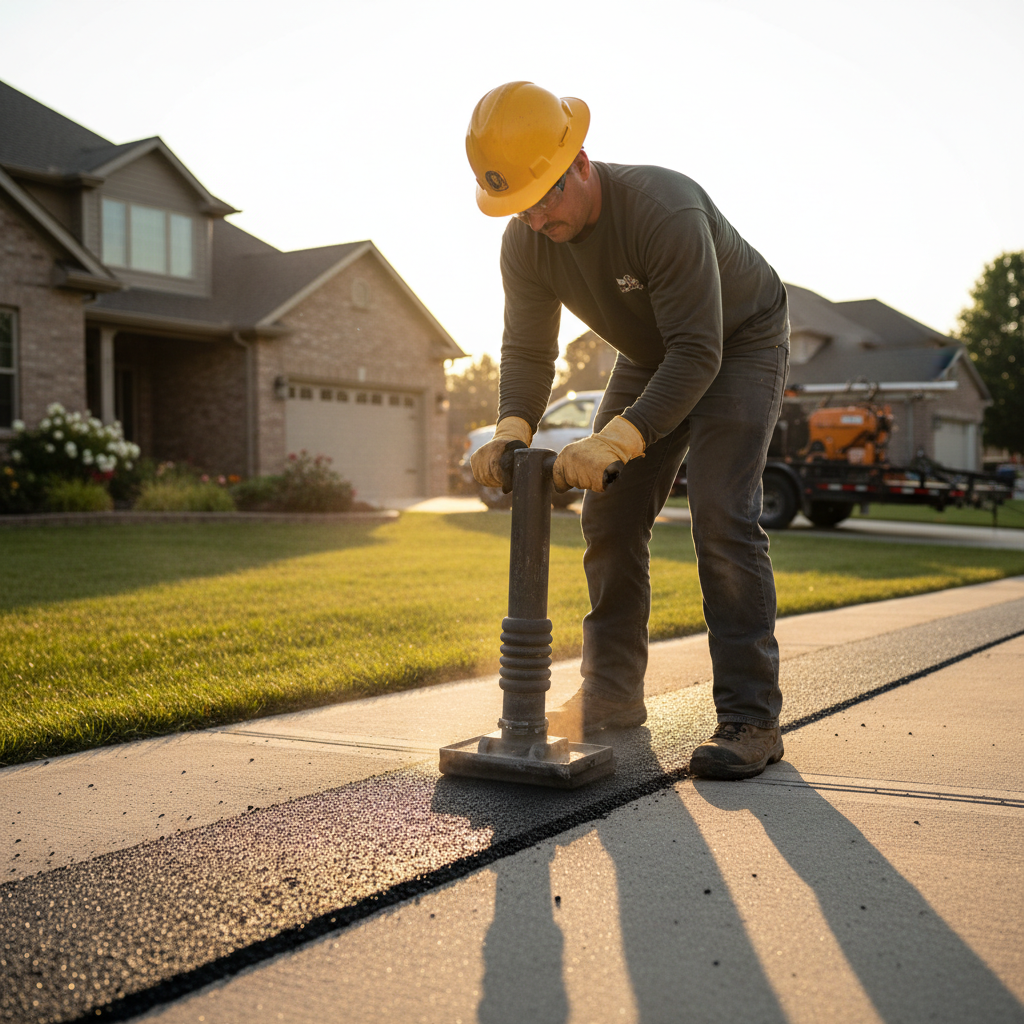
Driveway paving options and costs in Brampton
Brampton homeowners have a lot of driveway paving options, but the “best” choice usually comes down to how your property handles winter conditions. With Brampton at a population of 656,480 (Statistics Canada, 2021 Census), there’s strong demand for durable driveways—especially in neighbourhoods like West Brampton and Mount Pleasant, where lots are busy and access can be tight. Just as importantly, the housing mix matters: single-detached homes make up 52.6% of dwellings, and those homes typically have driveways that need a reliable surface year after year. In fact, homeowner households represent 78.1% of all households (Statistics Canada, 2021 Census), which is why driveway replacements and upgrades are common, not occasional.
Toronto-area weather drives the pricing. Frost in the ground can reach roughly 3–4 feet, and freeze–thaw cycles happen repeatedly through late fall, winter, and early spring. That means your asphalt or concrete must be built on a properly compacted granular base with dependable drainage so water doesn’t sit under the surface and cause heaving and cracking. The market also tightens the schedule: the paving season is effectively late spring through early fall, so prime dates can cost more in Brampton, particularly when demand peaks.
Below is a practical comparison of common materials and typical cost ranges for a well-prepared installation. Use it as a baseline, then we’ll fine-tune based on your driveway size, base conditions, drainage, and whether you’re doing new asphalt, interlock, or a concrete option.
| Material |
Lifespan |
Maintenance |
Best For |
Price per sq ft |
Price Range |
| Asphalt (new installation, proper base) |
15–25 years |
Seal every 3–5 years |
Good value, smooth ride, fastest install |
~$4.50–$9.00 |
$3,500–$8,000 |
| Asphalt (overlay on existing gravel base) |
10–18 years |
Seal every 3–5 years; monitor edges |
When the base is mostly sound and grade is right |
~$4.00–$7.75 |
$3,500–$7,200 |
| Interlocking concrete pavers |
25–40 years |
Occasional joint sand top-ups; replace units if needed |
Curb appeal, repairability, long-term flexibility |
~$10.00–$16.00 |
$9,000–$20,000 |
| Poured concrete (broom finish) |
20–30 years |
Light sealing as needed; manage de-icing use |
Long straight runs, simple maintenance |
~$8.00–$13.50 |
$6,000–$15,000 |
| Exposed aggregate concrete |
20–30 years |
Periodic cleaning; sealing when recommended |
Enhanced traction and finish |
~$10.00–$16.00 |
$7,500–$16,500 |
| Gravel / crushed stone (budget option) |
2–7 years (varies with drainage and compaction) |
Regrade and top up 1–3 times per year |
Temporary solution or low-budget pad |
~$2.50–$4.00 |
$1,800–$4,500 |
Prices are estimates only and vary by project scope, site access and material selection.
What affects the price of paving in Brampton
In Brampton and the wider Toronto economic region, it’s common to see quotes for what looks like the “same driveway” vary by 30–50%. The difference usually comes from the parts homeowners can’t easily see—base preparation, drainage corrections, tear-out and haul-away, edge restraints, and the type of asphalt mix required for freeze–thaw performance. Contractors also price differently based on workload: because the paving season is effectively late spring through early fall, prime dates get booked quickly, which can shift labour and equipment costs.
Frost depth and freeze–thaw cycles are decisive cost factors here. With ground freezing to roughly 3–4 feet, driveways need a thicker compacted granular base and reliable drainage so water can’t sit under the pavement. In colder inland markets like ours, base thickness is commonly in the 6–12 inch range (depending on your existing subgrade). That extra excavation, supply of granular material, and compaction time pushes total installed cost higher versus milder regions. Asphalt also needs local freeze–thaw-rated mix design; a “standard” mix may be cheaper upfront but can wear faster under Toronto-area cycling.
Concrete pricing can move too. For example, older homes with poorer drainage (especially where water collects near the garage slab) may require additional subdrain work and thicker base, which can bring a poured concrete driveway toward the upper end of the $6,000–$15,000 band. Homes built before 1981 account for 23.4% of dwellings (Statistics Canada, 2021 Census), and many of those driveways have older grading patterns that require rework to perform in winter. On the other hand, a clean tear-out with good subgrade can keep asphalt projects closer to the $3,500–$8,000 range.
| Price Factor |
Why It Matters |
Cost Impact |
| Driveway area in sq ft |
Most costs scale directly with surface area. |
Typically the largest variable line item; can change total by several thousand dollars. |
| Base depth required |
Frost line depth determines granular thickness to resist heaving. |
Extra excavation and material can add significant cost, especially if poor soil is found. |
| Grading and drainage work |
Correct slope and drainage prevent water trapping under pavement. |
Can add labour and materials for subdrains, swales, or spot rebuilds. |
| Tear-out of existing surface |
Breaking asphalt/concrete and hauling debris adds time and disposal costs. |
Unexpected demolition can move a budget plan up quickly. |
| Edge restraints and curbing |
Limits lateral movement that causes paver spread or asphalt edge failures. |
More restraint work often adds perimeter cost but protects the whole surface. |
| Sealing requirement |
Asphalt needs a seal to slow oxidation and water penetration. |
Usually adds a planned cost after installation (often within months 6–12). |
| Site access |
Narrow driveways or limited staging slow equipment and increase labour. |
May require smaller equipment and extra trips, raising overall cost. |
| Asphalt mix specifications |
Freeze–thaw-rated mixes perform better under Toronto-area cycling. |
Higher-grade mix can increase per-tonne material cost but improves durability. |
Permits & regulations in Ontario
In Ontario, paving a private driveway on your own property usually does not require a building permit. Most residential “in-kind” driveway resurfacing—like replacing asphalt on the same footprint—falls under normal private-site improvement, provided you’re not changing how water drains or altering municipal infrastructure. However, work in the municipal right-of-way is a different story. If your project includes a new or modified curb cut, changes to the boulevard, or any alteration to storm drainage leading to or from the road allowance, you should expect municipal approval requirements. Some areas also have lot-grading or surface drainage rules that restrict how close hard surfaces can be to property lines or how water must be managed.
Before any excavation, call for utility locates (Ontario One Call) and make sure you confirm exact depths and routes. Step-by-step, here’s how you should verify a contractor for Brampton:
- Ask for their Ontario business number and confirm they’re properly licensed for the type of paving/contracting they’re doing (check the appropriate online listings for the trade/contract category they claim).
- Request a certificate of insurance (liability) showing your address or showing they carry active coverage for the work.
- Confirm they have WSIB clearance/coverage for workers (or the correct exemption documentation if applicable).
- Ask for the proposed scope in writing (base build-up, drainage touches, disposal/haul-away).
- Only sign after you confirm the permit/approval responsibility for any right-of-way items.
Asphalt vs pavers vs concrete for Brampton driveways
For Brampton driveways, asphalt, interlocking pavers, and concrete can all work—but the climate punishes shortcuts. With Toronto-area freeze–thaw cycling and a frost depth roughly 3–4 feet, the base and drainage design matter more than the surface material. Asphalt is typically the lowest upfront cost and installs quickly, but it performs best when sealed regularly (often every 3–5 years) to protect against oxidation and water infiltration. Interlocking concrete pavers cost more to install, yet they’re highly repairable—individual units can be lifted and reset if a subgrade area settles or water is corrected later. Poured concrete is usually mid-range, but it can crack if joints, air-entrainment, and drainage aren’t handled correctly for freeze–thaw and de-icing practices.
In terms of base preparation, most Brampton projects require a properly engineered compacted granular base so water can’t sit beneath the driveway and freeze. Drainage matters everywhere in the Greater Toronto Area, but it’s especially important where the driveway meets the garage apron or where downspouts discharge nearby. For day-to-day winter maintenance, pavers generally tolerate plowing and salt exposure well when edging restraints are properly installed and the jointing sand is maintained. Asphalt also holds up well with correct edging and sealing, while concrete durability hinges on air-entrainment and joint layout—both of which affect how it reacts under repeated cycling.
Here’s a realistic cost justification example: if a well-prepped asphalt driveway is around the $3,500–$8,000 band, upgrading to interlock might land in the $9,000–$20,000 range. That additional cost is often worth it when you want long-term curb appeal in a neighbourhood like Mount Pleasant, and you value repairability over resurfacing later.
| Material |
Frost Resistance |
Curb Appeal |
Repair Method |
Lifespan |
Price Band |
| Asphalt (sealed regularly) |
Good with proper base and freeze–thaw-rated mix |
Attractive but more uniform/simple |
Patch or mill-and-overlay sections |
15–25 years |
$3,500–$8,000 |
| Interlocking concrete pavers |
Very good; flexible system with drainage-permitting base design |
High—great match for detached homes |
Lift units, correct base, re-set and re-sand |
25–40 years |
$9,000–$20,000 |
| Poured concrete (air-entrained) |
Good when air-entrained and properly jointed |
Medium to high (finish dependent) |
Crack repair with patching/partial replacement |
20–30 years |
$6,000–$15,000 |
| Exposed aggregate concrete |
Good with proper drainage and curing |
High—premium texture |
Patch/replace affected sections |
20–30 years |
$7,500–$16,500 |
| Permeable pavers (drainage grid) |
Excellent drainage potential when designed correctly |
High (often a modern look) |
Replace individual units and maintain drainage structure |
20–40 years (system dependent) |
$10,000–$22,000 |
| Chip seal / tar-and-chip |
Moderate; relies heavily on base quality |
Lower curb appeal than interlock/concrete |
Spot rework, re-chip at wear points |
6–12 years |
$3,000–$6,500 |
How to choose a paving contractor in Brampton
Choosing a contractor in Brampton is less about flashy ads and more about verifying details that protect your driveway in winter. Start by checking Ontario licensing for the contracting activities they’re offering and make sure their coverage is active. Ask for a current certificate of liability insurance (so you’re not exposed if damage or an accident occurs) and confirm WSIB coverage/clearance for their workers. If they can’t provide these right away, that’s a red flag—especially when excavation and heavy hauling are involved.
Next, get 2–3 itemised written quotes. You want a breakdown that shows labour and materials, not just a lump sum. Look for line items for excavation, granular base depth, compaction testing (if they do it), drainage work, disposal/haul-away, base preparation repairs, and the surface itself (including thickness). Confirm whether permits or municipal approvals are included when the work touches the boulevard/right-of-way. Warranty matters too: ask for workmanship warranty length and what’s covered if freeze–thaw failures show up (and whether it’s tied to an address/transferable if you sell).
For payment, never let it become a full upfront job. A common safe approach is no more than 10–15% upfront, with the balance due after milestones and final completion. Finally, ask for a start date and completion estimate in writing—Toronto-area scheduling can be tight, so you want clarity before materials are ordered.
- Confirm Ontario licence status and business identity matches the quote.
- Request certificate of insurance and verify active coverage dates.
- Verify WSIB clearance/coverage documentation before work begins.
- Ask for an itemised quote: excavation, base, drainage, surface, edging, disposal.
- Check what’s excluded (example: removal of unsuitable subgrade, permit fees, off-site disposal).
- Ensure drainage items are specified (slope correction, subdrain touches, catch points if needed).
- Verify base depth and granular specification; don’t accept vague “proper base.”
- Ask about testing/compaction process (and whether they document it).
- Confirm edging restraints/curbs are included for pavers to prevent spread.
- For asphalt, confirm the sealing plan (often required after installation, typically 6–12 months later).
- Get warranty terms in writing: workmanship length, exclusions, and how to claim.
- Set a payment schedule with holdback until completion and site cleanup are done.
Red flags in Brampton: (1) quotes that skip base depth and drainage details, (2) “too cheap” pricing that suggests minimal tear-out or no granular rebuild, (3) lack of insurance/WSIB documentation, (4) pressure for large upfront payments, and (5) no written start/end dates or vague timelines like “sometime this season.”
Frequently asked questions — paving in Brampton
Why does my driveway crack and heave in winter?
In Brampton and across Ontario, winter cracking and heaving are usually caused by water and freeze–thaw cycling acting on an unprotected base. If drainage isn’t right, meltwater and rain can migrate under asphalt or concrete, then expand as temperatures drop. That swelling lifts the surface (heaving) and eventually creates cracks or rough edges. The frost depth in this region can be significant, so an insufficient granular base thickness or poor compaction will struggle under repeated cycles. Many older driveways (including homes built before 1981, which make up 23.4% of dwellings) also have grading patterns that trap water, worsening the problem. A properly engineered base plus slope/drainage corrections are the fix, not just sealing or patching.
Do I need a permit to pave my driveway in Ontario?
Usually, paving your private driveway on your own property in Ontario does not require a building permit, especially if the work stays within the existing driveway footprint and doesn’t alter municipal infrastructure. That said, you should expect municipal approval if your project involves the boulevard/right-of-way—such as creating or changing a curb cut, modifying storm drainage that serves the street, or making changes near the road allowance. Also check whether your municipality has lot-grading or drainage rules that restrict where water can flow after the driveway is paved. The safest approach for Brampton homeowners is to ask your contractor to identify any right-of-way or grading touches in the scope before work starts, and to confirm utility locates through Ontario One Call before any excavation.
How long before I can drive on new asphalt?
For new asphalt in Brampton, you’ll typically be able to drive on the surface once it has cooled to a safe temperature and the mat has been rolled and finished properly. Many contractors aim for driveway access the same day, but it can depend on weather, humidity, and how thick the lift is. If a hot surface is exposed to traffic too soon, you can get ruts or surface damage that later leads to faster wear in winter. When planning your schedule, keep in mind Ontario’s shorter workable paving window, so crews often finish quickly and then follow up with proper cure time. If you’re budgeting, it’s helpful to know typical asphalt driveway paving ranges from about $3,500–$8,000, and sealing is commonly scheduled after installation (often within 6–12 months).
What causes potholes and how are they repaired?
Potholes usually start beneath the surface: water enters through cracks, weak joints, or edge failures, then undermines the base as it freezes and thaws. Over time, the weakened area can collapse, forming a pothole even if the top looks fine at first. In Ontario, repeated freeze–thaw cycling accelerates this process when the drainage slope is off or when the base wasn’t built deep and compacted correctly. Repairs are typically spot removal (cutting out the failed asphalt down to sound material), base correction if needed, compaction, and patching with asphalt matched to your area and mix design. If potholes keep forming in the same zone, you may actually need broader drainage or a partial rebuild rather than repeated patchwork.
How do I prepare for a paving project?
Preparation starts before the crew arrives. First, clear the driveway area so equipment can get in safely—remove vehicles, basketball hoops, planters, and anything that would restrict staging. Next, mark sprinkler heads and any landscaping features, and decide where you want spoil and waste material hauled. If your scope includes changing driveway grading or drainage, protect basement window wells and make sure downspouts aren’t discharging toward the driveway. For utilities, confirm the contractor will complete locates via Ontario One Call before digging. Finally, review the written quote for inclusions like tear-out, disposal, and whether edge restraints are included (especially important for pavers). A little front-end preparation helps avoid delays during the busy spring-through-early-fall season.
How do I compare paving quotes fairly?
To compare paving quotes fairly in Brampton, focus on scope and build quality, not just the final total. Ask every contractor for itemised labour and materials: excavation depth, granular base thickness, drainage/grading corrections, tear-out and haul-away, edging/curbs, and the surface spec (including asphalt mix requirements for freeze–thaw). Confirm warranty terms in writing and whether the workmanship warranty covers failures due to moisture or base issues. Also compare whether sealing is included for asphalt and when it will be applied—most asphalt projects require a seal after installation (often 6–12 months). Finally, understand realistic price bands: asphalt driveway paving commonly falls around $3,500–$8,000, while interlocking pavers are often $9,000–$20,000. Big gaps can be legitimate (more base, better drainage), or they can signal a cut in the critical parts.