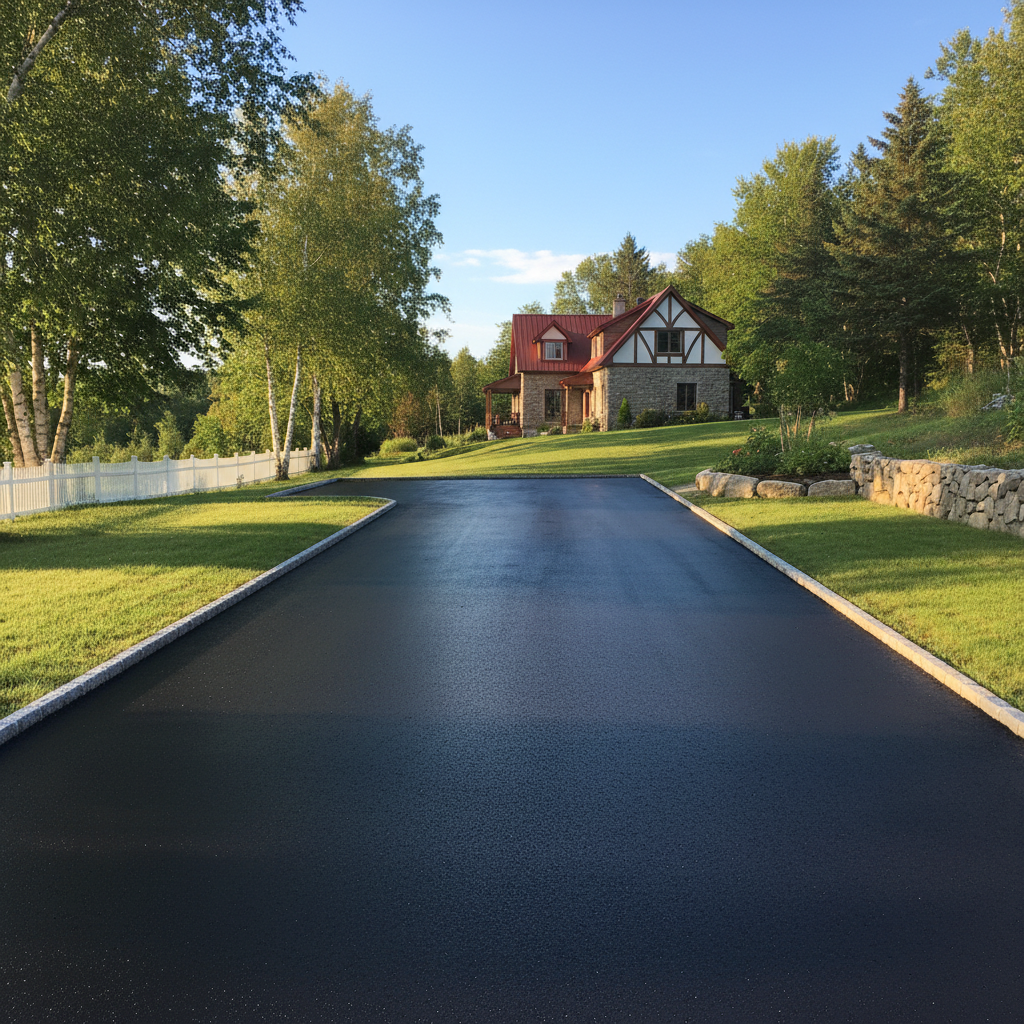
Driveway paving options and costs in West Clayton
In West Clayton, homeowners typically choose from asphalt, interlocking concrete pavers, or concrete—each with different upfront costs and performance trade-offs. With West Clayton’s population at 13,102 (Statistics Canada, 2021 Census), there’s steady demand for new driveways and upgrades around the Clayton Heights area where lots are set up for seasonal vehicle access and drainage. In practice, most private driveways belong to single-detached homes, so contractors see a high volume of residential installs rather than multi-unit paving.
Lower Mainland–Southwest paving pricing is shaped less by deep frost and more by intense rainfall, drainage, and the freeze–thaw band near the shallow frost line. Even though coastal British Columbia has a milder freeze profile than Interior regions, local design and construction habits still plan for a freeze depth on the order of about 18" for sensitive infrastructure. That means you’ll often see excavation and compacted granular base requirements that protect against heaving, rutting, and cracking—especially in clay-heavy soils found in parts of the Fraser Valley.
Because workmanship capacity is limited in peak months, a well-prepped base can cost more than a “minimal dig” approach, but it’s what keeps your surface stable through spring washouts and winter temperature swings. Asphalt budgets are usually the most predictable, while pavers and concrete tend to cost more up front but provide different maintenance paths. Below is a side-by-side comparison to help you line up realistic expectations for your project scope and material choice.
| Material |
Lifespan |
Maintenance |
Best For |
Price per sq ft |
Price Range |
| Asphalt (new installation, proper base) |
12–20 years |
Seal every 3–5 years; patch as needed |
Best balance of cost and smooth driving surface |
$12–$20 |
$12 – $20 |
| Asphalt (overlay on existing gravel base) |
8–15 years |
More frequent patching in weak areas; seal every 3–5 years |
When drainage is fixed but subgrade needs improvement |
$10–$18 |
$10 – $18 |
| Interlocking concrete pavers |
20–30 years |
Replace individual stones; periodic joint sand top-ups |
Curb appeal, easy localized repairs, long-term value |
$20–$40 |
$20 – $40 |
| Poured concrete (broom finish) |
20–30 years |
Seal optional; patch spalls; manage cracks over time |
Clean lines and low day-to-day upkeep |
$18–$35 |
$18 – $35 |
| Exposed aggregate concrete |
20–30 years |
Seal as recommended; patch carefully to match texture |
Improved traction and decorative finish |
$22–$40 |
$22 – $40 |
| Gravel / crushed stone (budget option) |
3–8 years |
Regrade annually; add stone as it migrates |
Short-term access while you plan a hard-surface upgrade |
$8–$14 |
$8 – $14 |
Prices are estimates only and vary by project scope, site access and material selection.
What affects the price of paving in West Clayton
In West Clayton and the wider Lower Mainland–Southwest, you can see the same driveway concept priced 30–50% apart depending on what’s included in the site prep and drainage. On top of that, British Columbia quotes can swing versus other parts of Canada because labour availability changes with the long paving season and the shoulder-season rain timing. Contractors also price risk—if heavy storms limit compaction windows, crews may charge more to ensure the base is installed and compacted correctly rather than rushed.
Two cost factors dominate: frost-line design and freeze–thaw cycling. Even with relatively shallow coastal frost, local practice assumes a frost line on the order of 18" for sensitive applications. That can mean deeper excavation and a thicker, well-compacted granular base (commonly about 6" compacted granular base for residential asphalt, with adjustments when soils are weak or saturated). In colder regions, designers lean into thicker bases—often 6–12 inches of granular support—because freeze–thaw damage is more severe. In West Clayton, the frost risk is less extreme, but the repeated temperature swings near that shallow band still matter, especially where clay soils hold water. That’s why proper drainage and granular replacement can push a job from an asphalt rate around the $12/sq ft level to a more complete “proper base” scope closer to $18–$20/sq ft.
Concrete costs can move for similar reasons. For example, adding proper subdrains or improving grading to daylight can increase concrete prep costs quickly, while a simple, well-draining site with stable subgrade can keep concrete closer to the lower end of the $18–$35/sq ft band. West Clayton homes often have older landscaping and changing grades near foundations; if your driveway ties into an existing drainage pattern or downspouts, we may need extra excavation and reshaping—sometimes by the tune of hundreds of dollars in added base and haul-away—before any surface goes down.
| Price Factor |
Why It Matters |
Cost Impact |
| Driveway area in sq ft |
Hard cost is largely proportional to square footage (excavation, base, surface, finishing) |
Largest driver; often 50–70% of total project cost |
| Base depth required |
Frost-line design determines granular thickness and how much subgrade must be removed/replaced |
Can add substantial cost if extra excavation is required |
| Grading and drainage work |
Slope corrections, removal of ponding, and drainage adjustments reduce freeze–thaw damage |
Often increases cost when reworking soils or adding drainage |
| Tear-out of existing surface |
Break-up, hauling and disposal are more labour-intensive than new builds on virgin grade |
Can swing the quote materially, especially for thick concrete |
| Edge restraints and curbing |
Prevents paver spread, maintains line and thickness, and improves long-term performance |
Adds cost but prevents expensive future failures |
| Sealing requirement |
Asphalt typically needs sealing after installation to protect binder and reduce moisture ingress |
Small add now; reduces deterioration and patching later |
| Site access |
Narrow lots, steep driveways, or limited truck staging increases labour and time |
Can raise labour cost and change equipment choice |
| Asphalt mix specifications |
Freeze–thaw-rated mixes and appropriate aggregate selection cost more than generic mixes |
Helps longevity; moves price toward higher band estimates |
Permits & regulations in British Columbia
In British Columbia, paving a private driveway within your own property usually does not require a building permit. That said, work in the municipal right-of-way can trigger municipal approval. In West Clayton, the projects that typically DO require municipal involvement include new curb cuts, changes to the boulevard, alterations that affect storm drainage flow, or modifications near drainage infrastructure in the street/boulevard area. If your plan changes how water exits your property—or ties into an existing ditch, catch basin, or culvert—assume you’ll need approval before excavation begins.
What typically does NOT require a permit is resurfacing or replacing a driveway entirely within your lot line, provided you are not changing drainage patterns in the right-of-way. Even then, some municipalities apply lot-grading bylaws that restrict how close a hard surface can be to certain lines and how stormwater must be managed.
Step-by-step for a West Clayton homeowner: first, request utility locates before any digging. In BC, call BC 1 Call so underground services are marked. Next, ask the contractor for their British Columbia licence details (where applicable), liability insurance certificate of insurance (COI), and proof of workers’ compensation coverage (often referred to as WCB coverage). You should also verify the insurance matches the job address and scope. Many homeowners review the COI for coverage limits and name/reflect the correct insured parties, and then confirm any required clearance documentation the contractor provides before work starts.
Asphalt vs pavers vs concrete for West Clayton driveways
For West Clayton’s Lower Mainland–Southwest climate, the “best” driveway material depends on how you handle water, how often you want maintenance, and how you prefer repairs to be done after winter. Asphalt generally wins on lowest upfront cost—within the local $12–$20 per sq ft range—but it needs sealing every 3–5 years to keep the binder protected from moisture and rain-driven erosion. Interlocking concrete pavers usually cost more upfront (often the $20–$40 range), but they offer excellent curb appeal and repairs: if a section fails, you can lift and replace individual stones without demolishing the entire driveway.
Poured concrete sits in the mid-range ($18–$35 per sq ft) and can perform very well when air-entrainment is correct and the base is compacted. The risk in freeze–thaw cycling is that concrete can crack if drainage is poor or if the slab isn’t properly supported, especially where clay soils hold water. Exposed aggregate concrete improves traction for wet conditions but still relies on correct installation to avoid surface scaling.
Base preparation matters more than “frost depth” stories you might hear online. Even in coastal BC, the working assumption for sensitive infrastructure is roughly an 18" frost line, so we design granular base and subgrade support to resist movement. Practically, that often means excavation and compaction comparable to what you’d see elsewhere in Canada—just with drainage-focused detailing as the priority.
One common decision point: if you’re comparing asphalt around $12–$20/sq ft to pavers near the $20–$40 band, the price difference is justified when you want curb appeal and the option for targeted repairs—especially if you expect future landscaping changes. If your property drains well and you prefer the simplest long-term maintenance plan, asphalt plus periodic sealing is often the better fit for many West Clayton homes.
| Material |
Frost Resistance |
Curb Appeal |
Repair Method |
Lifespan |
Price Band |
| Asphalt (sealed regularly) |
Good with correct base + drainage |
Medium (clean, dark finish) |
Patching hot-mix asphalt |
12–20 years |
$12–$20 |
| Interlocking concrete pavers |
Excellent when base is stable |
High (variety of colours/patterns) |
Lift/replace individual pavers |
20–30 years |
$20–$40 |
| Poured concrete (air-entrained) |
Good with proper support and mix |
Medium to high (broom finish) |
Crack repair/patching; partial panel repair |
20–30 years |
$18–$35 |
| Exposed aggregate concrete |
Good with correct base + curing |
High (textured decorative surface) |
Patch with matching aggregate/finish where feasible |
20–30 years |
$22–$40 |
| Permeable pavers (drainage grid) |
Excellent where designed for infiltration/controlled drainage |
High (modern drainage look) |
Replace affected paver section/joints |
20+ years (system-dependent) |
$25–$45 |
| Chip seal / tar-and-chip |
Fair to good (wears faster than asphalt) |
Low to medium |
Top-up/topping with additional aggregate |
5–10 years |
$8–$15 |
How to choose a paving contractor in West Clayton
When you hire a paving contractor in West Clayton, verify the basics before you compare prices. In British Columbia, ask for proof of liability insurance and confirm coverage applies to your project address and dates. Also ask for workers’ compensation coverage (WCB coverage). If a contractor can’t provide a current certificate of insurance (COI) and clear documentation of coverage, that’s a major risk you shouldn’t ignore.
For pricing, get 2–3 itemised written quotes that break down labour and materials instead of a single lump sum. You want to see line items for excavation, granular base, compaction, asphalt or concrete thickness, edge restraints, drainage/grading adjustments, and disposal. Confirm whether the quote includes permit coordination (if required for any right-of-way work), delivery charges, traffic control, and surface preparation steps like cutting and removing unsuitable material.
Warranty matters for workmanship. Look for the workmanship warranty length (for example, asphalt patching/installation coverage) and whether it’s tied to specific defects. Product/manufacturer warranties don’t always apply to installation issues—so ask how failures are handled. Also ask if warranties are transferable to future owners.
Payment schedule should be conservative: never pay more than 10–15% upfront. Hold back a meaningful final portion until the driveway is fully complete, swept, and cleaned up. Finally, request a written start date and completion estimate—weather can shift timelines in the Lower Mainland, but a reputable contractor will still commit to a schedule and communicate changes quickly.
- Request the contractor’s liability insurance COI and confirm coverage for your job site
- Confirm WCB coverage documentation before work begins
- Verify their business registration status and how long they’ve been operating locally
- Use itemised quotes: base/granular depth, thickness of asphalt or concrete, and compaction methods
- Ask what’s excluded (e.g., tree roots, drainage repairs, landscape reinstatement, disposal)
- Confirm whether utility locates are booked before excavation
- Confirm grading and drainage plan: where water goes and how ponding is prevented
- For pavers, ensure edge restraints/curbing and joint sand specification are listed
- For asphalt, confirm whether tack coat is included and sealing is recommended after curing
- Check warranty details in writing, including what triggers a warranty visit
- Agree on a payment schedule with a final holdback until completion
- Get a written schedule with start date, milestones, and weather contingency approach
Red flags in West Clayton: (1) quotes that ignore drainage/grading or don’t mention granular base compaction, (2) unusually low pricing that skips tear-out or proper disposal, (3) vague scope language like “as needed” with no thickness or base depth stated, (4) refusal to provide insurance/WCB documentation, and (5) asking for a large upfront payment before any materials are on site.
Frequently asked questions — paving in West Clayton
How long before I can drive on new asphalt?
In West Clayton and across the Lower Mainland–Southwest, drive-on timing depends on how the asphalt was placed, weather conditions, and whether the surface has been rolled properly. Typical guidance is that you can drive on new asphalt after it cools sufficiently—often within 24–48 hours—though foot traffic and light use is usually allowed sooner than heavy vehicle loads. If it’s been raining or the weather is cool, the cooling/curing window can stretch, so reputable crews coordinate schedules around temperature and moisture. After paving, you should plan to avoid sharp turns and prolonged parking on the fresh surface. For long-term performance, sealing is typically done after the asphalt cures (often within 6–12 months). If you’re budgeting, new asphalt commonly lands in the $12–$20 per sq ft band when proper base preparation is included (Lower Mainland–Southwest pricing).
What causes potholes and how are they repaired?
Potholes usually start with water. In West Clayton’s climate, heavy rain and ponding can infiltrate through surface cracks or weak joints, then soften the granular base. When vehicles pass over the softened area, the pavement loses support and breaks down into a pothole—then freeze–thaw cycles nearby can make the damage expand during temperature swings. Repairs depend on root cause: a surface patch over a wet, unstable spot won’t last. A proper repair typically involves saw-cutting the failed area, removing the loose asphalt and any saturated base material, re-compacting a granular replacement, and placing hot-mix asphalt to match the existing thickness and grade. If the issue is recurring, it may indicate deeper drainage or subgrade problems that should be corrected before more patching.
How do I prepare for a paving project?
Preparation is mostly about access and protecting what’s around the work zone. In West Clayton, schedule driveway unloading so deliveries and equipment can stage safely—narrow side access can slow excavation and asphalt placement. Clear vehicles, planters, and movable items from the driveway and sides, and discuss with your contractor whether any landscaping reinstatement is included. If you have downspouts draining toward the driveway or low spots that frequently pond, flag them early; drainage corrections drive cost and longevity. Before excavation, confirm that utility locates are ordered through BC 1 Call so crews don’t damage services. If your driveway ties into a boulevard area or involves storm drainage changes, ask whether municipal approvals are required. Finally, understand the schedule: paving work often compresses around rain windows, and asphalt crews may need a dry period for compaction and finishing.
How do I compare paving quotes fairly?
To compare quotes fairly in British Columbia, use the scope—not the total number. Start by lining up the same driveway area (in sq ft) and confirm the asphalt or concrete thickness, base type, and granular base depth. A quote that lands near the lower end of the asphalt range (for example, $12–$20 per sq ft) may still cost more later if it under-builds the base or skips drainage/grading corrections. For pavers, compare edge restraints/curbing, joint sand, and the thickness/build-up of the base gravel. For concrete, confirm whether the mix is air-entrained and whether saw-cutting/jointing is included. Ask each contractor to list what’s excluded: disposal, tear-out, permit coordination, and any drainage work. If one quote provides itemised line items and the others are vague, treat the vague quote as incomplete.
Can asphalt be laid in cold weather in West Clayton?
Cold weather matters for asphalt placement. In Lower Mainland–Southwest conditions, asphalt can often be placed during shoulder seasons when air temperatures are adequate, but workable conditions still depend on moisture, wind, and the mix temperature when it arrives. Local practice generally requires hot-mix asphalt to be installed when temperatures support proper compaction; many crews target conditions that align with an air temperature above about 10°C, because compaction and breakdown are critical. If it’s too cold or damp, the asphalt can cool too quickly, affecting density and long-term durability—especially with West Clayton’s rain-driven drainage challenges and shallow freeze–thaw cycling. A good contractor will be transparent about weather limits, may reschedule, and will not cut corners on base compaction.
What is a driveway apron and do I need one in West Clayton?
A driveway apron is the transition section between the road/curb area and your driveway surface—essentially the engineered ramp-like portion that helps vehicles enter and exit without abrupt steps. In West Clayton, you may need or benefit from an apron where there’s a curb cut, a boulevard transition, or a grade change that would otherwise cause bumping, accelerated wear, or drainage issues. Whether you “need” one depends on how water is managed at the curb cut and how your driveway ties into the municipal boundary area. If your work affects the right-of-way (for example, new curb cuts or changes to storm drainage), you may require municipal approval before paving. Discuss your plan with the contractor and ask what they recommend based on your existing curb/grading.