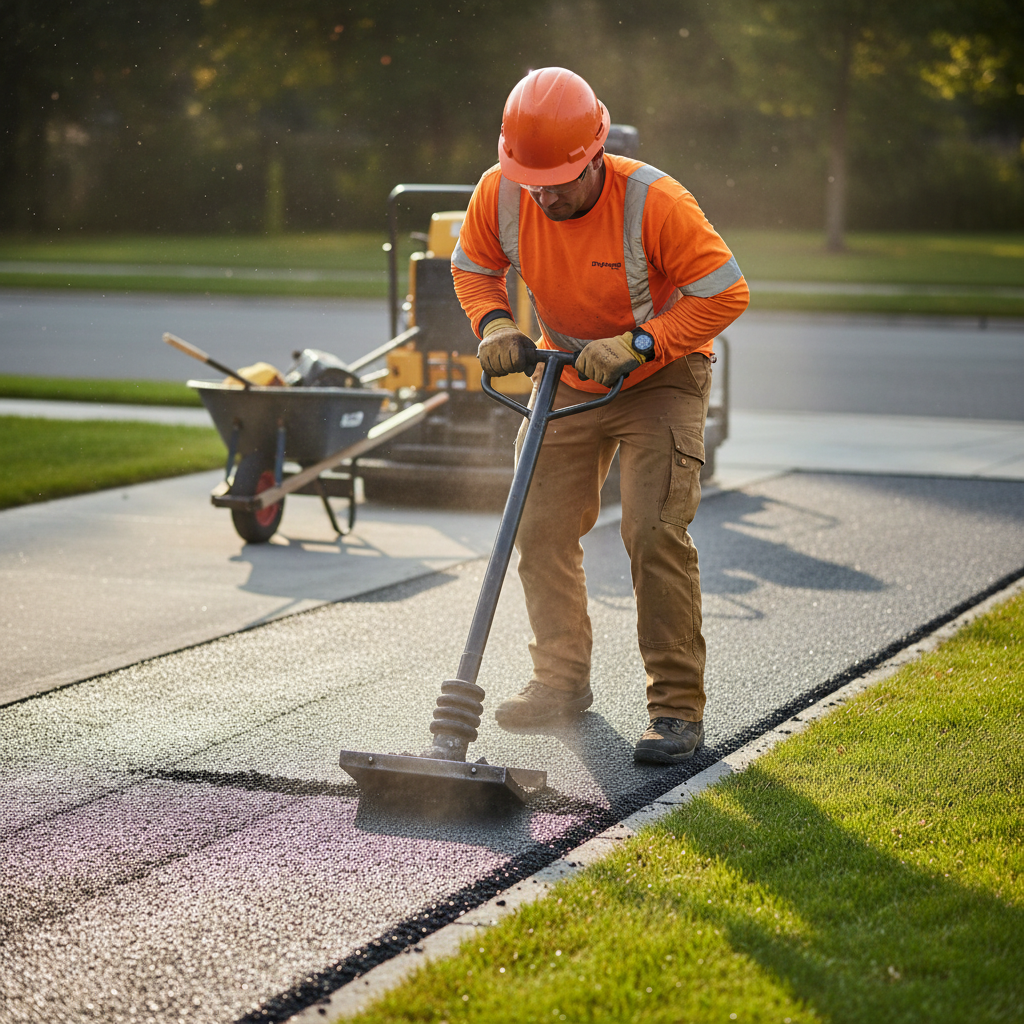
Driveway paving options and costs in Delta
Delta is a busy place for driveway work in the Lower Mainland–Southwest, and homeowners there typically want a finished surface that handles heavy rain, wet shoulder-season temperatures, and long paving windows without turning the job into a drainage problem. With 108,455 people in the 2021 Census and an estimated 28,785 homeowner households (75.6% of households own), demand is steady for new driveways and re-surfacing upgrades. Much of that work ties to the housing mix: single-detached homes make up 55.5% of dwellings, and a lot of private driveways serve detached properties where access, grading, and base preparation directly affect performance. (Statistics Canada, 2021 Census)
In Delta, asphalt and pavers pricing is shaped less by deep Interior-style frost and more by rainfall-driven saturation and freeze–thaw at the regional frost line. Even though coastal frost penetration is relatively shallow, local practice still assumes a freeze depth on the order of 18" for sensitive infrastructure. That means contractors excavate to reach reliable compactable granular base and design drainage so water doesn’t sit under the surface. You’ll often see stronger competition among crews around Tsawwassen and Ladner, since those areas have high owner-occupied detached housing and frequent driveway refresh projects, especially after older asphalt or failing gravel sections.
Below is a practical cost comparison for the typical Delta approach (proper base + compacted granular layers). Use it to sanity-check your quote, then we can fine-tune the best option based on your driveway size, soil condition, and desired look.
| Material |
Lifespan |
Maintenance |
Best For |
Price per sq ft |
| Asphalt (new installation, proper base) |
15–20 years |
Seal every 3–5 years |
Best value for smooth, quiet driving surface |
$12 – $20 |
| Asphalt (overlay on existing gravel base) |
10–15 years |
Seal and patch as needed |
When existing base is sound and drainage is corrected |
$10 – $18 |
| Interlocking concrete pavers |
25–30 years |
Spot replace broken units; re-sand as needed |
Curb appeal + easy future repairs |
$20 – $40 |
| Poured concrete (broom finish) |
20–25 years |
Seal occasionally; crack monitoring |
Straightforward, uniform finish |
$18 – $35 |
| Exposed aggregate concrete |
20–25 years |
Seal for stain resistance |
Decorative look with strong surface texture |
$22 – $40 |
| Gravel / crushed stone (budget option) |
5–10 years |
Top up annually; re-grade; weed control |
Short-term solution or overflow areas |
$8 – $14 |
Prices are estimates only and vary by project scope, site access and material selection.
What affects the price of paving in Delta
In Delta and the broader Lower Mainland–Southwest, it’s normal to see driveway quote differences of about 30–50% for the same general “new driveway” description. The main drivers are what you can’t see in a photo: how much excavation is required, whether drainage is failing, how deep the compacted granular base must be for your site, and how tight the access is for skid-steers, dump trucks, and rollers. In colder or more demanding frost environments, contractors often have to build thicker bases to resist freeze–thaw. In Delta, local practice still plans for a freeze line on the order of 18" for sensitive infrastructure, so you may hear base thickness targets closer to the “coastal frost-aware” range rather than a thin lift. In other parts of Canada, those assumptions change—for example, deeper frost in Ontario/Alberta often pushes base thickness to 6–12 inches, while coastal BC commonly ends up closer to 4–6 inches when conditions allow. The cost difference comes from labour and equipment time, not just materials.
Delta also has a longer paving window than Northern BC, but it still isn’t a constant “dry season.” Heavy winter rains and shoulder-season storms can compress workable scheduling, and contractors often protect quality by working only when subgrades are stable. Asphalt mix design matters too: freeze–thaw-rated hot mix and proper thickness keep the surface from rutting and cracking prematurely. A driveway that lands around the $12 – $20 asphalt band can climb quickly if base correction and drainage work are required.
Concrete pricing can swing based on reinforcement details and how well joints and air-entrainment are handled for freeze–thaw exposure. Older homes built before 1981 are common in Delta (53.6% of homes were built before 1981), and those properties often have older drainage patterns or settled subgrades that cost extra to rectify before any new surface goes down. (Statistics Canada, 2021 Census) If the existing surface is actively failing, tear-out and hauling can be the difference between an “overlay” budget and a full rebuild.
| Price Factor |
Why It Matters |
Cost Impact |
| Driveway area in sq ft |
Most materials and labour scale with surface area. |
Typically the biggest single variable; small driveways still have minimum mobilization charges. |
| Base depth required |
Freeze–thaw and clay-heavy soils demand dependable granular thickness and compaction. |
Extra excavation and gravel can add significant labour and hauling time. |
| Grading and drainage work |
Proper slope and water routing prevents soft subgrade and heaving. |
Regrading, adding drains, and correcting low spots commonly increase the quote by more than homeowners expect. |
| Tear-out of existing surface |
Old asphalt or concrete must be removed to reach stable material. |
Breaking, loading, and disposal can turn an overlay into a full reconstruction. |
| Edge restraints and curbing |
Pavers especially need containment to prevent lateral spread. |
Concrete edging and proper base support can add cost but improves long-term performance. |
| Sealing requirement |
Asphalt typically needs sealing after the initial cure period to protect from water and oxidation. |
Adding sealcoat timing into the plan reduces premature wear; skipping it shortens pavement life. |
| Site access |
Narrow lots and long carries slow equipment movement and extend labour time. |
Mobilization and extra handling can add cost even if the driveway is small. |
| Asphalt mix specifications |
Freeze–thaw-rated mix and correct compaction targets hold up better in Delta’s winter. |
Better mix and adherence to thickness specs can raise unit cost but reduce early cracking. |
Permits & regulations in British Columbia
In British Columbia, paving a private driveway within your own property typically does not require a building permit. However, work that affects the municipal right-of-way does require municipal approval. In Delta, that commonly includes creating or changing a curb cut, altering boulevard areas, changing the drainage pattern in the ditch/boulevard, or making any adjustments near municipal infrastructure that could affect runoff and pedestrian/traffic safety. If your driveway ties into storm drainage (for example, a swale, catch basin connection, or re-directed water flow), confirm the requirements before excavation.
Some municipalities also enforce lot-grading rules that restrict how close to property lines a hard surface can be and how water must be managed. That’s especially important in older neighbourhoods where drainage patterns may not match today’s expectations. Always call for utility locates before digging (BC 1 Call) and ask your contractor to include locate confirmation in their pre-construction checklist.
To verify a contractor in Delta, BC, start with their licensing and business standing, then check insurance documentation. Ask for a certificate of liability insurance showing adequate limits and confirm the certificate lists you (or your address) as additional insured if that’s part of the contract. For work coverage, ensure they carry the required workplace coverage (commonly referenced as WSBC in BC) and request proof of clearance/coverage status. Finally, confirm the contractor’s written workmanship warranty and whether any manufacturer warranty applies to specific materials (and whether it transfers if you sell your home).
Asphalt vs pavers vs concrete for Delta driveways
For Delta driveways, asphalt, interlocking concrete pavers, and poured concrete each trade off upfront cost, repair strategy, and how well they handle freeze–thaw plus wet-season drainage. Asphalt is usually the lowest upfront option and—when installed over a properly prepared granular base—delivers a smooth, quiet drive. The catch is maintenance: plan on sealing every 3–5 years (sealcoat is often priced around the $2 – $6 range, depending on system and prep), and patching smaller surface issues before water infiltrates.
Interlocking pavers cost more upfront (often aligning with the $20 – $40 band), but they’re the most repair-friendly option in a local context. If a section settles due to drainage or a buried service later, individual units can be lifted, re-levelled, and reset without replacing the whole driveway. That’s a real advantage in Delta’s housing stock—many older lots have drainage histories that may change over time.
Poured concrete typically lands mid-range (commonly within $18 – $35). It can look sharp, especially with good finishing and joint spacing, but it is more susceptible to visible cracking if jointing, reinforcement, and air-entrainment aren’t done correctly. De-icing salts used in winter can also be harsher on concrete if it’s not spec’d properly.
What holds up best to Delta’s winter maintenance routine? If your household uses plowing and you expect winter sand/salt, the best results usually come from consistent drainage and a base built to the freeze-aware target for the region. A properly built base matters more than the topping: asphalt without correct drainage will soften and rut; concrete without good jointing can crack; pavers without edge restraint can shift.
Example: if an asphalt driveway quote comes in around the $12 – $20 per sq ft band, but pavers are around $20 – $40, the extra cost is justified when you want curb appeal and the ability to perform localized repairs—especially if your lot has known drainage challenges or you expect driveway access changes in the future.
| Material |
Frost Resistance |
Curb Appeal |
Repair Method |
Lifespan |
Price Band |
| Asphalt (sealed regularly) |
Good when base and compaction are correct for freeze–thaw conditions |
Moderate (clean and uniform black finish) |
Cut-and-patch localized areas |
15–20 years |
$12 – $20 |
| Interlocking concrete pavers |
Very good with proper base and sand bedding; resists localized movement well |
High (wide colour/pattern choices) |
Lift/replace individual pavers; re-sand and re-compact |
25–30 years |
$20 – $40 |
| Poured concrete (air-entrained) |
Good if air-entrained and joints are properly planned |
Moderate to high (broom finish or decorative options) |
Full panel repair or patching; long cracks may require larger repairs |
20–25 years |
$18 – $35 |
| Exposed aggregate concrete |
Good with correct mix design and sealing; texture helps traction |
Very high (decorative finish) |
Limited patching options; often requires larger section touch-ups |
20–25 years |
$22 – $40 |
| Permeable pavers (drainage grid) |
Good for wet conditions; reduces water pooling under the surface |
High (distinct style, modern drainage look) |
Replace affected units; serviceability depends on system design |
20–30 years (system dependent) |
$28 – $55 |
| Chip seal / tar-and-chip |
Moderate to good; performance depends heavily on base quality |
Low to moderate (texture varies) |
Spot patch; re-surface later when worn |
6–12 years |
$10 – $18 |
How to choose a paving contractor in Delta
Start by verifying credentials that protect you if something goes wrong. In British Columbia, ask the contractor for (1) proof of current business status/licensing where applicable, (2) liability insurance with clear coverage limits, and (3) workplace coverage status (commonly WSBC in BC). You can check licensing through provincial business resources and confirm insurance by requesting an up-to-date certificate of insurance; for WSBC/WCB coverage, ask for a clearance letter or proof of coverage that matches the dates of the job.
Next, get 2–3 itemised written quotes instead of a single lump sum. A good quote breaks out excavation, hauling/disposal, granular base and compaction, asphalt or concrete thickness, edge restraint/curbing (especially for pavers), and any drainage corrections. It should also specify whether utility locates, saw-cutting, and removals (tear-out) are included. Confirm what’s excluded: permit pull, protection of landscaping, backfill type, and whether they include restoring adjacent areas disturbed by equipment. For disposal, ask who hauls away old asphalt or concrete and where it goes.
Warranty matters. Require a workmanship warranty length in writing, and clarify whether the material/manufacturer warranty applies and if it transfers to a new owner. Payment schedule should be conservative: never pay more than 10–15% upfront; hold back the remainder until the final inspection and completion walkthrough. Finally, insist on a written timeline with a proposed start date and a completion estimate—Delta’s rainy stretches can affect air/wet-subgrade conditions, so weather-sensitive scheduling should be included.
- Ask for Delta-based references with driveway photos in similar soil conditions.
- Confirm they plan for a freeze-aware granular base and drainage, not just surface thickness.
- Get quotes that list material thicknesses (base, asphalt/paver/concrete) and compaction targets.
- Ensure tear-out scope includes breaking, loading, and disposal of debris.
- For pavers, require edge restraints/curbing in the scope.
- Verify asphalt includes a compaction plan and sealing timing after cure.
- Check whether sealing is recommended within the first year and who performs it.
- Ask if utility locates are included and who requests BC 1 Call.
- Confirm who is responsible for protecting landscaping and fencing during excavation.
- Require an explicit warranty statement for workmanship and how claims are handled.
- Keep payments tied to milestones; avoid large upfront deposits.
- Make sure the quote includes a realistic start window and weather contingency approach.
Red flags in Delta: vague scopes with no thickness or drainage details, refusing to provide insurance/coverage documentation, quoting “overlay only” without a subgrade inspection, asking for most payment upfront, and promising work during wet conditions without discussing how they’ll protect the base.
Frequently asked questions — paving in Delta
How much does it cost to pave a driveway in Delta?
In Delta, pricing depends most on driveway area, excavation/base correction, and whether drainage needs to be improved. For a typical residential driveway done properly, asphalt often prices in the $12 – $20 per sq ft band, assuming a compacted granular base and correct slope. Interlocking pavers commonly land higher, often within the $20 – $40 range, because they require base prep plus edging and setting materials. Poured concrete typically falls around $18 – $35 depending on finishing and reinforcement. If your existing driveway is failing due to soft subgrade or poor drainage, tear-out and regrading can push costs up compared with a simple overlay. (Statistics Canada, 2021 Census) also shows Delta has a large owner-occupied detached housing base, so competitively priced labour is common—yet quality base work still drives the final number.
Asphalt vs interlocking pavers vs concrete — which is best in Delta?
For many Delta homeowners, asphalt is the best balance of cost and performance when it’s built over a drainage-corrected, freeze-aware granular base and sealed regularly. If you’re prioritizing curb appeal and want the easiest future repairs, interlocking pavers are a strong choice because you can replace sections without tearing out the whole surface. Poured concrete can look great and last well, but success depends on air-entrainment, joint planning, and proper base preparation to handle freeze–thaw and wet-season movement. In practice, pavers often win where drainage or soil settlement is a known concern, while asphalt is usually best where you want a smoother ride and can commit to sealing every 3–5 years. If your quote difference is substantial (for example, asphalt in the $12 – $20 range versus pavers near $20 – $40), the extra spend is most justified when you want repairability and long-term visual performance.
How long does a paved driveway last in Delta?
Lifespan in Delta is closely tied to base prep, drainage, and maintenance through wet winters. Asphalt typically lasts about 15–20 years with proper installation and sealing every 3–5 years; skipping sealcoat often accelerates water infiltration and surface oxidation. Interlocking pavers commonly last 25–30 years because individual units can be replaced if needed and the system tolerates localized movement better. Poured concrete often reaches around 20–25 years when it’s properly jointed and air-entrained for freeze–thaw conditions. Delta’s milder coastal frost is still enough to matter: the freeze line is assumed for sensitive infrastructure, and repeated freeze–thaw around shallow frost penetration can expose weak bases. Homes built before 1981 are common (53.6% of dwellings), so older drainage patterns and settlement can shorten driveway life if they’re not addressed first. (Statistics Canada, 2021 Census)
When is the best time of year to pave in Delta?
The best window in Delta is typically late spring through summer, when subgrades are drier and crews can achieve proper compaction and curing. Asphalt paving generally requires workable conditions—hot mix asphalt needs adequate air temperature (often above 10°C) and stable moisture conditions so it won’t compact poorly or trap excess moisture. Even if Delta has a longer season than Northern BC, heavy fall/winter rain and shoulder-season storms can delay scheduling. If you’re sealing an asphalt driveway, plan for the sealcoat after the pavement has cured (often within the first year, depending on the product and weather). A good contractor will also discuss weather contingency: they may adjust timing, protect the base, or postpone if the subgrade is saturated. Getting on a schedule early helps because neighbourhoods in Ladner and Tsawwassen can see higher contractor demand during dry stretches.
How deep should the base be for Delta's frost?
There isn’t one “magic number,” because base depth is a function of your soil condition, drainage, and the intended pavement thickness. In Delta, crews typically build a compacted granular base thick enough to perform through freeze–thaw at the regional frost line (practice often assumes around an 18" frost depth for sensitive infrastructure). For residential asphalt driveways, a common approach is roughly 6" of compacted granular base plus about 2.5–3" of asphalt, with deeper excavation if soils are weak or saturated. Clay-heavy areas in the Fraser Valley make drainage and base quality even more important. If your site needs regrading or has standing water after rain, the right answer may be “deeper and drier,” not “just add a thin layer.” A reliable contractor will recommend base thickness after inspecting and discussing moisture conditions, not just quoting from a template.
How often should I seal my asphalt driveway?
In Delta’s wet coastal climate, asphalt sealing is a key maintenance step to protect against water penetration and oxidation. As a general guideline, plan to seal every 3–5 years after installation, with timing influenced by traffic load, rainfall exposure, and how quickly the surface weathers. Many homeowners schedule the first sealcoat after the pavement has fully cured (your contractor will specify the minimum cure period), then repeat based on appearance and performance. If you see drying, fading, or early surface roughness, sealing sooner can help. While sealing costs vary by surface prep and access, it’s commonly budgeted in the $2 – $6 per sq ft range. Sealing doesn’t replace good installation—base drainage and proper asphalt thickness still drive the long-term life of the driveway.