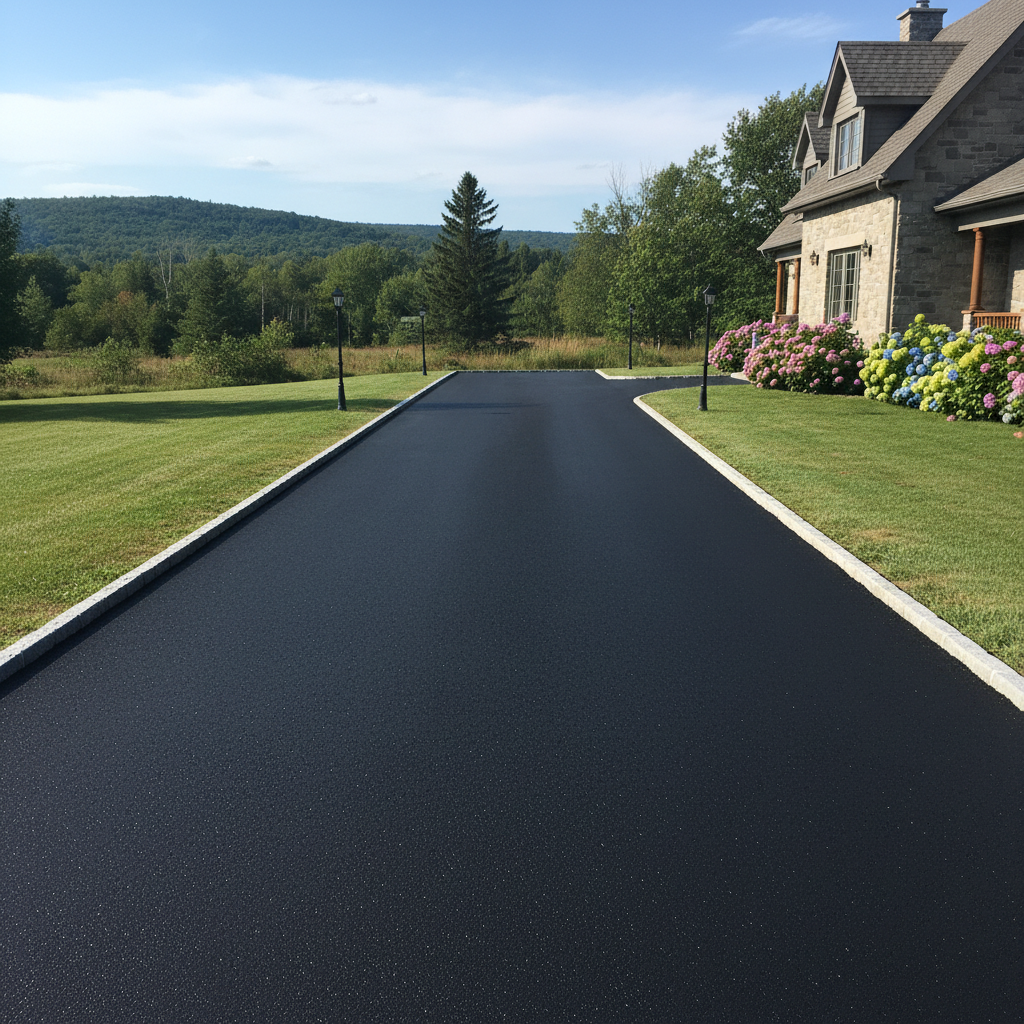
Driveway paving options and costs in West Vancouver
In West Vancouver, driveway paving choices typically come down to asphalt, interlocking pavers, and concrete—and the “right” option depends on how much drainage work your site needs and how your driveway was originally built. With West Vancouver having 44,122 residents (Statistics Canada, 2021 Census) and many homes owned rather than rented (70.9% of households are owner households), most driveways are tied to single-family living where curb and vehicle access matter year-round.
Lower Mainland–Southwest pricing is shaped less by deep, penetrating frost and more by intense rainfall, saturated subgrades, and repeat freeze–thaw near the coastal frost line. Even though coastal BC is milder than Ontario or Alberta, contractors still design bases to control frost heaving and prevent rutting. That’s especially important on older properties: 53.8% of local homes were built before 1981, so you’ll often see older granular bases, lower-quality compaction, or drainage that doesn’t perform well after decades of storms. In neighbourhoods such as British Properties and Caulfeild, paving demand is strong because driveways are frequently steep, heavily landscaped, and visually prominent—meaning base prep and surface alignment carry a big weight in cost.
To help you compare apples to apples, the table below shows typical lifespan expectations and realistic price ranges per square foot for West Vancouver installations built on a properly compacted granular base (with drainage corrections where needed). Use it as a budgeting starting point, then we’ll refine the final number after a site walk and measurement.
| Material |
Lifespan |
Maintenance |
Best For |
Price per sq ft |
| Asphalt (new installation, proper base) |
15–25 years |
Seal every 3–5 years; patch as needed |
Best value where drainage is corrected |
$12–$20 |
| Asphalt (overlay on existing gravel base) |
8–15 years |
Seal every 3–5 years; more frequent patching |
Budget refresh when base is still sound |
$10–$15 |
| Interlocking concrete pavers |
25–40 years |
Re-sand joints; occasional single-unit replacement |
Curb appeal + easier localized repairs |
$20–$40 |
| Poured concrete (broom finish) |
20–30 years |
Seal 5–8 years after pour, then as needed |
Low-maintenance, uniform surface |
$18–$35 |
| Exposed aggregate concrete |
20–35 years |
Seal periodically; patch with matching mix |
Slip-resistant finish and upscale look |
$22–$40 |
| Gravel / crushed stone (budget option) |
3–8 years (varies with drainage) |
Top up yearly; re-grade; weed control |
Temporary solution or low-improvement budgets |
$6–$12 |
Prices are estimates only and vary by project scope, site access and material selection.
What affects the price of paving in West Vancouver
In the Lower Mainland–Southwest, two contractors can quote the “same” driveway and still end up 30–50% apart—and the difference is usually not the asphalt or concrete itself. It’s the hidden work: excavation, granular base thickness, compaction testing (where used), drainage correction, haul/disposal, and how much tear-out is needed before a long-lasting surface goes down. In a market where many homes are built on older foundations and older drainage patterns, it’s common to see pricing drift higher once contractors uncover saturated soils or undersized base depth under the existing driveway.
Freeze–thaw cycles remain a decisive factor even along the coast. Quotes can jump when a deeper, well-compacted granular base is required to control heaving and cracking around the assumed frost line on exposed edges and transitions. In colder provinces, base design can be more aggressive (often 6–12 inches in parts of Ontario/Alberta), while coastal BC practice is often closer to 4–6 inches for less exposed areas—however, West Vancouver driveways can be more exposed due to slopes, runoff patterns, and the way water collects along property lines. That’s why drainage design and correct slopes can matter as much as surface thickness.
Timing also influences cost. Even with a longer season in coastal BC, heavy winter rains and shoulder-season storms reduce workable days, which can tighten scheduling and raise labour costs. If you’re planning an asphalt driveway in the range of $12–$20 per sq ft, expect the contractor to use a freeze-thaw-rated asphalt mix and a base prep approach that matches local performance expectations. Likewise, if you choose interlocking in the $20–$40 per sq ft band, you’re paying for edge restraints, proper bedding, and labour that supports long-term curb alignment.
Concrete examples: if the existing slab is failing and must be fully removed, disposal and haul can add significant cost before you even pour. On newer lots, we sometimes reduce cost by reusing sound subbase after careful inspection; on older lots, the opposite happens and excavation increases. With 53.8% of homes built before 1981 (Statistics Canada, 2021 Census), it’s worth planning for the possibility of drainage and base surprises—often the reason quotes widen.
| Price Factor |
Why It Matters |
Cost Impact |
| Driveway area in sq ft |
Most materials and labour scale directly with surface size |
High (primary driver of total quote) |
| Base depth required |
Frost-line design controls heaving and cracking in exposed zones |
High (can change excavation volume substantially) |
| Grading and drainage work |
Slope corrections and drainage fixes reduce ponding and saturation |
Medium to high (varies with water issues) |
| Tear-out of existing surface |
Breaking and hauling concrete or old asphalt adds equipment and disposal |
Medium to high (often a major quote divider) |
| Edge restraints and curbing |
Prevents paver spread and supports consistent asphalt/concrete edges |
Medium (more on tight sites and pavers) |
| Sealing requirement |
Asphalt performance improves when sealed after installation |
Low to medium (adds cost but protects the base) |
| Site access |
Narrow or steep driveways slow equipment movement and increase labour time |
Medium (can raise hourly labour costs) |
| Asphalt mix specifications |
Freeze-thaw-rated mix improves durability in coastal cycle conditions |
Low to medium (mix cost plus QA time) |
Permits & regulations in British Columbia
In British Columbia, paving a private driveway within your own property usually does not require a building permit when you’re simply replacing the surface (for example, tearing out old asphalt and rebuilding the driveway on your lot). The line changes when work touches the municipal right-of-way. In West Vancouver, you typically need municipal approval when you’re altering the boulevard or curb cut, making changes to storm drainage, or doing any work that impacts how water flows across the interface between your property and the street.
Also check whether West Vancouver or the district has lot-grading bylaws that restrict how close a hard surface can be placed to property lines or how runoff must be handled. Because driveway performance is tightly tied to drainage, it’s common to discover that a drainage correction can trigger additional requirements if it affects runoff patterns.
Before excavation, always have utilities located. In BC, you’d use BC 1 Call to mark underground services. Then, verify your contractor properly: ask for their British Columbia licence/registration details as applicable to their trade, a current certificate of insurance (liability), and proof they’re covered for workplace safety (WSBC coverage) if they employ workers. For your own peace of mind, request a clearance letter or current WSBC account status, and confirm the policy matches the work address and term. A reputable contractor should provide these without pressure, because it’s part of how they protect homeowners and workers alike.
Asphalt vs pavers vs concrete for West Vancouver driveways
For West Vancouver driveways, asphalt, interlocking pavers, and concrete each match a different homeowner priority—budget, curb appeal, or a uniform finish. Asphalt usually offers the lowest upfront cost, but it performs best when it’s sealed regularly (typically every 3–5 years) and when the base and drainage are done right. Interlocking pavers cost more up front, yet they’re often the best choice if you want repair flexibility: a failed area can be lifted and rebuilt without replacing the entire driveway. Poured concrete sits in the middle on cost, but it can be more susceptible to cracking from freeze–thaw movement and from salt/de-icing exposure if the concrete isn’t air-entrained and properly designed for outdoor cycling.
Base preparation matters for all three options in the Lower Mainland–Southwest. Even with relatively shallow frost penetration compared to Interior BC, the driveway can still experience repeat freeze–thaw where water is trapped—especially near edges, slopes, and transitions. That’s why we design the granular base and drainage system to keep subgrade dry. In practice, we often see the cost difference explained like this: asphalt in the $12–$20 per sq ft range may be the right value when you can correct drainage during installation; interlocking at $20–$40 per sq ft can be justified if you have a prominent entrance, want maximum curb appeal, and would rather replace sections than the whole surface after future service needs (like utility access or drainage repairs).
Winter maintenance also plays a role. West Vancouver homeowners often plough and use de-icing when needed. Pavers generally tolerate this routine well if joint sand is maintained; asphalt handles ploughing if not over-sealed too late and if the edges are restrained. Concrete can work well, but only when the mix is air-entrained and the base is stable enough to limit flexing.
| Material |
Frost Resistance |
Curb Appeal |
Repair Method |
Lifespan |
Price Band |
| Asphalt (sealed regularly) |
Good with proper base and drainage |
Medium (depends on finish and edges) |
Patch/overlay localized areas |
15–25 years |
$12–$20 |
| Interlocking concrete pavers |
Excellent with restrained edges and clean base |
High (strong visual impact) |
Lift and re-set individual pavers |
25–40 years |
$20–$40 |
| Poured concrete (air-entrained) |
Good when air-entrained and designed for freeze–thaw |
Medium (broom finish vs decorative options) |
Patch for small areas; larger cracks need attention |
20–30 years |
$18–$35 |
| Exposed aggregate concrete |
Good with stable base and proper sealing |
Very high (textures and colour choices) |
Patch with matching mix; patching can show |
20–35 years |
$22–$40 |
| Permeable pavers (drainage grid) |
Excellent for wet-site drainage control |
High (modern look) |
Lift/rebuild localized grid and pavers |
20–30 years (depends on maintenance) |
$25–$45 |
| Chip seal / tar-and-chip |
Fair to good; needs routine maintenance |
Low to medium (functional appearance) |
Re-chipse / spot seal |
6–12 years |
$10–$18 |
How to choose a paving contractor in West Vancouver
Choosing a contractor in West Vancouver is mostly about verifying coverage, confirming how they build the base and edges, and making sure the quote is itemized so you can compare like-for-like. In British Columbia, you should request proof of the contractor’s licence/registration for the applicable trade, a certificate of liability insurance, and workplace coverage through WSBC/WCB (for employers). When you get documents, check the dates are current, the certificate shows the work location, and the policy includes general liability for the driveway scope. If their trades include labourers, they should be properly covered for the period of the job.
Next, get 2–3 itemised written quotes that break out labour and materials (excavation, base gravel, bedding sand where relevant, asphalt/concrete/pavers, disposal, and any sealing). Avoid quotes that are purely lump sums with no detail—if a contractor skips lines like tear-out, disposal, or drainage corrections, you can see big add-ons later. Ask what’s excluded: permit pull (if needed), traffic control, saw-cutting, whether removal includes hauling offsite, and whether rock/soil unsuitable for base is included in disposal or handled as “extra.”
Warranty should be in writing. Clarify workmanship warranty length and whether it’s limited to the first season or extended across years. Also ask about product/manufacturer warranty and whether you’re covered if the material supplier changes batches. Payment should protect you: never pay more than 10–15% upfront; hold back a portion until the final grading and cleanup are completed to spec. Finally, demand a start date and completion estimate in writing—weather and site access are real factors on the North Shore, and reputable crews manage it transparently.
- Confirm licence/registration and provide a reference number you can check.
- Ask for a current certificate of liability insurance (and matching worksite address).
- Verify WSBC/WCB coverage if the contractor employs workers; request proof and dates.
- Request an itemized quote (excavation, base, surface, compaction, disposal, sealing).
- Insist on stated driveway measurements and a method for final square footage.
- Ask who supplies and compacts the granular base and what thickness is guaranteed.
- Confirm drainage/slope corrections are included if your driveway ponds or runs to one side.
- For asphalt, ask whether crack filling and sealing timing are included (or scheduled).
- For pavers, confirm edge restraints are included to prevent spread.
- Verify disposal is included for removed asphalt/concrete and unsuitable base.
- Get warranty terms in writing (workmanship + product/manufacturer) and what voids coverage.
- Agree on a payment schedule with a holdback until final inspection and cleanup.
Red flags to watch: quotes that don’t include disposal or base thickness details, “we’ll seal later” without a written plan, vague warranty language (“guaranteed” with no length or scope), missing proof of insurance/WSBC/WCB, and contractors who rush the site measurements or won’t discuss drainage corrections specific to West Vancouver’s rainfall patterns.
Frequently asked questions — paving in West Vancouver
How do I get the most accurate paving quote in West Vancouver?
To get an accurate quote in West Vancouver, start by measuring your driveway area and discussing drainage with the contractor during a site walk. The most reliable bids include a clear scope for excavation, granular base thickness, and compaction, plus whether tear-out and disposal are included. Because Lower Mainland–Southwest driveways are often affected by heavy rain and localized ponding, ask the estimator how they’ll correct slopes and where water will go after paving. Also confirm whether you’re being quoted on new installation versus overlay—an asphalt overlay can look cheaper, but pricing may shift if the existing base is weak. Finally, request an itemized breakdown and include any known access constraints (tight turns off Marine Drive, steep slopes, or limited equipment staging). In practice, a well-scoped asphalt job often lands in the $12–$20 per sq ft band, but that can move depending on base and drainage findings (Statistics Canada, 2021 Census context for local housing age patterns affects what’s commonly uncovered).
How much does it cost to pave a driveway in West Vancouver?
Cost in West Vancouver is usually quoted per square foot, then finalized based on excavation depth, drainage corrections, and disposal. Asphalt driveway paving commonly falls in the $12–$20 per sq ft range when you’re doing proper new installation and building the right base. Interlocking concrete pavers usually run higher—often $20–$40 per sq ft—because of edge restraints, bedding sand, and labour-intensive placement. Concrete driveway costs commonly sit around $18–$35 per sq ft depending on finish (broom finish vs exposed aggregate). The local housing mix matters too: with many homes older than 1981, it’s more common to find drainage and base issues, which can push costs toward the higher end once excavation is opened up. If your existing surface is still stable and you’re only doing a lighter scope, costs can come down, but overlay pricing should only be used after a base assessment, not just a visual check.
Asphalt vs interlocking pavers vs concrete — which is best in West Vancouver?
There isn’t one “best” material for West Vancouver—what works best depends on your drainage, your tolerance for maintenance, and your preference for repairs. Asphalt is typically the best value upfront (often within the $12–$20 per sq ft band) and can perform very well when the granular base and drainage are corrected for coastal rainfall and freeze–thaw cycling near the frost line. Interlocking pavers are usually the top choice if curb appeal is a priority and you want repair flexibility—pavers can be lifted and re-set without replacing the full driveway, and they generally handle West Vancouver’s plough-and-de-ice routine well. Poured concrete can be a solid mid-range option (often $18–$35 per sq ft), but it needs air-entrained concrete and a stable base to reduce cracking risk in freeze–thaw conditions. If your driveway ponds after rain or has slope issues, the “best” choice is often the one where the contractor addresses drainage first—because surface material can only do so much over a saturated or unstable subgrade.
How long does a paved driveway last in West Vancouver?
Lifespan depends more on base preparation and drainage than on the brand of material. In West Vancouver, a properly built asphalt driveway typically lasts about 15–25 years, especially when you follow sealing every 3–5 years after installation. Interlocking concrete pavers commonly last 25–40 years because localized repairs are feasible and because the system can be maintained by re-sanding joints and replacing individual pavers if needed. Poured concrete often lasts 20–30 years with air-entrained mix design and good subbase stability, while exposed aggregate is similar but can require periodic sealing to keep it looking uniform. Gravel is the most variable—many homeowners find it lasts only a few seasons if drainage isn’t corrected. West Vancouver’s heavy rainfall can saturate soils if drainage isn’t planned, and that saturation is what drives much of the early deterioration. With 53.8% of local homes built before 1981 (Statistics Canada, 2021 Census), many driveways start with older drainage patterns, so a contractor’s excavation-and-drainage approach usually determines whether you hit the low end or the top end of these ranges.
When is the best time of year to pave in West Vancouver?
The best time to pave in West Vancouver is typically late spring through early fall, when rain isn’t constant and contractors can achieve consistent base compaction and asphalt placement conditions. Even though coastal BC is milder and has shorter frost concerns than Interior regions, wet weather can still delay work and disrupt granular base stability. Asphalt requires suitable air temperatures—hot-mix asphalt production and placement are generally sensitive when temperatures drop, and crews often target days when it’s comfortably above 10°C to avoid issues with laydown and compaction. Concrete can be poured only when conditions are suitable for curing, and pavers can be installed when the bedding sand can be placed and levelled without being continually washed out by rain. If you’re scheduling, ask the contractor for a realistic start window and a contingency plan for storms, because shoulder-season delays can compress crews and impact pricing. Planning ahead is especially helpful in neighbourhoods with higher demand like British Properties or Caulfeild.
How deep should the base be for West Vancouver's frost?
Base depth in West Vancouver is driven by frost-line assumptions plus local exposure and drainage, not just “cold temperature.” While coastal BC frost penetration is usually relatively shallow compared with Northern or Interior regions, the practical risk is freeze–thaw movement around the shallow frost zone and along edges where water can sit. In residential driveway builds, a common approach is about 6 inches of compacted granular base, topped by the specified asphalt thickness (often roughly 2.5–3 inches) or by bedding sand and pavers for interlocking systems. If the driveway is steep, poorly draining, or on clay-heavy or saturated soils, contractors often excavate deeper and increase base thickness to prevent heaving and rutting. Before deciding “how deep,” a good contractor inspects the subgrade, checks for ponding, and confirms drainage slopes. A site-built drainage plan is often more important than chasing an exact number, because standing water can undo the benefits of any base depth.