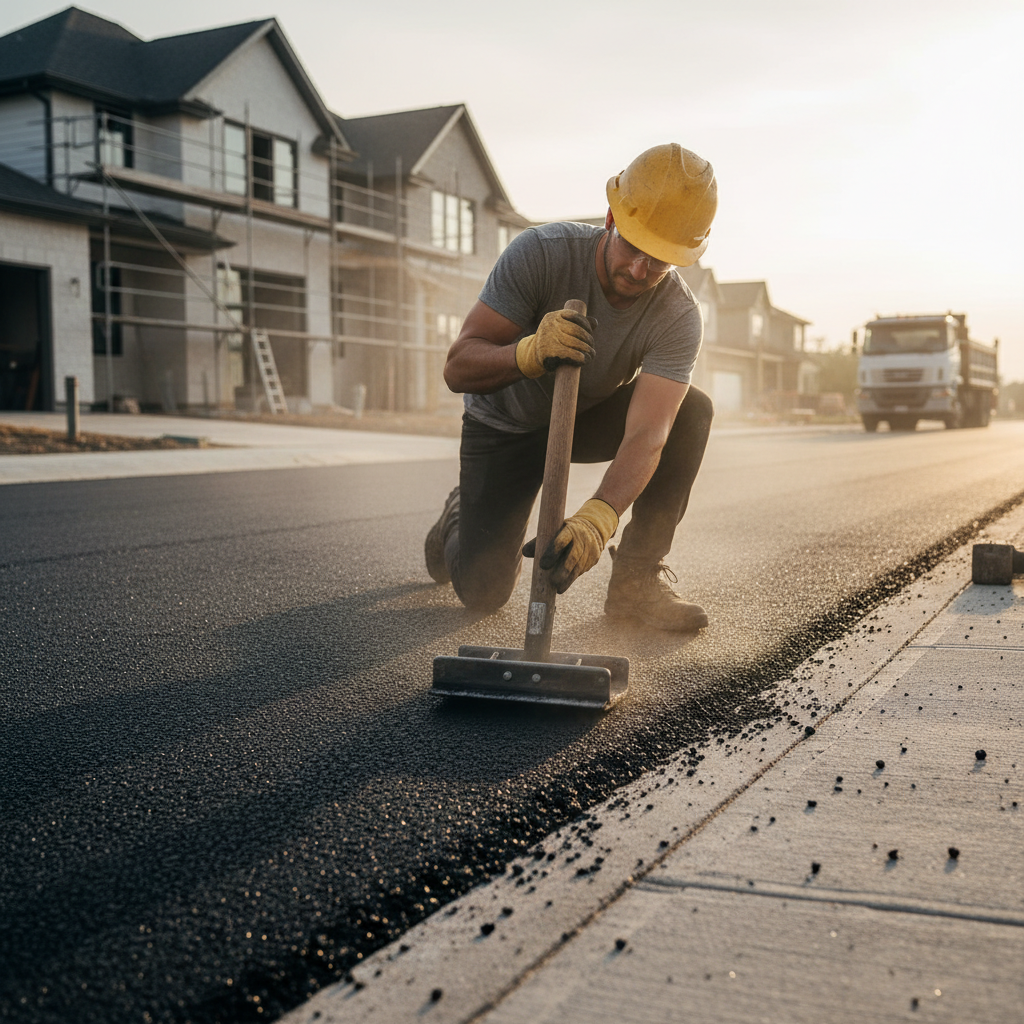
Driveway paving options and costs in Richmond
Richmond homeowners have several solid driveway paving options, and the “right” choice usually comes down to how long you want it to last, how much curb appeal matters, and how your site drains during Lower Mainland–Southwest rainstorms. Richmond’s housing mix helps explain why private driveway work is in constant demand: the city has about 30.1% single-detached houses (Statistics Canada, 2021 Census), and a large share of households are homeowners (57,800 owner households, or 71.3% of households). That combination means most driveway projects are residential and schedule-sensitive. Many homes in Richmond also pre-date current drainage norms—about 25.9% of homes were built before 1981 (Statistics Canada, 2021 Census)—so older lots can have weaker base or aging grading that needs correction before any new asphalt or pavers go down.
In the coastal Lower Mainland–Southwest, the freeze line is typically shallower than in Interior or Northern BC, but frost and freeze–thaw still affect exposed areas. That’s why contractors focus less on “extreme cold” and more on proper drainage, granular base thickness, and compaction—especially in areas with heavier soils. Work is often busiest in spring and early summer because asphalt construction needs warm air temperatures (generally above 10°C) and rain can tighten scheduling windows. You’ll also see especially high demand in neighbourhoods like City Centre and Steveston, where lots tend to be established and access can be tight.
Below is a practical comparison to help you budget before you request itemised quotes and site measurements.
| Material |
Lifespan |
Maintenance |
Best For |
Price per sq ft |
Price Range |
| Asphalt (new installation, proper base) |
15–25 years |
Seal every 3–5 years; spot crack fill as needed |
Good value, smooth ride, faster install |
$6.00–$10.00 |
$12,000–$20,000 |
| Asphalt (overlay on existing gravel base) |
10–18 years |
Seal every 3–5 years; monitor moisture and settlement |
When demo is limited and the base is sound |
$5.00–$8.50 |
$10,000–$16,000 |
| Interlocking concrete pavers |
25–30 years |
Weed control; occasional re-leveling; joint stone replenishment |
High curb appeal; repairable in sections |
$12.00–$18.00 |
$20,000–$40,000 |
| Poured concrete (broom finish) |
20–30 years |
Crack sealing as needed; re-seal selectively |
Low maintenance look; solid, uniform surface |
$10.00–$16.00 |
$18,000–$35,000 |
| Exposed aggregate concrete |
20–30 years |
Periodic cleaning; crack sealing |
Non-slip texture and premium appearance |
$12.00–$20.00 |
$22,000–$42,000 |
| Gravel / crushed stone (budget option) |
3–8 years (varies widely) |
Top up annually; re-grade; weed control |
Short-term solution or drainage-first approach |
$3.00–$6.00 |
$6,000–$14,000 |
Prices are estimates only and vary by project scope, site access and material selection.
What affects the price of paving in Richmond
In Richmond and across the Lower Mainland–Southwest, the same driveway can land at prices that differ by about 30–50% when you compare quotes from different contractors. The biggest drivers are not just “material choice” but how each quote handles excavation, base drainage, disposal, and compaction testing. Because many Richmond lots are established with mature trees and older utility layouts, the cost to get to stable subgrade can vary sharply from one block to the next. Labour availability also matters: paving demand is higher in the milder months, and rain can interrupt work, compressing scheduling windows for hot mix asphalt and concrete pours.
Frost and freeze–thaw cycles still influence costs in coastal BC, even though frost penetration is generally shallower than in Ontario or Alberta. Locally, contractors typically design with an assumed frost line on the order of 18" for sensitive exposed applications, and that means granular base preparation and drainage must be built to prevent heaving and surface cracking. In practice, that often translates to around 6" of compacted granular base plus 2.5–3" of asphalt for standard residential work—more if the soil is wet, soft, or poorly draining. In colder regions, thicker bases (often 6–12 inches) are common; in coastal applications, the numbers may be lower, but the drainage requirement doesn’t go away. Asphalt mix design is also adjusted for local freeze–thaw durability, and that can push the job toward the mid-to-high end of asphalt pricing (for example, within the $12,000–$20,000 driveway band) when a contractor specifies a freeze–thaw rated mix.
Concrete pricing can move too. If your site needs extra subbase prep or re-grading to create proper slope for water runoff, poured concrete can approach the upper end of the driveway range (often closer to $18,000–$35,000). Conversely, a straightforward site with good access and stable soil can keep concrete nearer the lower side. For interlocking pavers, cost can be lowered when only portions are affected, but it rises when extensive excavation and new edge restraints are required.
| Price Factor |
Why It Matters |
Cost Impact |
| Driveway area in sq ft |
Most material and labour scale directly with square footage |
Highest impact; can explain the majority of quote differences |
| Base depth required |
Granular thickness helps prevent frost-related movement and moisture damage |
More base often adds significant excavation, gravel, and compaction time |
| Grading and drainage work |
Proper slope and drainage reduce ponding during heavy winter rains |
Can add a moderate to large premium depending on how much rework is needed |
| Tear-out of existing surface |
Breaking, loading, and hauling concrete/asphalt is labour- and disposal-intensive |
Often a major cost swing; disposal fees vary by haul distance |
| Edge restraints and curbing |
Prevents paver spread and asphalt rutting at the perimeter |
Adds materials and layout time, especially for irregular driveways |
| Sealing requirement |
Asphalt needs sealing after curing (typically 6–12 months) for moisture protection |
Sealing adds an ongoing maintenance line item (but it protects your surface) |
| Site access |
Tight lots slow equipment movement and can require smaller machinery |
Can increase labour time and reduce crew efficiency |
| Asphalt mix specifications |
Freeze–thaw rated mixes and proper binder content improve longevity |
Higher mix cost; generally worth it on exposed, high-rain sites |
Permits & regulations in British Columbia
In British Columbia, paving a private driveway within your own property typically does not require a building permit. The work most often falls under “private property improvement,” assuming it stays within your lot and doesn’t alter municipal infrastructure. However, you should expect municipal approval when your project touches the municipal right-of-way—this includes new or changed curb cuts, modifications to boulevards, sidewalk/road interface changes, or any storm drainage alterations that affect how water flows across the frontage. Some Richmond-area properties also run into lot-grading expectations, where the municipality may limit how close new hard surfaces and drainage outlets can be to property lines or easements. If your driveway ties into catch basins or you’re changing how runoff is handled, confirm the requirements before excavation.
Regardless of permitting, call for utility locates before anyone digs: in BC you use BC 1 Call (utility locate request) and schedule it ahead of excavation so the contractor can plan safer digging. To verify a paving contractor’s British Columbia qualifications in Richmond, ask for three things and check them online where possible: (1) their licence status through the relevant BC contractor registry (and the correct business name), (2) a current certificate of liability insurance naming you as certificate holder where requested, and (3) proof of coverage for workplace injury protection (WSBC/WCB coverage) for their crews. A clearance letter or coverage confirmation number is usually available—don’t accept a verbal promise.
Asphalt vs pavers vs concrete for Richmond driveways
For Richmond driveways, asphalt, interlocking pavers, and concrete all can perform well, but they behave differently under Lower Mainland–Southwest freeze–thaw and winter maintenance routines. Asphalt is usually the lowest upfront cost and goes down quickly, which helps contractors manage the longer coastal paving season. That said, it should be sealed every 3–5 years to protect against moisture and small crack growth from winter rain and any freeze–thaw movement. Interlocking concrete pavers typically cost more initially, but they’re highly repairable: if one area settles, a contractor can lift and re-set the section without replacing the whole driveway—useful on older Richmond lots where subgrade can be uneven. Poured concrete sits in the middle for cost and can look very clean, but it’s more susceptible to visible cracking if it isn’t properly air-entrained and if joints/subgrade preparation aren’t done correctly. In coastal BC, that’s still a real concern because water intrusion and freeze–thaw cycling near the frost line can widen micro-cracks.
Across the Lower Mainland–Southwest, base preparation is the key to all three. Residential asphalt commonly uses about 6" compacted granular base plus 2.5–3" asphalt, and pavers are often built with 6" of compacted base plus bedding sand and 2.5–3.5" pavers. Drainage design matters more than “extreme cold.” If your driveway slopes toward the house or you have ponding, you’ll pay twice—first for excavation, then again in repairs—so choose a contractor who confirms drainage and compaction before laying surface material.
As a practical example: if asphalt bids around $12,000–$20,000 for your driveway scope but pavers land closer to $20,000–$40,000, the extra cost is often justified when you value curb appeal and want a surface you can rework locally. If your main goal is lowest upfront spend and you’re open to sealing maintenance, asphalt is commonly the better value.
| Material |
Frost Resistance |
Curb Appeal |
Repair Method |
Lifespan |
Price Band |
| Asphalt (sealed regularly) |
Good with proper base and freeze–thaw rated mix |
Moderate; can be kept neat with edging |
Crack fill, patching, and occasional resurfacing |
15–25 years |
$12,000–$20,000 |
| Interlocking concrete pavers |
Excellent; joints tolerate minor movement well |
High; premium look on Richmond streetscapes |
Lift-and-replace individual paver sections |
25–30 years |
$20,000–$40,000 |
| Poured concrete (air-entrained) |
Good if air-entrained and properly jointed |
Moderate; can be upgraded with finish options |
Seal cracks; patch spalls where needed |
20–30 years |
$18,000–$35,000 |
| Exposed aggregate concrete |
Good; requires careful base and curing |
Very high; textured, upscale appearance |
Limited patching; often partial replacement |
20–30 years |
$22,000–$42,000 |
| Permeable pavers (drainage grid) |
Good to very good; reduces surface ponding |
High; modern look |
Resand/re-level; replace affected units |
20–30 years |
$25,000–$45,000 |
| Chip seal / tar-and-chip |
Moderate; sensitive to heavy turning and soft base |
Low to moderate; functional finish |
Patch and re-chip as aggregate wears |
7–12 years |
$8,000–$16,000 |
How to choose a paving contractor in Richmond
Choosing the right paving contractor in Richmond comes down to proof, details, and how they manage base prep—because in the Lower Mainland–Southwest, drainage and compaction are what protect your driveway through winter rains and freeze–thaw movement near the frost line. Start by verifying British Columbia licensing for the contractor and business entity you’re hiring. Next, confirm liability insurance: ask for a current certificate of insurance and make sure it covers paving/excavation activities. Finally, verify WSBC/WCB coverage for their workers. In practice, you can request a clearance letter or coverage confirmation number; this is especially important if the contractor uses sub-trades.
Get 2–3 itemised written quotes—not a lump sum. Look for a breakdown that separates excavation, disposal, granular base thickness, compaction, asphalt or concrete thickness, edges/restraints, and any sealing requirement. Ask what’s included and what’s excluded: is permit assistance included if needed, is disposal of old material included, and is haul distance accounted for? For warranty, insist on both workmanship coverage and the material/manufacturer warranty terms. Clarify if the warranty is transferable if you sell your home—this matters for long-term value in Richmond’s owner-occupied market.
Payment matters too: never agree to more than 10–15% upfront. Use progress payments tied to milestones and hold back a portion until the final finish and cleanup are complete. Request a start date and completion estimate in writing, and confirm how they’ll protect work during rain events.
- Verify BC licence/biz name matches the quote and invoice.
- Require a current certificate of liability insurance (with correct coverage limits).
- Confirm WSBC/WCB coverage with clearance letter or confirmation number.
- Ask for compaction/testing approach (what they measure and how).
- Ensure base thickness and drainage plan are clearly stated in writing.
- Confirm asphalt thickness (e.g., ~2.5–3") and concrete thickness and finish.
- Get disposal/haul costs spelled out for tear-out projects.
- Check whether edge restraints/curbing are included (critical for pavers).
- Ask when asphalt sealing is scheduled (typically after 6–12 months).
- Review the quote for exclusions: subgrade stabilization, geotextile, drainage upgrades.
- Confirm warranty length, what it covers, and whether it’s transferable.
- Use a payment schedule with a final holdback until completion.
Red flags to watch in Richmond: (1) vague “includes base” wording with no thickness stated, (2) reluctance to provide insurance/WSBC documentation, (3) cash-only or large upfront payments beyond 10–15%, (4) no written timeline or rain protection plan, and (5) skipping proper drainage/edge restraint details—especially on older lots where settlement is more likely.
Frequently asked questions — paving in Richmond
What is a chip seal driveway and is it suited to Richmond?
Chip seal is a surface treatment: a layer of asphalt binder is sprayed, then crushed stone is broadcast and compacted into the binder. In Richmond and across the Lower Mainland–Southwest, it can work well for low-speed, drainage-practical applications, but it’s not always the best choice for a residential driveway where cars turn and where you’ll want a smooth, premium finish. It’s also more sensitive to poor base preparation—if the granular base isn’t dense and well-drained, stones can loosen and ravel faster. Compared with asphalt (often around $12,000–$20,000 for typical residential scopes), chip seal is usually cheaper upfront, but you should expect a shorter service life and more frequent patching. If you’re considering it, ask the contractor how they’ll build the base (and drainage) first, not just the topping.
How much does driveway crack repair cost in Richmond?
Crack repair in Richmond typically depends on crack type (active wide cracks vs. hairline settlement cracks), length, and whether it’s just filling or includes routing and sealing. For small localized cracks, many contractors charge per linear foot or per crack, with travel and surface prep included if they’re doing spot repairs. As a budgeting reference for maintenance/repair, homeowners often see repair/sealing allowances in the range of $2,000–$6,000 for a meaningful driveway section after cleaning and proper prep—larger repairs can push higher when tear-out and rebuild are required. If the cracks are recurring and you have ponding after rain, the cheaper “fill-only” approach may not last; you may need base/drainage correction. In the Lower Mainland–Southwest, don’t ignore drainage—water and freeze–thaw movement near the frost line will keep reopening cracks.
What base thickness do I need for pavers in Richmond?
For most residential paver driveways in Richmond, contractors commonly install about 6" of compacted granular base, then bedding sand and 2.5–3.5" of pavers. The exact total thickness can increase if your soil is saturated, if there’s evidence of prior settlement, or if the driveway experiences heavier loads (e.g., frequent truck use). The key is that drainage and compaction come before thickness—pavers can look great initially but will fail prematurely if the base isn’t well-drained or if fines migrate upward. Because Richmond’s freeze–thaw isn’t as deep as interior regions, the base may not need extreme thickness, but the local practice still assumes protection around a frost line for exposed applications. Ask your contractor to describe their drainage plan (slope and where runoff goes) and confirm the base depth in the written quote before you sign.
How do I get the most accurate paving quote in Richmond?
To get an accurate paving quote in Richmond, start by asking for a site visit and measure-on-site dimensions rather than relying on your estimated square footage. The most accurate quotes clearly state driveway width/length, proposed excavation depth, granular base thickness, asphalt/concrete thickness, edge restraints, and drainage/grading work. Request an itemised labour-and-material breakdown so you can compare apples to apples between contractors. Also ask whether disposal of old material is included, whether utility locates are required, and what’s excluded (common exclusions include subgrade stabilization, geotextile, and drainage corrections). Because Richmond lots vary, quotes often differ by 30–50% when one contractor assumes a “good base” and another uncovers weak or saturated soils after excavation. Finally, confirm workmanship warranty length, product warranty terms, and when asphalt sealing is scheduled (after curing, typically 6–12 months).
How much does it cost to pave a driveway in Richmond?
The total cost to pave a driveway in Richmond usually falls within the local Lower Mainland–Southwest price bands once you include excavation, base prep, surface thickness, and proper drainage. For asphalt driveway paving, many residential projects land in the $12,000–$20,000 range depending on area and whether there’s tear-out. Interlocking concrete pavers generally run $20,000–$40,000 because base work, edge restraints, and labour per paver unit add up. Concrete driveways typically land around $18,000–$35,000 depending on finish and whether the site needs significant re-grading. If you only need a small section resurfaced or you can overlay on a sound base, prices can be lower—but drainage issues will eventually surface. If your driveway is on a slope or ponding occurs during winter rains, expect some cost to be invested into grading and drainage to protect the new surface.
Asphalt vs interlocking pavers vs concrete — which is best in Richmond?
“Best” in Richmond depends on your priorities and how your driveway drains. Asphalt is often the best value if you want the lowest upfront cost and plan to seal regularly; it’s commonly budgeted around $12,000–$20,000 for typical residential scopes. Interlocking concrete pavers are often the best choice for curb appeal and repairability—sections can be lifted and fixed without replacing the entire surface—though pricing frequently lands in the $20,000–$40,000 range. Poured concrete (air-entrained) can be a strong middle-ground option with a clean finish and long life, commonly around $18,000–$35,000, but it needs correct subgrade prep, joints, and finish details to reduce cracking risk through freeze–thaw. In the Lower Mainland–Southwest, drainage and base prep drive performance for all three. If you have older soil, ponding, or frequent settling, pavers can be more forgiving to repair; if you want smooth and straightforward maintenance, asphalt is usually simpler—provided sealing is part of the plan.