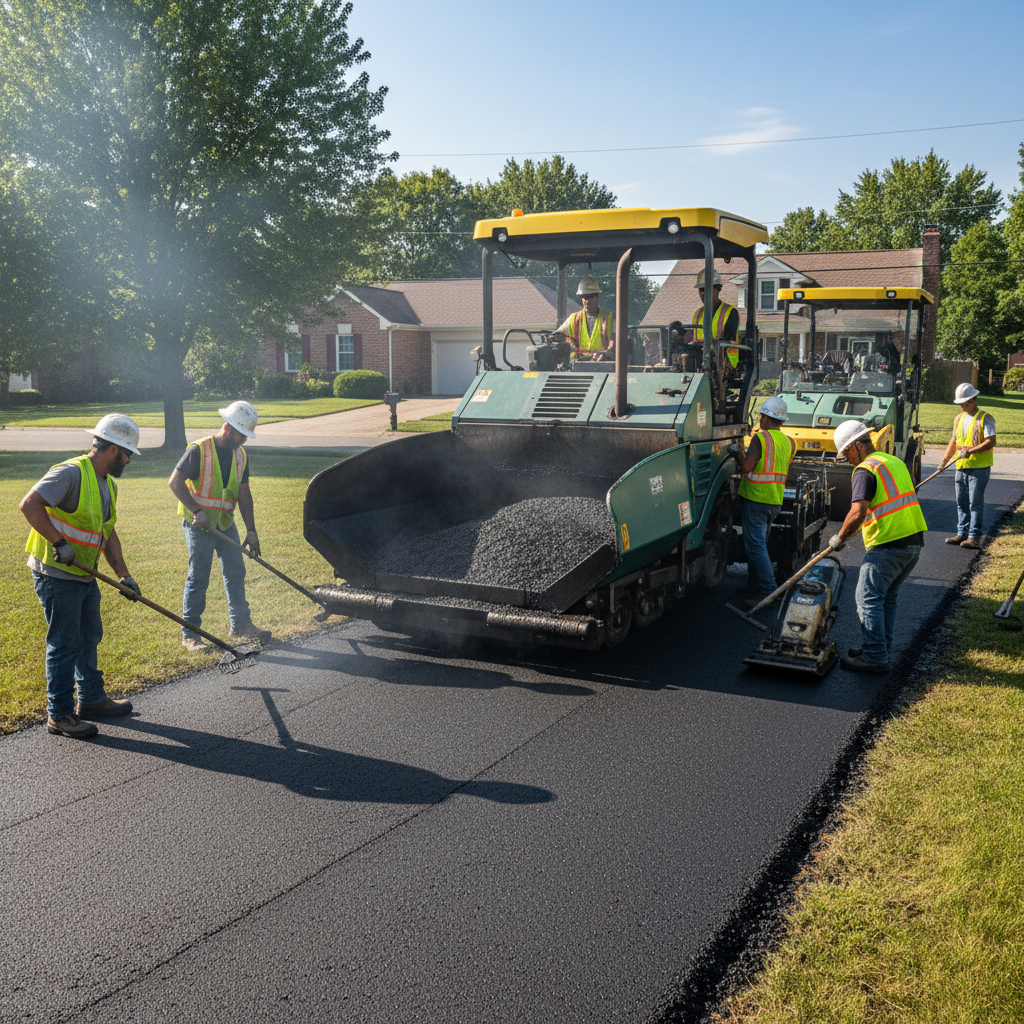
Driveway paving options and costs in York University Heights
York University Heights, Ontario is a dense, mature community where many homeowners are upgrading aging driveways without moving anything else on the property. With York University Heights holding a population of 27,593 (Statistics Canada, 2021 Census), demand is steady, and most driveways serve single-family homes—meaning contractors are often working around existing garages, tight turning radiuses, and established landscaping. In the Toronto economic region, pricing is heavily influenced by frost depth and the constant freeze–thaw cycle from late fall through early spring.
In practical terms, Toronto’s ground freezing (often roughly 3–4 feet) pushes driveways toward deeper, well-compacted granular base and reliable drainage. If water can’t drain away from beneath the asphalt or concrete, it freezes, expands, and can lift weak areas—resulting in cracks, settlement, and sometimes rutting. On top of that, Ontario’s paving season is effectively concentrated into late spring through early fall, which creates scheduling pressure and can raise costs for prime dates.
Because of these climate realities, the same square footage can price quite differently depending on excavation depth, drainage corrections, and whether your contractor is doing a full new installation or an overlay. For York University Heights, you’ll notice especially busy demand in the areas closer to the York University lands and the surrounding arterial corridors where homeowners often refresh both curb and driveway at the same time.
Below is a realistic comparison of common driveway materials and typical homeowner budgeting in this market.
| Material |
Lifespan |
Maintenance |
Best For |
Price per sq ft |
| Asphalt (new installation, proper base) |
15–25 years |
Seal coat every 3–5 years; winter patching as needed |
Most cost-effective full-surface upgrade with good drainage |
$10–$18 |
| Asphalt (overlay on existing gravel base) |
10–18 years |
Seal coat and monitor edges; periodic patching |
Lower upfront cost when the base is already strong |
$8–$14 |
| Interlocking concrete pavers |
25–40 years |
Joint sand top-ups; occasional lifting/releveling of small areas |
High curb appeal and easy repairs without full replacement |
$20–$35 |
| Poured concrete (broom finish) |
20–30 years |
Seal (if desired); crack monitoring; patching as needed |
Simple, durable driveway surface |
$14–$24 |
| Exposed aggregate concrete |
20–35 years |
Seal periodically; patch colour-matched areas |
Slip-resistant look and enhanced curb appeal |
$18–$30 |
| Gravel / crushed stone (budget option) |
5–12 years |
Regrade annually; top up stone; manage weeds/fines |
Short-term or low-budget approach |
$5–$10 |
Prices are estimates only and vary by project scope, site access and material selection.
What affects the price of paving in York University Heights
In the Toronto economic region, it’s common to see quotes for the “same” driveway differ by 30–50% once you break down what’s actually included. Two contractors can both say “asphalt driveway,” but one might be pricing a full excavation and properly engineered granular base while the other assumes the existing base is adequate. In winter-heavy areas like York University Heights, that difference matters because frost and water control are the foundation of performance.
Frost depth and freeze–thaw cycles are decisive cost factors here. With ground freezing often in the 3–4 feet range, driveways typically need deeper, well-compacted granular thickness to prevent heaving and cracking. In cold regions, that usually means added base material and labour compared to milder markets. Also, asphalt placement depends on workable weather; hot-mix asphalt requires air temperatures above about 10°C. Because the paving season is effectively narrowed to late spring through early fall, scheduling pressure can push pricing upward—especially for spring/summer start dates.
Concrete pricing can move too. For example, if your driveway slopes toward the house, drainage corrections (regrading and possibly adding subdrain) can add several thousand dollars. If you’re replacing older concrete, tear-out and disposal can also change the total cost quickly. If your driveway has tight access or steep turns, equipment time increases—labour and equipment scheduling are real cost drivers in dense neighbourhoods.
Bottom line: if you’re working within common budget ranges like $3,500–$8,000 for asphalt or $6,000–$15,000 for concrete in this tier, the “why” is usually base depth, drainage, and removal—not just the surface finish.
| Price Factor |
Why It Matters |
Cost Impact |
| Driveway area in sq ft |
Material and labour scale directly with square footage |
High (primary driver) |
| Base depth required |
Frost line determines granular thickness to stop heaving |
High (often thousands) |
| Grading and drainage work |
Proper slope and water management prevent water under pavement |
Medium–High |
| Tear-out of existing surface |
Breaking, hauling, disposal, and subgrade evaluation take time |
Medium–High |
| Edge restraints and curbing |
Interlock spread prevention and asphalt edge stability |
Medium |
| Sealing requirement |
Asphalt seal timing affects oxidation, permeability, and lifespan |
Low–Medium (short-term + lifecycle) |
| Site access |
Narrow passages slow equipment movement and extend labour time |
Medium |
| Asphalt mix specifications |
Freeze–thaw-rated mix and proper thickness reduce early failure |
Medium |
Permits & regulations in Ontario
For most homeowners in York University Heights, paving a private driveway within your own property typically does not require a building permit. However, once work touches municipal assets—especially within the municipal right-of-way—you may need municipal approval. Examples that usually require permission include creating or changing a curb cut, altering the boulevard area, and any work that changes storm drainage patterns (such as redirecting water flows away from the street in a way that affects the municipal system). In many cases, lot-grading rules also matter: some municipalities restrict how close a new hard surface and drainage outlets can be positioned to property lines or how stormwater is directed.
Before any digging, confirm utility locations using Ontario One Call (1-800-400-2255) so your contractor can avoid damaging buried services. Then verify contractor compliance step-by-step:
- Check their Ontario business and trades registration/licensing info through provincial resources (and confirm the contractor name matches the invoice and quote).
- Request a current certificate of insurance (liability) and confirm the coverage limits and expiry date.
- Verify WSIB/WCB coverage (or clearance where applicable) so you’re not left covering uninsured work.
- Ask for a written statement of what happens if unforeseen utilities or poor subgrade conditions are found.
If your scope includes any right-of-way or drainage changes, ask the contractor whether they’ll handle the approvals or provide the paperwork you must submit.
Asphalt vs pavers vs concrete for York University Heights driveways
In York University Heights, asphalt, interlocking concrete pavers, and concrete all have a place—but freeze–thaw performance and how you want the driveway to look after 5–10 winters should drive your choice. Asphalt is typically the lowest upfront option in this area (commonly within the $3,500–$8,000 tier depending on size and base). It also needs routine care: proper sealing after installation—typically within the first 6–12 months, then again every 3–5 years—helps reduce water infiltration, which is crucial when frost can reach roughly 3–4 feet deep.
Interlocking concrete pavers usually come with the highest upfront cost (often within the $9,000–$20,000 band) because of deeper preparation, setting materials, and labour. The payoff is repairability: if a section settles, you can lift and re-set only the affected area instead of replacing the entire surface. That matters in freeze–thaw winters where small weak spots can telegraph.
Poured concrete is often mid-range (commonly $6,000–$15,000) and durable, but it depends heavily on drainage, air-entrainment, and correct jointing. Poorly designed concrete can crack and heave where water accumulates near edges. Salt and ploughing add wear too—especially on the outer wheel paths.
A simple way to see where the money is justified: if your asphalt quote is $6,500 and includes a shallow base but your paver quote is $14,000 with full engineered drainage and a thicker granular structure, the difference is usually about long-term stability and the ability to correct future localized movement without full replacement.
| Material |
Frost Resistance |
Curb Appeal |
Repair Method |
Lifespan |
Price Band |
| Asphalt (sealed regularly) |
Good with proper base and drainage |
Medium (depends on edging) |
Mill and patch or overlay localized areas |
15–25 years |
$3,500–$8,000 |
| Interlocking concrete pavers |
Very good when base is engineered and edged |
High (upgrade-friendly patterns/colours) |
Lift/relevel and replace individual units |
25–40 years |
$9,000–$20,000 |
| Poured concrete (air-entrained) |
Good with correct mix, joints, and drainage |
Medium (finish options) |
Concrete patching; larger failures may require sections |
20–30 years |
$6,000–$15,000 |
| Exposed aggregate concrete |
Good with proper drainage and sealing approach |
High (textured premium look) |
Patch and match texture/colour where feasible |
20–35 years |
$8,000–$17,000 |
| Permeable pavers (drainage grid) |
Good when designed for your soil and slope |
High (modern look) |
Replace affected units; serviceable drainage layers |
25+ years (system-dependent) |
$10,000–$22,000 |
| Chip seal / tar-and-chip |
Moderate; performs best with good base and maintenance |
Low–Medium (more “utility” look) |
Maintenance surface treatments and patching |
8–15 years |
$4,000–$9,000 |
How to choose a paving contractor in York University Heights
Choosing the right paving contractor is what protects your driveway through Toronto’s freeze–thaw cycle. Start with compliance checks. In Ontario, ask for proof of liability insurance (certificate of insurance showing limits and active dates) and verify WSIB/WCB coverage so you’re not responsible if a worker is injured on-site. If the contractor uses subcontractors, make sure their coverage is addressed too—many disputes come from mixed coverage across a single job. Then check the contractor’s Ontario registration details via appropriate online resources, and confirm the company name, address, and contact information match the quote and invoices.
Next, get 2–3 itemised written quotes rather than lump sums. You want labour and materials breakdowns: excavation depth, granular base thickness, drainage/grading scope, disposal, asphalt/concrete thickness, and surface type. Read exclusions carefully—does the quote include utility locates, permit or right-of-way approvals (if required), saw-cutting, and disposal of removed material? Also ask for a specific start date window and a completion estimate in writing.
For warranty, ask for workmanship warranty length (and what it covers: settlement, surface cracking, edge failures) and whether it’s tied to maintenance like asphalt sealing. Product/manufacturer warranties should be documented and explained, including whether they’re transferable to future owners. Keep payment structured: never pay more than 10–15% upfront, and use a holdback until the job is complete and deficiencies are corrected.
- Confirm liability insurance certificate and read the listed project/address details.
- Verify WSIB/WCB coverage or clearance letter before work begins.
- Request a written quote with measurements of length/width and total sq ft.
- Ask for base thickness and compaction plan, not just “proper base.”
- Confirm drainage/grading changes are included (or listed as exclusions).
- Check whether tear-out/disposal is included or priced separately.
- Ask how edges will be restrained (curb, edging, interlock locking).
- For asphalt, confirm sealing timing and who applies the seal.
- For concrete, confirm air-entrainment, mix specification, and jointing plan.
- Review warranty terms in writing and get coverage duration and conditions.
- Set expectations for weather delays given Ontario’s short season.
- Use a clear payment schedule with retainage/holdback until final sign-off.
Red flags we see in York University Heights include: vague scopes like “seal and done” with no thickness/base details; no proof of WSIB/WCB or insurance; quotes that don’t include disposal or assume existing base is perfect without inspection; pressure to pay the full amount upfront; and contracts with unclear start dates or no workmanship warranty.
Frequently asked questions — paving in York University Heights
Why does my driveway crack and heave in winter?
In York University Heights and across the Toronto area, freeze–thaw is the biggest driver. When water isn’t draining properly, it can migrate into weak spots under asphalt or at edges. That water freezes, expands, and can lift the pavement (“heave”), then thaw and settle later, gradually turning into cracking, rutting, or broken edges. A common cause is insufficient granular base depth or poor compaction—especially where the original base was thin or disturbed by previous repairs. Another trigger is missing or inadequate edge restraints, which lets materials spread slightly under winter movement. If you’re seeing issues within the first 1–3 winters after a resurfacing, it often points to base preparation or drainage gaps, not just the surface material.
Do I need a permit to pave my driveway in Ontario?
Usually, paving a private driveway within your own property in Ontario does not require a building permit. However, approvals can be required when work affects municipal right-of-way items—such as adding or changing a curb cut, altering the boulevard, or changing storm drainage patterns connected to municipal systems. In York University Heights, ask your contractor to confirm whether any work is touching the street-side drainage or curbline. Even when a permit isn’t required, some municipalities have lot-grading rules that affect how water is handled near property lines. Before excavation, confirm utility locates through Ontario One Call. A reputable contractor should clearly state in writing which parts of the job are included (and which approvals, if any, are required) before you sign.
How long before I can drive on new asphalt?
Most new asphalt driveways can be driven on after it has cooled enough to resist tracking—often the same day for standard residential placements. If the surface was placed in cooler conditions or multiple lifts were required, traffic can be limited longer. A key detail is whether the contractor applied any tack coat or seal coat: seal coating is typically handled separately from the main asphalt placement and should not be driven on right away. For budgeting, remember asphalt sealing is not just optional maintenance; it’s part of protecting against water infiltration that fuels freeze–thaw damage. Many homeowners plan for sealing every 3–5 years, and the initial seal timing usually happens within the first 6–12 months. If you’re comparing options, asphalt projects commonly start in the $3,500–$8,000 range depending on size and base prep.
What causes potholes and how are they repaired?
Potholes usually start as small failures: water penetrates a weak spot, softens the base, and then traffic breaks the surface. In Ontario’s freeze–thaw climate, the cycle accelerates this because thaw water and freeze expansion widen the void. Common triggers include areas with inadequate drainage, missing compaction under patches, or cracking along edges where water collects. Repairs typically involve saw-cutting out the damaged asphalt and removing unstable material down to firm base, then installing new granular base (or cold mix/leveling course where appropriate) and repaving with properly compacted hot mix. If the damage is widespread, a localized patch won’t last long and an overlay may be recommended instead. A good contractor will also identify whether drainage or grading is causing the repeated failures, not just repaving the pothole.
How do I prepare for a paving project?
Preparation helps the work move faster—which matters in York University Heights where the paving window is typically late spring through early fall. Before the crew arrives, clear the driveway area of vehicles, move items away from edges, and secure landscaping that could be damaged by grading equipment. Mark any items that must be protected (like downspouts, garden beds, irrigation heads, or decorative stones). If you have existing drainage issues—standing water after rain or melting snow—tell the contractor upfront so it’s included in the scope. Get clarity on disposal and dust control, and confirm where excavated material will be hauled. For asphalt, ask about sealing timing in the first year. For planning, homeowners in this tier commonly budget roughly $300–$1,500 for sealing and repair treatments over time, on top of the main installation cost band.
How do I compare paving quotes fairly?
To compare quotes fairly, insist on itemised details rather than lump sums. The most important items are: total square footage, excavation depth, granular base thickness and compaction, drainage/grading corrections, tear-out and disposal, and edge restraint/curbing. For asphalt, confirm mix thickness and whether sealing is included and when it’s scheduled (usually after 6–12 months). For concrete, confirm air-entrainment, jointing plan, and finishing method. Quotes can differ by 30–50% in the Toronto region because frost-depth requirements and site conditions change base and labour needs. A fair quote should also show the warranty length for workmanship, any exclusions, and the payment schedule. If you’re seeing asphalt quotes that fall far below the typical $3,500–$8,000 band without explaining base and drainage scope, treat that as a question—often the “missing” scope is what prevents winter heaving.