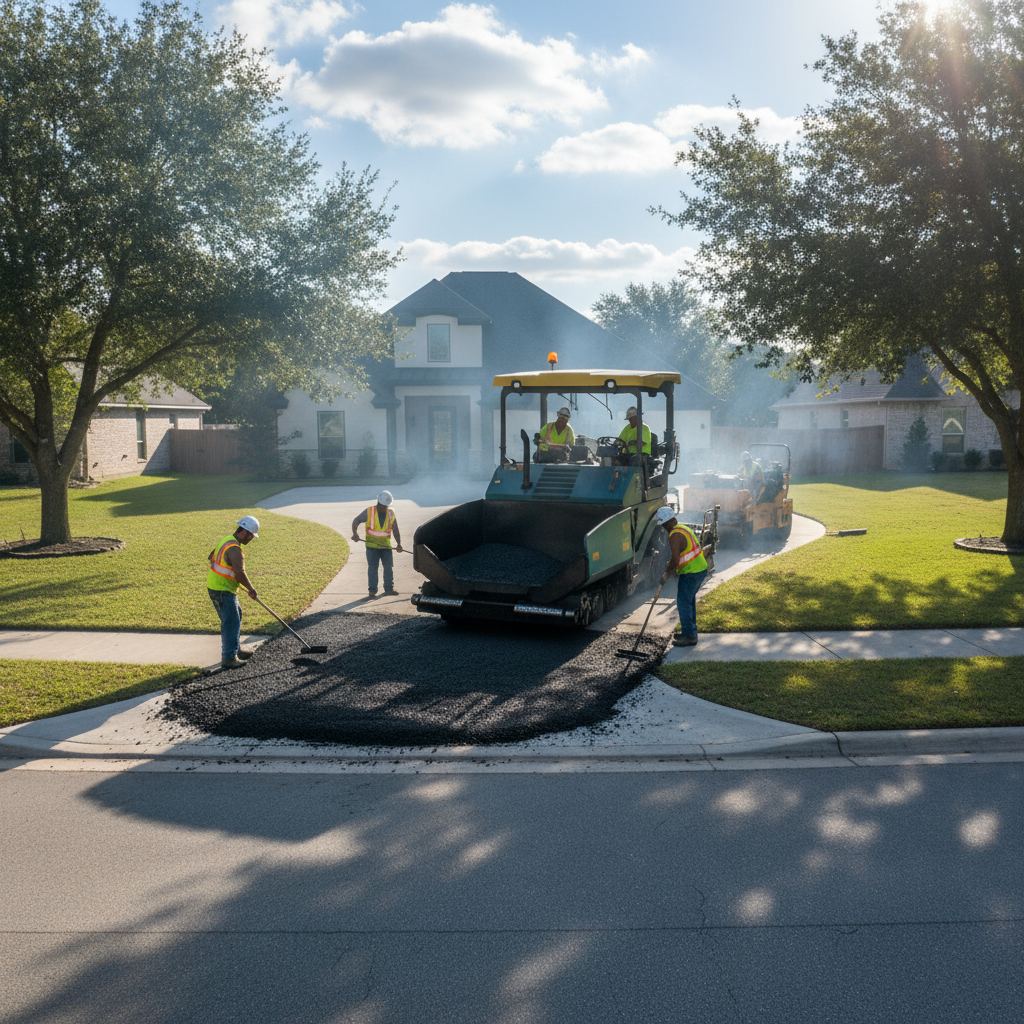
Driveway paving options and costs in Alderwood
Alderwood homeowners usually have two driveway realities in common: tight urban lots and long Ontario winters. In the Toronto economic region, private driveways are most often tied to single-detached homes—at a city-regional level there are 254,483 single-detached dwellings (Statistics Canada, 2021 Census)—so demand is steady for new asphalt, interlock, and concrete replacements. With Alderwood’s smaller population of 12,054 residents (Statistics Canada, 2021 Census), there’s not always a lot of contractor availability compared to the busiest parts of Toronto, so getting on the right schedule matters.
Toronto area pricing is also shaped by frost depth and freeze–thaw cycles. Local frost depth is roughly 3–4 feet, which means your driveway needs a deeper, well-compacted granular base and drainage so water can’t sit under the surface. That adds excavation, base material, and labour—especially when the work includes tear-out of older asphalt or concrete. Because the paving season effectively runs late spring through early fall (and hot-mix asphalt placement needs warm air/soil), prime dates can cost more in spring and early summer. You’ll often see busiest crews book up first near higher-traffic pockets like the Alderwood waterfront-side areas and established residential corridors.
Use the table below as a quick comparison before you request quotes; it shows typical performance and budget ranges for driveways in Alderwood and the surrounding Toronto market, where frost-related design is the difference between a surface that lasts and one that heaves.
| Material |
Lifespan |
Maintenance |
Best For |
Price per sq ft |
Price Range |
| Asphalt (new installation, proper base) |
12–20 years |
Sealcoat every 3–5 years (typically), patch as needed |
Best balance of cost and longevity with correct frost-proof base and drainage |
$7–$12 |
$3,500–$8,000 |
| Asphalt (overlay on existing gravel base) |
8–15 years |
Sealcoat every 3–5 years; monitor for base issues |
Slopes or sites where full tear-out isn’t required (only when base is sound) |
$6–$10 |
$3,200–$6,500 |
| Interlocking concrete pavers |
25–40 years |
Replace a few stones as needed; re-sand joints if settled |
Premium curb appeal and repairs without tearing out the whole driveway |
$14–$22 |
$9,000–$20,000 |
| Poured concrete (broom finish) |
20–30 years |
Sealer if desired; crack monitoring and targeted patching |
Clean look and straightforward maintenance with good jointing and drainage |
$10–$18 |
$6,000–$15,000 |
| Exposed aggregate concrete |
20–30 years |
Sealer/maintenance as specified; spot repairs can be more visible |
Upgraded appearance with skid resistance |
$12–$20 |
$7,000–$16,500 |
| Gravel / crushed stone (budget option) |
3–10 years |
Re-grade and top up regularly; weed control |
Temporary/lowest upfront cost or utility-access driveways |
$4–$7 |
$2,500–$6,000 |
Prices are estimates only and vary by project scope, site access and material selection.
What affects the price of paving in Alderwood
In Alderwood and across the Toronto region, the same driveway can receive quotes that differ by 30–50% because the “surface price” is only part of the job. Two contractors might both quote asphalt, but one includes proper frost-proof base build-up, drainage improvements, and disposal of old material—while another assumes your existing base is already engineered to handle freeze–thaw loads. In a market with a compressed paving season, labour scheduling also tightens around late spring through early fall, so prime dates can raise costs for both asphalt and concrete crews.
Frost depth and freeze–thaw cycles are decisive cost factors in this region. With ground freezing to about 3–4 feet, driveways need deeper, compacted granular thickness to prevent heaving and cracking. In practice, that often means more base material and longer compaction time, especially if the driveway currently sits on weak fill or old topsoil. Asphalt mix design matters too: freeze–thaw-rated hot-mix asphalt costs slightly more and must meet local performance requirements, not just “standard driveway mix.” Asphalt also needs air temperatures above about 10°C for reliable placement, so scheduling pressure in Ontario can add rush charges when demand peaks.
Concrete can be affected as well. For example, poured concrete may cost more in Alderwood if the contractor must install additional crack-control joints and improve drainage to manage water during freeze–thaw. Exposed aggregate can also increase labour because finishing is more time-sensitive. If your driveway is large—say 400 sq ft versus 250 sq ft—base and excavation scale quickly, which is why a larger job can land at the higher end of the $3,500–$8,000 asphalt band or, for pavers, move toward $9,000–$20,000 where materials and restraints dominate.
| Price Factor |
Why It Matters |
Cost Impact |
| Driveway area in sq ft |
Most materials (base, asphalt, pavers/concrete) and labour scale with surface area |
Often the biggest swing—larger driveways can exceed small-job pricing by 2–4x |
| Base depth required |
Frost line conditions drive granular thickness and compaction needs |
Additional depth can add major excavation, hauling, and compaction time |
| Grading and drainage work |
Correct slopes and sub-drainage prevent water pooling that leads to heave and early failure |
May add regrading, drainage rock/pipe, and outlet tie-ins |
| Tear-out of existing surface |
Breaking/hauling old asphalt or concrete adds labour, disposal, and sometimes geotextile/base rehab |
Can materially increase costs when old material is thick or reinforced |
| Edge restraints and curbing |
Restraints keep pavers from spreading and asphalt/concrete from migrating at the edges |
Extra concrete curbs/retaining edges add formwork and material |
| Sealing requirement |
Asphalt needs sealcoat after installation to protect from moisture and winter wear |
Longer-term maintenance add-on; skipping can shorten asphalt life |
| Site access |
Narrow driveways, steps, or limited staging slow down equipment movement and increase labour time |
May require more manual handling and additional time on site |
| Asphalt mix specifications |
Freeze–thaw-rated mix designs cost more but reduce premature rutting/cracking |
Usually a moderate premium, often worth it in Ontario winters |
Permits & regulations in Ontario
For most Alderwood homeowners, the driveway itself is straightforward from a permitting standpoint: paving a private driveway within your own property typically does not require a building permit. Where things change is when your project affects municipal infrastructure. If you’re working in the municipal right-of-way—such as building a new curb cut, changing the boulevard, modifying driveway access tied to the road, or altering storm drainage flow—municipal approval is commonly required before construction starts.
Two practical examples of permit/approval-triggering work: (1) installing or widening a curb cut to create a new driveway entrance, and (2) changing drainage patterns that direct runoff toward a municipal catch basin or altering the way stormwater leaves the property. In contrast, replacing asphalt or concrete within your existing driveway footprint usually stays in the “no permit” category, assuming you’re not changing municipal drainage or access.
Step-by-step verification is still essential. Before signing, ask for the contractor’s Ontario licence details, then confirm their liability insurance certificate includes your address and shows appropriate coverage limits. For workers, ensure they carry WSIB coverage (or provide a clearance letter where applicable). Finally, call for utility locates before excavation—use Ontario One Call—so the crew can mark buried services. If your driveway ties into lot-grading features, also confirm any lot-grading bylaws that may restrict how close you can build hard surfaces to property lines with adequate drainage.
Asphalt vs pavers vs concrete for Alderwood driveways
In Alderwood’s freeze–thaw climate, the “best” material depends on how you want to balance upfront cost, long-term repairs, and winter performance. Asphalt is usually the lowest upfront option and, when installed with the right frost-proof base and proper drainage, can perform well for 12–20 years. The trade-off is maintenance: asphalt sealing is typically required every 3–5 years, and without it, moisture and de-icing wear can accelerate surface aging.
Interlocking concrete pavers cost more up front, but they shine when your priority is curb appeal and repairability. If a section settles or needs replacement, crews can lift only the affected stones rather than tearing out the full slab. In Toronto winters with frequent freeze–thaw, good edging and joint sand installation help pavers stay stable—especially when the base is correctly compacted to resist heaving.
Poured concrete sits in the mid-range for cost, but it needs proper mix design (including air entrainment), correct joint spacing, and drainage planning to manage freeze–thaw and salt exposure from winter maintenance. Cracking is part of how concrete behaves; the goal is controlled cracking at joints and patches that remain serviceable.
Base preparation is non-negotiable for all options: with Toronto frost depths around 3–4 feet, expect deeper granular base and engineered drainage so water can’t sit beneath. If you compare costs, the difference can be justified: for a similar-size driveway, asphalt may land in the $3,500–$8,000 band, while pavers often move you into the $9,000–$20,000 range. If you plan to stay long-term and want easier repairs after winter settlement, pavers can be worth that premium. If budget is tighter and you’re comfortable with sealing, asphalt usually offers the best value.
| Material |
Frost Resistance |
Curb Appeal |
Repair Method |
Lifespan |
Price Band |
| Asphalt (sealed regularly) |
Good when base and drainage are engineered for freeze–thaw |
Moderate (clean, dark finish) |
Mill/patch potholes and failed areas; spot repairs |
12–20 years |
$3,500–$8,000 |
| Interlocking concrete pavers |
Very good with proper base, edging, and jointing |
High (variety of colours/patterns) |
Lift-and-relay individual blocks or sections |
25–40 years |
$9,000–$20,000 |
| Poured concrete (air-entrained) |
Good with air entrainment, joints, and drainage |
Moderate to high (finish options) |
Crack repair/patching; deeper failures may require slab work |
20–30 years |
$6,000–$15,000 |
| Exposed aggregate concrete |
Good with correct mix design and curing |
High (textured premium look) |
Spot patching; repaired areas can be slightly different visually |
20–30 years |
$7,000–$16,500 |
| Permeable pavers (drainage grid) |
Very good for water management when installed correctly |
Moderate to high (clean modern layouts) |
Remove affected paver sections and reset bedding/surface |
20–35 years |
$10,000–$22,000 |
| Chip seal / tar-and-chip |
Variable; best for specific base conditions |
Lower (texture/appearance) |
Spot aggregate repairs; periodic rework |
6–12 years |
$3,000–$7,000 |
How to choose a paving contractor in Alderwood
Start by verifying Ontario licensing requirements and coverage before you compare prices. Ask for their Ontario licence details (and confirm they’re in good standing via the appropriate online registry), then request a certificate of insurance showing liability coverage that lists you as an additional insured if applicable. For worker coverage, confirm WSIB status and obtain the WSIB clearance letter where required. This matters in Ontario because excavation and compaction work are where slips, equipment contact, and material handling claims can occur.
For quotes, don’t accept a “lump sum only” number. Get 2–3 itemised written quotes with a labour and material breakdown: excavation, disposal, granular base quantities, geotextile, asphalt/paver/concrete, edging/curbs, and finishing. Scope should be explicit about what’s included and excluded, including whether permit/approval pulling is included when curb cuts or boulevard work triggers municipal approval. Also confirm whether disposal and haul-away are included (not billed separately).
Warranty matters in freeze–thaw areas. Ask for the workmanship warranty term and what it covers (base failures vs surface issues). Separate it from the manufacturer’s product warranty, and ask whether warranties are transferable to future owners. Payment should protect you: never pay more than 10–15% upfront, and use a holdback until substantial completion. Finally, require a written timeline with a start date and estimated completion date so you can plan around Alderwood weather windows and utility needs.
- Request Ontario licensing information and verify it online before signing.
- Check the certificate of insurance for your address and correct coverage limits.
- Confirm WSIB coverage or obtain a WSIB clearance letter.
- Get 2–3 itemised quotes (labour + materials), not just one total.
- Confirm base thickness and compaction specs for freeze–thaw conditions.
- Ask how drainage and slope corrections will be handled.
- Verify tear-out scope: depth, breaking, hauling and disposal.
- Confirm edge restraint details (curbs/borders) for pavers and asphalt edges.
- For asphalt, ask when sealcoating will be applied and whether it’s included or scheduled.
- For concrete, confirm air entrainment and joint/crack control plan.
- Ensure warranty terms are written and specify what failures trigger warranty service.
- Agree on payment milestones: keep 10–15% holdback until acceptance.
In Alderwood, red flags we see include: contractors refusing to put base thickness and drainage details in writing, quotes that don’t specify tear-out/disposal, pressure to pay most of the total upfront, vague warranty language (“guaranteed” without term/conditions), and mismatched insurance/WSIB information that can’t be provided before work begins.
Frequently asked questions — paving in Alderwood
Do I need a permit to pave my driveway in Ontario?
In Ontario, paving a private driveway within your own property usually doesn’t require a building permit, and many Alderwood homeowners complete replacement work without permits. The exception is when you affect the municipal right-of-way or storm drainage—like building or widening a curb cut, altering boulevard features, or changing how runoff discharges toward municipal infrastructure. In those cases, municipal approval is typically required before excavation starts.
Your best move is to ask the contractor to identify whether any portion of the work touches municipal infrastructure and, if so, whether permit/approval pulling is included in the scope. Also remember Ontario One Call locates before any digging. If you’re unsure, contact your municipality with a short description (material type, driveway dimensions, and whether drainage/access changes are planned) so you can confirm requirements ahead of time.
How long before I can drive on new asphalt?
Typically, you can drive on new asphalt once it has cooled enough that it won’t pick up or deform from vehicle weight. In practice, crews often schedule “safe-to-drive” in the same day, but it depends on weather, asphalt mat temperature, and thickness. In Alderwood’s late spring through early fall season, conditions are usually favourable, but you still need a buffer for cooling and curing.
If you’re comparing contractors, ask what they consider “driveable” and whether they’ll mark the surface to prevent early traffic. For sealing, asphalt usually shouldn’t be sealed immediately—many contractors recommend waiting after installation (often around 6–12 months, depending on product) so the pavement cures properly. If you’ve been quoted around the asphalt band of $3,500–$8,000, confirm whether that quote includes only the base paving or also any required seal timing, because that affects long-term cost and performance.
What causes potholes and how are they repaired?
Potholes in Alderwood and the wider Toronto area are usually caused by water getting under the pavement during melt cycles, then freezing and expanding. Freeze–thaw stresses loosen the base and break down asphalt around the void. Heavy vehicle loads, soft spots in the subgrade, and poor drainage (or missing/incorrect slope) accelerate the failure. Sometimes potholes are “just surface,” but more often they indicate base saturation and a need for base attention.
Repair method matters: the reliable approach is “saw-cut and remove” to a stable depth, clean and recompact the base, then place asphalt in lifts and compact properly. If a contractor just fills on top without addressing the underlying wet area, potholes tend to come back. Ask your contractor to explain whether they’ll investigate why the area failed and whether they’ll use proper tack coat and compaction—not just patch material.
How do I prepare for a paving project?
Preparation is what protects your driveway after installation. Start by clearing the area (vehicles, trailers, and planters) and marking any utilities or irrigation lines you know about. Confirm with Ontario One Call that locates are completed before excavation if any digging into adjacent areas is expected. If you have pets or kids, plan for noise and vibration during tear-out.
Next, review access for equipment: tight gates and overhead lines can affect how the crew brings materials and can change labour time. Take photos of the existing driveway condition (especially low spots and drainage paths) so you can compare what changes after work. If you’re budgeting, remember that sealing and repairs can be part of the long-term plan for asphalt; for many Alderwood projects, asphalt installs are commonly within $3,500–$8,000, but ongoing maintenance should be considered. Ask for a written schedule and confirm pickup/disposal is included if your contractor is tearing out old pavement.
How do I compare paving quotes fairly?
Compare quotes like-for-like. The biggest mistake in Alderwood is treating two totals as equal when the base and drainage scope isn’t the same. Look for itemisation: excavation depth, granular base thickness, geotextile use (if required), compaction, drainage corrections, tear-out depth, disposal/haul-away, and edge restraint details. For asphalt, ensure the quote references proper frost-thaw-rated mix placement and includes tack/prime where needed.
Also compare warranty terms, not just price. Ask whether the workmanship warranty is written and for how long, and whether sealcoating timing is included or excluded. If one quote lands at the low end of the asphalt range (around $3,500–$8,000) but skips drainage or base depth, you may pay more later. Similarly, interlocking pavers often move you into the $9,000–$20,000 band; a lower number can be a sign of reduced restraints or less engineered base.
Can asphalt be laid in cold weather in Alderwood?
Asphalt is not a “anytime” material in Alderwood. Asphalt placement requires adequate air temperature and soil conditions so the mix can be compacted properly and won’t cool too quickly. In the Toronto region, contractors commonly rely on conditions above roughly 10°C air temperature for reliable placement—meaning late fall and early winter are usually not ideal, even if the surface looks dry.
Cold weather increases the risk of poor compaction, which can lead to early rutting, cracking, and moisture issues during later freeze–thaw cycles. If a contractor proposes paving during cold snaps, ask what they’ll do to meet placement/compaction standards, and whether they’re using a mix and process appropriate for Ontario freeze–thaw performance. A well-managed schedule is part of pricing too; shorter workable seasons can push demand into a few months, which is why you may see higher rates for rush dates.