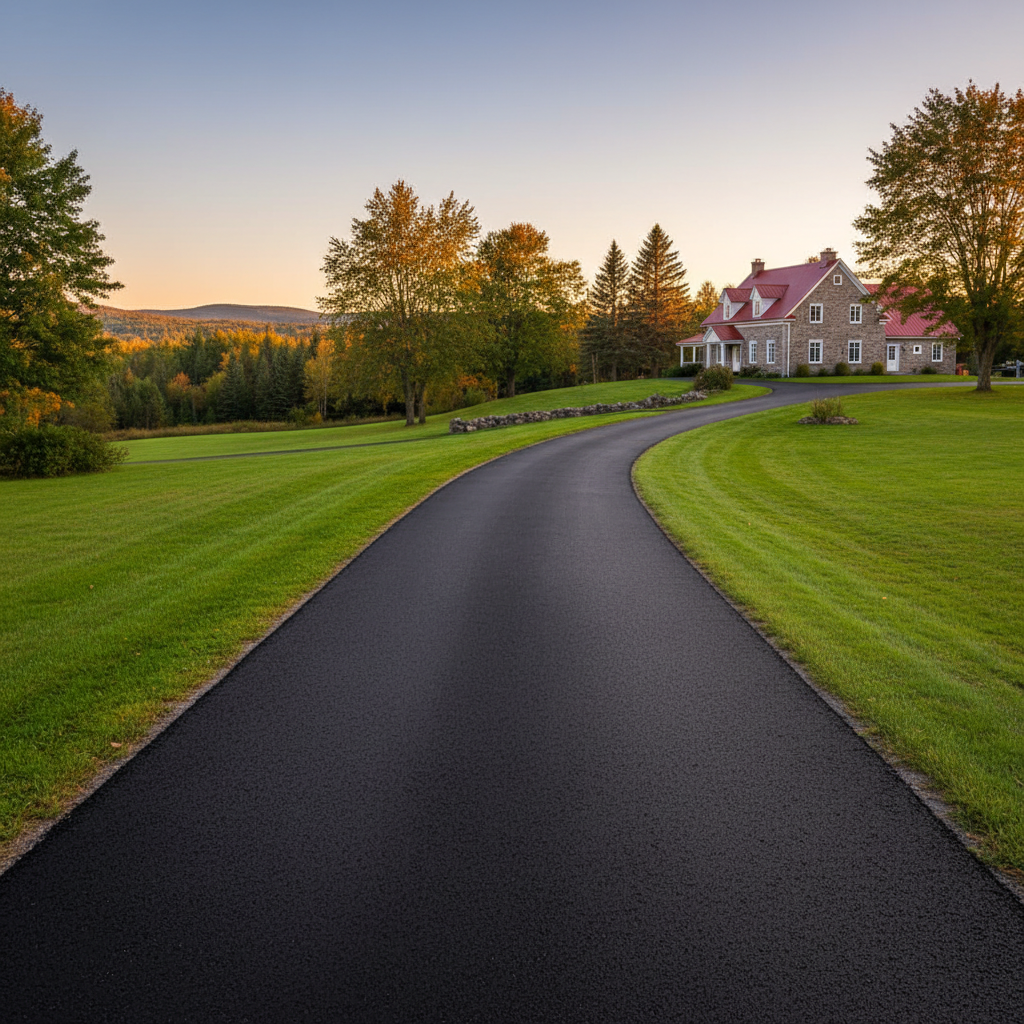
Driveway paving options and costs in Owen Sound
Owen Sound homeowners usually have the same core decision to make—how to upgrade a driveway that survives a brutal freeze–thaw cycle—while keeping costs predictable. With Owen Sound sitting at 21,612 people and roughly 58.0% of households owning their homes (Statistics Canada, 2021 Census), there’s a steady demand for new surfacing and repairs each spring. And because single-detached homes make up 51.1% of dwellings, most driveway work is attached to detached properties where access, base depth, and drainage at the apron matter a lot.
In the Stratford–Bruce Peninsula region (including Owen Sound), pricing isn’t just about “material.” Frost line depth and saturated clay or silty pockets in the subgrade can hold water and amplify frost heave, which pushes contractors to excavate deeper and build a thicker, well-compacted granular base. Add the compressed paving window—often late May through September when temperatures stay workable—and you’ll see that labour availability and scheduling pressure support the local price bands. That’s why even the same 400–600 sq ft driveway can land at meaningfully different totals depending on base condition, slope, and whether drainage corrections are needed.
Trade demand is especially visible around the older housing stock in areas like the East side and near the waterfront, where many driveways were originally built decades ago (72.4% of homes built before 1981—Statistics Canada, 2021 Census). Those older bases are often uneven or waterlogged, so “proper base” work is the key difference between a short-lived patch job and a long-lasting surface. Below is a practical side-by-side for Owen Sound driveway material choices to help you compare quotes, then we’ll break down what moves the price most.
| Material |
Lifespan |
Maintenance |
Best For |
Price per sq ft |
| Asphalt (new installation, proper base) |
15–25 years |
Seal every 3–5 years; crack-fill as needed |
Best overall value when base and drainage are corrected |
$6 – $10 |
| Asphalt (overlay on existing gravel base) |
10–18 years |
Seal every 3–5 years; monitor settlements |
Quicker upgrade when excavation is limited and base is stable |
$7 – $12 |
| Interlocking concrete pavers |
25–40 years |
Replace individual pavers; re-level sand occasionally |
Maximum curb appeal and easy spot repairs |
$18 – $28 |
| Poured concrete (broom finish) |
20–30 years |
Minor patching; sealing optional |
Clean, solid look with good load capacity |
$14 – $22 |
| Exposed aggregate concrete |
20–35 years |
Sealing as recommended by finisher; patching for spalls |
Slip-resistant texture and premium appearance |
$16 – $26 |
| Gravel / crushed stone (budget option) |
3–10 years |
Top up annually; re-grade; weed control |
Lowest upfront cost where paving can’t be done now |
$3 – $6 |
Prices are estimates only and vary by project scope, site access and material selection.
What affects the price of paving in Owen Sound
It’s common for the “same” driveway to come in 30–50% apart across Stratford–Bruce Peninsula and Southern Ontario. The biggest reason isn’t the asphalt or concrete itself—it’s everything beneath and around it. Contractors may be building a full, frost-protected base with proper compaction and edge support, or they may be trying to pave over a base that’s only partially stable. In colder regions like Owen Sound, that difference changes both cost and long-term performance.
Two decisive cost factors drive that spread: frost line depth and freeze–thaw cycles. With a frost line roughly around 1.2 m (about 4 ft) in Ontario, saturated subgrade above that depth can freeze, expand, and lift the pavement. To resist that movement, granular base thickness is typically deeper in Ontario than milder climates. That means more excavation, more stone, and more labour time to compact in lifts. On top of that, hot-mix asphalt requires air temperatures above 10°C to place properly, so the shorter paving season concentrates demand and increases the cost of scheduling and weather downtime. Regional mix design also matters—freeze–thaw-rated asphalt costs more than generic mix used in less demanding climates.
Concrete offers another example. In Owen Sound, an older subgrade that’s slightly high at one edge can cause broom-finish concrete to crack sooner if there’s not enough drainage and slope correction before pour. Conversely, when the base is rebuilt and forms are properly set with good sub-drainage, concrete can perform well even through winter salt and plowing. For homeowners feeling the budget pressure, that’s why asphalt at roughly $6 – $10 per sq ft can look attractive—but if your existing base is waterlogged, quotes can move toward the higher end (or beyond) once the “proper base” work is included.
| Price Factor |
Why It Matters |
Cost Impact |
| Driveway area in sq ft |
Most materials and machine time scale with surface area |
Highest overall driver; larger drives cost proportionally more |
| Base depth required |
Frost protection needs thicker compacted granular base in cold climates |
Can add significant excavation/stone costs when frost is addressed properly |
| Grading and drainage work |
Cross-slope, crown, and ditch tie-ins control freeze–thaw water |
Often increases cost but prevents early failure |
| Tear-out of existing surface |
Old asphalt or concrete must be broken, hauled, and disposed |
Higher for thicker slabs and reinforced concrete |
| Edge restraints and curbing |
Prevents paver spread and asphalt edge breakdown |
Adds layout and material cost; improves longevity |
| Sealing requirement |
Asphalt needs a sealant plan to resist water and oxidation |
Adds an extra line item; improves lifespan—often $0–$3 per sq ft |
| Site access |
Narrow lots slow equipment placement and increase labour time |
More crew hours and smaller-load material handling |
| Asphalt mix specifications |
Freeze–thaw-rated mixes better resist cracking in Ontario cycles |
Usually higher material cost; worth it in Owen Sound winters |
Permits & regulations in Ontario
In Ontario, paving a private driveway within your own property typically does not require a building permit. Where permits and approvals often come in is work that touches the municipal right-of-way or affects how stormwater moves through the boulevard area. In Owen Sound, that commonly includes making or widening a curb cut, changing the boulevard approach, modifying storm drainage leading to catch basins, or altering ditches that are part of municipal drainage patterns. If your plan involves any new apron configuration at the street line, assume you’ll need municipal approval before excavation begins.
Also watch for lot-grading bylaws. Some municipalities restrict how close hard surfaces can be to property lines and may require minimum slope and drainage away from foundations to avoid water migration onto neighbours’ lots. Your contractor should be able to describe the planned cross-slope and tie-in details, but the homeowner is still responsible for confirming local grading requirements.
Step-by-step, you can verify your contractor is set up correctly:
- Ask for the contractor’s Ontario business licence information (or confirm they’re in good standing if applicable) and their company contact details.
- Request a Certificate of Insurance: general liability should be current and match the scope (driveway paving, excavation, and material handling).
- Confirm WSIB coverage (where required) or the equivalent worker coverage documentation for the crew performing the work.
- Use the online registry/insurer documentation: you’re looking for validity dates and correct insured name.
- Have them provide the clearance letter where applicable and ensure it matches the job address and company name.
Before any shovel hits the ground, always ensure Ontario One Call is completed for utility locates, and confirm the excavation depth won’t interfere with buried services.
Asphalt vs pavers vs concrete for Owen Sound driveways
For Owen Sound driveways, asphalt, interlocking pavers, and concrete all have a place—but freeze–thaw performance and how each material handles water are the deciding factors. Asphalt is usually the lowest upfront cost in this region (often aligning with the $6 – $10 per sq ft band when the base is done properly). Its weakness is water infiltration through cracks, which is why sealing every 3–5 years matters in Ontario. In the Stratford–Bruce Peninsula market, we routinely see better asphalt longevity when contractors correct drainage and provide proper edge support instead of relying on “thicker asphalt” alone.
Interlocking concrete pavers cost more (commonly $18 – $28 per sq ft), but they shine when you want repairability. If a section settles due to a local subgrade issue, pavers can be lifted, the base fixed, and the surface rebuilt without replacing the whole driveway. That’s a meaningful advantage in older Owen Sound neighbourhoods where foundations and subgrades have changed over time.
Poured concrete typically lands mid-range (about $14 – $22 per sq ft). It can last 20–30 years when properly air-entrained and constructed over the right granular base with controlled joints. However, freeze–thaw and winter sanding/salt can accelerate surface wear and cracking if the mix isn’t air-entrained or if drainage is poor.
A concrete example: suppose you have a 500 sq ft driveway. A well-built asphalt install at around $6 – $10 per sq ft may price in the lower-to-mid range, while pavers at $18 – $28 per sq ft can cost roughly 3× the material cost. That difference is usually justified if you want curb appeal, easy sectional repairs, or you’re expecting base variability (common on driveways built when many homes were constructed before 1981). If your subgrade is straightforward and you’re budget-conscious, asphalt or concrete often holds up best to Owen Sound’s plowing and salt routine—provided the drainage and base are treated as part of the system.
| Material |
Frost Resistance |
Curb Appeal |
Repair Method |
Lifespan |
Price Band |
| Asphalt (sealed regularly) |
Good with proper base, drainage, and freeze–thaw-rated mix |
Moderate (clean black surface) |
Patch and seal localized sections; crack-fill |
15–25 years |
$6 – $10 |
| Interlocking concrete pavers |
Very good when compacted bedding prevents voids |
High (wide colour/style options) |
Lift, re-base, and replace individual pavers |
25–40 years |
$18 – $28 |
| Poured concrete (air-entrained) |
Good with air-entrainment, joints, and strong base |
Moderate (broom finish / custom options) |
Patch cracks; repair spalls; re-seal as needed |
20–30 years |
$14 – $22 |
| Exposed aggregate concrete |
Good when sealed and built over correct base |
Very high (textured premium look) |
Targeted patching; colour-matched repairs |
20–35 years |
$16 – $26 |
| Permeable pavers (drainage grid) |
Excellent for managing water at the surface |
High (modern look) |
Replace individual units; clean/flush drainage channels |
25–40 years |
$22 – $34 |
| Chip seal / tar-and-chip |
Fair to good; performance varies with prep and maintenance |
Moderate to low (utility finish) |
Re-surface spots; periodic top reapplications |
7–12 years |
$6 – $9 |
How to choose a paving contractor in Owen Sound
Choosing the right contractor in Owen Sound is mostly about proof and process—not just the lowest number. Start by verifying Ontario coverage and compliance. Ask for a current Certificate of Insurance for general liability, and confirm it lists the correct insured legal name and job address (or confirms it covers the project scope). For worker protection, confirm WSIB coverage where required; you should be able to see documentation with the coverage status and effective dates for the company doing the work. If a contractor can’t provide current documents promptly, that’s a stop-sign.
Next, request 2–3 itemised written quotes that break down labour and materials separately—especially excavation, granular base depth, geotextile/sub-drainage, asphalt or concrete supply, compaction, and any traffic control. A fair quote includes the same assumptions: base prep, drainage corrections, edge restraints, and disposal of old material. In Owen Sound, it’s also critical to clarify whether permit work for any boulevard/right-of-way portion is included or excluded, and whether disposal is included in the price or billed separately.
Then review warranty details. Look for workmanship warranty length (and what “workmanship” covers), product/manufacturer warranty coverage for the materials, and whether the warranty is transferable if you sell your home. Payment scheduling should protect you: never pay more than 10–15% upfront. Hold back a meaningful portion until the job is complete, inspected, and any deficiencies are corrected. Also insist on a start date and a completion estimate in writing, recognizing that the cold-climate season can compress schedules.
- Ask for WSIB coverage proof and confirm dates are current.
- Request current general liability insurance documentation.
- Get an itemised quote (no “lump sum” without breakdown).
- Confirm exactly what base depth is included and how it will be compacted.
- Clarify whether geotextile, sub-drain, or additional stone is included where needed.
- Check whether tear-out and hauling/disposal are included for existing asphalt or concrete.
- Verify edge restraints/curb returns are part of the scope (especially for pavers).
- Ask how drainage and cross-slope will be set before asphalt/pouring.
- Confirm asphalt sealing expectations (typical timing after 6–12 months, if included).
- Review the warranty: workmanship duration, exclusions, and transferability.
- Set a clear payment schedule with a holdback until final acceptance.
- Request a written timeline with weather contingencies and start/finish targets.
Red flags in Owen Sound include: refusing to show insurance/WSIB paperwork; quoting without stating base depth and compaction method; omitting disposal/tear-out details; promising asphalt in cold air without discussing temperature requirements and the paving window; and giving only a phone estimate with no written scope, warranty terms, or start/completion dates.
Frequently asked questions — paving in Owen Sound
What causes potholes and how are they repaired?
Potholes usually start when water gets into small cracks or weak spots in the base, then expands during Owen Sound’s freeze–thaw cycle. In Stratford–Bruce Peninsula, saturated subgrade and clay/silt pockets can lose support under traffic, causing the asphalt surface to break down quickly. Often, they appear after a heavy winter, spring thaw, or periods of freeze–thaw around 0 °C. Repairs typically include saw-cutting to remove all loose material, cleaning out the damaged base, and replacing with compacted granular base (not just patching surface asphalt). For best performance, crews then place a properly compacted asphalt patch and, for larger areas, may require a partial-reconstruction section to restore strength.
How do I prepare for a paving project?
Preparation is mostly about access and protecting what’s around your driveway in Owen Sound. Clear vehicles from the work area early and make sure gates allow equipment movement; tight access increases labour and can affect staging. Remove planters, decor, and loose items from both sides of the driveway so edge work isn’t compromised. Mark any sprinkler heads, and talk to your contractor about whether irrigation lines must be temporarily protected or relocated. For tear-out work, ensure the location for spoil removal is accessible and confirm disposal is included. Most importantly, confirm utility locates (Ontario One Call) before excavation and ensure any boulevard/right-of-way approvals are addressed if your project touches the street edge.
How do I compare paving quotes fairly?
Compare quotes line by line, not just the total. Ask whether each quote includes the same base depth, compaction method, and drainage corrections—those are the items that swing costs 30–50% across the region. Ensure the scope mentions tear-out and disposal of old asphalt/concrete, edge restraints for pavers, and any geotextile or sub-drainage if water is an issue. For asphalt, confirm the sealing plan and whether it’s included later; sealing after 6–12 months is typical to protect against water damage. Also check that prices align with the market bands: for example, well-prepared asphalt often lands in the $6 – $10 per sq ft range, while pavers typically come in around $18 – $28 per sq ft. If a number is far below, it’s usually missing key prep.
Can asphalt be laid in cold weather in Owen Sound?
Asphalt placement in Owen Sound has practical limits. Hot-mix asphalt generally requires air temperatures above 10°C to place and compact properly, and cool, damp conditions can reduce compaction and create early failures. Contractors also need to consider wind chill and pavement temperature, not just the daytime forecast. That’s why the paving window in colder Ontario regions is often late May through September; outside that window, crews either wait or adjust scheduling to avoid poor compaction. If a contractor promises asphalt in near-freezing weather without discussing temperature and compaction controls, treat it as a quality concern.
What is a driveway apron and do I need one in Owen Sound?
A driveway apron is the paved transition section at the street edge—where your driveway meets the municipal curb/boulevard area. In Owen Sound, an apron is often needed or improved when the existing approach is broken, too steep, or creates drainage issues. Whether you need a new or reconstructed apron depends on your current curb cut configuration and how water drains during spring melt. If any work involves the boulevard/right-of-way, you may require municipal approval before excavation. A proper apron also helps protect your driveway from edge breakdown caused by vehicle turning and plowing impacts, and it can reduce water tracking toward your foundation.
How do I maintain my driveway through Owen Sound winters?
Winter maintenance is mainly about preventing water from entering and protecting edges. For asphalt, keep an eye on early cracking and have crack filling done before water gets in; sealing is typically scheduled after the first 6–12 months and then again every 3–5 years. Avoid piling plowed snow directly on top of asphalt edges or paver joints; repeated freeze on concentrated meltwater can loosen base support. Use sand/salt sensibly—salt can accelerate surface wear, while sand helps traction with less chemical impact. After freeze–thaw seasons, do a quick spring inspection: look for low spots, birdbaths, and areas where water stands longer than a few hours. Those are signs your base/drainage may need correction.