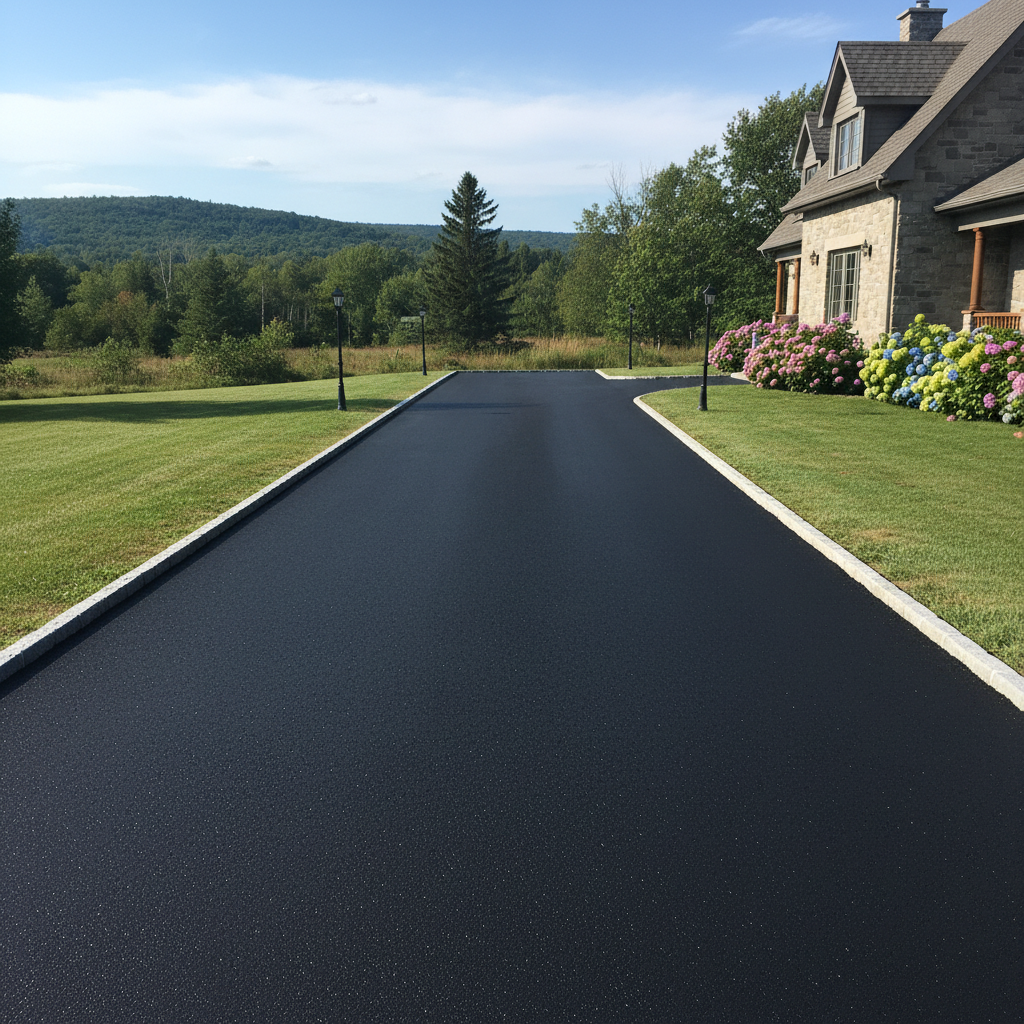
Driveway paving options and costs in Bridle Path-Sunnybrook-York Mills
Bridle Path-Sunnybrook-York Mills homeowners typically have three driveway upgrade paths: asphalt, interlocking pavers, or concrete. With a local population of 9,266 (Statistics Canada, 2021 Census), the area is still a compact market, so contractors often book quickly when spring base work starts. The bigger driver is housing type: this pocket of Toronto is dominated by detached homes, which means many projects are full driveway replacements or major reconstructions rather than small patch jobs.
In the Toronto economic region, frost depth and freeze–thaw cycles are a primary cost driver. Ground freezing commonly reaches about 3–4 feet, so driveways need a deeper, well-compacted granular base and dependable drainage. If water sits under the pavement, winter expansion can lead to heaving and early cracking. On top of that, hot-mix asphalt placement is temperature-sensitive (air/aggregate conditions matter), which effectively compresses the paving season into late spring through early fall. In busy parts of Toronto, including nearby corridors around Yonge Street and Bayview Avenue, prime scheduling can increase pricing and shorten the window for installers.
That’s why two quotes for “the same driveway size” can differ: one contractor may include deeper base excavation, proper drainage grading, and freeze–thaw-rated mix design, while another assumes thinner base or minimal site prep. Use the ranges below as a planning benchmark, then compare scope details in the next sections before you decide.
| Material |
Lifespan |
Maintenance |
Best For |
Price per sq ft |
| Asphalt (new installation, proper base) |
15–25 years |
Seal every 3–5 years; spot crack fill as needed |
Good value with correct base + drainage |
$3.50 – $6.50 |
| Asphalt (overlay on existing gravel base) |
10–18 years |
Seal every 3–4 years; monitor settlement |
Lower upfront cost when base is already stable |
$3.00 – $5.75 |
| Interlocking concrete pavers |
25–40 years |
Light joint re-sanding; replace individual stones if needed |
Maximum curb appeal and easy, targeted repairs |
$9.00 – $16.00 |
| Poured concrete (broom finish) |
20–30 years |
Seal if desired; maintain joints and address minor cracks early |
Clean look, simple maintenance |
$7.00 – $12.50 |
| Exposed aggregate concrete |
20–35 years |
Seal every few years; clean for salt/sand build-up |
Non-slip texture and higher-end appearance |
$8.50 – $14.50 |
| Gravel / crushed stone (budget option) |
3–10 years |
Rake/grade and top up; manage weeds and drainage |
Temporary solution or low-budget approach |
$2.00 – $4.50 |
Prices are estimates only and vary by project scope, site access and material selection.
What affects the price of paving in Bridle Path-Sunnybrook-York Mills
Even for the same driveway size, Toronto-area paving quotes can differ by roughly 30–50% because the “real work” is often buried in what’s included: how deep the contractor excavates, how the base is built, whether drainage is corrected, and how waste is hauled away. In Bridle Path-Sunnybrook-York Mills, many homes have mature landscaping and established grading, so site prep (tree roots, geotextile, tight excavation) can become a larger portion of the budget than homeowners expect.
In the Toronto economic region, frost line depth and freeze–thaw cycles are decisive cost factors. With freezing to roughly 3–4 feet, driveways typically need a thicker, well-compacted granular base (often in the 6–12 inch range in Ontario depending on subgrade conditions) to prevent heaving and pumping. Compared to milder markets, that adds excavation, base material, and labour. The shorter season also concentrates demand: hot-mix asphalt placement is generally planned when air temps are above about 10°C, so spring and early summer scheduling can be tight—pushing labour rates and prime-date pricing. For asphalt, mix design matters too; freeze–thaw-rated asphalt is a cost adder, but it’s what helps control rutting and cracking over time.
Concrete costs can move up or down based on crack-control detailing and drainage. For example, a driveway poured without properly planned contraction joints can require earlier repair, while an air-entrained mix and well-managed drainage can extend performance. A contractor also may include engineered sub-drainage or catch basins if water is a pattern problem. For planning, asphalt new installs often land in the $3,500 – $8,000 band, while interlocking projects commonly sit higher (often $9,000 – $20,000) because restraints, bedding layers, and labour are more intensive.
| Price Factor |
Why It Matters |
Cost Impact |
| Driveway area in sq ft |
Most material and labour scale directly with square footage |
Major driver; often the #1 line item |
| Base depth required |
Frost line determines granular thickness to resist heaving |
Can add noticeable cost if subgrade is weak |
| Grading and drainage work |
Slope and drainage corrections stop water sitting under pavement |
Moderate to major, depending on site conditions |
| Tear-out of existing surface |
Breaking and hauling concrete or old asphalt adds labour and disposal |
Often one of the bigger adders after excavation |
| Edge restraints and curbing |
Prevents paver spread and asphalt edge failure |
Small to moderate, but critical for longevity |
| Sealing requirement |
Asphalt needs sealing after cure, typically 6–12 months after install |
Small but recurring cost for asphalt plans |
| Site access |
Narrow lots slow equipment movement and increase labour time |
Can raise cost due to extra handling |
| Asphalt mix specifications |
Freeze–thaw-rated mix typically costs more than basic mixes |
Moderate; usually worth it for Ontario winters |
Permits & regulations in Ontario
For most homeowners in Bridle Path-Sunnybrook-York Mills, paving a private driveway within your own property usually does not require a building permit. Typical driveway work that generally falls under “private land improvements” includes asphalt or concrete installation/repairs, interlocking pavers, and surface re-grading that stays on your lot without altering municipal infrastructure.
What can require municipal approval (and sometimes a permit) is anything that impacts the municipal right-of-way or storm servicing. That includes new or modified curb cuts, changes to boulevard areas, work near municipal catch basins, and altering storm drainage patterns that affect how runoff leaves your property. If your project involves changing the driveway entrance profile with ties into the streetworks, assume you’ll need municipal sign-off before excavation begins.
Step-by-step, here’s how a homeowner should verify the contractor and stay compliant:
- Confirm the contractor’s Ontario paving/contracting credentials (and trades involved) using the relevant online business/contractor listings where available.
- Ask for a current certificate of insurance: general liability naming you as applicable.
- Request proof of WSIB coverage (or valid clearance) if workers are involved—obtain the clearance letter documentation.
- Do utility locates before excavation (Ontario One Call): confirm they’ll submit and wait for locates.
- Ask for a written scope that states whether boulevard/storm work is included or excluded.
- Check lot-grading/bylaw rules with the municipality so runoff isn’t directed toward neighbours or foundation areas.
Asphalt vs pavers vs concrete for Bridle Path-Sunnybrook-York Mills driveways
In Bridle Path-Sunnybrook-York Mills’ Toronto freeze–thaw climate, the “best” material is usually the one engineered with proper base depth, drainage, and joints/edges that can tolerate movement. Asphalt is typically the lowest upfront cost and installs quickly once conditions are right, but it needs planned sealing every 3–5 years to slow oxidation and reduce moisture intrusion. If the contractor builds the base correctly, asphalt can perform very well through winter plowing cycles and salt exposure.
Interlocking concrete pavers usually cost more upfront, but homeowners like them because they’re repairable without replacing the entire driveway. Individual units can be lifted, the bedding corrected, and stones re-set—helpful if one area settles or a drainage issue develops. With the Toronto market’s strong curb-appeal expectations, pavers are often chosen when the driveway is a visible front feature.
Poured concrete is mid-range on cost and can look crisp, especially with broom finish or exposed options. The trade-off is crack control: freeze–thaw movement demands air-entrained concrete and smart jointing. Concrete also has to be detailed to handle de-icing salt and plow impacts; without proper air entrainment and drainage, you can see early cracking or spalling.
Base preparation matters across all options. With freezing to about 3–4 feet in the region, the driveway base needs to be engineered to resist heaving and water infiltration, and edging/restraints must prevent failure at the sides. As a rough example of value: if asphalt is priced around $3,500 – $8,000 and interlocking comes in around $9,000 – $20,000, the extra spend is most justified when you want long-term curb appeal and easier spot repairs—especially for driveways with complex slopes or visible front entrances.
| Material |
Frost Resistance |
Curb Appeal |
Repair Method |
Lifespan |
Price Band |
| Asphalt (sealed regularly) |
Good with deep base and freeze–thaw-rated mix |
Moderate (clean, uniform finish) |
Mill/patch localized areas; seal cracks |
15–25 years |
$3,500 – $8,000 |
| Interlocking concrete pavers |
Excellent when base is properly compacted and drained |
High (varied patterns and premium look) |
Lift-and-reset individual pavers |
25–40 years |
$9,000 – $20,000 |
| Poured concrete (air-entrained) |
Good with air entrainment and correct jointing |
Moderate to high (depends on finish) |
Crack repair/patch; rarely full removal |
20–30 years |
$6,000 – $15,000 |
| Exposed aggregate concrete |
Good with engineered drainage and proper curing |
Very high (textured, upscale finish) |
Patch or section replacement |
20–35 years |
$7,000 – $17,000 |
| Permeable pavers (drainage grid) |
Good; relies on stone storage bed and proper outlet |
High (modern look) |
Replace pavers; address stone bed clogging |
20–35 years |
$10,000 – $22,000 |
| Chip seal / tar-and-chip |
Moderate; best where weight and traffic are lower |
Low to moderate (rougher texture) |
Re-seal/re-chip sections |
5–12 years |
$3,000 – $7,500 |
How to choose a paving contractor in Bridle Path-Sunnybrook-York Mills
Choosing the right contractor in Bridle Path-Sunnybrook-York Mills is mostly about proof and clarity. First, verify Ontario compliance before you sign. Ask for a current certificate of insurance (general liability) and confirm coverage amounts are appropriate for driveway work. Next, for workers on-site, request WSIB coverage confirmation or a clearance letter—this shows the contractor is properly registered and accounts for workplace insurance obligations. If subcontractors are involved, ask who holds which coverage.
Then, get 2–3 itemised written quotes. You want a breakdown that separates excavation and disposal, granular base material and compaction, membrane/geotextile (if used), the asphalt/paver/concrete supply, labour, edging/curbs, and any sealant. Avoid “lump sum only” estimates because Toronto pricing swings are often driven by base depth, drainage corrections, and haul distance. Make sure the scope states what’s excluded: permit pull (if any municipal approval is needed), saw-cutting and crack routing, disposal fees, snow/ice handling during the build window, and whether garage aprons/transition details are included.
Warranty should be written and specific: workmanship warranty length, what failures are covered (including settlement and joint issues for pavers), and whether manufacturer warranties apply to materials (and whether they’re transferable). For payment, never pay more than 10–15% upfront; hold back a portion until grading is verified and the final finish is complete and cleaned. Ask for a start date and completion estimate in writing—especially important because the paving season is shorter here, and delays can affect final curing windows.
- Confirm WSIB clearance letter/proof and that it matches the company name on the contract.
- Request general liability insurance and verify the certificate is current.
- Ask who will be on-site (crew vs. subcontractors) and how changes are approved.
- Require an itemised quote: excavation, base, compaction, drainage, surface, edging, and cleanup.
- Ask for base specifications (depth and compaction approach) tied to frost conditions.
- Confirm drainage details: slope, outlet tie-in, and whether any sub-drainage is included.
- Get details on tear-out: what thickness is removed and where debris is hauled.
- For asphalt, confirm freeze–thaw-rated mix and planned cure/temperatures.
- For pavers, verify restraint/edge system and joint sand type.
- For concrete, confirm air entrainment and joint spacing plan (and who supplies the mix design).
- Check warranty terms in writing, including coverage period and exclusions.
- Use a payment schedule with a holdback (typically until final inspection/acceptance).
Red flags I see in Bridle Path-Sunnybrook-York Mills: vague “we’ll handle it” base promises, no compaction proof or skipped drainage correction, quotes that don’t separate tear-out/disposal from new material, no insurance/WSIB clearance provided, and schedules that ignore the weather window—especially when asphalt needs suitable temperatures to place and compact properly.
Frequently asked questions — paving in Bridle Path-Sunnybrook-York Mills
How do I compare paving quotes fairly?
To compare paving quotes fairly in Bridle Path-Sunnybrook-York Mills, insist on like-for-like scope. Ask for an itemised breakdown of excavation depth, granular base quantity and compaction, drainage corrections (slope and outlets), edging/restraints, disposal, and whether any sub-drain or geotextile is included. Many Toronto-area differences come from frost protection: if one contractor builds the base deeper and addresses water control, the quote can be higher but more durable through freeze–thaw. Also compare the material specifics—freeze–thaw-rated asphalt mix or air-entrained concrete matters. Finally, align pricing with your budget bands: asphalt new installs commonly land around $3,500 – $8,000, while interlocking often sits higher (frequently within $9,000 – $20,000).
Can asphalt be laid in cold weather in Bridle Path-Sunnybrook-York Mills?
Asphalt placement in cold weather is possible only under strict conditions, and reputable contractors plan around temperature. In Toronto’s climate, asphalt is typically laid when air/aggregate temperatures are suitable—often when air temperatures are above about 10°C and the surface can be properly prepared and dried. If conditions are too cold, you can get poor compaction, reduced bonding, and early cracking from freeze–thaw movement. If a contractor pressures you to “push it through” during late fall or early spring without meeting temperature and curing requirements, that’s a risk. The best approach is scheduling during late spring through early fall, then ensuring the base is dry and compacted. Ask for a written plan for weather checks and cure timing.
What is a driveway apron and do I need one in Bridle Path-Sunnybrook-York Mills?
A driveway apron is the transition section where your driveway meets the road curb line/entrance area. It’s designed to handle vehicle loads smoothly and reduce edge break-up and drainage issues at the connection point. In Bridle Path-Sunnybrook-York Mills, whether you “need” an apron depends on your current driveway entrance geometry and how water flows during snowmelt and rain. If you’re rebuilding a driveway entrance or changing how the driveway slopes toward the street, the apron detail becomes more important for long-term performance. Where the work touches municipal right-of-way or involves curb cut changes, municipal approval may be required. In your quote, ask whether the contractor includes apron/transition work and whether disposal and grading corrections at the entrance are part of the scope.
How do I maintain my driveway through Bridle Path-Sunnybrook-York Mills winters?
Winter maintenance is about preventing water and limiting surface damage. For asphalt, keep the surface clear of heavy snow piles right away to avoid edge stress from plow leverage, and use de-icing carefully—overuse of salt can accelerate aging. Address small cracks quickly with crack filling before water gets in and freezes. For pavers, protect joint sand from being washed out; occasional re-sanding after heavy thaw cycles helps keep them locked in place. For concrete, prioritize air-entrained mixes (installed correctly) and monitor joints/cracks; if you see widening or raised edges, get it assessed early. The key locally is that freeze–thaw cycles keep working on weaknesses—so fast repairs prevent expensive reconstruction.
Is it worth sealing a new driveway right away in Bridle Path-Sunnybrook-York Mills?
Generally, sealing “right away” isn’t recommended. Asphalt needs proper cure time so the oil/binder can set. Many contractors plan sealing after the driveway has cured—commonly after 6–12 months—so you’re not trapping moisture or interfering with the final strength development. In Bridle Path-Sunnybrook-York Mills winters, sealing can help reduce water penetration that contributes to freeze–thaw damage, but timing matters. If you want to preserve appearance and extend life, ask your contractor for their cure schedule and warranty conditions. As a planning reference, asphalt new installations often fall in the $3,500 – $8,000 range; sealing is typically an add-on later (rather than included immediately), and it’s usually part of the longer-term maintenance budget.
What is a chip seal driveway and is it suited to Bridle Path-Sunnybrook-York Mills?
Chip seal (also called tar-and-chip) is a surface treatment where binder is sprayed and aggregate chips are broadcast and rolled. It can be a cost-controlled option, but it’s not the “best fit” for every Toronto driveway because it’s more textured and can shed aggregate if traffic is heavy or if the subgrade isn’t well prepared. In Bridle Path-Sunnybrook-York Mills, it can be suited to lower-speed, lighter-use areas where homeowners expect periodic rework. For longer-term, smoother performance, asphalt with proper base prep or interlocking pavers typically hold up better through freeze–thaw movement. If you’re considering chip seal, ask about base depth and drainage first; a bad base will show up quickly in winter. Typical project pricing often starts around $3,000 – $7,500, depending on scope.