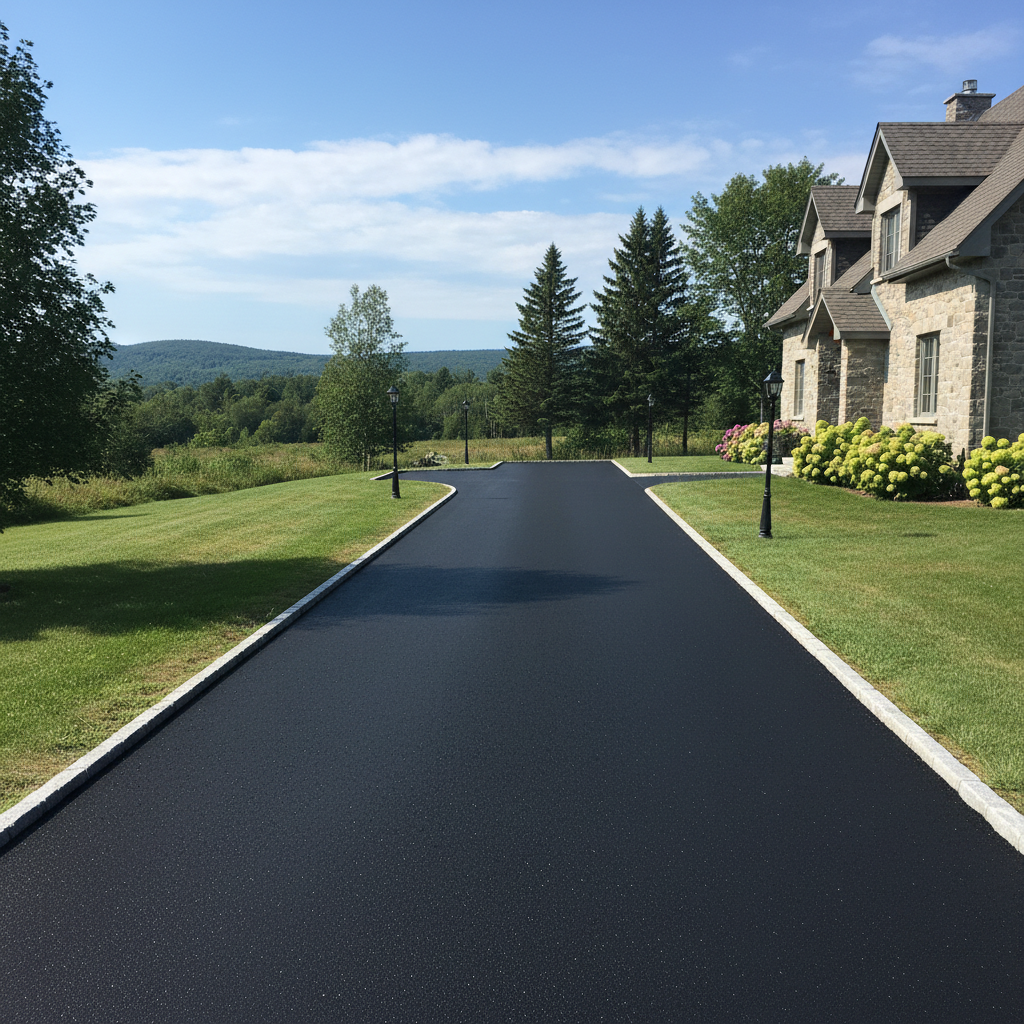
Driveway paving options and costs in Greater Napanee
Driveway paving in Greater Napanee is a little different than in the warmer pockets of Southern Ontario because our winter freeze–thaw cycles are relentless. With a population of 16,879 (Statistics Canada, 2021 Census) and a housing stock where most homes are single-detached (73.7% of dwellings), you’re typically looking at a private residential driveway tied to detached properties—so demand for durable, properly based asphalt or interlock is steady year-round. It also matters that 64.2% of homes were built before 1981 (Statistics Canada, 2021 Census); older lots often have less-engineered granular layers, variable drainage, and spotty subgrade compaction that can drive up excavation and base replacement costs.
In the Kingston–Pembroke economic region, frost penetration is commonly around 4 feet (≈1.2 m). That depth, paired with wet spring conditions and a shorter paving window (hot-mix asphalt needs air temps above 10 °C), concentrates contractor availability into a narrower season—so quotes can tighten during peak spring and early summer. Gravel haul distance, soil type (including clay pockets), and site access in nearby areas like Bath Road and the Napanee corridor also influence the labour and aggregate cost components.
Below is a practical comparison of the main options homeowners choose in Greater Napanee, based on typical installed driveway pricing ranges for this region, assuming proper subgrade and drainage work where needed. Use the table to sanity-check your quote before we talk details like base thickness, grading, and edges.
| Material |
Lifespan |
Maintenance |
Best For |
Price per sq ft |
| Asphalt (new installation, proper base) |
15–25 years |
Seal every 3–5 years; patching as needed |
Good value, smooth ride, fastest install |
$5.50–$10.00 |
| Asphalt (overlay on existing gravel base) |
10–18 years |
Seal every 3–5 years; more frequent patching possible |
Budget upgrades when base is still sound |
$4.75–$8.25 |
| Interlocking concrete pavers |
25–40 years |
Weed control, occasional re-sanding; unit replacement |
Highest curb appeal; easy local repairs |
$8.00–$16.00 |
| Poured concrete (broom finish) |
25–35 years |
Occasional crack sealing; re-sand/patch spalls |
Low maintenance, clean look |
$9.00–$17.00 |
| Exposed aggregate concrete |
25–35 years |
Sealer may be recommended; crack sealing |
Slip resistance and premium finish |
$11.00–$20.00 |
| Gravel / crushed stone (budget option) |
5–12 years |
Top-ups, grading, weed control |
Lowest upfront cost; quick refresh |
$3.00–$6.00 |
Prices are estimates only and vary by project scope, site access and material selection.
What affects the price of paving in Greater Napanee
In Greater Napanee, two driveway quotes for the same-looking job can differ by 30–50% because the real drivers aren’t just “paving” — they’re the engineered base, drainage, excavation quantities, and how long the contractor has to protect the job from weather during shoulder seasons. In the Kingston–Pembroke region, frost penetration is commonly around 4 feet (≈1.2 m), so deeper frost requires a thicker, well-compacted granular base to limit heaving and cracking. As a rule of thumb in Ontario/Alberta, base depths are often in the 6–12 inch range (project-dependent), while coastal BC can be closer to 4–6 inches. That extra base and the imported aggregate needed to reach below frost influence cost more than the surface material itself.
Season length also matters. Hot-mix asphalt requires air temperatures above 10 °C, and winter temperatures stay below zero for extended periods, so spring and early summer become a tight scheduling window. When the paving window is short and demand peaks, availability can push pricing toward the upper end (for example, asphalt often lands in the $4,500–$9,000 band depending on excavation and base replacement). Concrete and interlock also ride on labour availability because crew time is compressed, but they’re less sensitive to temperature in the same way as asphalt during placement.
Concrete and interlock costs can rise for common local scenarios: clay subgrade that needs stabilization, low-spot drainage corrections near the driveway apron, and older driveways where tear-out includes removing failed granular layers—not just the surface. Costs can also drop when the existing base is already well-drained and compacted. If your home is from the pre-1981 era (64.2% of dwellings in the area), it’s more likely the original grading and drainage aren’t meeting modern freeze-thaw expectations; that’s where you may see project budgets move by thousands, not hundreds.
| Price Factor |
Why It Matters |
Cost Impact |
| Driveway area in sq ft |
Most labour and surface material scale directly with square footage. |
Typically the largest swing (often 50–70% of total variation). |
| Base depth required |
Frost line determines granular thickness needed to prevent heaving. |
Can add significant excavation and aggregate haul costs. |
| Grading and drainage work |
Slope correction, ditching, swales, or French drains manage water. |
Often a major line item when clay pockets or low spots exist. |
| Tear-out of existing surface |
Breaking/hauling old concrete or removing failed asphalt affects disposal and time. |
Labour + disposal can push costs up materially. |
| Edge restraints and curbing |
Prevents paver movement and asphalt edge breakdown. |
Adds materials and layout labour, especially for long runs. |
| Sealing requirement |
Asphalt needs sealing after curing (often 6–12 months) to extend life. |
Ongoing cost; sometimes quoted as a separate line item. |
| Site access |
Narrow drives, slopes, and rural approach routes slow equipment movement. |
Increases time on site; can also require smaller loads. |
| Asphalt mix specifications |
Freeze-thaw-rated mix design reduces raveling and early cracking. |
Higher material specs can move asphalt pricing upward. |
Permits & regulations in Ontario
For most Greater Napanee homeowners, paving a driveway within your own property typically doesn’t require a building permit. What usually does require municipal involvement is any work that affects the municipal right-of-way or changes how stormwater is managed near the curb/boulevard. For example, new or modified curb cuts, altering the boulevard area, or making changes that redirect storm drainage generally require municipal approval. Some municipalities also have lot-grading rules that limit how close a hard surface can be brought to property lines and how drainage must be handled so water doesn’t discharge onto neighbours’ lots.
Before anyone excavates, you should always call for utility locates through the provincial call system (Ontario One Call) and confirm the contractor has them scheduled. Step-by-step, you can protect yourself by verifying three things:
1) Contractor licence: ask for their Ontario business/contractor credentials and confirm they are legitimately operating for the scope of work. 2) Liability insurance: request a current certificate of insurance and confirm coverage limits match the project value and that paving work is included. 3) WSIB/WCB coverage: ask for proof of coverage/clearance for workers involved. If a contractor can’t provide documents on request, that’s a red flag.
Once you’ve confirmed the paperwork, align the quote with the scope: who handles permits (if needed), and how drainage/ditching will be restored.
Asphalt vs pavers vs concrete for Greater Napanee driveways
When you’re choosing a driveway surface in Greater Napanee, the freeze–thaw cycle is the constant. Asphalt is often the lowest upfront option, but it needs regular sealing every 3–5 years to slow oxidation and reduce raveling in freeze-thaw seasons. Interlocking concrete pavers cost more upfront, yet they’re repair-friendly: if a section settles or a utilities patch is needed, you can lift and reset units instead of replacing the whole driveway. Poured concrete sits in the mid-range for many projects, but it must be air-entrained and correctly finished to handle expansion and contraction; otherwise, cracking and spalling can show up sooner—especially with de-icing salt and wet runoff sitting in low areas.
In Kingston–Pembroke, base preparation is where material choice becomes “real engineering.” Regardless of asphalt or concrete, a deeper granular base and robust drainage design are critical because frost commonly penetrates around 4 feet (≈1.2 m). If the site has clay pockets, you often need improved grading and subdrainage (swales or sometimes French drains) so water doesn’t migrate into the base during spring thaws.
For local winter maintenance, plowing and salt are tough on edges. That’s why interlock with proper edge restraint and well-built base tends to hold up especially well through repeated plow passes and traction sand, while asphalt should have sealing maintained to protect the binder. A concrete driveway that isn’t air-entrained or has poor drainage can start micro-cracking earlier, then widen over seasons.
Cost-wise, the difference can be justified. For example, asphalt in this region often falls into the $4,500–$9,000 band, while interlock commonly lands around the $6,500–$14,000 range. If your priority is curb appeal and long-term, targeted repairs (common in neighbourhoods along the Napanee corridor where aesthetics matter), the extra upfront can make sense—especially if you expect to need localized repairs later.
| Material |
Frost Resistance |
Curb Appeal |
Repair Method |
Lifespan |
Price Band |
| Asphalt (sealed regularly) |
Good with engineered base and sealing |
Moderate |
Cut/patch the affected area |
15–25 years |
$4,500–$9,000 |
| Interlocking concrete pavers |
Excellent with compacted base and edge restraint |
High (premium look) |
Lift units and replace locally |
25–40 years |
$6,500–$14,000 |
| Poured concrete (air-entrained) |
Good when air-entrained and properly drained |
Moderate to high |
Crack repair and patching; sometimes section repair |
25–35 years |
$7,000–$15,000 |
| Exposed aggregate concrete |
Good with proper mix and curing |
High (textured, premium) |
Patch and match surface finish (limited) |
25–35 years |
$8,500–$16,500 |
| Permeable pavers (drainage grid) |
Very good when water management is designed correctly |
Moderate to high |
Replace affected units; clean/rehabilitate infill as needed |
25–35 years |
$9,000–$18,000 |
| Chip seal / tar-and-chip |
Fair to good; depends heavily on prep |
Low to moderate |
Re-surface or patch localized failures |
8–15 years |
$3,500–$7,500 |
How to choose a paving contractor in Greater Napanee
Choosing the right contractor matters as much as the material. In Ontario, start by verifying licensing and coverage. Ask for: (1) liability insurance certificate (current date, correct insured name, and coverage that matches the scope), (2) WSIB/WCB clearance or proof of coverage for workers performing the work, and (3) that the contractor is legitimately set up to do the driveway scope you’re paying for. If anything is vague or outdated, request updated documents before scheduling.
Then get 2–3 itemised written quotes, not just one lump sum. A good quote breaks down labour and materials (excavation, haul, base stone, geotextile if used, asphalt/pavers/concrete, compaction, edges/reservations, and traffic control). Read the exclusions carefully: is disposal included? Is your driveway graded to the right pitch? Is permit work included if the municipal right-of-way is affected? In Greater Napanee, drainage corrections and tear-out often make or break pricing—so make sure those line items are clearly defined.
Warranty is another differentiator. Ask for the workmanship warranty length and what it covers (settlement, edge failure, premature raveling/cracking), and confirm whether it’s backed by the manufacturer for the specific product used. Payment should be conservative: never pay more than 10–15% upfront, and hold back a portion until the job is complete and cleaned up. Finally, insist on a written start date and completion estimate, especially because the paving window in our region tightens around spring warmth.
- Confirm liability insurance and that paving work is included on the certificate.
- Request WSIB/WCB proof or clearance before work starts.
- Get 2–3 itemised quotes with base, drainage, tear-out, and disposal listed separately.
- Ask for base thickness recommendations based on your site (not a one-size template).
- Confirm whether geotextile is included if subgrade is soft or pumping is a concern.
- Verify how drainage will be handled (ditching/swale/French drain) and where water will go.
- Ensure edge restraints are included for pavers to prevent spreading.
- Ask when sealing will be done for asphalt (often after curing, typically 6–12 months).
- Check that traffic control and cleaning of the site are in the scope.
- Review warranty terms in writing, including claim process and coverage period.
- Confirm the payment schedule: small deposit, remainder after completion.
- Require a written timeline with weather contingencies acknowledged.
Red flags in the Greater Napanee market: a quote that doesn’t discuss base thickness or drainage at all, refusal to provide insurance/WSIB/WCB documentation, “too cheap” pricing that omits tear-out or granular haul, no written warranty terms for workmanship, or asking for large deposits (bigger than 10–15%) before any work begins.
Frequently asked questions — paving in Greater Napanee
How often should I seal my asphalt driveway?
In Greater Napanee and across the Kingston–Pembroke region, most homeowners should plan to seal asphalt every 3–5 years, then re-evaluate based on how it’s ageing. The reason is Ontario’s freeze–thaw cycles and wet spring conditions: moisture and cold stress speed up binder breakdown, which shows up as surface raveling or patchy wear. If the contractor recommends an initial seal only after proper curing, that’s usually around the 6–12 month window. Your driveway’s use matters too—plow passes, traction sand, and vehicle traffic add wear. If you’re comparing quotes, ask whether sealing is included or quoted separately; sealing/repair typically runs about $400–$1,800 depending on area and condition.
Why does my driveway crack and heave in winter?
Cracking and heaving usually point to water and frost working together. In the Kingston–Pembroke area, frost penetration is commonly around 4 feet (≈1.2 m), and strong freeze–thaw cycles can lift weak spots if the base isn’t thick and well-compacted enough or if drainage is poor. Common Greater Napanee causes include low spots that trap meltwater, clay subgrade that holds moisture, and edges without proper restraint (for pavers) or without a robust base (for asphalt and concrete). Older homes—especially those built before 1981—often had grading practices that don’t manage water the way modern projects do. The best fix isn’t just “filling cracks”: it’s addressing base condition, compaction, and directing water away.
Do I need a permit to pave my driveway in Ontario?
Typically, paving your private driveway within your own property usually doesn’t require a building permit in Ontario. However, work that affects the municipal right-of-way generally needs municipal approval—such as new or altered curb cuts, changes to the boulevard, or storm drainage alterations. Greater Napanee homeowners should also consider lot-grading rules that may restrict how close a hard surface can be to property lines and how you must handle drainage to prevent runoff onto neighbours’ property. Before digging, ensure utility locates are completed through the Ontario call system. Your contractor should confirm whether any municipal approvals are needed based on your site plan and driveway connection details, and that should be reflected in your quote scope.
How long before I can drive on new asphalt?
In Ontario conditions, new asphalt typically needs time to cool and set after rolling and compaction. Many crews will allow light vehicle traffic after it has cooled (often the same day), but you should expect full curing to take longer, especially if the weather is cool or damp during installation. Your contractor should give you a traffic restriction plan in writing—how long to keep vehicles off and when regular driving is safe—because it depends on mix type, temperature, and thickness. If you’re planning sealing, that’s usually not immediate; sealing is commonly scheduled later once the asphalt is properly cured, often around the 6–12 month timeframe in local practice. Ask your contractor how they handle weather delays given Greater Napanee’s short paving window.
What causes potholes and how are they repaired?
Potholes usually start with water. In Greater Napanee winters, water gets into the pavement through small cracks or weak joints, then expands when it freezes. Over multiple freeze–thaw cycles, the base can soften, and the asphalt breaks down—eventually forming a pothole. Patching starts with cutting out to sound material, removing any saturated/failed base material, and compacting replacement base before placing asphalt. A quality repair also addresses drainage where the water is coming from, otherwise the failure can repeat. If you’re budgeting, minor repairs are different from full base reconstruction; that’s why good quotes include an assessment of base condition. For broader issues, homeowners often end up needing sealing plus localized patching, and sealing/repair budgets commonly run about $400–$1,800.
How do I prepare for a paving project?
Start with a site walk with your contractor and mark what must be kept clear: landscaping, fences, eaves, and any utility access points. In Greater Napanee, also discuss drainage—where does spring runoff go now, and where will it go after grading? Clear the driveway footprint of vehicles and store items away from equipment routes. Confirm utilities locates have been called before excavation. Ask how tear-out and disposal will be handled and where the contractor will stage materials (access matters on rural properties). Review the written scope line-by-line: base depth and drainage work, disposal inclusion, and whether edges/curb restraint are part of the plan. Lastly, confirm warranty details and the payment schedule—aim to keep upfront payment to about 10–15% and hold a portion until completion.