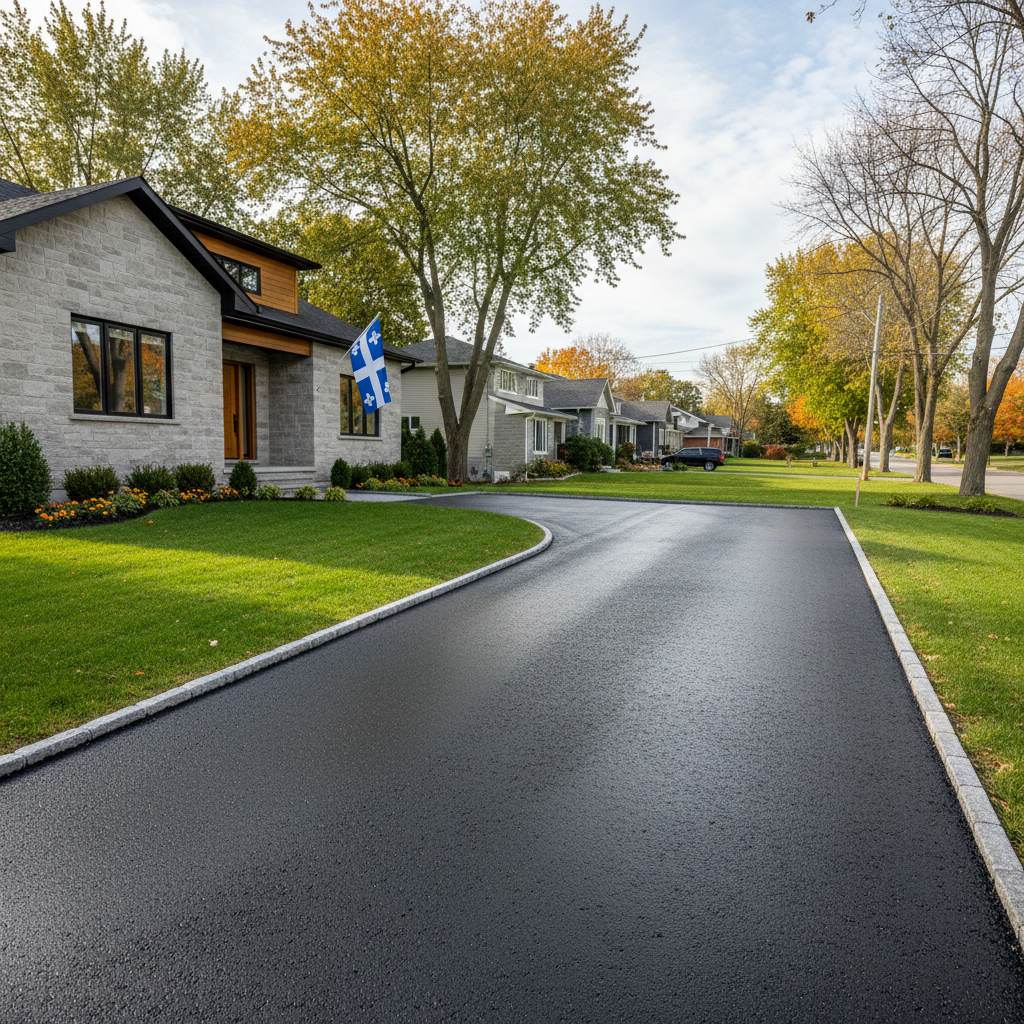
Driveway paving options and costs in Victoria Village
In Victoria Village, Ontario, choosing the right driveway surface is usually less about “best material” and more about balancing winter durability, curb appearance, and upfront cost. With a population of 17,510 in the area (Statistics Canada, 2021 Census), you’ll see a steady mix of residential driveways where many homes are detached and privately serviced—meaning contractors often price around vehicle access width, excavation depth, and how much existing pavement has to come out. That matters because Toronto’s freeze–thaw cycles are a primary cost driver: ground can freeze roughly 3–4 feet, so the base has to be engineered and compacted to control water movement. When water sits under the pavement and then freezes, you get heaving, settlement, and cracking. On top of that, the paving season effectively runs late spring through early fall, which compresses scheduling and can raise pricing for prime dates.
Demand is especially steady around the Victoria Village / Scarborough border near Eglinton Avenue East where lots are busy and access can be tight. If your street sees frequent plowing and winter sanding/salting, the wrong build-up or drainage details can shorten service life. For most homeowners, asphalt is the lowest-cost entry point, interlock offers the easiest “section-by-section” repairs, and concrete is a durable option when it’s designed for Toronto’s temperature swings (air-entrainment and joint planning).
To compare apples-to-apples, use the table below as a planning benchmark, then we’ll help you refine it with site measurements, drainage checks, and a clear build-up plan.
| Material |
Lifespan |
Maintenance |
Best For |
Price per sq ft |
| Asphalt (new installation, proper base) |
15–25 years |
Seal coat typically every 3–5 years |
Most driveways where you want the lowest upfront cost |
$7 – $15 |
| Asphalt (overlay on existing gravel base) |
10–20 years |
Seal coat every 3–5 years; monitor for settlement |
Where you want a faster/less invasive upgrade |
$6 – $12 |
| Interlocking concrete pavers |
25–40 years |
Replace individual stones as needed; re-level occasionally |
Homes that prioritize curb appeal and easy repairs |
$15 – $27 |
| Poured concrete (broom finish) |
25–35 years (with proper joints) |
Seal if desired; keep de-icing appropriate |
Long-term, low-fuss maintenance |
$14 – $25 |
| Exposed aggregate concrete |
25–35 years |
Occasional seal; manage salts to protect surface |
Premium look with good skid resistance |
$16 – $30 |
| Gravel / crushed stone (budget option) |
5–10 years (typical) |
Top up yearly; re-grade and stabilize ruts |
Short budget window or temporary solution |
$4 – $9 |
Prices are estimates only and vary by project scope, site access and material selection.
What affects the price of paving in Victoria Village
In the Toronto economic region, it’s common to see quotes for the “same driveway” vary by 30–50%. The biggest reason is that the scope behind the finish surface isn’t always equal: excavation depth, base thickness, drainage corrections, and how much existing material has to be removed. Two contractors may both say “asphalt driveway,” but one might be building to Toronto’s freeze–thaw requirements while another is pricing a shallower base that’s more likely to heave and crack sooner.
Freeze depth and freeze–thaw cycles are decisive cost factors here. Toronto’s ground freezing to roughly 3–4 feet means driveways typically need a deeper, properly compacted granular base and reliable drainage so water can’t sit under the pavement. In practice, that can mean the difference between a build-up that performs for years versus one that needs repairs early—especially through late fall, winter, and early spring. Asphalt also depends on mix design and placement temperature; hot-mix asphalt needs conditions above roughly 10°C, and the shorter workable season concentrates demand and can push pricing toward the higher end of the band for prime summer dates.
Concrete costs can swing for a few reasons in Victoria Village. If your driveway requires extra saw-cut joints or a more detailed subgrade prep to manage settlement, concrete may trend toward the higher end of the $6,000–$15,000 band. If your driveway sees heavy winter maintenance (plowing and regular salting), air-entrained concrete and a well-planned joint layout matter—done right, it can hold up well; done loosely, cracking can show up sooner. For budget planning, asphalt projects often start around the lower end of the $3,500–$8,000 band, while pavers can climb quickly because they require excavation, base stone, edging, and meticulous leveling—often aligning with the $9,000–$20,000 range.
| Price Factor |
Why It Matters |
Cost Impact |
| Driveway area in sq ft |
Most pricing is volume-based (excavation + base + surface) |
Highest impact; small changes can shift the total substantially |
| Base depth required |
Frost line determines granular thickness to prevent heaving |
More depth increases rock, labour, and compaction time |
| Grading and drainage work |
Slope corrections and drainage control water away from subgrade |
Often adds significant labour and extra material |
| Tear-out of existing surface |
Breaking and hauling concrete/old asphalt adds disposal and equipment time |
Can meaningfully increase totals versus “overlay” scenarios |
| Edge restraints and curbing |
Helps prevent paver spread and keeps asphalt from migrating |
More materials and formwork/installation time |
| Sealing requirement |
Asphalt needs seal after curing (often 6–12 months) for longevity |
Lowerers long-term failure risk; adds a future cost line |
| Site access |
Narrow lanes or tight turns slow equipment movement and staging |
Labour time increases; sometimes requires smaller equipment |
| Asphalt mix specifications |
Freeze-thaw-rated mixes can cost more but perform better under Toronto conditions |
Higher material cost; often improves service life |
Permits & regulations in Ontario
In Ontario, paving a private driveway within your own property typically does not require a building permit. However, work that affects the municipal right-of-way usually needs municipal approval. That includes creating or changing curb cuts, altering boulevard areas, adjusting driveway tie-ins to the street edge, or any work that impacts storm drainage patterns. If your contractor is modifying drainage (for example, changing where runoff flows or tying into an existing drain), treat it as “may require approval” and confirm it before excavation.
There are also practical constraints to watch for in Victoria Village: some municipalities enforce lot-grading rules that limit how close hard surfaces can be to property lines and how runoff is directed. The key is to ensure water is handled on your property and doesn’t pond near foundations or neighbouring properties.
Here’s the homeowner-friendly verification process, step by step. First, make sure utilities are located before anyone digs—use Ontario One Call for underground services. Second, confirm the contractor’s Ontario licensing (if applicable to their work scope) and ask for a current certificate of liability insurance naming you as an interested party if required by your agreement. Third, verify workers’ coverage: in Ontario this is typically managed through WSIB coverage for employees; ask for documentation showing account status or clearance if they must provide it for site work. Finally, request the proposed start date, excavation/haul/disposal plan, and a written scope that clearly states whether disposal and restoration of any grass/soil are included.
Asphalt vs pavers vs concrete for Victoria Village driveways
For Victoria Village driveways, asphalt, interlocking pavers, and concrete can all work—but they fail for different reasons in our Toronto freeze–thaw climate. Asphalt is usually the lowest upfront cost and offers a smooth ride, but it depends on a well-drained, properly compacted base and routine maintenance. In Ontario winters with plowing and regular salting, asphalt should be sealed after it cures (often within 6–12 months) and then resealed about every 3–5 years to protect from oxidation and surface water infiltration.
Interlocking concrete pavers typically cost more up front, but they’re the most forgiving in terms of repairs. If a section settles or a subgrade area underperforms, pavers can be lifted, re-leveled, and reinstalled without replacing the entire driveway. That matters in Toronto where freeze–thaw cycles and water management can be less predictable if drainage wasn’t engineered correctly at the beginning. Proper edging and restraints are also essential so the paver field doesn’t “spread” over time.
Poured concrete sits in the middle for upfront cost and can last decades when it’s air-entrained and jointed appropriately. The catch is cracking risk: concrete must be designed for temperature movement and should include a realistic joint pattern and proper base preparation. If your driveway sees heavy de-icing, a poorly air-entrained mix can deteriorate faster at the surface.
As a practical dollar example, a homeowner might pay around the mid range of the asphalt band—say $3,500–$8,000 for a typical driveway—while interlock could land in the $9,000–$20,000 range. That difference is justified when curb appeal is a priority, when you want easy localized repairs, or when access constraints make a full replacement later harder and more expensive.
| Material |
Frost Resistance |
Curb Appeal |
Repair Method |
Lifespan |
Price Band |
| Asphalt (sealed regularly) |
Good with proper base and drainage; needs sealing |
Moderate (clean, straight lines) |
Patch and resurface; seal to blend |
15–25 years |
$3,500–$8,000 |
| Interlocking concrete pavers |
Very good if base is compacted and edges are restrained |
High (upgrade look and colours) |
Lift and replace affected stones/area |
25–40 years |
$9,000–$20,000 |
| Poured concrete (air-entrained) |
Good when jointed and air-entrained for freeze–thaw |
Moderate to high (broom finish or textured) |
Crack repair/patch; may require section replacement |
25–35 years |
$6,000–$15,000 |
| Exposed aggregate concrete |
Good with correct mix and curing; texture needs protection |
Very high (premium slip-resistant look) |
Patch and blend; may be more visible |
25–35 years |
$7,500–$18,000 |
| Permeable pavers (drainage grid) |
Good for water control if subgrade is designed to drain |
High (modern drainage-conscious look) |
Lift/reinstall grids; address base layers |
20–35 years |
$10,000–$22,000 |
| Chip seal / tar-and-chip |
Moderate; performance varies with base prep |
Low to moderate (utility look) |
Spot patch; periodic recoat |
8–15 years |
$3,000–$7,500 |
How to choose a paving contractor in Victoria Village
Choosing a contractor in Victoria Village is easiest when you verify three things: licensing/credentials, insurance, and workmanship process. Start with insurance: ask for a current certificate of liability insurance (and confirm the effective dates). Next, confirm workers’ compensation coverage in Ontario (WSIB) if they have employees—request WSIB documentation such as a clearance letter or account status as appropriate for the job. Also ask whether supervisors/subcontractors are covered, not just “the company name.” For coverage verification, call the insurer or review the certificate details so you can see the policy is active and the certificate isn’t expired.
Then collect 2–3 itemised written quotes. You want breakdowns for excavation, disposal, base material, compaction, geotextile (if included), asphalt/paver/concrete supply, thicknesses, edging/restraints, and any sealing. Avoid lump-sum quotes that don’t specify scope; ask what’s excluded—permit handling, utility locates, temporary access, saw-cutting, and disposal of concrete/asphalt. For permits and right-of-way items, confirm who applies and whether municipal approvals are included.
Warranty matters: ask for the workmanship warranty term and whether it covers labour only or labour plus materials, and whether it’s transferable if you sell the home. Payment schedule should be conservative: never more than about 10–15% upfront, and hold back a portion until the job is complete and cleaned. Finally, insist on a written timeline with a start date target, cure/seasonal constraints for asphalt, and an estimated completion date.
- Request proof of Ontario liability insurance (active policy dates, correct insured party).
- Verify WSIB clearance/account status for employee coverage in Ontario.
- Confirm who will do the work on-site (company crew vs subcontractors).
- Ask for an itemised quote: excavation, base, thickness, paving/material supply, edging, and disposal.
- Ensure the quote states build-up thicknesses and compaction steps (not just “proper base”).
- Check whether geotextile, drainage improvements, and slope corrections are included.
- Clarify tear-out scope (full removal vs partial; breaking and hauling concrete).
- Confirm edge restraints/curbing details for pavers and how asphalt transitions are built.
- Ask whether a sealer is included (or scheduled) for asphalt and when it’s applied.
- Confirm disposal/recycling is included in the price and what happens to old material.
- Review warranty length and coverage (workmanship vs product) in writing.
- Get the start/completion schedule in writing, including weather call-offs.
Red flags to watch for in Victoria Village: (1) “We’ll do it without needing utility locates,” (2) vague scope like “standard base” with no thickness/compaction details, (3) requiring large upfront payments beyond 10–15%, (4) no written warranty terms, and (5) skipping drainage/grade explanations even when your driveway has ponding or ruts.
Frequently asked questions — paving in Victoria Village
How do I compare paving quotes fairly?
To compare paving quotes fairly in Victoria Village and across the Toronto region, insist on itemised pricing that lists the same scope in each bid: excavation depth, base material type and thickness, compaction method, disposal of removed material, and the surface course thickness. Many differences that swing totals by 30–50% are hidden in the base and drainage work, not the finish. Also confirm asphalt mix specifications for freeze–thaw performance and whether concrete is air-entrained with a joint plan. If one quote is much lower—especially if it lands below the typical asphalt driveway band of $3,500–$8,000—ask what was omitted (tear-out, drainage corrections, edging, or proper base depth). Finally, compare warranty terms and payment schedule, not just the total.
Can asphalt be laid in cold weather in Victoria Village?
In Ontario, asphalt placement is constrained by temperature. Hot-mix asphalt typically needs air temperatures above about 10°C and good weather conditions for proper placement and compaction. In Victoria Village, you can see late fall and early spring cold snaps that compress the effective paving season into late spring through early fall, so crews often schedule early in the window to avoid quality problems. If an asphalt contractor claims they can reliably pave in cold, ask how they manage temperature, tack coat timing, and compaction. Poor thermal conditions can reduce density and lead to faster surface deterioration. A credible crew will explain weather cut-offs, curing expectations, and why base prep and drainage still matter even when the finish looks smooth.
What is a driveway apron and do I need one in Victoria Village?
A driveway apron is the transition section where your driveway meets the street edge or curb line—essentially the graded and paved area that helps vehicles ramp smoothly and helps manage drainage at the boundary. In Victoria Village, whether you need an apron depends on the existing curb/sidewalk layout, the driveway elevation relative to the street, and any municipal right-of-way work. If the contractor is changing a curb cut, modifying boulevard grading, or altering storm drainage tie-ins, that’s the type of work that often requires municipal approval. If your driveway is already at a consistent grade with a functional edge, an apron may not be required—but if you’re replacing asphalt or pavers and the approach is uneven or water pools at the street edge, adding proper transition details is usually worth it.
How do I maintain my driveway through Victoria Village winters?
For Ontario winters in Victoria Village, maintenance is mostly about preventing water infiltration and reducing damage from salt and ice. For asphalt: clear snow promptly without aggressive scraping, use sand for traction if you can, and avoid overloading salt—heavy salt can accelerate surface wear. If you have interlocking pavers, protect the joints by keeping debris out and topping up joint sand if wash-out occurs after freeze–thaw. For concrete, avoid de-icing chemicals that can be harsh on surfaces; follow the contractor’s recommendations and try not to chip away ice with metal tools. Most importantly, don’t ignore drainage issues—if you have ponding near the driveway edges, address grading and drainage early, because repeated freeze–thaw cycles will magnify the problem.
Is it worth sealing a new driveway right away in Victoria Village?
Often, yes—but “right away” doesn’t mean during the same week. Asphalt needs time to cure before sealing so moisture can dissipate and the surface can accept the seal coat properly. Many contractors plan sealing after the driveway has cured, commonly within 6–12 months depending on weather and product system. Sealing helps slow oxidation, reduce water penetration, and can extend asphalt life—especially through Toronto’s late fall, winter, and early spring freeze–thaw swings. If you’re budgeting, remember that sealing is part of the long-term cost of asphalt; it’s normal to plan it even though the initial driveway cost may fall in the $3,500–$8,000 range. Ask for the exact product, timing window, and whether your quote includes seal or schedules it as a follow-up.
What is a chip seal driveway and is it suited to Victoria Village?
Chip seal (tar-and-chip) is a surface treatment where binder is applied and then covered with aggregate. It’s sometimes chosen for cost reasons, but performance depends heavily on the base prep and how well drainage is controlled. In Victoria Village’s Toronto climate—where freeze–thaw cycles and salt/plowing can be hard on surfaces—chip seal can work, but it’s generally more variable than properly built asphalt or pavers if the subgrade is marginal or water management is weak. If you consider chip seal, ensure the contractor explains base preparation, expected life, and the likelihood of periodic recoat or spot repairs. For homeowners comparing options, chip seal may fall below the typical asphalt band in price planning, but you should expect shorter service life and more frequent maintenance compared with a conventional asphalt build-up that targets the $3,500–$8,000 range.