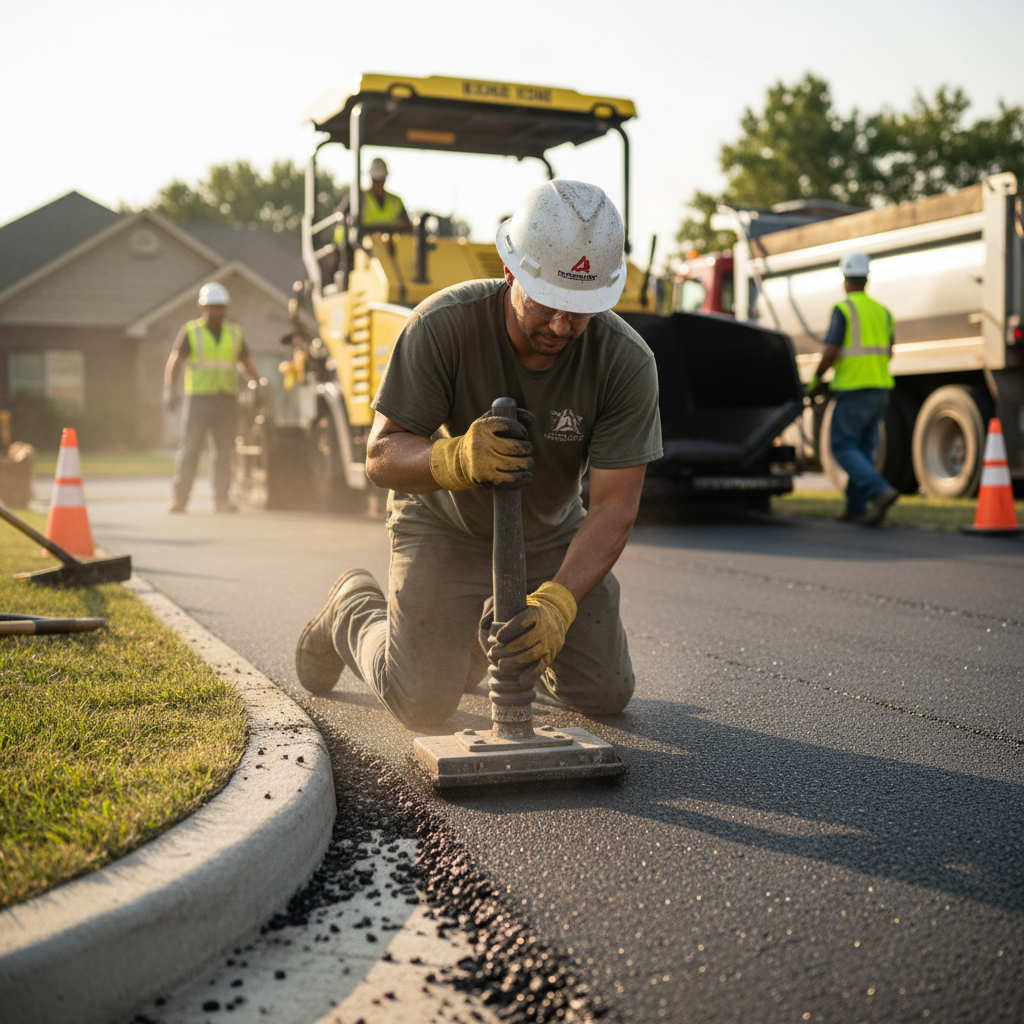
Driveway paving options and costs in Woodstock
Woodstock homeowners typically have a clear choice when it comes to driveway paving: asphalt, interlocking pavers, or concrete. With 46,705 residents in the community and about 65.2% of households owning their homes (Statistics Canada, 2021 Census), driveways get upgraded often—especially on the large share of properties with single-detached housing, which account for 57.5% of dwellings (Statistics Canada, 2021 Census). In practical terms, that means most private driveways you’ll see in Woodstock are tied to detached homes, where long-term ride quality and winter usability matter as much as upfront price.
In the London economic region, pricing is shaped by the local frost depth (roughly 1.0–1.2 m) and aggressive freeze–thaw cycles. Contractors must plan for deeper excavation and a well-graded granular base so water doesn’t sit under the surface and trigger heaving and cracking. It also affects scheduling: the effective paving window is shorter (late spring to early fall), so labour availability and unit pricing can be tighter in summer, particularly when neighbourhoods around high-traffic residential areas want jobs done at the same time.
One area where we often see driveway work demand is the north end and the broader residential pockets near downtown Woodstock—lots of older homes (many built before 1981) need base corrections and drainage tweaks before any new asphalt or pavers will perform well.
Here’s a practical cost comparison for common options, assuming proper subgrade preparation and Ontario-style drainage measures.
| Material |
Lifespan |
Maintenance |
Best For |
Price per sq ft |
Price Range |
| Asphalt (new installation, proper base) |
15–25 years |
Seal coat every 3–5 years; patch as needed |
Best balance of cost and smoothness |
$7.50–$14.00 |
$4,500 – $9,000 |
| Asphalt (overlay on existing gravel base) |
10–18 years (depends on base) |
Sealing and targeted patching sooner |
When the existing base is sound |
$6.50–$12.50 |
$4,000 – $7,500 |
| Interlocking concrete pavers |
25–35 years |
Re-sand joints periodically; replace individual units |
Curb appeal and easy localized repairs |
$12.00–$22.00 |
$8,000 – $16,000 |
| Poured concrete (broom finish) |
25–30 years (proper air-entrainment) |
Seal optional; manage crack/edge joints |
Straight, clean look with durable surface |
$14.00–$26.00 |
$9,000 – $18,000 |
| Exposed aggregate concrete |
25–30 years |
Seal optional; routine joint/crack monitoring |
Slip resistance and premium finish |
$16.00–$30.00 |
$10,000 – $20,000 |
| Gravel / crushed stone (budget option) |
3–10 years (varies with drainage) |
Regrade and add stone annually |
Temporary solution or low-traffic areas |
$4.00–$8.00 |
$2,500 – $5,500 |
Prices are estimates only and vary by project scope, site access and material selection.
What affects the price of paving in Woodstock
In Woodstock and the wider London-area market, it’s common to see driveway quotes for the “same” job land 30–50% apart. The main reason isn’t just the surface choice—it’s how each contractor builds the structure below the asphalt or concrete. Two driveways can be the same square footage but differ massively in excavation depth, how wet the subgrade is, how much base stone is needed, and whether drainage corrections (swales or French drains) are included.
Frost depth and freeze–thaw cycles are decisive cost factors in southern Ontario. With a frost line roughly 1.0–1.2 m, most properly paved driveways here need a thicker, well-compacted granular base than you’d see in milder regions. In practice, that often means an additional 6 inches or more of excavation and aggregate in clay-heavy or water-retentive areas to keep the pavement below the active frost zone and reduce heaving and cracking. Asphalt also has to be planned for Ontario’s temperature limits: hot-mix asphalt placement is typically dependent on air temperatures above about 10°C, so the shorter paving season concentrates demand and raises spring/summer scheduling pressure.
Concrete costs can move up or down based on reinforcement details and finish expectations. For example, an asphalt driveway that comes in closer to the $4,500 – $9,000 range is usually tied to straightforward grade and drainage; add deep base removal, and the scope can push you toward the top end quickly. Similarly, pavers often land in the $8,000 – $16,000 band when edge restraints, thicker bedding sand, and a full excavation are included—those are exactly the items you want in freeze–thaw conditions.
Woodstock housing stock adds another layer. With a sizeable portion of homes built before 1981 (Statistics Canada, 2021 Census), older driveways often sit over poorer compacted fill or have undersized drainage, and upgrading that base can be the difference between a 10-year surface and a 25-year performance.
| Price Factor |
Why It Matters |
Cost Impact |
| Driveway area in sq ft |
Labour, base stone, and asphalt/concrete are largely area-based |
Major cost driver; more square footage usually scales quickly |
| Base depth required |
Frost line determines granular thickness needed to prevent heaving |
Often the largest variable after area, especially on clay or wet lots |
| Grading and drainage work |
Slope and water control keep freeze–thaw damage from starting |
Can add significant excavation, pipe, and restoration costs |
| Tear-out of existing surface |
Breaking and hauling concrete or removing failed asphalt |
Raises cost if pavement is thick or access is difficult |
| Edge restraints and curbing |
Restraints prevent paver spread and keep asphalt/concrete edges stable |
Moderate add; essential for long-term straight edges |
| Sealing requirement |
Asphalt must be sealed after 6–12 months to protect from water penetration |
Small but recurring; skipping sealing can shorten lifespan |
| Site access |
Narrow/tight lots slow equipment movement and increase labour time |
Can add hours and multiple truck moves |
| Asphalt mix specifications |
Freeze-thaw-rated mix and proper binder content reduce deterioration |
Mix upgrades typically add cost but improve winter durability |
Permits & regulations in Ontario
In Ontario, paving a private driveway within your own property usually does not require a building permit. That said, work in the municipal right-of-way often does. In Woodstock, that means if your project affects the area between your property line and the roadway—commonly including new driveway apron work (curb cut), changes to boulevard grading, modifications to existing storm drainage, or altering curb lines—you should expect to need municipal approval before construction.
Step one is to confirm what’s actually being changed. If the contractor is only resurfacing within your lot (for example, removing old asphalt and rebuilding the base under the driveway), permits are typically not required. If they are changing the storm flow path, modifying culverts, adjusting curb cuts, or tying into municipal drainage, that’s where approvals and site conditions come into play.
Before excavation, every homeowner should require utility locates. In Ontario, call Ontario One Call so underground utilities can be marked—especially important if you’re adding drains or doing deep base removal. Then verify the contractor properly: check their Ontario licence status (where applicable for the scope), ask for a valid Certificate of Insurance naming you as the certificate holder or providing the appropriate liability wording, and confirm workers’ coverage (WSIB) for the crew doing the work. Request the documents before the job starts, not after mobilization. A reputable contractor can provide clear, current paperwork and will coordinate around access, staging, and any municipal requirements.
Asphalt vs pavers vs concrete for Woodstock driveways
For Woodstock’s freeze–thaw reality, asphalt, interlocking pavers, and concrete can all work—but they shine in different ways depending on your priorities and how you maintain the surface. Asphalt is the lowest upfront option, typically landing in the $4,500 – $9,000 band when the base and drainage are done correctly. The trade-off is that asphalt needs a seal coat after the initial season (often 6–12 months after paving) and then every 3–5 years, otherwise water infiltrates and winter damage accelerates.
Interlocking concrete pavers cost more up front—often $8,000 – $16,000—but they’re highly repairable. If a localized area settles or a utility needs future access, individual units can be lifted and reset without tearing out the whole driveway. In Woodstock winters, that matters because road salt and plough debris can expose weak spots; paver systems tolerate those repairs well.
Poured concrete sits mid-range in practice and is durable when air-entrained and built with the right base. The downside is cracking: freeze–thaw can reveal joints that aren’t planned well, and de-icing salt can be harsher on poorly finished slabs. Exposed aggregate concrete improves traction, and for some homeowners it’s worth the premium when you want a slip-resistant finish for snowy shoulder seasons.
Where does the cost difference make sense? For example, if your subgrade is clay-heavy and needs extra excavation plus drainage, pavers can justify their higher price because you’re paying for a system that performs and allows targeted repairs. If drainage is straightforward and you’re aiming for the smoothest value, asphalt remains hard to beat—provided it’s built to withstand the frost depth and sealed on schedule.
| Material |
Frost Resistance |
Curb Appeal |
Repair Method |
Lifespan |
Price Band |
| Asphalt (sealed regularly) |
Good with proper granular base and freeze–thaw-rated mix |
Medium (varies with finish and edges) |
Patch and re-seal; grind and overlay for larger issues |
15–25 years |
$4,500 – $9,000 |
| Interlocking concrete pavers |
Excellent when properly bedded and edged |
High (varied patterns/colours) |
Remove and replace individual stones/sections |
25–35 years |
$8,000 – $16,000 |
| Poured concrete (air-entrained) |
Good if air-entrained and joints are correctly detailed |
Medium to High (finish dependent) |
Crack repair and patching; full resurfacing if widespread |
25–30 years |
$9,000 – $18,000 |
| Exposed aggregate concrete |
Good with proper base and curing |
High (premium texture and look) |
Patch sections; full replacement if deep structural failure |
25–30 years |
$10,000 – $20,000 |
| Permeable pavers (drainage grid) |
Very good for managing water if subgrade allows infiltration |
Medium to High (system look) |
Reset/swap grid sections; maintain stone reservoir |
20–30 years |
$10,000 – $18,500 |
| Chip seal / tar-and-chip |
Moderate; performance depends on base and workmanship |
Low to Medium (more utilitarian finish) |
Spot repairs; re-chip or re-surface periodically |
5–12 years |
$4,000 – $7,000 |
How to choose a paving contractor in Woodstock
Choosing the right contractor in Woodstock is mostly about verifying proof, not promises. First, confirm they’re insured. Ask for a Certificate of Insurance with liability coverage and clear job-site details; it should align with the driveway work being performed. Next, verify workers’ coverage (WSIB) so you’re not left holding the bag if someone is hurt on your property. If the contractor also uses subcontractors, ask how coverage is handled. For licensing, the key is to make sure they’re permitted to perform the type of work they’re advertising, and that the paperwork is current for Ontario.
Then get 2–3 itemised written quotes—labour and materials broken out, not just a lump sum. You want line items for excavation, base stone, compaction testing or process notes, drainage corrections (if required), asphalt/concrete/pavers, edge restraints, and disposal of removed materials. Read the scope carefully: what’s excluded (topsoil replacement, sodding, regrading lawns, permits), and is the contractor responsible for disposal? For asphalt, confirm when the seal coat is planned; a good quote will address sealing timing after the initial cure window.
Warranty matters too. Ask about workmanship warranty length, what product/manufacturer warranty covers, and whether warranties transfer to the next homeowner. For payment, never pay more than 10–15% upfront; hold back the remainder until the job is complete and cleaned. Get a written timeline with start date and completion estimate, and make sure weather delays and cure times are described.
- Request proof of liability insurance before any work starts
- Confirm WSIB/WCB coverage for all workers on-site
- Ask for licence/registration details relevant to the paving scope in Ontario
- Get itemised quotes (labour, base, material, disposal) rather than lump sums
- Ensure excavation and granular base depth is stated in the contract
- Confirm drainage provisions (slope, swales, pipe, or French drains if needed)
- Ask how compaction is verified (process notes, testing, or documentation)
- Clarify edge restraint type for pavers or termination method for asphalt/concrete
- Verify asphalt seal coat timing (after cure) and who provides it
- Confirm warranty terms in writing, including whether they’re transferable
- Set a payment schedule with a 10–15% maximum upfront deposit
- Obtain a written schedule with cure windows and weather-delay communication
In Woodstock, red flags include: vague base thickness “allowances,” no written drainage plan when you have standing water, refusing to provide insurance/WSIB paperwork, quotes that don’t include material disposal, and payment requests that exceed 10–15% upfront with no holdback at completion.
Frequently asked questions — paving in Woodstock
What is a driveway apron and do I need one in Woodstock?
In Woodstock, a driveway apron is the paved transition area where your driveway meets the curb and boulevard—often including the curb cut and the engineered ramp/grade that connects to the municipal street drainage pattern. Whether you need an apron depends on what you’re changing. If you’re simply repaving inside your property limits, you typically don’t need to rebuild municipal apron details. However, if your project involves a new driveway apron, changing the curb cut, or altering how stormwater flows from the boulevard to your lot, municipal approval is usually required. Because freeze–thaw can amplify settlement and water pooling at transitions, properly built apron geometry and drainage are critical for long-term performance.
How do I maintain my driveway through Woodstock winters?
Woodstock winters are tough on paving because of repeated freeze–thaw and the way meltwater and salt seep into weak edges. For asphalt, keep debris off and avoid letting thick salt piles sit on the surface; use sand for traction when possible and keep salt applications reasonable. For all materials, plough carefully along edges and avoid gouging joints. If you notice low spots or water that lingers after rain, address drainage early—water under the slab or under asphalt accelerates deterioration. The best maintenance habit is inspection: walk the driveway in spring and look for surface cracking, potholes, or paver joint loss before the next winter cycle. Preventative patching is usually far cheaper than full replacement.
Is it worth sealing a new driveway right away in Woodstock?
Generally, yes—timing matters more than rushing. Asphalt needs time to cure before sealing so you don’t trap moisture or oils under the surface. In southern Ontario conditions like Woodstock, seal coats are commonly applied after the initial season or when the asphalt is sufficiently cured (often described as 6–12 months after paving, depending on weather and contractor practice). When sealing is done on schedule, it helps limit water penetration and slows aging from winter salt and freeze–thaw. If your quote is in the $4,500 – $9,000 range, make sure the contractor explains whether sealing is included, or if you should plan for a separate sealing allowance. Skipping sealing can shorten asphalt life even when the base is correct.
What is a chip seal driveway and is it suited to Woodstock?
Chip seal (sometimes called tar-and-chip) is a surface treatment that bonds a layer of binder and aggregates to create a rough, durable wearing surface. In Woodstock, it can be a cost-effective option for low-traffic driveways when the subgrade is solid and workmanship is excellent, but it’s not the same level of smoothness as asphalt or pavers. Freeze–thaw and snow-plough impacts can loosen aggregate if the base isn’t compacted well or if drainage is weak. Salt can also accelerate surface wear. If you choose chip seal, plan for periodic maintenance and be realistic about lifespan—often shorter than full asphalt. It can work for budgets around the lower end of driveways, but for heavy vehicles and frequent use, most homeowners prefer conventional asphalt or pavers.
How much does driveway crack repair cost in Woodstock?
Crack repair pricing in Woodstock depends on how wide the cracks are, how many sections are affected, and whether the issue is just surface cracking or a sign of deeper base movement. For small asphalt cracks, sealing and crack-filling are usually the approach, while concrete may require targeted patching or joint work. If the damage is widespread (multiple failures, edge lifting, or repeated opening), you may be looking at an overlay or partial tear-out rather than simple repair. For budgeting, many repair allowances fall within the overall sealing & repair band of $400 – $1,600 for small, localized work—while larger repairs commonly cost more. The most important factor is diagnosing the cause: if water is trapped due to grading or drainage, the crack will return until drainage is addressed.
What base thickness do I need for pavers in Woodstock?
For pavers in Woodstock, base requirements aren’t one-size-fits-all because frost depth and soil conditions drive excavation depth. In a typical London-area build designed for freeze–thaw performance, the contractor will excavate to remove unsuitable material and install a compacted granular base deeper than you might see in milder climates. On clay-heavy or wet areas, it often includes additional excavation (commonly an extra 6 inches or more) to get stable, well-graded stone below the active frost zone. Above the structural base, pavers still require bedding sand to the correct thickness for jointing and leveling, plus proper edge restraints to prevent movement. The right answer for your lot comes from a site assessment: soil firmness, evidence of water, and the proposed drainage plan.