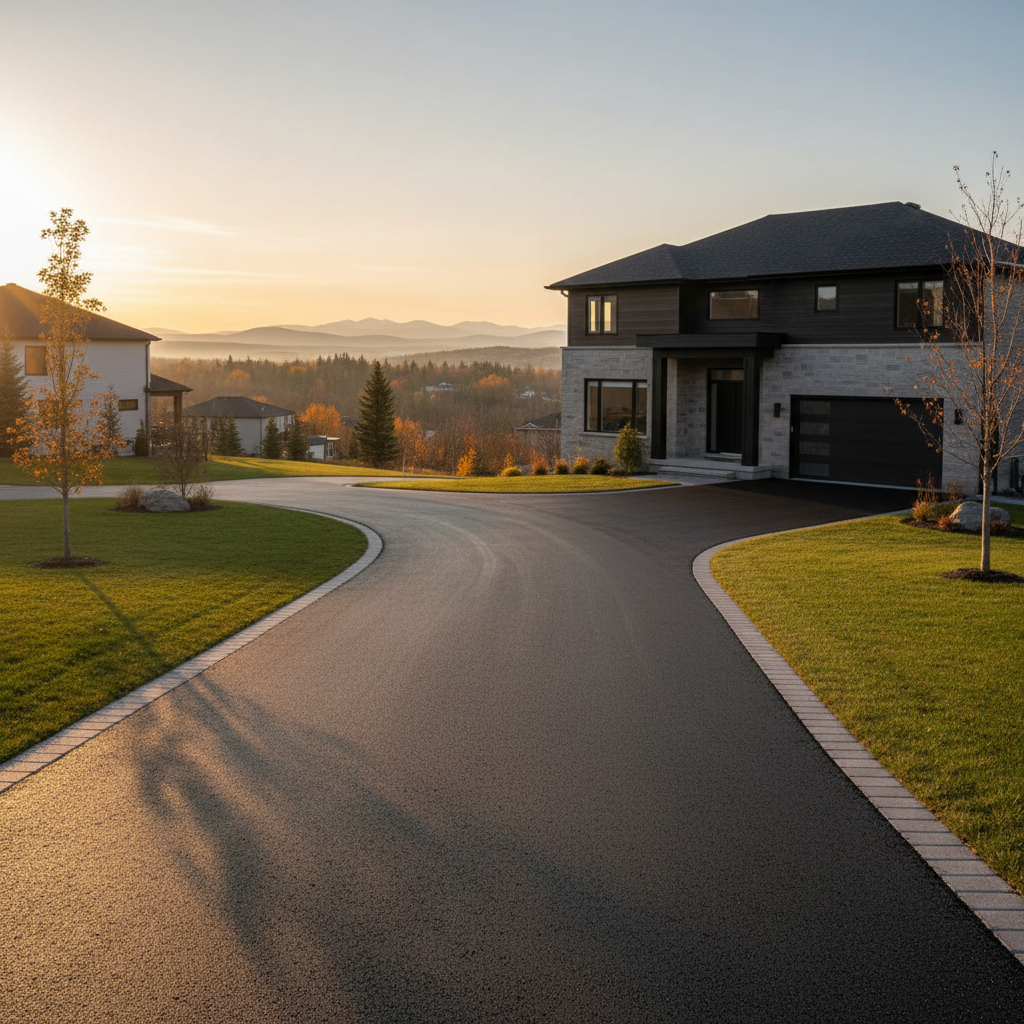
Driveway paving options and costs in Bendale
Bendale is a busy residential pocket of Toronto where driveway paving is in constant demand—partly because the area’s population is substantial, with 29,960 residents recorded in the 2021 Census (Statistics Canada, 2021 Census). Most private driveways here are tied to detached and semi-detached homes, so you’re usually planning for daily vehicle loads plus Ontario winter wear. That means the “cheapest” option on paper can change once you account for base depth, drainage, and the reality of freeze–thaw cycles.
In the Toronto economic region, frost can reach roughly 3–4 feet, so contractors must build a deeper, properly compacted granular base and keep water moving away from the driveway. As a result, paving and interlock pricing isn’t just about the finish material—it’s heavily influenced by excavation, base and compaction labour, and edging/reshaping work. Another factor is timing: the paving season in Ontario effectively runs late spring through early fall, with hot-mix asphalt placed best when air temperatures are consistently warm. When prime dates get tight, quotes for the same scope can jump simply due to scheduling pressure.
Demand is especially steady around the Middlefield Road and Bendale area where lots tend to have practical, everyday driveway use and homeowners often want curb appeal that still performs through winter. Use the table below to compare typical material choices before we dig into the cost drivers and what to ask for in your quote.
| Material |
Lifespan |
Maintenance |
Best For |
Price per sq ft |
Price Range |
| Asphalt (new installation, proper base) |
12–20 years |
Seal every 3–5 years |
Most cost-effective all-rounder for Toronto frost conditions |
$10–$18 |
$3,500–$8,000 |
| Asphalt (overlay on existing gravel base) |
8–15 years |
Seal every 3–5 years; monitor settlement |
When the existing base is sound and you want lower disruption |
$12–$20 |
$4,000–$7,500 |
| Interlocking concrete pavers |
25–35 years |
Occasional joint sand top-up; lift/replace if needed |
High curb appeal and repairs without tearing up the whole driveway |
$20–$35 |
$9,000–$20,000 |
| Poured concrete (broom finish) |
20–30 years |
Seal/maintain; manage de-icing carefully |
Low day-to-day maintenance with a clean, modern look |
$16–$28 |
$6,000–$15,000 |
| Exposed aggregate concrete |
20–30 years |
Seal to limit staining; crack monitoring |
Texture and slip resistance without the “busy” look of pavers |
$18–$32 |
$7,000–$16,500 |
| Gravel / crushed stone (budget option) |
5–10 years |
Re-grade and top up annually; weed control |
Short budget runway or temporary driveway solution |
$5–$12 |
$2,200–$5,000 |
Prices are estimates only and vary by project scope, site access and material selection.
What affects the price of paving in Bendale
In the Toronto economic region, the same driveway scope can come in 30–50% apart, even when the finished surface looks similar, because the real work happens under the surface. Contractors price differently based on how much excavation is needed, how deep they build the granular base, what drainage corrections they make, and how much crew time is spent on haul-away and compaction. A driveway that only needs resurfacing is one thing; a driveway that needs re-grading, new edge restraints, and a deeper base is another.
Frost depth and freeze–thaw cycles are decisive cost factors for paving in Ontario. With ground freezing to roughly 3–4 feet, the granular base often needs to be engineered to resist heaving and cracking. That usually means deeper, well-compacted base and reliable drainage so water can’t sit under the pavement. The paving season is also shorter: hot-mix asphalt should be placed when air temperatures are above about 10°C, so demand clusters into late spring through early fall. When schedules compress, prime dates can push costs up, especially for asphalt installations and full-depth replacements. Asphalt mix design must also meet local freeze–thaw performance requirements, which can increase material costs compared to generic mixes.
Concrete can rise in cost when air-entrainment and control-joint spacing are carefully planned for freeze–thaw movement, particularly if your driveway is near a downspout path or sits on soils that hold moisture. In Bendale, I also see costs go up when older driveways have settled—requiring a thicker build-up and sometimes full tear-out rather than an overlay. If your target is around the asphalt band of $3,500–$8,000, the savings typically come from avoiding major drainage corrections. If you’re moving to interlocking at $9,000–$20,000, the extra cost is often justified by repairability and stronger resistance to minor base movement.
| Price Factor |
Why It Matters |
Cost Impact |
| Driveway area in sq ft |
More square footage means more excavation, base, and surface material. |
Highest driver of total cost |
| Base depth required |
Frost line determines granular thickness to prevent heaving and cracking. |
Can add major excavation and material costs |
| Grading and drainage work |
Slope corrections and drainage features stop water from pooling under the surface. |
Often increases cost when needed mid-project |
| Tear-out of existing surface |
Breaking and hauling old concrete or removing failed asphalt adds labour and disposal. |
Typically pushes budgets up quickly |
| Edge restraints and curbing |
Restraints keep pavers and asphalt from spreading under freeze–thaw movement. |
Moderate cost, high performance value |
| Sealing requirement |
Asphalt performs better long-term with sealcoat after the surface cures (often 6–12 months). |
Extra maintenance line item over the years |
| Site access |
Narrow driveways or limited staging slow equipment movement and increase labour hours. |
Can raise labour cost and schedule time |
| Asphalt mix specifications |
Freeze–thaw-rated mixes help asphalt resist rutting and surface cracking. |
More material cost, better winter durability |
Permits & regulations in Ontario
For most Bendale homeowners, paving work on your own property typically does not require a building permit. That’s usually true when you’re repaving a private driveway where you’re not making changes to municipal infrastructure. The line you should watch is the municipal right-of-way: if you’re altering the boulevard, changing storm drainage, installing or modifying a new curb cut/apron in the municipal area, or making changes that affect how water flows across the city-owned portion, you’ll generally need municipal approval before excavation.
Also check whether your municipality has lot-grading or “property maintenance/grade” rules that restrict how close hard surfaces can be to property lines or how runoff must be managed. In Ontario, it’s not just a paperwork concern—bad grading can push water under your driveway, which in turn worsens freeze–thaw damage.
Before anyone digs, you should confirm utility locates through Ontario One Call. Step-by-step, here’s how to verify your contractor is set to work safely and legally: (1) confirm they carry liability insurance and ask for a certificate of insurance naming you as applicable; (2) verify their workplace coverage (WSIB coverage status/letter for Ontario workers); (3) confirm the contractor’s Ontario registration and licensing information through the relevant public registry sources; and (4) request a written scope that includes haul-away/disposal and drainage/grading responsibilities. Doing this up front helps prevent delays or stop-work situations after excavation begins.
Asphalt vs pavers vs concrete for Bendale driveways
For Bendale’s freeze–thaw climate, your best choice depends on whether you want the lowest upfront cost, the easiest future repairs, or the cleanest long-term surface. Asphalt is usually the lowest upfront option and stays smooth if it has a properly compacted granular base and reliable drainage. In Toronto’s winters—salt, plowing, and repeated freezing—good asphalt should be sealed regularly (often every 3–5 years). Interlocking concrete pavers cost more to install, but they’re highly repairable: if a section settles, we can lift and relay that area without replacing the whole driveway. For many Bendale homeowners, that repairability is a major “value” feature after years of minor base movement. Poured concrete sits in the middle on price, but it needs correct air-entrainment and smart control-joint planning to manage expansion/contraction and freeze–thaw movement; otherwise, you can see cracking earlier, especially with heavy de-icing use.
Base preparation in Toronto generally needs to be deeper than you’d expect from milder regions, because frost movement can drive water and stress into the base. Drainage design matters more than colour or finish. For winter maintenance, asphalt and concrete both face stress from plough impacts and salt. Pavers typically handle routine snow clearing well, and if joint sand washes out, re-sanding is a practical fix.
As a real-world pricing example: if your driveway falls in the asphalt band around $3,500–$8,000, that might be the right move if you’re also keeping excavation/dig-out minimal. If you’re spending near the paver band around $9,000–$20,000, it’s usually because you want the long repair window and curb appeal—especially on driveways that may experience minor settlement over time.
| Material |
Frost Resistance |
Curb Appeal |
Repair Method |
Lifespan |
Price Band |
| Asphalt (sealed regularly) |
Good with proper base, drainage, and freeze–thaw-rated mix |
Clean, uniform look |
Mill and overlay or patch the failed section |
12–20 years |
$3,500–$8,000 |
| Interlocking concrete pavers |
Very good; flexible surface over engineered base |
Highest curb appeal options and patterns |
Lift, rebuild base if needed, relay only the affected area |
25–35 years |
$9,000–$20,000 |
| Poured concrete (air-entrained) |
Good if properly air-entrained and jointed |
Modern, simple appearance |
Crack repair is localized; full replacement is costly if widespread |
20–30 years |
$6,000–$15,000 |
| Exposed aggregate concrete |
Good if sealed and drained properly |
Premium texture look |
Patch/repair is possible but colour matching can be imperfect |
20–30 years |
$7,000–$16,500 |
| Permeable pavers (drainage grid) |
Very good when base is engineered for infiltration |
Modern “engineered drainage” look |
Replace individual units; inspect/performance-check base periodically |
20–30+ years |
$10,000–$22,000 |
| Chip seal / tar-and-chip |
Moderate; performance depends heavily on base prep and maintenance |
More utilitarian look |
Spot repairs and re-seal cycles |
6–12 years |
$4,000–$9,000 |
How to choose a paving contractor in Bendale
When you hire a paving contractor in Bendale, verify three things before you sign: Ontario licensing/registration (if applicable to their work type), liability insurance, and WSIB/WCB coverage. Practically, you should request: (1) a certificate of insurance with your address/your name listed if your contract requires it; (2) their WSIB clearance letter or the current proof of coverage status for Ontario workers; and (3) their business identification and registration details for the type of construction they’re doing. If a contractor won’t provide documents or speaks vaguely about “coverage” or “someone else takes care of it,” that’s a risk you don’t want near an excavation schedule.
Next, get 2–3 itemised written quotes—not just a single lump-sum number. You want line items for labour and materials (excavation, base, compaction, asphalt/pavers/concrete, edging/restraints, disposal, and any geotextile or drainage items). Read the scope carefully: are permits included where required, is disposal included, and what exactly is excluded (for example, yard restoration, sidewalk or hydro work, or additional base depth if soils are wetter than expected)? Warranty matters too—ask for the workmanship warranty length, the manufacturer product warranty (if any), and whether the warranty transfers to you as the homeowner.
Payment should protect you. A common safeguard is to keep upfront payment to 10–15%, then use staged payments tied to measurable milestones, with a holdback until completion and cleanup. Finally, require a start date and completion estimate in writing so schedule pressure doesn’t turn into unfinished work in winter.
- Confirm Ontario proof of business registration/licensing for their work type.
- Request a certificate of liability insurance (and any additional insured language).
- Get WSIB clearance/coverage proof in writing (or a documented status).
- Ask for past-project photos specifically from Toronto/Ontario winter performance.
- Require an itemised scope: excavation depth, base type, compaction method.
- Verify disposal/haul-away is included for removed asphalt/concrete.
- Check drainage plan: slope %, drainage swales, and where water goes.
- Confirm edging/restraints are included (paver base performance depends on it).
- Ask whether geotextile is used where subgrade is soft or pumping occurs.
- Clarify asphalt curing and when sealing will be scheduled after installation.
- Review warranty: workmanship duration, exclusions, and claim process.
- Keep payment staged; do not exceed 10–15% upfront and hold back at completion.
In Bendale, red flags I’ve seen include: “we’ll fix it later” promises with no drainage plan, refusing to provide insurance/WSIB paperwork, quotes that omit disposal or base depth, starting without confirming utility locates, and missing milestones/dates so you can’t tell what you’re actually paying for.
Frequently asked questions — paving in Bendale
What is a driveway apron and do I need one in Bendale?
A driveway apron is the paved section at the point where your driveway meets the street/municipal boulevard area, often tied to the curb opening or curb cut. In Bendale (and across Ontario), whether you “need one” depends on your current street condition and how water drains from the roadway into your lot. If you’re changing the curb cut, altering boulevard grading, or affecting storm drainage in the municipal right-of-way, you typically need municipal approval before excavation. If you’re only repaving on your property and you’re not modifying the municipal portion, it’s usually not part of the requirement. The best way to confirm is to ask your contractor to review the existing curb/grade and include any apron/curb-cut work only if it’s actually required.
How do I maintain my driveway through Bendale winters?
Ontario winters around Bendale are hard on any surface because of salt, sand, and plough impact during freeze–thaw cycles. For asphalt, keep the surface clean—don’t let sand/salt brine sit in one area—and avoid aggressive scraping that gouges the surface. For pavers, remove weeds early and re-sand joints if you see gaps; wash-out around edges is usually a sign drainage or base fines are moving. For concrete, don’t use de-icing salt in excessive amounts right after placement, and keep water draining away from the slab (standing water under the driveway is the enemy in Toronto’s frost environment). Regular visual checks after the first few freeze cycles can catch small issues early before they turn into expensive repairs.
Is it worth sealing a new driveway right away in Bendale?
In most cases in Ontario, you shouldn’t seal asphalt immediately upon completion. Asphalt needs curing time so the surface doesn’t trap moisture or compromise bond strength. Common practice is to plan sealing after the asphalt cures, often around 6–12 months depending on product and weather conditions. If you’re budgeting around the asphalt band of $3,500–$8,000, sealing is one of the most cost-effective steps to protect your investment—because it helps reduce oxidation, surface wear, and water penetration during winter freeze–thaw events. The trade-off is timing: if your contractor seals too early, it can increase the risk of premature peeling. Ask for the exact sealing product and the planned seal schedule in your written scope.
What is a chip seal driveway and is it suited to Bendale?
Chip seal (tar-and-chip) is a layered surface treatment: binder is spread and aggregate is broadcast, then rolled to lock it in. It can be a budget-friendly option, but in Bendale it’s “suited” only when the base is engineered correctly and maintenance cycles are realistic. Toronto-area freeze–thaw can loosen aggregate over time if drainage is poor or if the binder isn’t the right type for colder climates. The performance is often less consistent than asphalt paving for driveways that see regular heavy vehicle turning. If you want the lowest upfront cost (and can accept periodic maintenance), it may make sense. If you want a long, low-effort service life, asphalt with proper base or interlocking pavers generally provide more predictable results in our winter conditions.
How much does driveway crack repair cost in Bendale?
Crack repair cost depends on crack width, length, and whether it’s a surface crack (sealer/fill) or a structural issue (base or drainage problem). For Bendale, typical small patch or crack-filling work often falls within the $300–$1,500 range for straightforward repairs, especially when only a few sections need cleaning and sealing. If cracks are widespread, if there’s edge failure, or if water is causing pumping/settlement, the repair may expand into base correction and milling/patching, which increases cost. The biggest difference in Bendale quotes is whether the contractor diagnoses drainage and subgrade first or simply “fills and hopes.” Ask for photos and a short explanation of likely cause before you approve pricing.
What base thickness do I need for pavers in Bendale?
For pavers in Bendale, the base thickness is driven by frost depth risk and how wet the subgrade can be. With Toronto’s deep frost environment (around 3–4 feet freezing), contractors typically build a deeper compacted granular base than you’d see in milder regions, then add proper edge restraints and drainage so water doesn’t sit under the interlock. Exact thickness can vary based on soil type, subgrade condition, and whether geotextile/drainage layers are needed, but the key is that the base must be compacted and leveled to prevent uneven settlement that opens joints. A good contractor will measure existing conditions, recommend the base build-up in the written quote, and confirm drainage/slope—because in freeze–thaw climates, base engineering is where performance is won or lost.