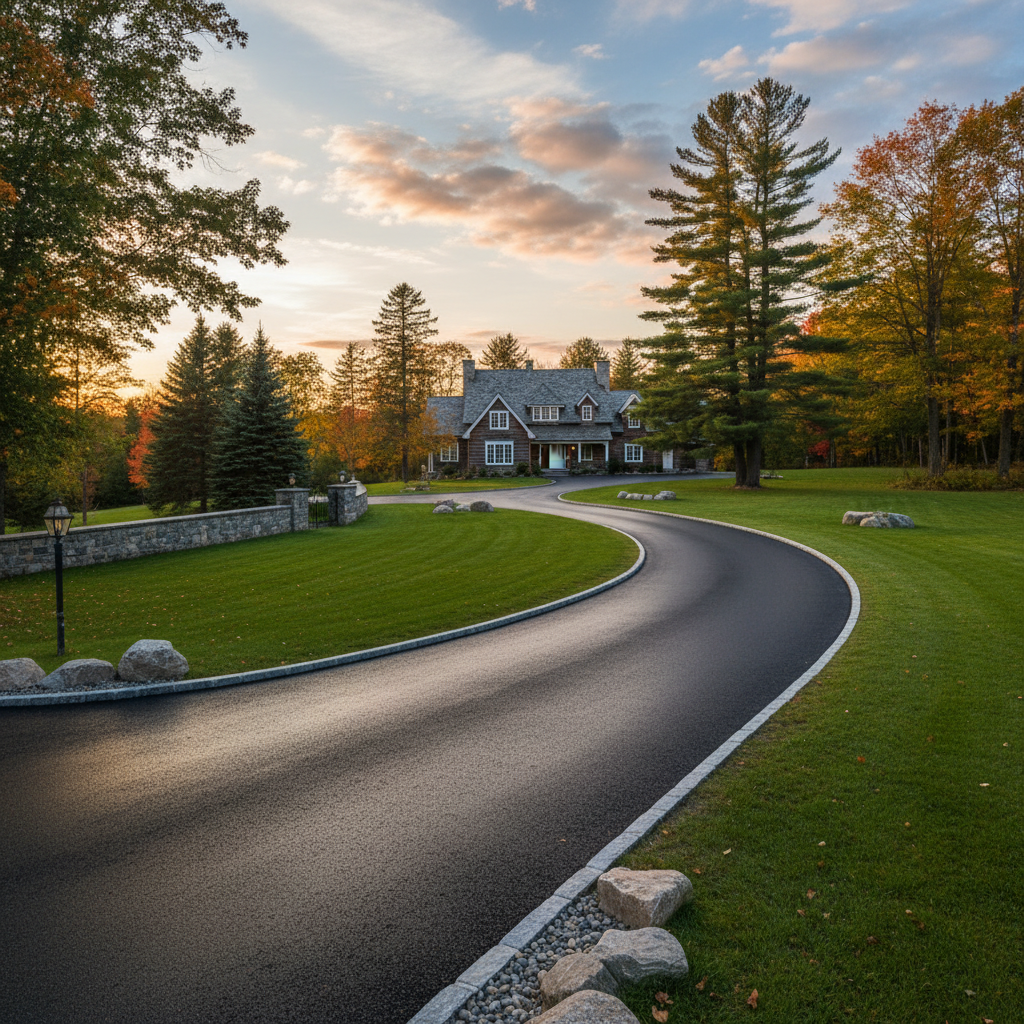
Driveway paving options and costs in Acton
In Acton, choosing the right driveway finish usually comes down to three things: your budget, how much maintenance you’re willing to do, and how your driveway handles winter. With a population of 9,377 (Statistics Canada, 2021 Census), Acton has a mix of long-established residential streets and newer infill—typical settings where homeowners want a clean, durable surface without constant repairs. Most private driveways in this area are tied to single-detached housing, so the driveway is often part of day-to-day access for vehicles, ploughing, and salt use.
In the Toronto economic region, frost depth and freeze–thaw cycles are the decisive cost drivers. Ground freezing of roughly 3–4 feet means the contractor has to build a deeper, well-compacted granular base and engineer drainage so water doesn’t sit under the pavement. When late fall, winter, and early spring bring repeated cycles, asphalt and pavers do better when the base is engineered to move slightly without opening joints or causing major cracking.
Pricing also changes with the marketplace: the paving season is effectively compressed into late spring through early fall, so prime dates get booked quickly—especially around Acton’s more active residential pockets such as the south end near the main retail corridors and commuting routes toward Georgetown and Milton. That scheduling pressure is one reason you’ll often see a wider spread between quotes, even for similar driveways.
Use the table below to compare typical costs, then match the material to your winter maintenance routine and how long you want the driveway to last before resurfacing or repairs.
| Material |
Lifespan |
Maintenance |
Best For |
Price per sq ft |
| Asphalt (new installation, proper base) |
15–25 years |
Seal every 3–5 years; minor patching as needed |
Lower upfront cost with good performance when base and drainage are done right |
$4.50–$9.00 |
| Asphalt (overlay on existing gravel base) |
10–18 years |
Seal as required; overlays may need earlier patching if base settles |
When the existing base is strong enough to support an overlay |
$3.50–$7.50 |
| Interlocking concrete pavers |
25–40 years |
Occasional joint sand top-up; lifted/replaced blocks after localized failure |
Best curb appeal and easier spot repairs without tearing out the whole driveway |
$9.00–$15.50 |
| Poured concrete (broom finish) |
20–30 years |
Seal selectively; manage cracking with proper joints and drainage |
Clean look, strong load capacity, and a simpler maintenance routine |
$7.00–$13.00 |
| Exposed aggregate concrete |
25–35 years |
Periodic sealing; surface stays more slip-resistant than smooth concrete |
High-visibility areas where texture and appearance matter |
$10.00–$16.50 |
| Gravel / crushed stone (budget option) |
5–12 years |
Top up and re-grade; weed control; rut repair after spring thaw |
Temporary solution or low-budget access areas |
$2.50–$5.50 |
Prices are estimates only and vary by project scope, site access and material selection.
What affects the price of paving in Acton
In Toronto-area quotes, it’s common to see the same driveway end up 30–50% apart across different contractors and job sites. That’s rarely because “one bid is wrong”—more often it’s because the work behind the surface is different: excavation depth, base design, drainage details, disposal fees, and the time it takes to prep and protect surrounding landscaping. Even within Acton, some streets have wetter soils or more variable subgrade, which forces extra base and compaction to keep the driveway stable through winter.
Frost line depth and freeze–thaw cycles are decisive in this region. In the Toronto economic region, ground freezing to roughly 3–4 feet means contractors typically need a thicker compacted granular base and reliable under-drainage so water can’t sit beneath the asphalt or concrete. When the base is too thin or poorly drained, you get heaving, map cracking, or early edge failure—issues that often show up after the first few cycles of late winter and early spring.
The paving season is also shorter here. Hot-mix asphalt placement depends on suitable soil and air temperatures (often above 10°C), so demand stacks into a few peak months. That schedule pressure can push pricing toward the higher end of the asphalt band (for example, $3,500–$8,000 for typical asphalt driveway paving projects) and affect contractor availability when multiple homes are queued for the same window.
Concrete can be priced higher or lower depending on thickness, jointing, and whether air-entrainment is specified. For instance, a well-planned poured concrete driveway (proper joints and drainage) may come in closer to $6,000–$15,000, while a site with poor drainage or heavy tear-out (existing slab removal) can push costs upward due to added base, haul-away, and labour.
| Price Factor |
Why It Matters |
Cost Impact |
| Driveway area in sq ft — the primary cost driver |
Most materials and paving labour scale directly with surface area |
Biggest swing item; a 200 sq ft difference can change the total by thousands |
| Base depth required — frost line determines granular thickness |
Toronto-area freeze–thaw needs engineered granular thickness to prevent heaving and cracking |
Typically one of the largest “scope” differences between quotes |
| Grading and drainage work — slope or drainage corrections add cost |
Correct slope and drainage protect the base from holding water |
Can add significant excavation, fabric, and drainage stone |
| Tear-out of existing surface — breaking and hauling concrete or old asphalt |
Removal affects labour, time, disposal, and sometimes surprises in subgrade |
Unexpected increases are common if buried materials or poor base are found |
| Edge restraints and curbing — needed to prevent paver spread |
Restraints hold the system together during freeze–thaw movement |
Often required for pavers; omission leads to premature joint failure |
| Sealing requirement — asphalt must be sealed after 6–12 months |
Sealing protects asphalt binder from oxidation and winter damage |
Not always included in early quotes; affects long-term value |
| Site access — narrow or tight lots slow equipment movement |
Smaller access increases time for skid-steer, compaction, and material delivery |
Higher labour hours; more machine mobilization and handling |
| Asphalt mix specifications — freeze-thaw-rated mix costs more |
Local performance depends on mix design suited to Ontario’s cycles and load |
Improves durability; can raise material line-items but reduce early failures |
Permits & regulations in Ontario
For most homeowners in Acton, paving a private driveway within your own property typically does not require a building permit. In practice, you usually don’t need a permit to resurface an existing driveway footprint, replace asphalt, or install interlock on your lot—as long as you’re not modifying municipal infrastructure. The situation changes when your project touches the municipal right-of-way or affects how stormwater is managed.
Work that typically DOES require municipal approval/permits: creating or changing a curb cut, altering the boulevard, adjusting connections where your driveway ties into municipal drainage infrastructure, and any change that impacts storm drainage flow in the municipal area. If you’re considering larger grading changes that could redirect runoff, confirm requirements before excavation.
Work that typically does NOT require a permit: re-paving within the driveway limits on private property, replacing base and asphalt in the same footprint, installing pavers or concrete inside your property lines, and routine sealing and repair that doesn’t change drainage patterns or right-of-way features.
Step-by-step: first, ask the contractor for their Ontario business information and confirm they’re properly registered for the work they’re performing (availability varies by trade activity). Next, request a certificate of insurance showing general liability. Then confirm WSIB coverage (or applicable exemption) for workers—don’t accept “we’re covered” without paperwork. Finally, if they’re asking to start excavation, insist on utility locates through Ontario One Call before any digging. For peace of mind, also check Acton lot-grading rules with the municipality so your drainage plan complies.
Asphalt vs pavers vs concrete for Acton driveways
In Acton’s freeze–thaw climate, asphalt, interlocking pavers, and concrete can all perform well—but the “best” choice depends on how you maintain your driveway and how you want repairs to be handled. Asphalt usually has the lowest upfront cost and is the fastest to install, but it needs sealing every 3–5 years to protect the binder from oxidation and winter wear. When the base is correctly compacted and drained for the Toronto-region frost depth (around 3–4 feet), asphalt can remain smooth and crack-resistant for years.
Interlocking concrete pavers cost more upfront, but they’re a strong fit when you want curb appeal and the ability to repair. If one section settles or a localized area fails, pavers can be lifted, re-leveled, and reinstalled without tearing out the entire driveway—useful on properties where spring thaw highlights weak spots.
Poured concrete sits in the middle for cost, but it must be air-entrained and properly jointed. Concrete in Ontario can crack when freeze–thaw and de-icing salt attack the surface, especially if drainage is poor or joints are missing or incorrectly spaced. Exposed aggregate improves slip resistance and appearance, while permeable pavers can help manage runoff (though they still need correct sub-base design to prevent fines migration).
Here’s a practical way to judge the price difference: if your asphalt driveway budget is around $3,500–$8,000, moving to pavers might bring you into the $9,000–$20,000 range. That jump is justified when you value long-term repairability and visual impact, or when you expect future re-grading due to landscaping changes. If you want the most economical option and are willing to seal on schedule, asphalt is often the best match for Acton homeowners.
| Material |
Frost Resistance |
Curb Appeal |
Repair Method |
Lifespan |
Price Band |
| Asphalt (sealed regularly) |
Good when base is engineered and drainage is tight for freeze–thaw |
Mid (clean, smooth finish) |
Patch and re-surface sections; full overlay later |
15–25 years |
$3,500–$8,000 |
| Interlocking concrete pavers |
Excellent with proper base, edging restraints, and joint sand |
High (wide style and colour options) |
Lift-and-reset individual stones/sections |
25–40 years |
$9,000–$20,000 |
| Poured concrete (air-entrained) |
Good with air-entrainment and correctly planned joints |
Mid (clean and modern, especially with finishing) |
Section replacement for major cracking; surface seal/patch for minor issues |
20–30 years |
$6,000–$15,000 |
| Exposed aggregate concrete |
Good when mix design and finishing are correct for freeze–thaw |
Very high (textured, premium look) |
Hard to “patch invisibly”; typically localized replacement |
25–35 years |
$8,500–$18,000 |
| Permeable pavers (drainage grid) |
Good when designed correctly to avoid clogging and water pooling |
High (modern look) |
Lift/reset blocks; requires maintaining permeability features |
20–35 years |
$11,000–$22,000 |
| Chip seal / tar-and-chip |
Fair—more sensitive to base quality and winter degradation without upkeep |
Low to mid (functional finish) |
Re-chipping and spot patching; maintenance cycle is more frequent |
5–10 years |
$2,800–$6,500 |
How to choose a paving contractor in Acton
Choosing the right paving contractor in Acton isn’t just about the lowest number—it’s about whether they build the base to survive Toronto’s frost depth and freeze–thaw movement. Start by verifying the contractor’s Ontario licensing/registration for the work they’re offering, then ask for a certificate of general liability insurance. For worker coverage, request WSIB clearance (or confirm applicable coverage documentation if they don’t have WSIB-exempt arrangements). Don’t rely on verbal assurances—look at the paperwork before work begins.
Next, request 2–3 itemised written quotes, not lump-sum estimates. A proper quote breaks out excavation, base material type and depth, compaction testing approach, drainage/grading items, disposal/tip fees, and the paving surface cost. It should also show what’s included versus excluded—example: permit pull responsibilities (if any), sawcutting, breaking/hauling of existing concrete or asphalt, and whether your quote includes edging restraints, interlock joint sand, or asphalt sealing within the first season.
Warranty matters. Ask for the workmanship warranty length and what it covers (settlement, cracking, edge failure), and confirm whether the manufacturer warranty on materials is included separately. If you’re selling the home later, ask whether the workmanship warranty is transferable.
For payment, keep it controlled: never pay more than 10–15% upfront. Hold back a portion until the job is complete and properly cleaned, with final grading and drainage verified. Finally, require a written timeline—start date and estimated completion date—so you can plan around the late-spring to early-fall schedule constraints.
- Confirm Ontario registration/licensing for the work they’ll perform.
- Request certificate of general liability insurance and verify dates match your project.
- Ask for WSIB coverage/clearance letter and keep a copy with your contract.
- Get 2–3 itemised quotes with base depth, materials, and unit pricing.
- Demand a clear scope of tear-out, haul-away, and disposal/tip fees.
- Check whether drainage/grading corrections are included (not just “we’ll level it”).
- Verify edging restraints/curbing are included where needed, especially for pavers.
- For asphalt, ask when sealing will occur (typically after 6–12 months) and whether it’s scheduled.
- Confirm compaction approach (equipment used, layers placed, and QC method).
- Ask who supplies geotextile/fabric and where it’s used to protect the base.
- Review warranty details in writing: length, exclusions, and what counts as “failure.”
- Keep a sensible payment schedule—10–15% max deposit and holdback until final acceptance.
In Acton, common red flags include contractors who won’t discuss base design or drainage, quotes that omit compaction layers, “driveway sealing included” offers that don’t specify timing after installation, refusing to provide insurance/WSIB documentation, or starting work without confirming utility locates through Ontario One Call.
Frequently asked questions — paving in Acton
When is the best time of year to pave in Acton?
In Acton, the best results come from late spring through early fall, when soil and air temperatures are suitable for asphalt placement and base compaction. Asphalt is sensitive to temperature; hot-mix asphalt production and placement typically require conditions warm enough to achieve proper compaction and bond. Ontario’s freeze–thaw cycles also mean contractors try to avoid finishing right before a hard cold snap, because trapped moisture and early winter temperatures can accelerate surface breakdown. If you’re flexible, aim for a window where crews aren’t rushed—prime dates get booked quickly in the Toronto region due to compressed paving season, and rush work can reduce attention to drainage details.
How deep should the base be for Acton's frost?
For Acton and the broader Toronto economic region, the frost depth is a major driver of base thickness. With ground freezing roughly 3–4 feet in the region, a driveway typically needs a deeper, properly compacted granular base and engineered drainage so water doesn’t sit under the pavement and heave. A contractor should assess your subgrade conditions and design the build-up accordingly; the right answer isn’t just one fixed number. As a rule of thumb for Ontario projects, deeper frost requires thicker granular thickness than milder regions, and the base design often differs depending on whether you’re paving over gravel, removing a failed slab, or correcting poor drainage.
How often should I seal my asphalt driveway?
For Ontario driveways, asphalt sealing is typically done after the first season—about 6–12 months after installation—then repeated every 3–5 years depending on traffic, sun exposure, and winter wear from plowing and salt. Sealing matters because it protects the asphalt binder from oxidation, which is accelerated by temperature swings and moisture movement during freeze–thaw cycles. If your quote is around the asphalt band of $3,500–$8,000, confirm whether sealing is included or if it’s an add-on you’ll need to budget later. A good contractor will recommend a sealing schedule based on your surface condition rather than a one-size-fits-all date.
Why does my driveway crack and heave in winter?
Cracking and heaving are usually symptoms of water and frost working together. In Acton and across Ontario’s Toronto region, repeated freeze–thaw cycles can push upward when water gets under the pavement, usually because drainage is poor or the base wasn’t built with sufficient granular thickness and compaction. Edge failure is also common when restraints aren’t tight enough, letting pavement move during expansion and contraction. On older asphalt, oxidation can also reduce flexibility, so the surface can’t accommodate movement, leading to more visible cracks. The fastest way to fix is not just patching the surface—it’s addressing the base, slope, and drainage so the next winter doesn’t repeat the problem.
Do I need a permit to pave my driveway in Ontario?
Often, no permit is required when you’re paving within your private property limits and not changing storm drainage or municipal right-of-way features. In Ontario, homeowners commonly replace asphalt or install pavers/concrete on their lot without a permit. However, you should expect municipal approval when the work affects the boulevard or curb cut, changes storm drainage patterns, or involves construction within the municipal right-of-way. Before any excavation, you should also confirm utility locates through Ontario One Call. If your contractor’s scope includes right-of-way impacts, ask clearly who will pull approvals and what documentation will be provided—don’t assume it’s “covered” in the price.
How long before I can drive on new asphalt?
After asphalt paving in Ontario, most driveways can be used after the surface cools and gains sufficient stability—typically within about 24 hours under normal conditions. Timing can vary with weather, thickness, and whether crews apply rollers and compaction properly. Avoid turning vehicles, heavy loads, and spinning tires right after completion, and don’t place furniture or landscaping materials on the fresh surface. If your project is being scheduled during Acton’s shorter paving season, plan around track time to prevent accidental damage while the asphalt cures. For long-term performance, remember that sealing is usually done after 6–12 months, not immediately—this supports durability through the next freeze–thaw cycle.