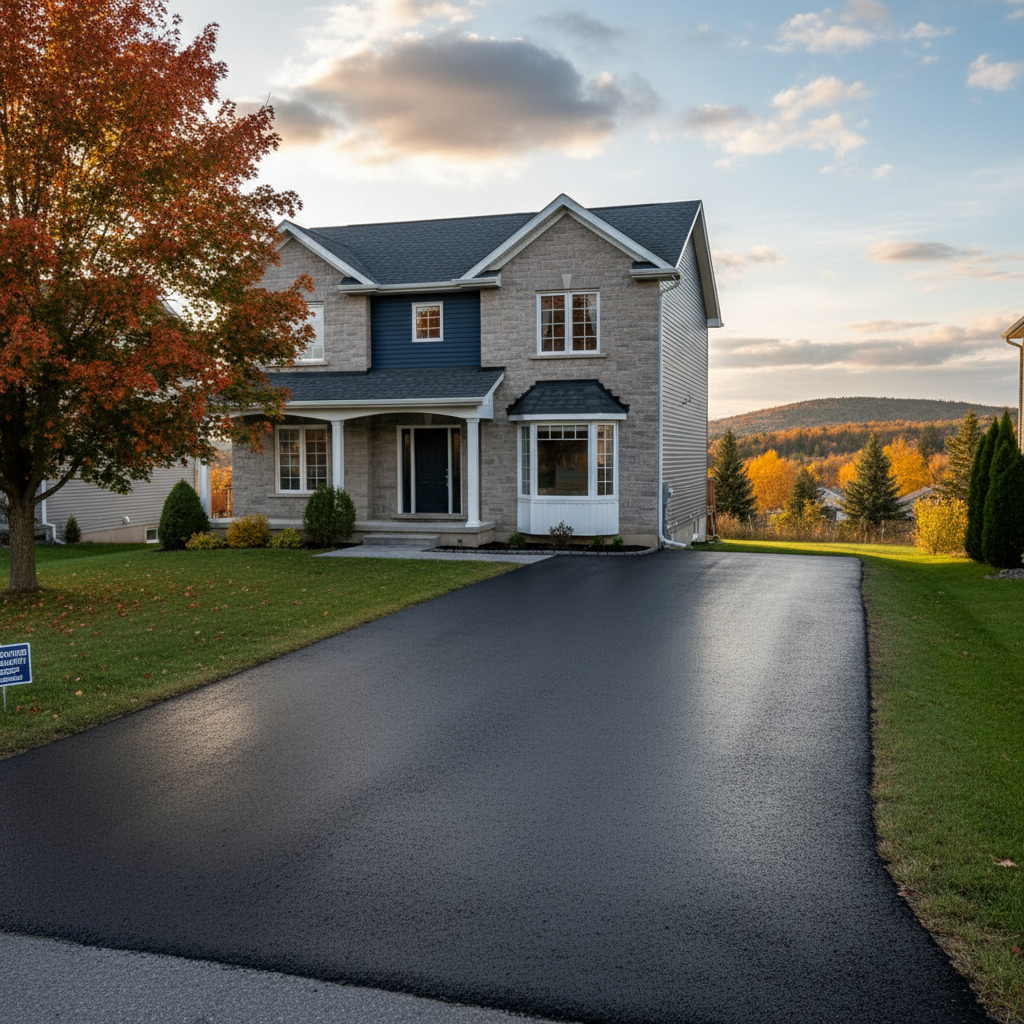
Driveway paving options and costs in Parkwoods-Donalda
In Parkwoods-Donalda, driveway paving is a year-round planning topic, but the work really concentrates in late spring through early fall. That matters because Toronto’s freeze–thaw cycles push contractors to schedule base prep and asphalt placement during the warmest windows. Parkwoods-Donalda is also a dense, established neighbourhood—Statistics Canada counted 34,805 people in the area in 2021 (Statistics Canada, 2021 Census)—and most private driveways here serve detached and semi-detached homes with predictable access needs for skid-steer, dump trucks, and compactors. The result is steady demand, especially around Bayview/Sheppard and the nearby corridor where crews are often moving between homes in tight timeframes.
Because the ground can freeze roughly 3–4 feet in the Toronto economic region, pricing usually hinges on how thick and well-compacted your granular base is, plus how reliably drainage directs meltwater away from under the pavement. Two homeowners can get quotes that look different even for the same driveway size: one lot may need extra excavation to reach stable soil and improve slope, while another only needs a surface overlay. If you’re comparing options, it’s helpful to know the typical Toronto price bands—especially asphalt (often the lowest upfront), concrete (mid-range to higher depending on finish), and interlock pavers (highest upfront but highly repairable).
Below is a quick comparison table to anchor your expectations before you request itemised quotes.
| Material |
Lifespan |
Maintenance |
Best For |
Price per sq ft |
Price Range |
| Asphalt (new installation, proper base) |
15–25 years |
Seal every 3–5 years |
Best value when you want smooth ride and lower upfront cost |
$6.50–$12.50 |
$3,500–$8,000 |
| Asphalt (overlay on existing gravel base) |
8–15 years |
Seal every 3–5 years; monitor edges/drainage |
Budget refresh when base is still solid |
$5.50–$10.00 |
$2,800–$6,500 |
| Interlocking concrete pavers |
25–40+ years |
Rinse/weed control; occasional re-sanding |
Curb appeal and repairs without replacing the whole driveway |
$12.00–$18.00 |
$9,000–$20,000 |
| Poured concrete (broom finish) |
20–30 years |
Seal/maintain; watch joints and drainage |
Low-maintenance, continuous surface look |
$10.00–$16.00 |
$6,000–$15,000 |
| Exposed aggregate concrete |
20–30 years |
Seal periodically; manage de-icing salt use |
Slip resistance and premium appearance |
$12.00–$20.00 |
$7,000–$18,000 |
| Gravel / crushed stone (budget option) |
3–10 years |
Top up annually; reshape and re-level |
Temporary solution or lowest-cost driveway base layer |
$3.00–$6.00 |
$2,000–$5,000 |
Prices are estimates only and vary by project scope, site access and material selection.
What affects the price of paving in Parkwoods-Donalda
Even when two Parkwoods-Donalda neighbours request the same driveway size, quotes can land 30–50% apart across Toronto and Ontario. The usual reason isn’t the asphalt or concrete itself—it’s what’s happening below it: excavation depth, base design to handle frost, drainage corrections, and how much labour is required for haul-away and disposal. Toronto-area schedules also tighten around a short paving season; hot-mix asphalt placement generally needs air temperatures above about 10°C, and crews get booked quickly when spring arrives all at once.
In this region, the frost line depth and freeze–thaw cycles are decisive cost factors. If your driveway needs a thicker compacted granular base to prevent heaving and cracking, you pay more in material and machine time. In Ontario/Alberta, deeper frost typically means driving base thickness closer to 6–12 inches (as a practical range for stable granular layers in driveways), whereas milder coastal climates can sometimes get away with thinner sections. The goal is to keep water from sitting under the pavement—because when trapped moisture freezes, it expands and lifts the surface.
Concrete pricing also responds to local conditions. For example, a broom-finished concrete driveway can cost less than exposed aggregate, but it still requires correct air-entrainment and careful jointing to control cracking. Likewise, if an existing asphalt driveway fails at the edges due to poor drainage, a “simple overlay” may actually become an expensive tear-out once unsuitable base is exposed.
As a reference point for planning: a new asphalt driveway often falls in the $3,500–$8,000 band, while paver projects commonly start in the $9,000–$20,000 range depending on excavation, base profile, and border treatments. With winter conditions and drainage demands, older lots can also add labour—especially where driveway slopes don’t match the street catchment and new grading is required.
| Price Factor |
Why It Matters |
Cost Impact |
| Driveway area in sq ft |
Most materials and labour scale directly with square footage |
High (typically the largest single driver) |
| Base depth required |
Frost line determines how thick and well-compacted the granular layers must be |
Medium to high (can change the job materially) |
| Grading and drainage work |
Proper slope and drainage prevent water from sitting under the driveway |
Medium (often reveals hidden subgrade issues) |
| Tear-out of existing surface |
Breaking, hauling, and disposal of old asphalt or concrete adds labour and machinery |
Medium to high depending on material and condition |
| Edge restraints and curbing |
Pavers and asphalt need stable edges to resist spreading and washouts |
Medium (especially for wider borders) |
| Sealing requirement |
Asphalt should be sealed after initial curing (commonly 6–12 months) to slow oxidation |
Low to medium (recurring but predictable) |
| Site access |
Narrow driveways, tight corners, and limited laydown area slow equipment movement |
Medium (can affect production rates) |
| Asphalt mix specifications |
Freeze-thaw-rated mixes cost more due to additive selection and gradation control |
Low to medium (small per ton, meaningful on full tonnage) |
Permits & regulations in Ontario
For homeowners in Parkwoods-Donalda, the permitting answer is usually simpler than people expect—but you still need to verify what work touches municipal infrastructure. In Ontario, paving a private driveway within your own property typically doesn’t require a building permit. Where permits and municipal approvals often come into play is when the work extends into the municipal right-of-way or changes services. Examples of work that usually DOES require municipal approval include creating or changing a curb cut, altering boulevard grading, modifying storm drainage connections, and any work that affects drainage flow in the road allowance.
Steps to follow: First, call for utility locates before excavation (Ontario One Call) so the contractor can identify underground services. Next, confirm lot-grading rules with your local municipality—some municipalities restrict how close to property lines hard surfaces can be, or how drainage must be handled. Even if your driveway is “just resurfacing,” if you’re reconstructing base thickness or changing the slope, ask how grading and drainage rules apply to your specific site.
To verify your contractor’s credentials in Ontario, ask for three documents and check them before work starts: (1) Ontario licence info (where applicable) and valid business details, (2) Certificate of Insurance (liability coverage with your address listed or evidence of coverage), and (3) proof of WSIB coverage (or a clearance letter, if they’re eligible for that status). For paving, also request the written scope so you know what’s included for disposal, saw-cutting, and any curb/boulevard coordination.
Asphalt vs pavers vs concrete for Parkwoods-Donalda driveways
Choosing between asphalt, interlocking pavers, and concrete in Parkwoods-Donalda comes down to how each material performs through Ontario’s freeze–thaw winter routine and how you prefer to handle repairs. Asphalt typically has the lowest upfront cost and gives a smooth, quiet ride, but it does require sealing every 3–5 years to slow oxidation and help it resist water infiltration. In Toronto’s cycle of late-fall to early-spring freezing, that water control is critical—small drainage failures under the surface can show up as cracks and edge failures over time.
Interlocking concrete pavers cost more initially, but they’re the most forgiving when a localized issue develops. If frost-related movement or drainage problems affect a small section, pavers can be lifted, re-leveled, re-compacted, and reset without replacing the full driveway. That “repairable” advantage is why pavers are popular in visually prominent parts of Parkwoods-Donalda where homeowners care about curb appeal.
Poured concrete often lands in the middle for cost, but freeze–thaw resistance depends heavily on proper air-entrainment, correct joint placement, and good drainage. Salt and de-icing can accelerate surface wear if the mix and curing aren’t right, and Toronto’s compressive winter conditions can widen small cracks if joints aren’t engineered for movement. For exposed aggregate, you typically pay more for finish and texture, but slip resistance can be a plus.
In terms of dollars: if you’re looking at a standard-size driveway, asphalt commonly fits the $3,500–$8,000 band, while interlock often sits in the $9,000–$20,000 range. That extra $ often makes sense when you want long-term curb appeal and easy section-level repairs; it’s not always justified if your priority is lowest upfront cost and your drainage/base are already ideal.
| Material |
Frost Resistance |
Curb Appeal |
Repair Method |
Lifespan |
Price Band |
| Asphalt (sealed regularly) |
Good with proper drainage and freeze–thaw-rated paving thickness |
Medium (clean, dark finish) |
Mill-and-replace localized sections if needed |
15–25 years |
$3,500–$8,000 |
| Interlocking concrete pavers |
Excellent when base is engineered and edges are restrained |
High (many colours/patterns) |
Lift, re-grade base, replace affected blocks |
25–40+ years |
$9,000–$20,000 |
| Poured concrete (air-entrained) |
Good if joints and air-entrainment are done correctly |
Medium to high (depending on finish) |
Crack repair and patching; larger issues may require removal |
20–30 years |
$6,000–$15,000 |
| Exposed aggregate concrete |
Good with correct mix design and curing; surface can wear less |
High (textured premium look) |
Patch-matching is possible but may be more visible |
20–30 years |
$7,000–$18,000 |
| Permeable pavers (drainage grid) |
Very good for managing meltwater if system is installed correctly |
High (modern drainage look) |
Lift/reset affected areas; maintain infill channels |
20–35 years |
$10,000–$22,000 |
| Chip seal / tar-and-chip |
Moderate; performance depends strongly on binder and compaction |
Low to medium (utilitarian) |
Periodic refresh; limited spot repair |
7–12 years |
$2,500–$6,000 |
How to choose a paving contractor in Parkwoods-Donalda
Start by verifying licensing and coverage before you agree to any work. In Ontario, reputable paving contractors should provide: (1) proof of liability insurance (request the Certificate of Insurance and confirm it covers the scope of paving and includes your address or lists you as an interested party if applicable), and (2) WSIB coverage or a clearance letter (if they’re required to carry coverage). If a contractor can’t produce these documents, treat that as a major warning sign. Also ask for the business’s legal name and number so you can confirm it matches the certificate paperwork.
Next, get 2–3 itemised written quotes—not just one lump-sum number. The best quotes break down labour, excavation/tiered base material, geotextile (if used), asphalt concrete or concrete materials, edging/restraints, and disposal. Confirm whether permit pull is included (if the work touches right-of-way) and whether disposal/haul-away is part of the price or billed separately. For drainage or tear-out, ask how they’ll handle spoil—Toronto-area jobs often hinge on how much old material must be removed.
Review warranty details carefully. Ask: How long is the workmanship warranty? Does it cover base settlement and edge failure, or only surface defects? Is there a manufacturer warranty for the product, and is it transferable to future owners? For payment scheduling, never pay more than 10–15% upfront; use a holdback until the job is complete and you’ve received documentation (delivery tickets/mix info if available). Finally, put the start date and estimated completion timeline in writing; Ontario’s compressed season can change quickly, especially after late spring weather swings.
- Request proof of liability insurance before any site work begins.
- Confirm WSIB coverage or get a WSIB clearance letter.
- Ask for Ontario business details and confirm the name matches the paperwork.
- Get 2–3 itemised quotes with labour and material line items (not just one total).
- Ensure the scope states excavation depth and base thickness assumptions.
- Verify drainage plan: slope, outlet tie-ins, and how they prevent water under the pavement.
- Clarify what’s included for tear-out, saw cutting, and haul-away/disposal.
- Ask if geotextile and compaction testing (where applicable) are included.
- Confirm edge restraints/curbing details for pavers and asphalt.
- For asphalt, confirm when sealing will be recommended (often after 6–12 months).
- Read warranties in plain terms and ask if they cover workmanship vs material only.
- Agree on a payment schedule with a holdback until final grading and cleanup are done.
Red flags I see in Parkwoods-Donalda include: quotes that won’t specify base thickness, no written drainage plan, pressure to pay full upfront, vague warranty language (“best effort” only), and crews showing up without insurance/WSIB documentation. If they can’t explain the frost–drainage logic behind their build-up, they’re guessing instead of designing.
Frequently asked questions — paving in Parkwoods-Donalda
How deep should the base be for Parkwoods-Donalda's frost?
In Parkwoods-Donalda and the broader Toronto area, the frost can reach roughly 3–4 feet, so the base depth and composition matter more than the surface material. For driveway reconstructions, contractors typically design granular base thickness in the Ontario range (commonly around 6–12 inches of engineered compacted granular layers, depending on soil conditions, drainage, and how much excavation is required). The right answer for your lot depends on subgrade stability—some properties need deeper excavation to reach firm material or to correct grading so water won’t pond. When getting quotes, ask for the proposed excavation depth and base build-up, not just “we’ll compact the base.” A well-designed granular section plus reliable drainage is what prevents heaving and cracking during freeze–thaw cycles (Statistics Canada, 2021 Census).
How often should I seal my asphalt driveway?
For asphalt in Ontario, sealing is usually a 3–5 year cycle, but timing starts after the driveway has had a chance to cure. Many contractors recommend waiting about 6–12 months after installation before the first sealcoat, because premature sealing can trap moisture and accelerate deterioration. If your driveway is exposed to frequent plowing and salt (common in Parkwoods-Donalda), sealing tends to be more important because water infiltration speeds up surface oxidation and edge breakdown. When comparing quotes, check whether sealing is included or listed as a future maintenance cost. Asphalt itself may fit the $3,500–$8,000 band for new installation, but skipping sealing can reduce the long-term value you expect from that price.
Why does my driveway crack and heave in winter?
Cracking and heaving in winter almost always trace back to water and support problems, not “bad luck.” In the Toronto area, freeze–thaw cycles expand moisture trapped under the pavement. If the base isn’t thick enough for local frost conditions, or if compaction and drainage aren’t engineered correctly, the subgrade can shift—leading to lifted edges, alligator-type cracking, or surface breaks. Older driveways sometimes fail at the perimeter first where water can enter from landscaping or where slopes don’t drain away from the driveway. De-icing salt can also contribute to surface deterioration once cracks begin. If you’re seeing heave, don’t just patch—ask contractors whether the base and drainage need correction before resurfacing, whether it’s asphalt overlay or a full rebuild.
Do I need a permit to pave my driveway in Ontario?
In Ontario, paving within your own property—such as replacing asphalt or installing a new surface on your driveway footprint—typically doesn’t require a building permit. However, you may need municipal approval when the work affects the municipal right-of-way, including curb cut changes, boulevard grading changes, or altered storm drainage connections. Parkwoods-Donalda homeowners should also expect lot-grading rules to matter, since some municipalities restrict how close hard surfaces can be to property lines and how drainage must be handled. Before excavation, ensure utility locates are completed through Ontario One Call. When hiring a contractor, ask whether they handle municipal approvals if your job touches the boulevard, and request a clear statement in the contract about what’s included.
How long before I can drive on new asphalt?
Most homeowners can drive on new asphalt after it cools, but “drive right away” isn’t always the same as “normal traffic.” Typically, contractors allow light vehicle traffic once the asphalt has cooled sufficiently and has been properly rolled. Exact timing depends on weather, lift thickness, and mix. In Ontario’s spring and fall swings, crews often work to placement temperature and then protect the surface from disturbance while it gains strength. If you’re also planning snow work, ask the contractor how they recommend handling the first winter. This matters because asphalt performance and sealing timing depend on keeping water out early. When planning budgets, new asphalt commonly lands in the $3,500–$8,000 range, but the long-term outcome relies on correct compaction and build-up, not just the day you can drive on it.
What causes potholes and how are they repaired?
Potholes usually form when water penetrates through cracks or weak spots and then freezes and expands, breaking the asphalt further. In the Toronto region, that freeze–thaw action repeats enough times to turn minor surface damage into a bigger failure. Common culprits include poor drainage at the driveway edge, insufficient base compaction, or overlaying without addressing an underlying base issue. Repairs can range from cold patch for temporary stabilization to proper saw-cut patching where damaged asphalt is removed down to sound material, base is checked/compacted, and a new patch is installed to match thickness. For severe, repeating failures, resurfacing or full reconstruction may be necessary. If you’re considering repairs, get a contractor to explain the cause first; otherwise, you can spend money fixing a hole while the water problem continues.