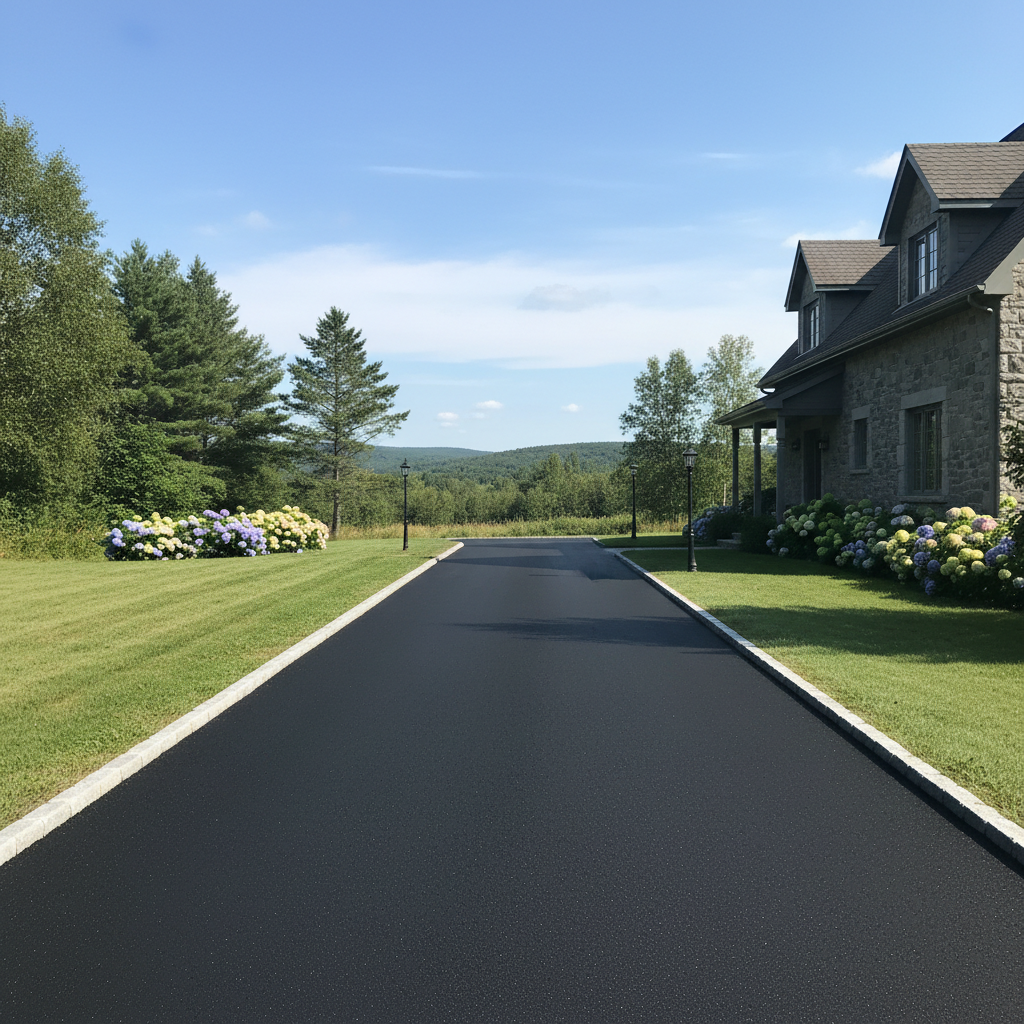
Driveway paving options and costs in Grand Forks
Grand Forks paving choices come down to three things: your budget, how much freeze–thaw punishment you expect each spring, and how quickly you want to get back to regular use. In Grand Forks, the vast majority of homes are single-detached (75.9% of dwellings), so most private driveways connect to that housing type and require a properly engineered base to reduce heave and cracking. The town also has a large share of older housing stock—55.6% of homes were built before 1981—which often means existing gravel or tired asphalt will need extra tear-out and base corrections before any new surface goes down (Statistics Canada, 2021 Census).
In the Kootenay interior, frost depth is commonly in the 45–60 inch range depending on elevation and micro-climate. That makes drainage and granular base thickness a major cost driver, because contractors need deeper, well-compacted road base (often in the 6–10 inch range for typical driveway builds, adjusted higher where soils are weaker or clayey). Labour and scheduling also tend to be tighter here—hot-mix asphalt needs consistent warm conditions—so pricing often reflects a shorter, late-spring-through-early-fall construction window.
Where this work is especially busy is around the residential corridors closer to the downtown core and the main approach roads into town, where homeowners typically upgrade older, rutted driveways before winter. Use the table below to compare options for Grand Forks, and then look at what affects pricing in the next section.
| Material |
Lifespan |
Maintenance |
Best For |
Price per sq ft |
Price Range |
| Asphalt (new installation, proper base) |
15–25 years |
Seal every 3–5 years; spot patching as needed |
Cost-effective, smooth finish with routine upkeep |
$9.50–$15.50 |
$7,500–$12,500 |
| Asphalt (overlay on existing gravel base) |
10–18 years |
Seal every 3–5 years; more frequent patching if base is marginal |
When you have a stable base and want a lower upfront cost |
$8.50–$13.50 |
$6,500–$11,000 |
| Interlocking concrete pavers |
25–35+ years |
Minimal; replace individual stones if damaged |
Highest curb appeal and easier localized repairs |
$14.00–$22.00 |
$9,500–$16,000 |
| Poured concrete (broom finish) |
20–30 years |
Seal as recommended; crack monitoring |
Low maintenance look and straightforward construction |
$14.50–$23.50 |
$11,000–$18,000 |
| Exposed aggregate concrete |
20–30 years |
Seal every few years; routine cleaning |
Non-slip texture and stronger surface appearance |
$16.00–$26.00 |
$12,000–$19,500 |
| Gravel / crushed stone (budget option) |
3–8 years (varies widely) |
Regrade, add topping, and control weeds regularly |
Temporary solution or low-budget access roads |
$3.50–$6.50 |
$3,000–$7,000 |
Prices are estimates only and vary by project scope, site access and material selection.
What affects the price of paving in Grand Forks
In Grand Forks and the wider Kootenay region, the same “average driveway” can land 30–50% apart from quote to quote across Kootenay and other parts of British Columbia because the hidden work changes: excavation, base build-up, drainage corrections, and how contractors manage frost risk. Coastal BC typically has a different freeze profile, while the interior needs construction that performs through repeated freeze–thaw cycles. In colder zones, frost penetration is commonly around the 45–60 inch range, which means the granular base has to be thick and properly compacted to prevent heave and reduce cracking in the asphalt or concrete surface.
That deeper frost requirement usually pushes base depth and material quantities higher than milder BC conditions (and well beyond what you’d see on warmer coasts). For asphalt, hot-mix placement also depends on air temperature—work generally needs air temps above 10°C—so contractors schedule carefully and price higher when demand is concentrated in late spring and early fall. On the asphalt side, the mix design also matters: a freeze-thaw-rated mix costs more than a basic mix, especially when polymer-modified binders or higher-spec aggregates are used to resist rutting and winter surface deterioration.
For concrete in Grand Forks, cost can change based on reinforcement detailing and the finishing approach. For example, a broom-finish driveway may be priced lower than exposed aggregate, and air-entrainment design can add material cost but helps reduce freeze damage. Likewise, if your existing driveway is older (55.6% of homes in Grand Forks were built before 1981), tear-out can be heavier—breaking and hauling concrete or removing failed asphalt often adds labour before any new paver base or concrete pour begins. That’s also why one quote might land near the asphalt band of $7,000–$13,000, while another comes closer to $11,000–$18,000 for concrete once base and drainage corrections are included.
| Price Factor |
Why It Matters |
Cost Impact |
| Driveway area in sq ft |
Surface area drives asphalt, base, forms, and material quantities. |
Typically the biggest variable (often 50–70% of total). |
| Base depth required |
Frost line conditions require adequate compacted granular thickness. |
Adding 2–3 inches of base can noticeably increase costs. |
| Grading and drainage work |
Water must shed away from the pavement; poor drainage increases failure. |
Can add substantial excavation and rework time. |
| Tear-out of existing surface |
Old asphalt/concrete must be removed; base may need rebuilding. |
Breaking, hauling, and disposal can increase labour costs. |
| Edge restraints and curbing |
Prevents paver movement and keeps asphalt edges from crumbling. |
Higher cost on longer edges and tighter curves. |
| Sealing requirement |
Asphalt needs sealing after installation (often 6–12 months) to protect binder. |
Ongoing cost, commonly within the $600–$3,000 band. |
| Site access |
Narrow lots slow hauling and limit equipment setup. |
Can increase mobilization time and labour hours. |
| Asphalt mix specifications |
Freeze-thaw-rated mixes resist winter damage and early rutting. |
Often raises material cost per tonne. |
Permits & regulations in British Columbia
In British Columbia, paving a private driveway on your own property typically does not require a building permit. Most homeowners in Grand Forks can proceed without a permit when they’re resurfacing within the lot lines—such as replacing asphalt, installing pavers on existing driveway footprints, or pouring a new slab on private land—assuming you’re not changing municipal drainage patterns.
Where permits or approvals do come into play is when the work affects the municipal right-of-way or storm system. Examples that usually require municipal approval include new curb cuts, changing an existing access point that ties into the boulevard, altering catch basins or storm drainage, or any grading that changes how water leaves your property and flows toward municipal assets.
Step-by-step, a homeowner can verify a contractor correctly in BC:
- Ask for their business licence details (and confirm the company name matches the quote).
- Request a certificate of liability insurance and verify limits are appropriate for paving projects.
- Confirm WCB coverage (in practice, this is often coordinated through WCB accounts and proof documentation provided to you).
- Before excavation, ensure utility locates are ordered (BC 1 Call) so crews don’t hit buried services.
- Ask whether any permit or municipal approval is required for the specific curb/boulevard connection and who will handle it.
- Verify the contractor provides disposal (hauling off old asphalt/concrete) rather than leaving you to manage debris.
Then, confirm any lot-grading restrictions with the local municipality, especially if you’re changing elevations close to property lines.
Asphalt vs pavers vs concrete for Grand Forks driveways
For Grand Forks driveways, asphalt, interlocking pavers, and concrete all can work well when the granular base and drainage are correct—but they differ in upfront cost, maintenance needs, and how easily they recover from winter wear. Asphalt is typically the lowest upfront option for a properly built base, and it gives a smooth ride, but it relies on timely sealing. In the Kootenay interior freeze–thaw cycle, asphalt binder can age faster, so sealing every 3–5 years is a practical way to extend pavement life and slow surface raveling.
Interlocking concrete pavers usually cost more at the start, but they’re the most forgiving for localized damage because you can lift and reset specific units without replacing the whole driveway. That matters when plowing and winter traction cause small settlement spots over time—common in older lots where 55.6% of homes predate modern drainage standards. Pavers also perform well for curb appeal on driveways where homeowners care about appearance.
Concrete sits in the middle: poured slabs can be a good value, but freeze–thaw cracking is still possible if the mix isn’t air-entrained and if water can sit at the surface. In salted winter conditions, properly designed concrete usually does better, but a poorly draining sub-base can still lead to fine cracking and deterioration. As a rule in Grand Forks, base prep is not “one-size-fits-all”—thicker compacted granular base and positive slope away from the slab/pavement edges are essential for all three systems.
A realistic example: if a 500 sq ft driveway lands around the asphalt band near $7,000–$13,000, interlocking pavers may be more like $9,000–$16,000. That extra cost is justified when you value curb appeal, want easy repairs, or expect heavier traffic and plowing patterns that may create minor point failures.
| Material |
Frost Resistance |
Curb Appeal |
Repair Method |
Lifespan |
Price Band |
| Asphalt (sealed regularly) |
Good with correct base and sealing |
Low to medium |
Patch areas, mill and overlay if needed |
15–25 years |
$7,000–$13,000 |
| Interlocking concrete pavers |
Excellent when base and drainage are correct |
High |
Remove and replace individual pavers |
25–35+ years |
$9,000–$16,000 |
| Poured concrete (air-entrained) |
Good with air-entrainment and drainage |
Medium |
Patch and seal; larger sections may require resurfacing |
20–30 years |
$11,000–$18,000 |
| Exposed aggregate concrete |
Good with correct base and finishing |
High |
Patch sections; full replacement if widespread failure |
20–30 years |
$12,000–$19,500 |
| Permeable pavers (drainage grid) |
Very good where water management is engineered properly |
Medium to high |
Replace individual units; maintain infiltration layers |
25+ years |
$10,500–$17,000 |
| Chip seal / tar-and-chip |
Moderate; better for lighter-use areas |
Low to medium |
Recoat and patch aggregate loss |
6–12 years |
$6,000–$10,000 |
How to choose a paving contractor in Grand Forks
Choosing the right paving contractor in Grand Forks is about verifying coverage, reading the scope line-by-line, and making sure the quote reflects frost-proof construction—not just the visible surface. In British Columbia, confirm they provide a current certificate of liability insurance and proof of WCB coverage for the workforce. Ask for the certificate directly and check the named insured and policy dates; don’t accept “it’s included” without seeing paperwork. For labour coverage, your contractor should be able to provide confirmation that workers are covered through WCB.
Next, get 2–3 itemised written quotes. You want breakdowns that separate excavation/hauling, granular base depth and compaction, geotextile (if required), edge restraints, asphalt/concrete/paver materials, and the final surface. Avoid lump-sum quotes that don’t say what’s included—especially when Grand Forks frost depth makes base thickness and drainage non-negotiable.
Read the exclusions: who disposes of old asphalt or concrete? Is permit/municipal approval included if your work touches the boulevard or curb cut? Is grading and drainage correction included to keep water from pooling? For asphalt, ask when sealing is scheduled; sealing is typically done after placement (often 6–12 months) and can affect long-term performance. Review warranty terms too: workmanship warranty length, what “defects” cover, whether the warranty is transferable if you sell, and the duration of any product/manufacturer warranty.
Finally, payment terms should be reasonable: never pay more than 10–15% upfront. Hold back the remainder until completion and walkthrough acceptance, with a written start date and completion estimate.
- Confirm BC coverage documentation: liability insurance certificate (policy dates and limits) and WCB proof
- Ask for contractor references in the Kootenay interior—recent driveway projects, not just commercial jobs
- Require an itemised quote (base, excavation, compaction, edging, disposal, surface)
- Demand base build details: depth (inches), material type, and compaction method
- Ask about drainage: slope, underdrain/weep options if needed, and how water is managed
- For pavers, check edge restraints and locking stone requirements
- For asphalt, confirm mix specs for freeze–thaw performance and tack/binder application steps
- For concrete, confirm air-entrainment and reinforcement details (and curing method)
- Get an asphalt sealing plan (timing and who applies it)
- Clarify disposal: hauled away by contractor or by homeowner
- Confirm equipment access plans for narrow drive lanes and turns
- Set payment schedule in writing with a holdback until final cleanup and inspection
Red flags in Grand Forks include contractors who won’t specify granular base depth, skip drainage/grading discussion, provide only a lump-sum with no disposal details, ask for large upfront payments beyond 10–15%, or can’t produce insurance/WCB paperwork when requested.
Frequently asked questions — paving in Grand Forks
How much does it cost to pave a driveway in Grand Forks?
In Grand Forks, typical driveway paving costs depend heavily on size, tear-out needs, and how much granular base and drainage correction is required for frost protection. For asphalt, most projects fall around $7,000–$13,000 when a proper base is included. Concrete driveways are commonly higher, often within $11,000–$18,000, especially if your existing surface is older and requires reconstruction rather than a simple patch. Interlocking pavers usually start higher, commonly $9,000–$16,000, due to more excavation, base layers, and edge restraint work. (Statistics Canada, 2021 Census) shows many homes are in older categories, so base prep and tear-out are common.
Asphalt vs interlocking pavers vs concrete — which is best in Grand Forks?
There isn’t one “best” option in British Columbia, but in Grand Forks the best choice is usually the one that matches your maintenance comfort and how your driveway handles winter. Asphalt tends to be best for homeowners wanting lower upfront cost; it’s typically the most budget-friendly within $7,000–$13,000, but you should plan to seal after installation (often 6–12 months) and then every 3–5 years. Interlocking pavers are often the best curb-appeal and repair-friendly choice in Kootenay freeze–thaw conditions, commonly $9,000–$16,000, because damaged areas can be lifted and reset. Poured concrete (around $11,000–$18,000) can be durable, especially with air-entrainment, but it relies on excellent drainage and base prep to limit freeze-related cracking.
How long does a paved driveway last in Grand Forks?
Driveway longevity in Grand Forks is strongly tied to frost penetration impacts and drainage performance, not just the surface material. Asphalt with a correct granular base and regular sealing can commonly last 15–25 years; without sealing, surface aging accelerates in the freeze–thaw cycle. Concrete commonly lasts 20–30 years when air-entrained and well drained, though fine cracks can still occur if water is trapped. Interlocking pavers can go 25–35+ years because individual pavers can be replaced if a localized settlement spot develops. Your home’s era can matter too: with many dwellings built before 1981 (55.6%), older driveways frequently need base correction, which improves lifespan once the new system is built to handle winter conditions. (Statistics Canada, 2021 Census)
When is the best time of year to pave in Grand Forks?
In Grand Forks and across the Kootenay, the paving season is shorter than in milder parts of BC. Hot-mix asphalt generally needs consistent warm conditions (often air temperatures above 10°C), so late spring through early fall is the practical window. Concrete and pavers can sometimes be scheduled earlier or later depending on temperature control and curing conditions, but the critical point is base preparation: you want stable, non-frozen, properly compactable subgrade. Weather risk also affects scheduling—rain after compaction can force rework. A good contractor will provide a start date and completion estimate in writing and explain how they plan staging if temperatures swing late in the season.
How deep should the base be for Grand Forks's frost?
Because Grand Forks sits in one of BC’s colder interior zones, base depth and drainage are decisive for resisting frost heave. Contractors typically target deeper, well-compacted granular base—commonly 6–10 inches of compacted base for many driveway builds, with increases where soils are weaker or more clayey. Your exact requirement depends on your site: soil type, current subgrade condition, driveway thickness, and the drainage slope you can achieve. The reason quotes vary is that frost depth and freeze–thaw cycling demand a base system that keeps water from sitting and reduces movement during melt cycles. If your driveway is older (many homes were built before 1981), the subgrade may not be as stable, so an upgraded base and drainage corrections can be needed before new asphalt or concrete goes down.
How often should I seal my asphalt driveway?
For asphalt in Grand Forks, sealing is one of the simplest maintenance steps that helps protect the binder through winter. Typically, contractors recommend the first seal after the asphalt has had time to cure—often around 6–12 months after installation—then continuing on a cycle of about every 3–5 years depending on traffic, sun exposure, and how much water gets tracked onto the surface after spring melt. If you’ve salted and plowed regularly, sealing becomes even more important because freeze–thaw can speed surface wear. Local pricing for sealing and repairs often falls within about $600–$3,000 depending on the driveway size and whether patching is included.