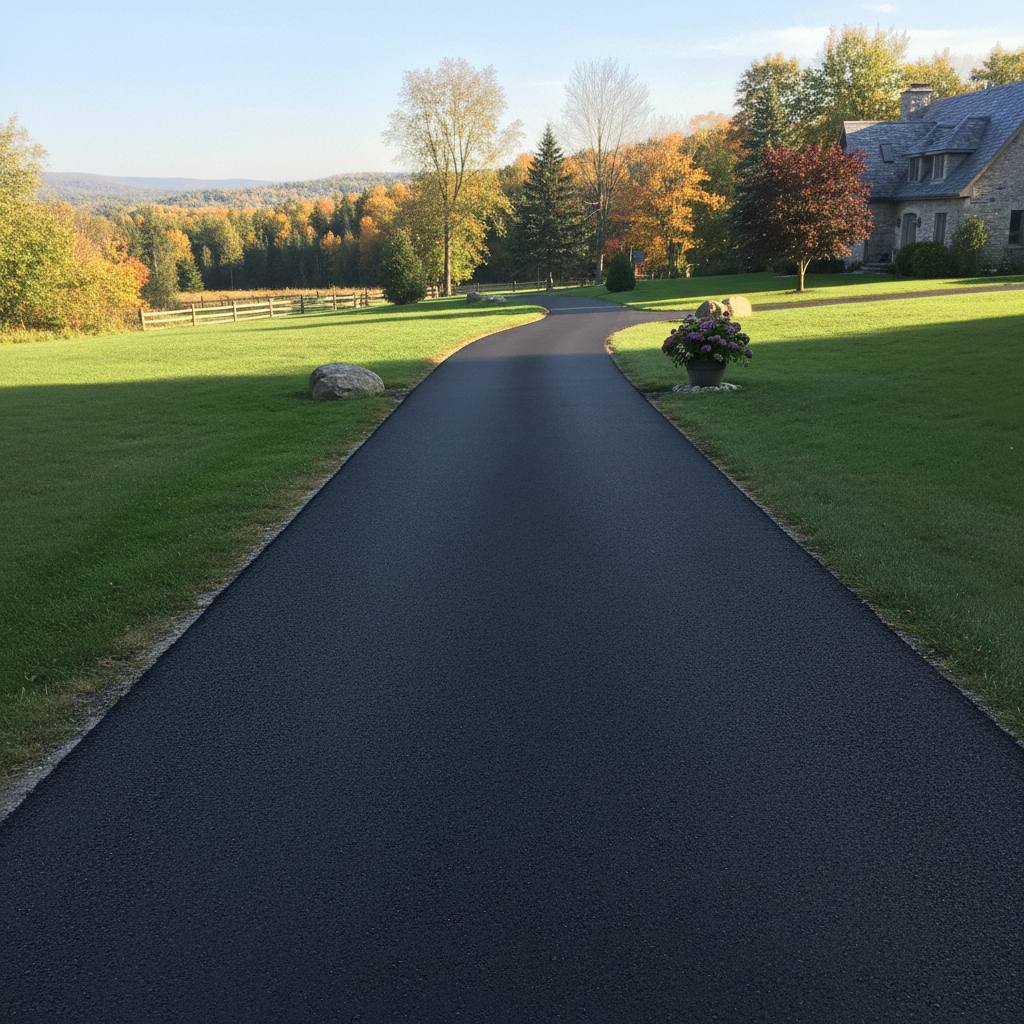
Driveway paving options and costs in Esquimalt
In Esquimalt, homeowners usually choose driveway paving based on curb appeal, winter durability, and how disruptive the project will be. With 70.3% of homes built before 1981 and only 23.2% of dwellings being single-detached, many properties have older driveways with uneven foundations, tighter approaches, and drainage quirks that need addressing before any asphalt or concrete goes down. That matters because on Vancouver Island and the Coast we get a mild coastal climate, yet we still see localized freezing and repeat freeze-thaw cycles that can heave weak spots and bring cracks to the surface if the base and water management aren’t designed correctly.
We also see strong demand along the Esquimalt waterfront and in neighbourhoods like Fairfield Road and around the Rockheights area where lots tend to have limited access and existing drive edges are close to property boundaries. On projects like these, the cost isn’t just “materials per square foot”—it’s time spent excavating, hauling, compacting, and rebuilding proper slopes to shed water away from the driveway and transitions to the street. When the paving season is ideal, crew scheduling tightens and that can affect turnaround times, especially for asphalt work where hot-mix asphalt placement typically needs warm conditions. For budgeting, it helps to compare options with a realistic price band per square foot.
Below is a planning table for common driveway builds in Esquimalt, assuming proper excavation, a well-compacted granular base, and standard residential access.
| Material |
Lifespan |
Maintenance |
Best For |
Price per sq ft |
| Asphalt (new installation, proper base) |
12–20 years |
Seal coat every 3–5 years (typical) |
Smoother ride, lower upfront cost, good value when base is engineered for freeze-thaw |
$10–$20 |
| Asphalt (overlay on existing gravel base) |
10–15 years |
Seal coat every 3–5 years; monitor edges and low spots |
Budget-focused installs where excavation is limited and drainage is already decent |
$12–$22 |
| Interlocking concrete pavers |
25+ years |
Minimal—replace individual stones if needed |
Curb appeal, easier spot repairs, and better control of surface shape |
$25–$45 |
| Poured concrete (broom finish) |
20–30 years (with air-entrainment) |
Crack monitoring; light sealing if desired |
Clean look, low maintenance, straightforward flatwork |
$18–$35 |
| Exposed aggregate concrete |
25+ years |
Sealer as recommended by contractor |
Slip-resistant finish and decorative curb appeal |
$22–$40 |
| Gravel / crushed stone (budget option) |
3–7 years (varies widely) |
Regrade and top-up annually; weed control |
Lowest cost while you plan a longer-term rebuild |
$6–$12 |
Prices are estimates only and vary by project scope, site access and material selection.
What affects the price of paving in Esquimalt
In Esquimalt, two quotes for the same “driveway size” can still swing by 30–50% on Vancouver Island and the Coast—and that spread isn’t unusual across British Columbia. The reason is that the true cost drivers are usually underground and operational: how much excavation is needed, whether drainage must be corrected, how difficult access is for saws, skid steers, and trucks, and what base thickness is required to control freeze-thaw movement.
Frost and freeze-thaw conditions are decisive cost factors in coastal BC. While the frost line is relatively shallow compared with colder provinces, localized freezing combined with repeated freeze-thaw cycles still creates heaving and cracking in weak subgrades. If the base is undersized, you may see edge lift, pumping, or surface cracking—especially near transitions to curbs or where water collects. In practice, we typically budget for a compacted road base thickness in the range of about 4–6 inches for well-draining coastal sites, but we increase base depth and granular stabilization when soils are soft or drainage is compromised.
Concrete costs can also rise when we need proper forming, edge control, and air-entrained concrete for winter durability. For example, older driveways common in Esquimalt (70.3% built before 1981) often require removal of deteriorated material and re-establishing slope; that tear-out can push the project from a “straight overlay” mindset into full reconstruction. On the asphalt side, a simple asphalt build may land near $10–$20 per sq ft when access and base are straightforward, but if we must correct drainage and add granular thickness, it can drift toward the upper end—similar to why many sealing and repair allowances run as a separate line item within the $1–$4 per sq ft style budget range for maintenance planning.
| Price Factor |
Why It Matters |
Cost Impact |
| Driveway area in sq ft |
Most material and production time scales directly with square footage |
Major (primary driver) |
| Base depth required |
Freeze-thaw control depends on enough compacted granular thickness and stability |
High—can change scope and trucking/haul counts |
| Grading and drainage work |
Slope corrections and drainage tie-ins prevent standing water and pumping |
High—excavation, labour, and sometimes additional base materials |
| Tear-out of existing surface |
Breaking and hauling old asphalt or concrete adds labour, disposal, and time |
Medium to very high on older/failed driveways |
| Edge restraints and curbing |
Edges keep pavers and asphalt from spreading and reduce water infiltration |
Medium—materials + forming/detail work |
| Sealing requirement |
Asphalt benefits from sealing after installation to reduce oxidation and moisture damage |
Low to medium—often a separate later maintenance cost |
| Site access |
Narrow lots slow equipment movement and can force hand work and multiple trips |
Medium—labour time and staging affect productivity |
| Asphalt mix specifications |
Freeze-thaw-rated mixes cost more and need proper placement timing |
Medium—premium mix and tighter quality control |
Permits & regulations in British Columbia
In British Columbia, paving a private driveway within your own property usually does not require a building permit. The permit question changes when work affects the municipal right-of-way or storm infrastructure. In practical terms, driveway paving work that typically does require municipal approval includes new or modified curb cuts, changes to boulevard areas, alterations that tie into municipal drainage or storm servicing, and any work that changes how water is directed at the street interface. Some neighbourhoods also enforce lot-grading rules that restrict how close hard surfaces can sit to property lines or how grading can be altered.
Before excavation, always arrange utility locates through BC 1 Call (and confirm any site-specific requirements). Utility marks protect you and the contractor, and they can prevent costly delays if services are near the driveway area.
To verify a contractor’s readiness in BC, follow these steps in writing: (1) Licence: ask for their business details and confirm they’re in good standing using the appropriate provincial registry information available online for the trade/services they claim to perform; (2) Liability insurance: request a current certificate of insurance naming you (or confirming additional insured wording if required by your strata/municipality) and check the effective dates and coverage amounts; (3) Coverage for workers: confirm they carry WSBC/WCB coverage for employees and that their clearance is current—request a clearance letter or verification document.
Do this early—before you sign—so your schedule in Esquimalt isn’t derailed by insurance gaps or missing locates.
Asphalt vs pavers vs concrete for Esquimalt driveways
For Esquimalt driveways, asphalt, interlocking pavers, and concrete each solve a different homeowner priority. Asphalt is the lowest upfront option and typically lands around $10–$20 per sq ft when the base and access are straightforward. Its trade-off is that asphalt needs sealing every 3–5 years to protect against oxidation and moisture intrusion—important on Vancouver Island where damp weather and coastal humidity accelerate surface wear if not sealed. Pavers cost more upfront (often $25–$45 per sq ft) but offer the best repair strategy for freeze-thaw movement: if a section shifts, the contractor can lift and replace individual stones without tearing up the entire driveway. Poured concrete sits in the middle cost-wise, often near $18–$35 per sq ft, but it must be properly air-entrained and detailed to resist cracking from seasonal freeze-thaw and winter de-icing practices.
Base preparation is the deciding factor for all three materials. On Vancouver Island, we usually don’t need the very deep granular bases used in much colder inland regions, but we still require a properly compacted road base and disciplined drainage design to prevent water pooling. That’s especially relevant around older properties (70.3% built before 1981) where driveway slopes and subsurface drainage were often less engineered.
Here’s a realistic decision example: if a 400 sq ft driveway is quoted at the lower asphalt range, you may be comparing roughly a $4,000–$8,000 asphalt cost versus pavers that can jump to $10,000–$18,000. That extra spend is often justified where curb appeal matters, where utility trenches are possible, or where you want future repair flexibility—particularly on Esquimalt lots with complicated edges and transitions.
| Material |
Frost Resistance |
Curb Appeal |
Repair Method |
Lifespan |
Price Band |
| Asphalt (sealed regularly) |
Good when base/drainage are engineered for freeze-thaw |
Moderate (clean, uniform finish) |
Mill and patch localized failures; reseal as needed |
12–20 years |
$10–$20 |
| Interlocking concrete pavers |
Very good with proper bedding and compaction |
High (wide style/colour choices) |
Lift/replace affected units and reset base as required |
25+ years |
$25–$45 |
| Poured concrete (air-entrained) |
Good with correct mix, reinforcement detail, and curing |
Medium (clean, modern or broom-finished) |
Patch/overlay; larger issues may require section removal |
20–30 years |
$18–$35 |
| Exposed aggregate concrete |
Good when mix is designed for freeze-thaw durability |
High (textured decorative look) |
Localized patching is possible but colour matching matters |
25+ years |
$22–$40 |
| Permeable pavers (drainage grid) |
Very good where water infiltration can be managed safely |
High (designed look + drainage benefit) |
Replace affected pavers; inspect/maintain underlying drainage media |
20–30 years (system-dependent) |
$30–$55 |
| Chip seal / tar-and-chip |
Moderate; sensitive to base quality and maintenance routine |
Lower (functional finish) |
Spot re-chip where wear occurs |
5–12 years |
$7–$16 |
How to choose a paving contractor in Esquimalt
Choosing the right paving contractor in Esquimalt is mostly about verifying three things: competence, coverage, and clarity of scope. First, confirm British Columbia insurance and coverage. Ask for their certificate of liability insurance (with dates and coverage limits) and ensure it’s current. Next, request evidence that they carry WSBC/WCB coverage for their workers—many contractors can provide a clearance letter or verification document on request. If the contractor is subcontracting, make sure your paperwork covers the full workforce, not just the company name on the invoice.
Second, get 2–3 itemised written quotes. You want a breakdown that separates excavation, base/granular, disposal, forms/edges, asphalt/concrete/pavers, compacting, and finishing work. Avoid “lump sum only” quotes; if a contractor can’t explain what you’re paying for, you’ll pay later through change orders. Also ask whether permits (if any) and utility locates are included, and whether disposal of removed asphalt or concrete is in the price.
Third, review warranty terms. A workmanship warranty should be written and specify what’s covered and for how long. Clarify whether manufacturer material warranties apply to you directly and whether they are transferable if you sell the home. For payment, a good rule is to never pay more than about 10–15% upfront; hold back the remainder until the job is complete and cleaned up. Finally, insist on a written start date and completion estimate, since coastal shoulder-season weather can affect scheduling.
- Confirm liability insurance is current and provided before work starts.
- Verify WSBC/WCB coverage and request documentation/clearance proof.
- Get 2–3 quotes with itemised line-by-line scope (not lump sums).
- Ask what thickness of base is included and how drainage/slope is handled.
- Confirm utility locates are included and who orders them.
- Check whether tear-out and disposal are included (or a separate charge).
- Make sure edge restraints/curbs are part of the scope where needed.
- For asphalt, confirm if sealing is included after the waiting period.
- Review workmanship warranty length and what “failure” means.
- Clarify product/manufacturer warranty and whether it applies to you.
- Schedule payment: limit upfront deposit; retain holdback until final acceptance.
- Get a written timeline and what weather conditions could pause work.
Red flags I see too often in Esquimalt: a quote that doesn’t mention base thickness or drainage; refusing to provide proof of WSBC/WCB coverage or liability insurance; offering an unusually low price with “allowances” that aren’t defined; starting work without written scope, dates, and warranty terms; and pressuring you for large deposits before any excavation or base work begins.
Frequently asked questions — paving in Esquimalt
How do I prepare for a paving project?
To prepare for a driveway paving job in Esquimalt, start by clearing the work area of vehicles, patio furniture, hoses, and anything that could interfere with equipment movement and waste haul-out. If your driveway has older utilities, request that your contractor confirms utility locates through BC 1 Call before excavation so you don’t run into hidden services. It’s also smart to mark any landscaping items you need protected and decide how you’ll handle runoff paths during construction (temporary measures can reduce mud tracking on wet coastal days). Finally, gather your existing drawings or notes from any prior drainage changes—especially if you’ve had water pooling near the apron.
How do I compare paving quotes fairly?
Compare quotes in a structured way: make sure every contractor includes the same scope—excavation depth, compacted base thickness, grading/drainage corrections, edge restraints, and disposal. For asphalt, confirm whether the quote assumes a proper base and whether sealing is planned after the correct curing period. A fair comparison also includes the material specification (freeze-thaw appropriate mix), not just the final surface. If one company is quoting within a typical asphalt range (for example, roughly $10–$20 per sq ft) but another is much higher, check whether the cheaper option is skipping base, drainage, or restraints. If the paperwork is vague, ask for clarifications before signing.
Can asphalt be laid in cold weather in Esquimalt?
Yes, but placement conditions matter. Asphalt needs to be placed when temperatures and weather allow proper compaction and adhesion; in practice, many contractors target air temperatures above about 10°C for reliable hot-mix placement, and they manage wind/rain exposure. In Esquimalt’s mild coastal climate, cold snaps can still happen, and damp conditions can shorten the window for production, even if we don’t have deep inland frost. The bigger risk isn’t only “cold weather,” it’s poor compaction due to temperature or moisture and not meeting mix requirements for freeze-thaw durability. A reputable contractor should explain their weather cutoff plan and how they’ll protect the surface until it can be compacted and traffic is controlled.
What is a driveway apron and do I need one in Esquimalt?
A driveway apron is the transition section at the street-side interface—where your driveway meets the boulevard/road area. Whether you “need” one depends on how your current edge is built, whether there’s a curb cut, and how water drains at the street connection. In Esquimalt, aprons are commonly addressed when the driveway edge is failing, the slope is causing pooling, or when the municipal drainage interface needs a clean, stable transition. If the work involves changes in the municipal right-of-way or storm drainage connection, approvals may be required. Ask your contractor to describe exactly what they’re building at the street edge and whether they’re matching existing grades so your new surface doesn’t create a trip edge or direct water into the property.
How do I maintain my driveway through Esquimalt winters?
Winter maintenance in Esquimalt is mainly about reducing water intrusion and preventing surface damage during freeze-thaw cycles. Keep an eye on low spots or edges after heavy rains—if water sits, it can worsen movement once temperatures swing below freezing. For asphalt, plan sealing after the appropriate waiting period (sealing is commonly done within a few months of installation, then again about every 3–5 years). When using de-icing products, avoid aggressive salts that can accelerate wear at the surface edges; use sand where possible for traction. For concrete and pavers, remove debris and keep joints clean so water doesn’t infiltrate and freeze. If you see small cracks or lifted edges, repair early to prevent water from reaching the base.
Is it worth sealing a new driveway right away in Esquimalt?
Usually, yes—but timing has to be right. Asphalt needs time to cure and for moisture to dissipate before a seal coat is applied; sealing too early can trap moisture and reduce performance. When timed correctly, sealing helps protect against oxidation and water penetration, which matters on Vancouver Island where coastal dampness and freeze-thaw cycles can degrade unsealed asphalt faster. For budgeting, sealing/repair planning often lands in a maintenance band such as $1–$4 depending on condition and whether you’re doing spot repairs versus a broader treatment plan. Your contractor should tell you the earliest safe sealing window and how they’ll handle traffic control so the new surface isn’t damaged before the sealer cures.