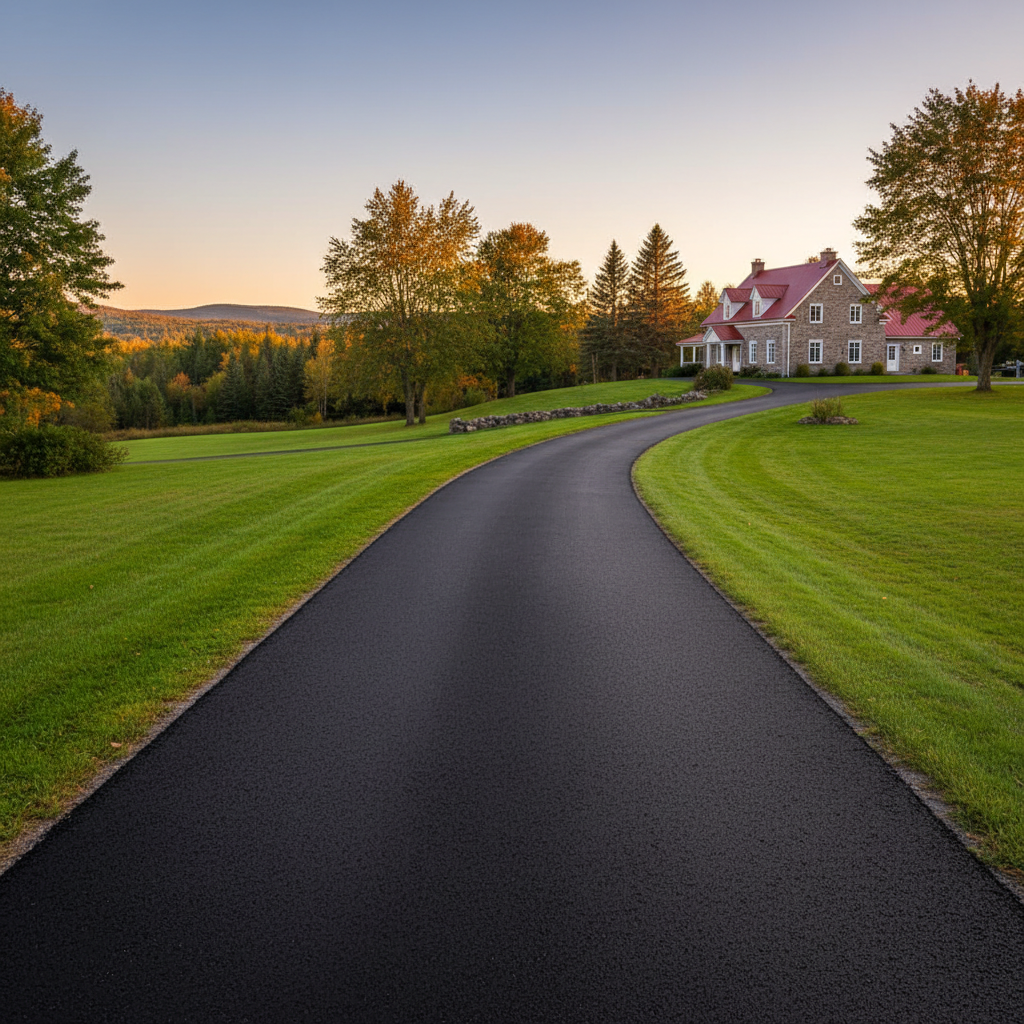
Driveway paving options and costs in Cloverdale
Cloverdale homeowners often start by comparing driveway materials, and with a population of 73,355 in the community area (Statistics Canada, 2021 Census), there’s plenty of local demand for durable surfaces that can handle the Lower Mainland–Southwest’s heavy rain seasons. Most private driveways here attach to single-family homes, so contractors see steady work from neighbourhoods like Cloverdale Village and along the major residential corridors where access, curb tie-ins, and drainage details matter day to day.
In the Lower Mainland–Southwest, pricing is shaped less by deep freeze and more by intense rainfall, drainage performance, and the freeze–thaw behaviour that occurs near the assumed frost depth for sensitive infrastructure. Even though frost penetration is relatively shallow compared with Interior or Northern BC, the region still follows designs that assume a frost line on the order of 18 inches in exposed applications—meaning proper excavation and compacted granular base thickness are where good outcomes are won or lost. Asphalt costs also reflect that heavy winter rains and shoulder-season storms compress workable scheduling windows, so reputable crews plan jobs carefully around drainage and compaction needs.
Below are realistic budget and mid-range expectations for Cloverdale, assuming proper sub-base prep and typical residential access. Use this table to compare materials side-by-side, then we can tighten pricing once we confirm your driveway size, soil condition, and whether any tear-out is required.
| Material |
Lifespan |
Maintenance |
Best For |
Price per sq ft |
Price Range |
| Asphalt (new installation, proper base) |
15–25 years |
Seal every 3–5 years; patch as needed |
Best balance of cost, performance, and availability |
$12–$18 |
$12,000–$20,000 |
| Asphalt (overlay on existing gravel base) |
10–18 years |
Seal every 3–5 years; monitor settlement |
When existing base is stable and drainage is good |
$14–$20 |
$14,000–$22,000 |
| Interlocking concrete pavers |
25–35 years |
Joint sand top-ups; replace individual stones if needed |
High curb appeal and repairability |
$20–$35 |
$20,000–$40,000 |
| Poured concrete (broom finish) |
25–35 years |
Reseal if desired; joint/patch monitoring |
Smooth, clean look and long service life |
$18–$30 |
$18,000–$35,000 |
| Exposed aggregate concrete |
25–35 years |
Sealer as recommended by the installer/manufacturer |
Non-slip texture and premium finish |
$22–$35 |
$22,000–$38,000 |
| Gravel / crushed stone (budget option) |
3–8 years (varies widely) |
Top up 1–2 times per year; grading |
Short-term budget or temporary access |
$6–$12 |
$6,000–$15,000 |
Prices are estimates only and vary by project scope, site access and material selection.
What affects the price of paving in Cloverdale
In Cloverdale and the broader Lower Mainland–Southwest, you can see quote differences of 30–50% for what sounds like the “same job” because paving pricing is driven by what’s happening under the surface. Contractors aren’t just selling asphalt or concrete—they’re pricing excavation, haul-off, granular base installation, compaction testing, and proper drainage. On top of that, labour availability tightens in the spring and early summer since asphalt production and placement are weather-sensitive, and crews in the Lower Mainland are often booked solid during the most predictable windows.
Frost line depth and freeze–thaw cycles are decisive cost factors, even in coastal BC. In exposed areas, deeper frost assumptions translate into thicker compacted granular base and tighter drainage control. In colder provinces like Ontario/Alberta, base thickness is commonly higher (often 6–12 inches), while coastal BC practice is typically lighter (often closer to 4–6 inches) because the freeze is less severe—yet the “assumed frost depth” still drives where sensitive edges and weak soils need reinforcement. Where clay-heavy soils are present, the wrong base depth or poor grading can lead to heaving and cracking, so contractors spend more time (and materials) getting the base right.
Concrete cost can move with finish choice and concrete type: an air-entrained mix and proper curing habits help reduce freeze–thaw damage. Asphalt overlays can be cheaper upfront, but if the existing base is saturated or settled, you’ll pay later—often closer to new-install pricing. Asphalt in the Lower Mainland commonly lands in bands such as $12–$20 per sq ft for well-prepared installs, while pavers often price in the $20–$40 band depending on thickness, base depth, and restraints.
| Price Factor |
Why It Matters |
Cost Impact |
| Driveway area in sq ft |
Most materials and machine time scale directly with square footage |
Large (often the biggest single driver) |
| Base depth required |
Frost assumptions and soil conditions determine compacted granular thickness |
Medium to large (more excavation = more material + labour) |
| Grading and drainage work |
Correct slopes and drainage prevent water pooling, soft base, and winter heave |
Medium (can be the difference between stable vs failing base) |
| Tear-out of existing surface |
Breaking, hauling, and disposing add labour and dump fees |
Medium to large |
| Edge restraints and curbing |
Restraints hold grades and prevent paver spread or asphalt edge breakdown |
Small to medium (critical for appearance and long-term performance) |
| Sealing requirement |
Asphalt typically needs sealing after curing (often within 6–12 months), then every 3–5 years |
Small to medium (but important for lifespan) |
| Site access |
Narrow driveways and tight turns slow equipment and may require smaller crews |
Small to large (access can add hours) |
| Asphalt mix specifications |
Freeze–thaw-rated mix design can cost more but improves resilience in coastal cycling |
Small (often worth it for long-term cracking resistance) |
Permits & regulations in British Columbia
In British Columbia, paving a private driveway within your own property typically does not require a building permit. In most Cloverdale residential cases, the work is considered a private improvement as long as you’re not altering municipal infrastructure. The key exception is when the project affects anything in the municipal right-of-way—this is where approval is usually required. That includes new or changed curb cuts, any work in the boulevard, and storm drainage modifications connected to municipal systems.
Another area homeowners sometimes overlook is lot grading. Some municipalities have bylaws that regulate how close hard surfaces and grading changes can be to property lines or how runoff must be managed. Even if a permit isn’t required, you may still need to comply with those grading rules.
Step-by-step, here’s how to verify your contractor in BC before excavation begins:
- Ask for their licence/registration details and confirm they are eligible to do the work (use the relevant provincial/industry registry if applicable).
- Request certificate of liability insurance showing they carry coverage for the job.
- Confirm workplace coverage (WSIB/WCB equivalent coverage where required) and ask for documentation.
- Verify they have a clear written scope that states whether disposal, drainage corrections, and any required approvals are included.
- Keep copies of everything with your contract so there’s a record if questions come up later.
Asphalt vs pavers vs concrete for Cloverdale driveways
For Cloverdale driveways, the decision usually comes down to upfront cost, appearance, and how you want the surface to behave through Lower Mainland winters. Asphalt typically has the lowest upfront cost and is fast to install, but it relies on good base prep and needs regular sealing every 3–5 years to slow water penetration. Interlocking concrete pavers cost more initially, yet they’re the most flexible if a spot settles—individual pavers can be lifted, base corrected, and reset without tearing up the whole driveway.
Poured concrete sits in the middle price range and can last a long time, but freeze–thaw movement and drainage are still the deciding factors. In British Columbia, air-entrained concrete and proper curing help manage moisture-related damage. Exposed aggregate adds slip resistance and curb appeal, while permeable paver systems can be beneficial when drainage needs are site-specific, though they still require meticulous base design so water is managed rather than trapped. For winter maintenance routines—typical plowing, sand use, and de-icing—good drainage and the right surface finish matter more than the material alone.
In practice, Lower Mainland–Southwest designs often assume a frost depth of around 18 inches for sensitive areas, so you still need a properly compacted granular base and well-graded drainage, even if the coastal climate is milder. As a realistic example: if asphalt is priced near the $12–$20 per sq ft band, pavers may come in around the $20–$40 per sq ft band. That extra cost is usually justified when you want curb appeal or you expect future adjustments (like servicing or driveway reconfiguration), because repair is local rather than wholesale.
| Material |
Frost Resistance |
Curb Appeal |
Repair Method |
Lifespan |
Price Band |
| Asphalt (sealed regularly) |
Good with proper base and sealing |
Medium |
Patch-and-tack / section replacement |
15–25 years |
$12–$20 |
| Interlocking concrete pavers |
Very good when base is well compacted |
High |
Remove and relay individual pavers |
25–35 years |
$20–$40 |
| Poured concrete (air-entrained) |
Good with air entrainment and curing |
Medium |
Crack repair/patching; slab replacement if severe |
25–35 years |
$18–$35 |
| Exposed aggregate concrete |
Good with proper mix and drainage |
Very high |
Limited repair (often patching or localized replacement) |
25–35 years |
$22–$38 |
| Permeable pavers (drainage grid) |
Good if base design routes water correctly |
High |
Replace affected pavers; clear lines as needed |
20–30 years |
$25–$45 |
| Chip seal / tar-and-chip |
Fair to good; more maintenance timing |
Low to medium |
Spot overlay / recoat |
8–15 years |
$10–$16 |
How to choose a paving contractor in Cloverdale
Choosing the right paving contractor in Cloverdale starts with verification. First, ask for proof of the contractor’s British Columbia licence/registration (and confirm it matches the type of work they’ll perform). Next, request a certificate of liability insurance naming you as certificate holder if possible, and confirm coverage limits are appropriate for equipment-heavy work. Then verify workplace coverage (WSIB/WCB equivalent as required for contractors) and ask for the clearance letter or current documentation—don’t accept verbal assurances.
When you request quotes, get 2–3 itemised written estimates that break down excavation, base materials, compaction, asphalt/concrete or paver supply, and finishing. Avoid a single lump sum without details. Read the scope: is tear-out included? Is haul-off included (and where are they disposing)? Are edge restraints or drainage corrections part of the plan? If the job requires municipal approvals (for example, any work tied to right-of-way changes), confirm who is responsible.
Warranty matters too. Make sure you understand the workmanship warranty length, whether it’s separate from the product/manufacturer warranty, and if it’s transferable to future owners. For payment, never pay more than about 10–15% upfront; reputable crews typically schedule payments tied to milestones and keep a holdback until the job is complete and cleaned up. Finally, ask for an actual start date and completion timeframe in writing so shoulder-season rain doesn’t become an excuse for ongoing delays.
- Confirm BC licence/registration and keep a copy with your contract.
- Collect a current certificate of liability insurance.
- Verify workplace coverage documentation (WSIB/WCB equivalent as required).
- Require itemised pricing (labour and materials separately where possible).
- Ask for base build-up details (depth and compaction plan).
- Confirm drainage/grading is included (slope direction, downspout ties if applicable).
- Check whether utility locates are included or the homeowner is expected to arrange them.
- Clarify tear-out and disposal: concrete/asphalt removal, dump fees, and backfill.
- For pavers, confirm restraints/edges and joint sand specification.
- For asphalt, confirm curing time and when sealing is recommended (often after 6–12 months).
- Get warranty terms in writing (workmanship vs product, and transferability).
- Set a payment schedule and keep a holdback until the driveway passes final inspection.
Red flags in Cloverdale include: skipping base excavation depth details, refusing to discuss drainage (just “paving over it”), quoting only a lump sum without showing disposal and tear-out assumptions, demanding a large upfront payment, and providing a vague warranty with no written terms.
Frequently asked questions — paving in Cloverdale
When is the best time of year to pave in Cloverdale?
In Cloverdale, the best time is usually late spring through early fall, when we have more consistent dry weather for excavation, drainage setup, and compaction. Even though Lower Mainland–Southwest has milder winters than Interior BC, heavy rain and cool shoulder-season temperatures can delay prep and affect asphalt placement. Asphalt typically needs workable air temperatures and proper curing; hot-mix asphalt is sensitive when conditions are too cold or damp. Concrete also benefits from stable curing weather to reduce surface scaling and improve strength gain. Many contractors aim to finish base and forms before the wet stretches, then schedule surfacing when conditions support quality compaction and bonding.
How deep should the base be for Cloverdale's frost?
Base depth isn’t one-size-fits-all in British Columbia. In Cloverdale, frost behaviour is less severe than in Interior regions, but designs still account for an assumed frost depth on the order of 18 inches in exposed applications for sensitive infrastructure, and freeze–thaw cycles still cause movement when drainage is wrong. For typical residential asphalt, a common approach is about 6 inches of compacted granular base plus roughly 2.5–3 inches of asphalt, with deeper excavation if soils are weak, saturated, or clay-heavy. If you’re on a site with poor drainage, a contractor may increase excavation and add geotextile and additional granular thickness. The key is compaction and drainage—not just guessing a single number.
How often should I seal my asphalt driveway?
After a new asphalt driveway in Cloverdale, sealing is usually recommended once the surface has cured—often within the first 6–12 months—so moisture doesn’t work its way into the pavement. After that, plan on sealing about every 3–5 years depending on sun exposure, traffic, and how much winter sanding/plowing scuffs the surface. Sealing helps maintain the pavement’s resistance to water penetration, which is important here because Lower Mainland rain and shoulder-season storms accelerate wear if water gets into the asphalt structure. If your asphalt is priced around the $12–$20 per sq ft band for a proper install, sealing is the ongoing step that protects that investment.
Why does my driveway crack and heave in winter?
Cracking and heaving are commonly caused by water and frost interaction. In Cloverdale, winter issues often start in the shoulder seasons: rainfall saturates a base that wasn’t graded correctly or didn’t get enough compacted granular thickness. When temperatures drop near the shallow coastal freeze zones, trapped moisture expands, leading to heave, and the pavement then cracks as it flexes. Another frequent contributor is settlement from soft clay or inadequate drainage around edges and transitions. If you’ve got downspout runoff or poor slope toward the street, the problem usually shows up quickly after a wet winter. The fix is usually base correction and drainage improvement—not just surface patching.
Do I need a permit to pave my driveway in British Columbia?
In most Cloverdale residential situations, paving within your own property typically does not require a building permit in British Columbia. However, permits or municipal approvals can be required when the work affects municipal right-of-way areas—such as a new or changed curb cut, alterations to boulevard areas, or storm drainage modifications connected to municipal infrastructure. Some municipalities also enforce lot grading rules that restrict how runoff is handled or how hard surfaces are placed and graded near property lines. Always confirm with the municipality and ensure utility locates are completed before excavation. A reputable contractor should tell you up front whether your scope includes right-of-way impacts before they start.
How long before I can drive on new asphalt?
After asphalt paving in Cloverdale, most crews keep vehicles off the surface long enough for it to cool and for the asphalt to gain stability. In many residential installs, light foot traffic is possible sooner, while vehicles can typically drive after a curing/cooling period and once the surface is no longer soft. Exact timing depends on weather, temperature at placement, and whether tack coat was used (and how much). Your contractor should provide a specific “off limits” period in writing. If you opted for a mid-range asphalt install in the $12–$20 band, you still want to respect curing time—moving too soon can create ruts that later turn into cracks.