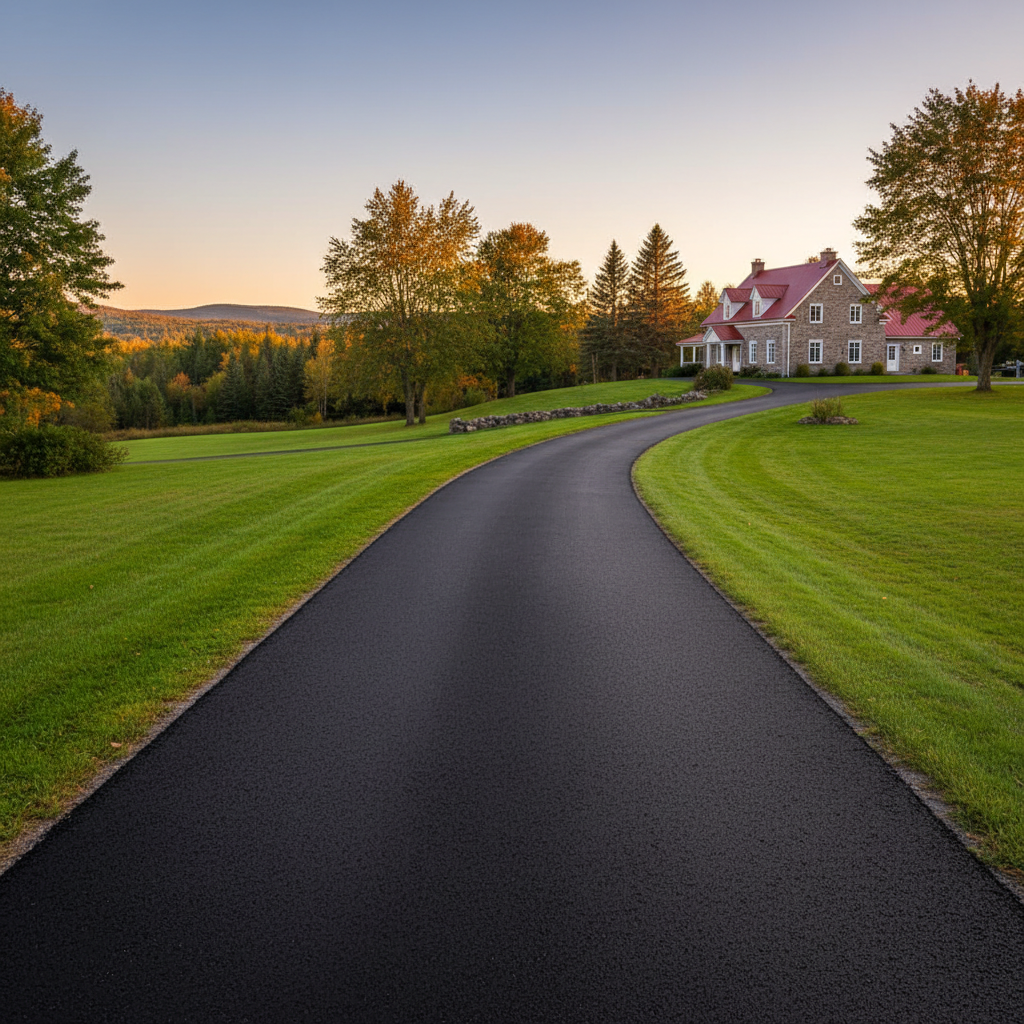
Driveway paving options and costs in Cove Cliff
Cove Cliff homeowners typically have a straightforward decision: keep an existing surface in good shape or re-do the driveway with a long-lasting system built for Lower Mainland–Southwest conditions. Cove Cliff’s population was 1,778 people in 2021, so the local pool of crews is smaller than in Vancouver, and scheduling can be tighter when several neighbouring projects hit the same drainage timelines (Statistics Canada, 2021 Census). In practice, most private driveways here service detached homes, which means driveway scope is usually consistent—excavation, base, and a durable wearing surface—rather than major commercial road-style reconstruction.
In the Lower Mainland–Southwest, pricing is driven more by intense rainfall and drainage than deep freeze. Frost penetration is relatively shallow compared with Interior or Northern BC, but regional practice still assumes a frost line on the order of 18 inches for sensitive infrastructure, so contractors price for proper granular base thickness and compaction. Clay-heavy pockets in parts of the Fraser Valley can also increase the need for thicker base and more deliberate subgrade correction. That’s why “same size driveway” quotes can differ: drainage upgrades, base rebuild depth, and disposal requirements can shift costs as much as many thousands of dollars.
If you’re in demand for driveway work, it tends to cluster around the more residential pockets near Cove Cliff’s established waterfront and main access routes, where access constraints and parking during construction can influence labour time and equipment choice. Use the table below to compare common driveway material options and realistic budget ranges, then align your quote to the base and drainage scope—not just the top layer.
| Material |
Lifespan |
Maintenance |
Best For |
Price per sq ft |
| Asphalt (new installation, proper base) |
15–25 years |
Seal every 3–5 years; keep drains clear |
Best value, smooth ride, long-term performance if base is done right |
$12–$20 |
| Asphalt (overlay on existing gravel base) |
10–18 years |
Seal every 3–5 years; monitor settlement |
When the existing base is solid and you’re avoiding full excavation |
$10–$16 |
| Interlocking concrete pavers |
25–35+ years |
Weed control; re-leveling of a few stones as needed |
Curb appeal and easy, localized repairs without tearing everything out |
$20–$40 |
| Poured concrete (broom finish) |
25–30 years |
Minimal; occasional patching; joint inspection |
Clean look and good durability for steady, light vehicle use |
$18–$35 |
| Exposed aggregate concrete |
25–30 years |
Occasional cleaning; seal optional depending on finish |
Slip-resistant texture and premium appearance |
$22–$40 |
| Gravel / crushed stone (budget option) |
5–10 years |
Top up annually; re-grade; manage washouts |
Short-term solution or low-budget staging |
$6–$12 |
Prices are estimates only and vary by project scope, site access and material selection.
What affects the price of paving in Cove Cliff
In the Lower Mainland–Southwest, the same driveway “on paper” can land 30–50% apart depending on the base and drainage work included, not just the surface material. The same effect shows up across British Columbia because material transport, crew availability, and disposal costs change with distance and season. In Cove Cliff, your quote can move a lot if the contractor finds saturated subgrade or requires deeper excavation to stabilize clay soils, especially after a wet shoulder season.
Frost line depth and freeze–thaw cycles are decisive cost factors even on the coast. Coastal BC has a milder winter profile than the Interior, but regional practice still expects a frost line on the order of 18 inches for sensitive infrastructure. When base thickness needs to be increased to resist heaving and cracking, you’re paying for additional granular material, more excavation, and extra compaction passes. In colder regions of BC, that thickness often jumps to 6–12 inches of compacted granular base; in coastal applications, it may be 4–6 inches depending on soil conditions, but drainage quality becomes the “insurance policy” that keeps water from cycling in the subgrade.
Scheduling also changes pricing. Hot-mix asphalt generally needs air temperatures above about 10°C to place and compact properly, so spring and summer demand can tighten scheduling and raise crew rates. Concrete may seem more weather-flexible, but air-entrained mixes and correct finishing still matter to control freeze–thaw deterioration. For example, a straightforward asphalt replacement might sit in the $12–$20 per sq ft band, while a base-and-drainage-corrected driveway that needs more excavation and restraints can quickly move toward the upper end. On the paver side, interlocking systems in the $20–$40 per sq ft band become justified when curb lines, drainage fall, and long-term repairability reduce the chance of repeated full-surface replacements.
In Cove Cliff, a driveway on older fill or clay-heavy soils commonly costs more because contractors must remove soft layers and rebuild the granular structure; meanwhile, a driveway replacing a well-graded existing asphalt base can reduce excavation and keep costs lower.
| Price Factor |
Why It Matters |
Cost Impact |
| Driveway area in sq ft |
Most line-items scale directly with surface area |
Primary driver; can change total cost by thousands |
| Base depth required |
Granular thickness protects against heaving and cracking |
Higher depth increases excavation, gravel, and compaction time |
| Grading and drainage work |
Slope and water routing prevent saturation and washouts |
Extra labour for swales, subdrains, or drainage correction |
| Tear-out of existing surface |
Break-up, loading, and hauling add major cost |
Concrete and heavily reinforced slabs cost more to remove |
| Edge restraints and curbing |
Pavers need containment to prevent lateral movement |
Costs increase with more edging, caps, and demolition |
| Sealing requirement |
Asphalt sealant protects against water penetration and ageing |
Added cost year 1–2 and then again every 3–5 years |
| Site access |
Narrow lots slow equipment movement and loading |
May add hourly labour and increase equipment time |
| Asphalt mix specifications |
Freeze–thaw-rated mixes perform better in wet cycles |
Better mixes can cost more but reduce early failure risk |
Permits & regulations in British Columbia
In British Columbia, paving a private driveway within your own property usually does not require a building permit. Most homeowners can proceed with typical driveway surfacing and standard excavation as long as they’re not changing municipal infrastructure. Where permits and approvals often come into play is when your work touches the municipal right-of-way—such as installing a new curb cut, modifying boulevard areas, changing storm drainage patterns, or altering municipal ditching. If you’re extending or reconfiguring how runoff flows at the street line, treat that as “approval required” until the municipality confirms otherwise.
A practical way to verify your obligations in Cove Cliff is to do a quick two-step check before the contractor mobilizes. First, call the local municipality (or use its online service requests) to ask whether your proposed scope includes any right-of-way or lot-grading impacts. Second, confirm any lot-grading bylaw rules that can restrict how close the hard surface can be to property lines or how drainage must be managed.
For utilities, every homeowner should ensure locates are done before excavation. In BC, use BC 1 Call before digging, and ask your contractor to document the locate ticket number.
Finally, verify your paving contractor properly: check their British Columbia licence/registration status through the appropriate online registry, review their liability insurance certificate for adequate coverage, and ask for WSBC/WCB clearance where applicable. A legitimate contractor should also give you a clearance letter or proof package that matches the work they’re performing.
Asphalt vs pavers vs concrete for Cove Cliff driveways
For Cove Cliff driveways, choosing asphalt, interlocking pavers, or concrete is really about matching the material to Lower Mainland–Southwest drainage behaviour, winter maintenance routines, and how you want repairs to be handled. Asphalt is usually the lowest upfront option and delivers a smooth, dark finish, but it depends on correct base preparation and regular sealing—typically every 3–5 years. Interlocking concrete pavers cost more at the start, yet they’re highly serviceable: if a small section settles or a drain line needs access, individual stones can be lifted, corrected, and reset without tearing out the entire driveway. Poured concrete sits in the middle on price, but it can crack from freeze–thaw movement and surface stresses if not air-entrained and properly designed, especially when joints and drainage aren’t right.
In a coastal-wet climate, water management beats “frost depth guessing.” Contractors typically build a compacted granular base sized for freeze–thaw conditions (often around 4–6 inches in many coastal cases, with deeper excavation when soils are weak or saturated) plus drainage that prevents water from sitting under the surface. With winter routines in Cove Cliff—plowing, sanding, and occasional de-icing—pavers generally handle edge impact and localized settlement better, while asphalt needs a protective seal and a stable base to prevent water intrusion. Concrete needs correct mix design and finishing to limit surface scaling and cracking.
Where the price difference is justified: say you have a 400 sq ft driveway. Asphalt might land near $12–$20 per sq ft, while pavers often fall in the $20–$40 band. If you expect possible future utility access, want premium curb appeal along Cove Cliff’s more visible streetscapes, or have a history of localized settlement, pavers can be worth the added cost because repairs can be targeted rather than fully reconstructed.
| Material |
Frost Resistance |
Curb Appeal |
Repair Method |
Lifespan |
Price Band |
| Asphalt (sealed regularly) |
Good with proper drainage and base; seal helps water resistance |
Medium (clean, dark finish) |
Patch and re-tack; full resurfacing later if needed |
15–25 years |
$12–$20 |
| Interlocking concrete pavers |
Very good; tolerates localized movement when base is built correctly |
High (varied colours and patterns) |
Remove and reset affected stones; re-level as required |
25–35+ years |
$20–$40 |
| Poured concrete (air-entrained) |
Good if air-entrained and joints/drainage are designed well |
Medium to high (broom finish vs decorative options) |
Patch small areas; larger sections may need resurfacing |
25–30 years |
$18–$35 |
| Exposed aggregate concrete |
Good with correct base and finishing; slip-resistant surface |
Very high (textured premium look) |
Small repairs are harder to match; section patching as needed |
25–30 years |
$22–$40 |
| Permeable pavers (drainage grid) |
Excellent water handling; reduces saturation under the drive |
High (modern drainage-friendly look) |
Remove affected units and reset; inspect drainage channels |
25+ years (system-dependent) |
$28–$55 |
| Chip seal / tar-and-chip |
Fair to good; performance depends on product and maintenance |
Low to medium (more utilitarian finish) |
Spot maintenance; more frequent refresh than asphalt |
8–15 years |
$10–$18 |
How to choose a paving contractor in Cove Cliff
Choosing the right paving contractor in Cove Cliff starts with proof. In British Columbia, confirm the contractor’s licensing/registration is active for the type of work they’re advertising. Next, ask for a certificate of liability insurance and verify it covers the jobsite and your property. For workers on the crew, request WSBC/WCB coverage documentation—ideally a clearance letter or proof package dated to the current period. Don’t accept verbal assurances; ask for documents before work begins.
Then get 2–3 itemised written quotes. You want a breakdown that separates excavation, base gravel, compaction, asphalt/paver/concrete supply, disposal, and edge restraints/curbing. A lump-sum quote is harder to compare fairly, especially when drainage scope changes. Ask what’s excluded: permit fees (if any), utility locates, soil hauling, saw-cutting and disposal of reinforced concrete, and whether traffic control is included for any street-adjacent work.
Warranty matters. Require a workmanship warranty in writing (and confirm the length), plus product/manufacturer warranties for asphalt, sealer, or paver materials. Ask whether the warranty is transferable to future owners. On payment schedule, avoid large deposits: a typical approach is no more than 10–15% upfront, then hold back the remainder until substantial completion and cleanup.
Finally, insist on a written start date and completion estimate, plus what weather triggers a reschedule. In the Lower Mainland–Southwest, rain can delay asphalt placement and compaction, so the timeline should acknowledge drainage and curing steps.
- Verify BC licensing/registration is current for the contractor’s scope.
- Request a certificate of liability insurance and confirm jobsite coverage limits.
- Confirm WSBC/WCB clearance/coverage documents before excavation starts.
- Get 2–3 quotes that are itemised (base, labour, disposal, restraints), not one number only.
- Ask for driveway measurements used to compute sq ft and confirm area math.
- Require a written scope for grading and drainage, including slope targets and runoff direction.
- Clarify tear-out limits: what thickness gets removed and where does new base begin?
- Confirm edge restraints/curbing for pavers to prevent lateral spread.
- Ask whether asphalt includes a freeze–thaw-rated mix and how compaction will be verified.
- Discuss seal timing: typically after 6–12 months for asphalt, depending on conditions.
- Define disposal/hauling: included or extra, and where the material is taken.
- Set payment milestones: small deposit, progress payments, and a holdback until final walk-through.
Red flags in Cove Cliff include: contractors who won’t show proof of insurance or WSBC/WCB coverage, quotes that skip base and drainage details but still promise “it’ll last,” pressure to pay a large deposit before any measurements or material selection, vague warranties with no term or exclusions, and crews who can’t explain how they’ll handle wet subgrade and compaction testing.
Frequently asked questions — paving in Cove Cliff
Do I need a permit to pave my driveway in British Columbia?
In British Columbia, most homeowners can pave a private driveway within their own property without a building permit. What changes things is whether your work affects municipal right-of-way or storm drainage—examples include creating a new curb cut, altering boulevard areas, or changing how water runs toward the street. If any of that is in your plan, you should confirm requirements with the municipality before construction starts. Also check local lot-grading rules that may limit how close a hard surface can be to property lines or require specific drainage routing. Regardless of permits, arrange utility locates before digging; in BC you can use BC 1 Call so underground services are marked. A good contractor should ask you about curb/ditch changes during the quote process.
How long before I can drive on new asphalt?
For asphalt driveways in Cove Cliff, you can often drive on the surface once it has cooled and set—many jobs are ready the same day, assuming weather stays dry and the asphalt has been properly compacted. That said, contractors usually recommend avoiding sharp turns, heavy loads, and parking on one spot until the surface has fully cooled and hardened. If rain is in the forecast, crews may reschedule to protect compaction. Plan for a curing window before heavy vehicles and for keeping the driveway clean of debris. If you choose asphalt sealing, that’s typically scheduled after about 6–12 months, depending on how the surface ages and the contractor’s product guidance. Budgeting around the $12–$20 per sq ft range is common for new asphalt with a proper base, but the “time to travel” depends heavily on weather and workmanship.
What causes potholes and how are they repaired?
Potholes usually start as water problems. In Cove Cliff’s wet, freeze–thaw-influenced winters, water can enter small cracks or weak spots, soften the base, and then vehicles break the surface. In clay-heavy areas or where drainage wasn’t corrected, settlement accelerates and potholes show up faster. They’re also common when the base wasn’t compacted to the right density or when there’s poor slope so runoff stays on the driveway. Repairs are typically done by removing the failed asphalt to a stable depth, rebuilding the base (granular material and compaction), and then placing asphalt patch lifts to match thickness. A patch should be feathered and compacted well; otherwise, the same issue reappears nearby. If you have widespread cracking or recurring failures, it may be more cost-effective to plan an overlay or full resurfacing rather than repeated pothole patches.
How do I prepare for a paving project?
Preparation is mostly about access and decisions before crews arrive. Clear the driveway area of vehicles, trailers, and landscaping items. If you’re paving near gates or narrow entries in Cove Cliff, discuss equipment access with your contractor so they can plan haul paths and reduce extra labour time. Mark any utilities or irrigation heads you’ll need protected. If tear-out is part of the scope, understand what will be removed and where it will be hauled; ask if disposal is included. Confirm colours and materials for pavers (and whether you want edging/curbing). If you’re choosing asphalt, plan for the fact that asphalt placement is weather-sensitive—crews need suitable drying and air temperatures. Finally, review the written quote so you know what’s included: grading/drainage corrections, compacted granular base depth, and seal timing. Good prep can be the difference between a fast install and a mid-project delay.
How do I compare paving quotes fairly?
To compare paving quotes fairly in Cove Cliff, treat the quote as a scope document, not just a price. First, confirm each quote uses the same driveway measurements and explains how sq ft was calculated. Second, compare base depth and drainage work—these are usually the biggest cost drivers and the most overlooked. A “cheap” asphalt quote can fail early if it skips granular base thickness, compaction, or proper slope corrections. Third, check tear-out scope: whether disposal, breaking, hauling, and any subgrade stabilization are included. Fourth, confirm material specifications: for asphalt, ask about freeze–thaw-rated mix and sealing expectations; for concrete, ask about air-entrainment and joint detailing. Finally, compare timelines, warranty length, and payment schedule. As a sanity check, asphalt typically fits around the $12–$20 per sq ft band for quality work, while pavers often land in the $20–$40 range depending on edging and base.
Can asphalt be laid in cold weather in Cove Cliff?
Asphalt placement in cold weather is limited by performance and compaction. In the Lower Mainland–Southwest, you still can’t assume “mild coast” means asphalt will work anytime. Hot-mix asphalt generally needs air temperatures above about 10°C to place and compact properly, and the subgrade must be dry enough for bonding and compaction. If it’s too cold or wet, you risk poor compaction, reduced density, and premature cracking or raveling. In Cove Cliff, where winter rains can be intense and schedule windows can be short, reputable contractors often hold off until conditions are suitable instead of forcing the job. This is also where drainage quality matters: if the subgrade holds water, even a slightly warmer day can still cause issues. A good quote should include a weather plan and an understanding that timelines may shift to protect long-term performance.