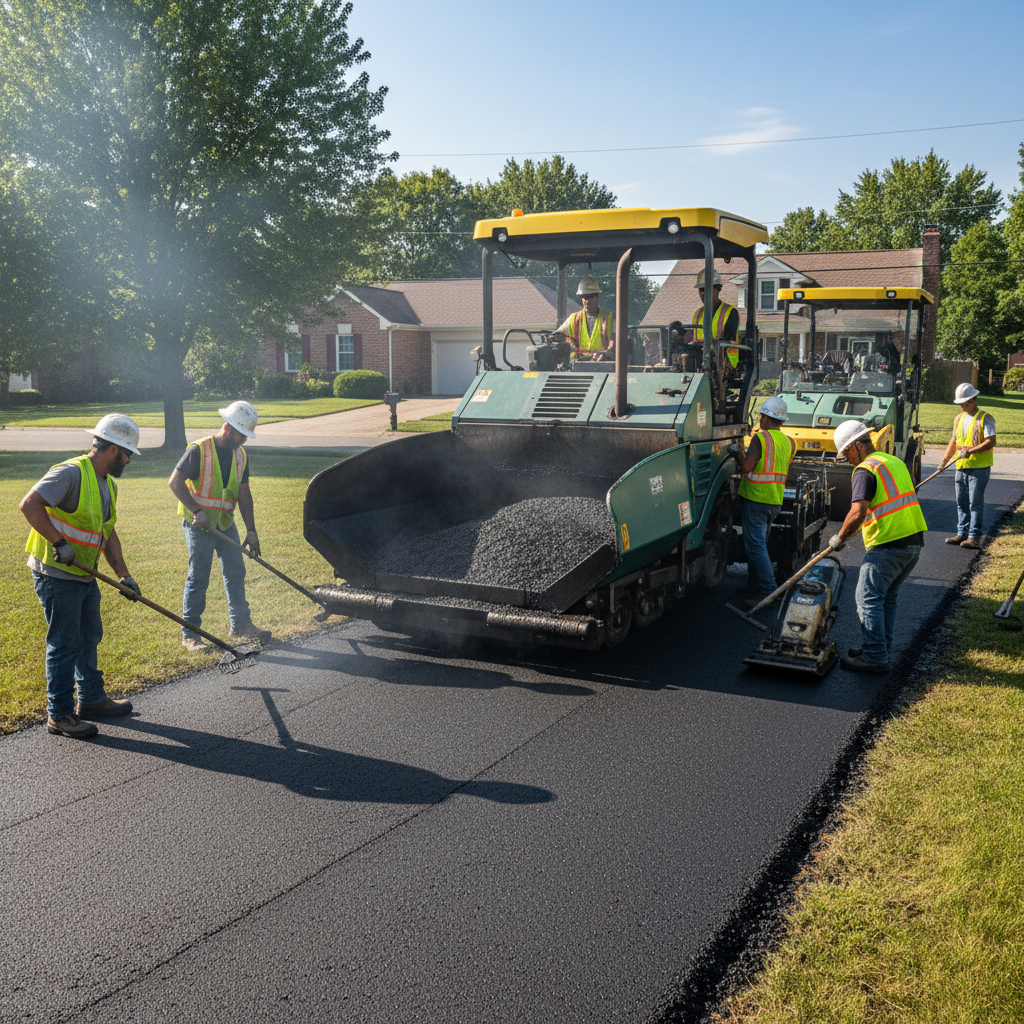
Driveway paving options and costs in Bowen Island
Bowen Island homeowners typically have a single driveway serving the main detached residence—there are 89.0% single-detached homes in the community, and 1,465 homeowner households (84.9% of households own) that make driveways a high-priority home-improvement category. You’ll see the greatest demand in areas with older housing stock and limited drainage capacity, particularly around the most established neighbourhood pockets near the ferry routes and hillside lots where runoff management is a constant concern.
In the Lower Mainland–Southwest, pricing is shaped less by deep, damaging frost and more by intense rainfall, drainage, and the freeze–thaw cycling that can occur around the seasonal frost zone. Even though coastal frost is usually relatively shallow, contractors still plan for a freeze line assumption of roughly 18" for sensitive infrastructure. That drives excavation depth, compacted granular base thickness, and careful grading to keep water from pumping through the asphalt or pavers. Scheduling also tends to be more compressed by shoulder-season storms: while the paving season is longer than in colder parts of BC, wet weeks can delay saw-cutting, base placement, and asphalt placement windows.
Below are realistic cost bands for common driveway systems on Bowen Island. Use them to compare quotes apples-to-apples—especially base thickness, disposal, and how much drainage correction is included—then we’ll break down what moves the price up or down in the next section.
| Material |
Lifespan |
Maintenance |
Best For |
Price per sq ft |
Price Range |
| Asphalt (new installation, proper base) |
15–25 years |
Seal every 3–5 years |
Good value with smooth driving surface |
$12–$20 |
$12,000–$20,000 |
| Asphalt (overlay on existing gravel base) |
10–18 years |
Seal every 3–5 years |
When existing base is stable enough to support overlay |
$10–$16 |
$9,500–$16,500 |
| Interlocking concrete pavers |
20–30 years |
Occasional re-sand and panel-level repairs |
Curb appeal and easy spot repairs |
$20–$40 |
$18,000–$35,000 |
| Poured concrete (broom finish) |
20–30 years |
Crack monitoring; patching as needed |
Low-maintenance, clean look with durable surface |
$18–$35 |
$16,000–$30,000 |
| Exposed aggregate concrete |
20–35 years |
Sealer optional; minor joint repair over time |
Slip-resistant finish and premium appearance |
$22–$40 |
$20,000–$36,000 |
| Gravel / crushed stone (budget option) |
5–10 years |
Top up annually; re-grade; weed control |
Temporary solution or lowest upfront cost |
$6–$12 |
$6,000–$12,500 |
Prices are estimates only and vary by project scope, site access and material selection.
What affects the price of paving in Bowen Island
In Bowen Island and across the Lower Mainland–Southwest, two quotes for the “same driveway” can differ by 30–50% when the base, drainage, and removal scope aren’t identical. The reason is simple: asphalt and pavers don’t fail because the surface is “bad”—they fail because water finds the weak points at the edges or underneath. In coastal BC, contractors also have to build in a design assumption for freeze–thaw around a frost depth on the order of 18" for sensitive infrastructure, which means your excavation and granular thickness decisions carry real cost.
Freeze–thaw is decisive because repeated cycling around the seasonal frost zone can cause heaving, rutting, and cracking if the base isn’t thick and compacted enough. Where deeper frost typically demands thicker base in Ontario/Alberta (often 6–12"), coastal projects generally plan around roughly 4–6" of compacted granular base for many residential applications—but that still requires proper drainage subgrade preparation, especially on clay-heavy soils in portions of the Fraser Valley and wherever your lot traps water. The paving season is longer than in Northern BC, yet heavy winter rains and shoulder-season storms compress workable windows; hot-mix asphalt also needs suitable air temperatures (often above 10°C) for proper placement and compaction. Mix design must meet local freeze–thaw performance requirements, which can add cost compared with “basic” mixes.
Concrete pricing can swing too. For example, older homes built before 1981 (36.8% of dwellings) often have driveways with unknown drainage patterns or prior fill, leading to extra base rebuild. A bigger difference happens when you need edge restraints and curb ties for pavers; it’s usually why interlocking work can move from the $20–$40 per sq ft band closer to the higher end. Asphalt may stay closer to the $12–$20 band when tear-out is minimal and the drainage plan is straightforward.
| Price Factor |
Why It Matters |
Cost Impact |
| Driveway area in sq ft |
Most materials and labour scale with square footage |
High (primary driver) |
| Base depth required |
Freeze–thaw protection depends on granular thickness and compaction |
High |
| Grading and drainage work |
Slope corrections and drainage improvements keep water from migrating under the surface |
Medium–High |
| Tear-out of existing surface |
Breaking, removal, hauling and disposal add labour and equipment time |
Medium–High |
| Edge restraints and curbing |
Prevents paver spread and protects asphalt edges from raveling |
Medium |
| Sealing requirement |
Asphalt performance depends on timely sealing to protect from moisture and oxidation |
Low–Medium |
| Site access |
Narrow driveways or limited staging slow equipment and increase handling |
Medium |
| Asphalt mix specifications |
Freeze–thaw-rated mixes can cost more but reduce cracking and moisture damage |
Medium |
Permits & regulations in British Columbia
In British Columbia, paving a private driveway within your own property usually does not require a building permit, especially when you’re simply replacing an existing surface with the same basic footprint and not altering municipal infrastructure. However, work that affects the municipal right-of-way does require municipal approval—this includes new curb cuts, changes to boulevard areas, and any alterations that impact storm drainage patterns. If your project involves lot-grading changes near property lines or you’re redirecting water away from neighbours or an easement, confirm any local lot-grading bylaws with Bowen Island staff before work starts.
Step one is utility locates: in BC you should arrange locates before excavation so there’s no surprise when digging for base. Then, verify your contractor’s credentials:
- BC licence/registration (if applicable): check the business/contractor standing through the appropriate provincial registry.
- Liability insurance: request a current certificate of insurance (COI) showing the project coverage.
- Workers’ protection coverage: confirm Workers’ Compensation coverage (WCB) for the individuals performing the work.
- Clearance letter: some contractors provide a clearance/coverage confirmation—ask for it rather than assuming.
Finally, use your written scope to confirm what includes municipal approvals, if needed, and what the contractor is responsible for versus what you must arrange.
Asphalt vs pavers vs concrete for Bowen Island driveways
For Bowen Island driveways, the “best” choice usually depends on how you want the driveway to look, how you plan to maintain it, and how your lot handles water. Asphalt typically offers the lowest upfront cost and a smooth driving surface, but it relies on proper base drainage and regular sealing every 3–5 years to stay resilient through wet winters. Interlocking concrete pavers have the highest upfront cost, yet they’re repairable: if a section settles, the contractor can lift and re-level only that area rather than replacing an entire slab or full asphalt lift.
Poured concrete sits in the middle for pricing and can look excellent with a broom finish, but it’s more sensitive to improper jointing and base preparation. In the Lower Mainland–Southwest, freeze–thaw around a shallow frost zone can still lead to cracking if drainage is off or if the mix isn’t air-entrained for freeze exposure. Concrete also tends to be less forgiving of water trapped under the slab—good granular base and a well-drained subgrade are non-negotiable.
For base preparation, all three options should be built on a properly compacted granular system that considers frost protection and drainage. In Bowen Island conditions, the drainage design matters as much as the surface thickness: any option that skimped on base or slope tends to fail sooner due to water migration under load and during intense rainfall events.
A practical price example: if asphalt is quoted at the $12–$20 per sq ft band and pavers come in near the $20–$40 band, the difference can be justified when you want easier future repairs and stronger curb appeal. But if your driveway is straightforward, well-drained, and you’re comfortable with sealing, asphalt often provides the best cost-to-performance balance.
| Material |
Frost Resistance |
Curb Appeal |
Repair Method |
Lifespan |
Price Band |
| Asphalt (sealed regularly) |
Good with proper base and sealing |
Medium |
Patch area or overlay |
15–25 years |
$12–$20 per sq ft |
| Interlocking concrete pavers |
Very good with edge restraint and base compaction |
High |
Remove and re-set individual units |
20–30 years |
$20–$40 per sq ft |
| Poured concrete (air-entrained) |
Good with air-entrainment and joints |
Medium–High |
Crack repair/patch or section replacement |
20–30 years |
$18–$35 per sq ft |
| Exposed aggregate concrete |
Good with correct mix and base |
High |
Patch sections (matched finish required) |
20–35 years |
$22–$40 per sq ft |
| Permeable pavers (drainage grid) |
Good when installed with correct drainage layer |
High (distinct look) |
Remove/reset localized sections |
15–25 years |
$25–$50 per sq ft |
| Chip seal / tar-and-chip |
Moderate; best for low-traffic |
Low–Medium |
Spot patch and periodic reseal |
7–12 years |
$10–$18 per sq ft |
How to choose a paving contractor in Bowen Island
Choosing a contractor in Bowen Island starts with verifying credentials and proving they’ve done work similar to yours. In British Columbia, ask for proof of liability insurance and confirm workers’ protection coverage (WCB) for the crew that will be on site. You should also confirm the contractor’s business registration standing (where applicable) and request a clear, written scope of work that matches what’s been quoted—especially excavation depth, base gravel type, compaction requirements, and disposal.
Get 2–3 quotes, but insist on itemized pricing. A proper quote breaks out labour and materials (excavation, base supply and compaction, geotextile/drainage layers if needed, asphalt/paver/concrete supply, delivery, and edge restraints). Avoid lump sums that don’t mention tear-out scope or whether permits and municipal right-of-way approval (if needed) are included. Confirm how disposal is handled and who hauls away old asphalt or concrete. Clarify warranty too: you want a workmanship warranty length stated clearly, separate from product/manufacturer warranties, and whether the coverage is transferable if you sell the home.
Payment schedule matters. Never pay more than about 10–15% upfront. Use a holdback until completion and final cleanup, and schedule a post-install check so the contractor can address minor settlement or edge issues while everything is still accessible. Finally, put the timeline in writing: ask for a proposed start date and an estimated completion date, taking into account weather-sensitive work windows in the Lower Mainland–Southwest.
- Ask whether their estimate includes excavation, base gravel, and compaction testing (not just “materials”).
- Confirm minimum base thickness and slope/grading plan.
- Require line-item disposal costs for old asphalt/concrete.
- Check that utility locates are arranged before digging.
- Verify liability insurance COI is current and for the correct project address.
- Confirm WCB coverage for workers who will be on site.
- Request a written start date and completion window.
- Ask who supplies edge restraints/curbing (and what system).
- For asphalt, confirm sealing timing and whether the first seal is recommended after curing.
- For pavers, confirm bedding sand depth and jointing sand plan.
- Confirm warranty scope: workmanship duration, exclusions, and how repairs are handled.
- Don’t accept a quote without a clear scope of exclusions (e.g., drainage corrections not included).
Red flags to watch for in Bowen Island: quoting without discussing drainage or base thickness, vague “we’ll figure it out later” language, no insurance/WCB proof, paying a large deposit (more than 10–15% upfront) without a holdback, and refusing to provide an itemized written scope with disposal and tear-out details.
Frequently asked questions — paving in Bowen Island
Asphalt vs interlocking pavers vs concrete — which is best in Bowen Island?
Most Bowen Island driveways are best served by whichever system matches your drainage situation and how hands-on you want to be with maintenance. Asphalt is usually the best value upfront, commonly priced within the $12–$20 per sq ft band, but it needs sealing every 3–5 years to protect against wet-weather wear and to reduce moisture damage through winter. Interlocking concrete pavers cost more (often within the $20–$40 range), yet they’re very repairable—great if your lot has localized settling or you want long-term flexibility. Air-entrained poured concrete is durable and looks sharp, but it depends heavily on proper base and jointing for freeze–thaw performance in BC’s coastal conditions. If your driveway collects water or sits on marginal fill, base drainage and grading are more important than the surface material.
How long does a paved driveway last in Bowen Island?
Longevity in Bowen Island depends on base prep, drainage, and whether you maintain the surface. With a properly compacted granular base and correct slope, asphalt typically lasts about 15–25 years; with sealing every 3–5 years, you’re protecting it from oxidation and moisture intrusion. Interlocking pavers often reach 20–30 years because you can re-level or replace small sections if water or settlement creates movement. Poured concrete commonly lasts 20–30 years when it’s air-entrained, properly jointed, and built over a stable, well-drained base. If a contractor skipped drainage corrections or used minimal base thickness, you can see cracking, rutting, or heaving much earlier—even in coastal BC where frost is relatively shallow compared with interior provinces.
When is the best time of year to pave in Bowen Island?
The best time to pave in Bowen Island is during the drier stretches when crews can achieve good compaction and finishing conditions—typically late spring through summer into early fall. Asphalt placement is temperature-sensitive: hot-mix generally requires air temperatures above about 10°C to place and compact properly. Even in the Lower Mainland–Southwest, heavy rainfall and shoulder-season storms can compress schedules and delay base work or asphalt laydown, which affects both timing and costs. A good contractor will plan around weather windows, ensure the base is dry enough for placement, and coordinate any drainage grading before surfacing. If you’re comparing quotes, ask for the expected start date and what happens if weather interrupts the schedule.
How deep should the base be for Bowen Island's frost?
For Bowen Island, you plan for freeze protection based on regional practice rather than just “how cold it feels.” Even though coastal frost penetration is typically shallower than in Interior or Northern BC, designs still assume a frost line on the order of 18" for sensitive infrastructure, and freeze–thaw cycling around that zone can drive failure. In typical residential Lower Mainland–Southwest construction, asphalt driveways often use about 6" of compacted granular base plus 2.5–3" of asphalt, while paver systems commonly use 6" of base gravel plus bedding sand and 2.5–3.5" pavers. If soils are weak or saturated, deeper excavation and additional base may be required. The exact thickness should be confirmed by site conditions (subgrade stability, drainage, and how water behaves after rain), not by a guess.
How often should I seal my asphalt driveway?
For asphalt in British Columbia, sealing is usually recommended every 3–5 years, and timing depends on the pavement age and how much moisture and vehicle wear it sees. New asphalt typically needs a curing period before the first seal; many homeowners plan the first sealing in the first year after installation (based on contractor guidance), then keep a routine thereafter. If your driveway sees a lot of wet weather and standing water, sealing becomes even more important because asphalt is vulnerable to moisture damage and oxidation over time. Compared to the driveway’s initial cost, sealing is relatively modest—often a few dollars per sq ft depending on product and scope—yet it can be the difference between a 10–15 year driveway and a 15–25 year driveway.
Why does my driveway crack and heave in winter?
Cracking and heaving in Bowen Island are usually symptoms of water and base issues—not just “normal aging.” In the Lower Mainland–Southwest, heavy winter rains soak the base, and then freeze–thaw cycles around a shallow frost zone can move water and expand the subgrade. Common causes include poor drainage slope, missing or ineffective edge restraints (so water and fines migrate), insufficient compacted granular base, or subgrade that was not properly stabilized before paving. If the driveway was built on weak fill or didn’t account for how your lot drains after storms, you can get localized movement that shows up as cracks near edges, potholes, or heaving spots. Fixing the surface alone often doesn’t solve it—successful repairs usually correct grading and base drainage first.