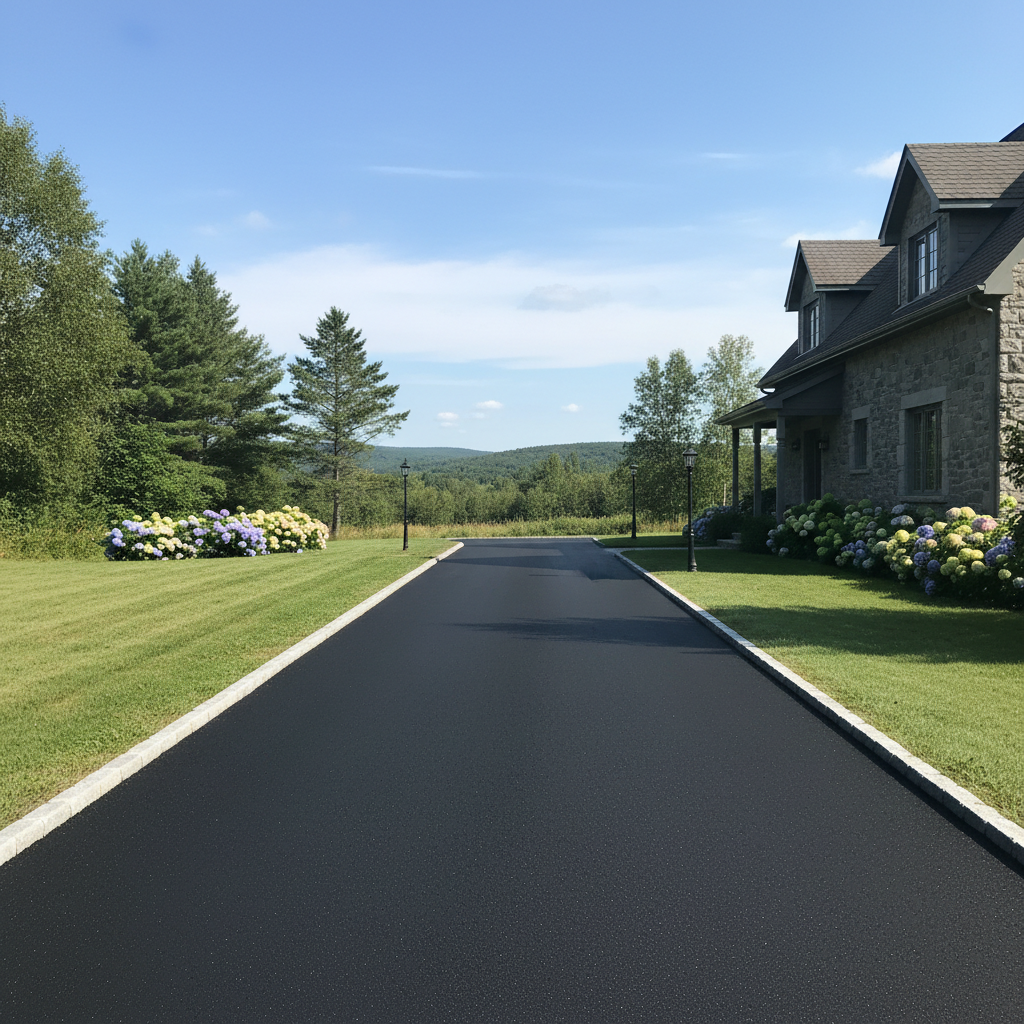
Driveway paving options and costs in Sechelt
Sechelt homeowners have a lot of choices for upgrading a driveway, but the “right” option comes down to how your site drains, what the original base is like, and how long you want the surface to look sharp. In Sechelt, most housing stock is single-detached—about 75.3% of dwellings—so private driveways are typically a big line-item for value-conscious renovations. With 4,140 homeowner households (80.7% of households own) and a meaningful share of homes built before 1981, many properties have older gravel pads or surfaces that are starting to ravel, rut, or crack.
In the Lower Mainland–Southwest, costs are shaped more by intense rainfall and drainage than by ultra-deep frost, but we still design around freeze-thaw behaviour near the frost line. Heavy winter storms and saturated soils can quickly expose weak base work, while shoulder-season schedules can tighten because hot-mix asphalt production and placement depends on workable temperatures (commonly above 10°C). That’s why reputable crews in areas like West Sechelt and around Grantham/Downtown corridors are especially busy—more homes are replacing worn driveways after freeze-thaw and wet-season settling.
Use the table below to compare typical lifespan, maintenance, and realistic price ranges for Sechelt. After that, we’ll explain why quotes can swing substantially even for “the same” driveway.
| Material |
Lifespan |
Maintenance |
Best For |
Price per sq ft |
| Asphalt (new installation, proper base) |
15–25 years |
Sealcoat every 3–5 years |
Good value with smooth driving surface |
$12 – $20 |
| Asphalt (overlay on existing gravel base) |
10–18 years |
Sealcoat every 3–5 years |
When base is stable and savings are needed |
$10 – $17 |
| Interlocking concrete pavers |
25–40 years |
Replace individual stones as needed |
Curb appeal and easy local repairs |
$20 – $40 |
| Poured concrete (broom finish) |
20–30 years |
Occasional crack monitoring/patching |
Low-maintenance, straight-edged look |
$18 – $35 |
| Exposed aggregate concrete |
20–30 years |
Crack repair as required; re-seal optional |
Slip-resistant, decorative finish |
$22 – $40 |
| Gravel / crushed stone (budget option) |
3–8 years |
Top-up, re-grade, weed control |
Temporary solution or lower-traffic pads |
$7 – $14 |
Prices are estimates only and vary by project scope, site access and material selection.
What affects the price of paving in Sechelt
In Sechelt and across the Lower Mainland–Southwest, two contractors can price the same driveway 30–50% apart because the quote is really about the preparation—not just the surface. Excavation depth, granular base design, drainage fixes, haul/disposal, and the amount of asphalt or concrete placed are what move the needle. In British Columbia, crews often price for longer wet-season disruptions and for drainage-driven base failures, while interior provinces may price around deeper freeze and different construction windows.
Frost line depth and freeze-thaw cycles are decisive cost factors in this region, even with coastal conditions. When frost is deeper (as it is in Ontario/Alberta), we typically plan thicker compacted granular bases—often 6–12 inches in more freeze-prone regions. In coastal BC, frost penetration is usually less severe, but we still design exposed driveway sections around a frost line assumption and prevent movement at that interface. In practice here, that means granular base thickness can still be in the 4–6 inch range for stable sites, and more when soils are clay-heavy or saturated (a common cost driver in parts of the Fraser Valley). The paving season is also compressed by rain: hot-mix asphalt needs favourable air conditions, commonly above 10°C, so spring/summer scheduling pressure can raise labour and equipment rates.
Local examples that raise cost in Sechelt: (1) replacing soft, pumping subgrade with imported granular material; (2) correcting positive drainage so runoff doesn’t pond near the garage; and (3) dealing with older driveways where tear-out is messier than expected. If your plan is simple—stable base, clean edges, straightforward access—an asphalt surface at roughly the $12–$20 per sq ft band can be hard to beat. If you’re aiming for premium curb appeal and easy spot repairs, interlocking pavers in the $20–$40 per sq ft band can be justified where you expect future landscaping changes or utility work.
| Price Factor |
Why It Matters |
Cost Impact |
| Driveway area in sq ft |
Most material and labour scale with square footage |
High (often the biggest driver) |
| Base depth required |
Frost line determines granular thickness and stability |
High (more excavation/import) |
| Grading and drainage work |
Slopes, swales, and runoff control prevent saturation |
Medium to high |
| Tear-out of existing surface |
Breaking up old concrete or old asphalt and hauling disposal |
Medium to high |
| Edge restraints and curbing |
Pavers spread without proper restraints |
Medium |
| Sealing requirement |
Asphalt needs sealcoat after cure (often 6–12 months) |
Low to medium (but time-based) |
| Site access |
Narrow/tight lots slow equipment movement and increase labour |
Low to medium |
| Asphalt mix specifications |
Freeze-thaw-rated mixes and thicknesses cost more |
Medium |
Permits & regulations in British Columbia
In British Columbia, paving a private driveway within your own property typically does not require a building permit. However, work in the municipal right-of-way can require municipal approval. That includes new curb cuts, changes to boulevard drainage, altering stormwater flow paths, or adjusting street-edge grading that affects municipal infrastructure. If you’re changing how water leaves your property (for example, redirecting runoff to a ditch, catch basin, or ditch line), it’s smart to confirm requirements before you start.
Sechelt homeowners should also be aware that some municipalities apply lot-grading bylaws that restrict how close a hard surface can be to property lines and how runoff must be handled. Your contractor should help you identify whether your driveway tie-in impacts boulevard areas, but you’re still responsible for verifying the rule set that applies to your parcel.
Before excavation, always arrange utility locates through BC 1 Call so crews know where power, telecom, and other buried services run. Then verify the contractor’s credentials: ask for (1) their British Columbia licence number or registration details (and confirm it online if the contractor provides it), (2) a Certificate of Insurance showing general liability coverage and the right company name for the job address, and (3) WSIB/WCB clearance—provide the document, not just a promise. A legitimate paving company can supply these items quickly, along with proof the same crews and supervisors are assigned to your project.
Asphalt vs pavers vs concrete for Sechelt driveways
For Sechelt driveways, the three most common surface choices—asphalt, interlocking concrete pavers, and concrete—each perform differently under Lower Mainland–Southwest freeze-thaw and wet-weather conditions. Asphalt is usually the lowest upfront option, with a smooth look and easy plowing compatibility. The trade-off is maintenance: sealcoat is typically needed every 3–5 years to protect against water intrusion and surface wear.
Interlocking concrete pavers cost more up front, but they shine in a coastal, drainage-focused climate because repairs are localized. If a settlement spot develops from saturated subgrade or a future utility adjustment, pavers can be lifted, corrected, and reinstalled without replacing the whole driveway. That’s a big reason many Sechelt homeowners choose pavers in busier neighbourhood pockets where access and future landscaping tweaks are common.
Poured concrete is a mid-range price option and is low maintenance day-to-day, especially with a broom finish for traction. Still, concrete can crack from freeze-thaw movement if the base and drainage aren’t handled correctly, and de-icing salt can accelerate surface scaling on unprotected finishes. In most driveway builds here, properly compacted base and good drainage design matter as much as the slab choice.
To illustrate where price differences are justified: if you have a straightforward asphalt-compatible site, asphalt in the $12–$20 per sq ft band can be a cost-effective solution. But if you want maximum curb appeal and easier spot repairs, pavers in the $20–$40 per sq ft band often make sense—especially when your soil is clay-prone or your driveway area sees frequent water flow. All three options should be built over a frost-aware granular base strategy and designed so water doesn’t pond near the surface, which is key for how Sechelt handles winter storms, sanding, and plowing.
| Material |
Frost Resistance |
Curb Appeal |
Repair Method |
Lifespan |
Price Band |
| Asphalt (sealed regularly) |
Good with proper base and drainage |
Moderate |
Mill and patch or overlay |
15–25 years |
$12 – $20 |
| Interlocking concrete pavers |
Very good when edges are restrained |
High |
Lift-and-replace individual sections |
25–40 years |
$20 – $40 |
| Poured concrete (air-entrained) |
Good with air-entrainment and correct base |
Moderate to high |
Crack repair and patching |
20–30 years |
$18 – $35 |
| Exposed aggregate concrete |
Good with correct curing and base |
Very high |
Targeted patching is possible |
20–30 years |
$22 – $40 |
| Permeable pavers (drainage grid) |
Excellent for water management |
High (modern look) |
Replace affected stones/modules |
25–35 years |
$24 – $45 |
| Chip seal / tar-and-chip |
Fair to good; relies on surface integrity |
Lower (functional look) |
Spot blotching and re-surface cycles |
7–15 years |
$10 – $18 |
How to choose a paving contractor in Sechelt
Choosing the right contractor matters in Sechelt because drainage details and base preparation decide whether your driveway performs through wet winters. Start with licensing: in British Columbia, ask for their BC licence details and confirm them using the contractor’s provided information. Next, verify insurance—request a Certificate of Insurance with general liability that lists the jobsite address and the correct legal name of the contractor. For work coverage, confirm WSIB/WCB status by asking for a clearance certificate or the documented proof they’re covered for the type of work performed; a reputable contractor should provide these documents quickly and willingly.
For pricing, get 2–3 itemised written quotes with a clear labour-and-material breakdown (excavation, granular base, compaction, asphalt/concrete placement, disposal, and finishing). A quote that only shows a lump sum is harder to compare and often hides the real differences, like whether the contractor includes proper drainage correction or only “covers” the top surface. Read the scope for what’s excluded: permit pulls (if any), debris disposal, saw-cutting, edge restraints, and whether the driveway ties into an existing apron or curb area.
Warranty should be in writing with workmanship duration, what’s covered (settlement, cracking, raveling), and whether it’s tied to proper maintenance. Product/manufacturer warranties (where applicable) should be separate from workmanship coverage. Payment scheduling matters too—never pay more than 10–15% upfront; hold back a portion until completion and cleanup are verified. Finally, ask for a written start date and an estimated completion timeline, because rainy shoulder seasons can shift sequencing.
- Confirm BC licence details and request the exact licence/registration number in the quote.
- Verify Certificate of Insurance and make sure it matches the contractor legal name and job address.
- Provide WSIB/WCB clearance proof (or the documented coverage status) before work begins.
- Ask for a base-build section: granular thickness, compaction method, and whether they use geotextile.
- Get a written drainage plan: slope direction and how runoff is managed on your lot.
- Ensure the quote lists disposal/haul-away costs for old asphalt or concrete.
- Confirm edge restraints: curbs or forms for concrete/asphalt; proper bedding and restraint for pavers.
- Ask for asphalt mix specs or equivalent, especially for freeze-thaw durability.
- Verify sealcoat timing and who is responsible for it on asphalt (often after cure, 6–12 months).
- Read warranty terms: duration, exclusions, and whether it’s transferable if you sell the home.
- Use a payment schedule that keeps 80–90% withheld until final grading, compaction, and cleanup pass.
- Request a written schedule that includes weather contingencies for Sechelt’s rainy windows.
Red flags in Sechelt include: crews that won’t discuss base thickness and drainage details, quotes that exclude disposal or any tear-out plan, “universal” pricing without a site visit, pressure to pay most of the job upfront, and warranties that are only verbal or unclear about what fails and who repairs it.
Frequently asked questions — paving in Sechelt
What is a driveway apron and do I need one in Sechelt?
An driveway apron is the transitional paving section where your driveway meets the street edge or a curb cut area—often the part between the roadway and your private driveway surface. In Sechelt, whether you “need” one depends on where your driveway ties in and whether there’s a municipal interface (like a boulevard area or curb cut). For purely private paving on your own lot line (with no right-of-way changes), an apron may be optional. But if your contractor is changing how water runs off near the driveway entry, or you’re building at the street edge, an apron and proper drainage detailing can prevent rutting and surface breakdown right at the transition. Because rules can vary by the exact location of the driveway entry, ask your contractor to confirm scope and drainage tie-in before pricing.
How do I maintain my driveway through Sechelt winters?
In British Columbia’s Lower Mainland–Southwest climate, winter maintenance is mostly about managing water and protecting the surface, especially during heavy rain and freeze-thaw around the frost line. For asphalt, keep the surface clear of debris so water can drain, and avoid scraping aggressively with plow blades—minor gouges can become water pathways. For pavers, remove weeds promptly in joints and check that edge restraints haven’t shifted after storms. For concrete, don’t overuse de-icing salt; it can worsen surface scaling over time. Also, address any low spots early: if a section ponds, it can saturate the base and lead to movement. A good contractor will design proper grading at install, but maintenance helps your driveway survive longer.
Is it worth sealing a new driveway right away in Sechelt?
For asphalt in Sechelt, sealing too early is a common mistake. Most reputable contractors wait for the asphalt to cure properly and for surface moisture to dissipate—often around the 6–12 month window—then apply a sealcoat. If you seal right away, trapped moisture can reduce adhesion and shorten the service life of the coating. If your driveway was installed properly over a well-draining base, you still benefit from sealing regularly every 3–5 years after the initial cure, especially in rainy cycles when water intrusion is the enemy. If you’re budgeting, sealing is usually an additional line item within the typical sealing/repair band of about $2–$6 per sq ft. Ask your contractor what they recommend based on your install date and weather exposure.
What is a chip seal driveway and is it suited to Sechelt?
Chip seal (tar-and-chip) is a surface treatment where asphalt binder is sprayed and aggregate chips are rolled into place. It’s a functional option that can work well for low-to-moderate traffic areas, and it can be faster to install than full asphalt paving. In Sechelt, it can be suited to properties where you want a durable, economical surface and you accept a rougher texture than a smooth asphalt finish. It’s also highly dependent on proper preparation and binder/aggregate selection to prevent early loss of chips during wet weather. That said, chip seal typically has a shorter lifespan than full asphalt paving, so homeowners expecting a long, clean finish often choose asphalt at roughly $12–$20 per sq ft or consider pavers for a longer service life and easier repairs.
How much does driveway crack repair cost in Sechelt?
Crack repair costs in Sechelt vary mainly by crack width, length, and whether the issue is cosmetic surface cracking or a symptom of drainage/base movement. Typical sealing/repair allowances are often in the $2–$6 per sq ft range for small repairs, depending on prep, crack routing/cleaning, and the product used. For isolated hairline cracks, you may get a lower cost because prep is minimal. For wider cracks, failed joints, or areas that have started to ravel, the contractor may need to widen the crack, clean and stabilize the edges, and sometimes patch a section—cost rises accordingly. If you’re seeing repeating cracking after storms, treat the root cause (grading and drainage) rather than only filling cracks, or the same cracks can return quickly.
What base thickness do I need for pavers in Sechelt?
For interlocking concrete pavers in Sechelt, the base structure is designed to handle drainage and freeze-thaw movement near the frost line. A common residential approach is about 6 inches of compacted granular base, with bedding sand beneath the pavers. In areas with weaker or saturated soils, contractors often excavate deeper and import more granular material to ensure a stable, uniform bearing surface. Edge restraints are equally important—pavers shift if the perimeter isn’t properly locked in. Your exact thickness depends on soil conditions and your driveway’s drainage plan, so the best quotes include an on-site base assessment and compaction testing or clear compaction methods. If your home is on older soil or you’ve had ponding, expect thicker base than a “standard” layout.