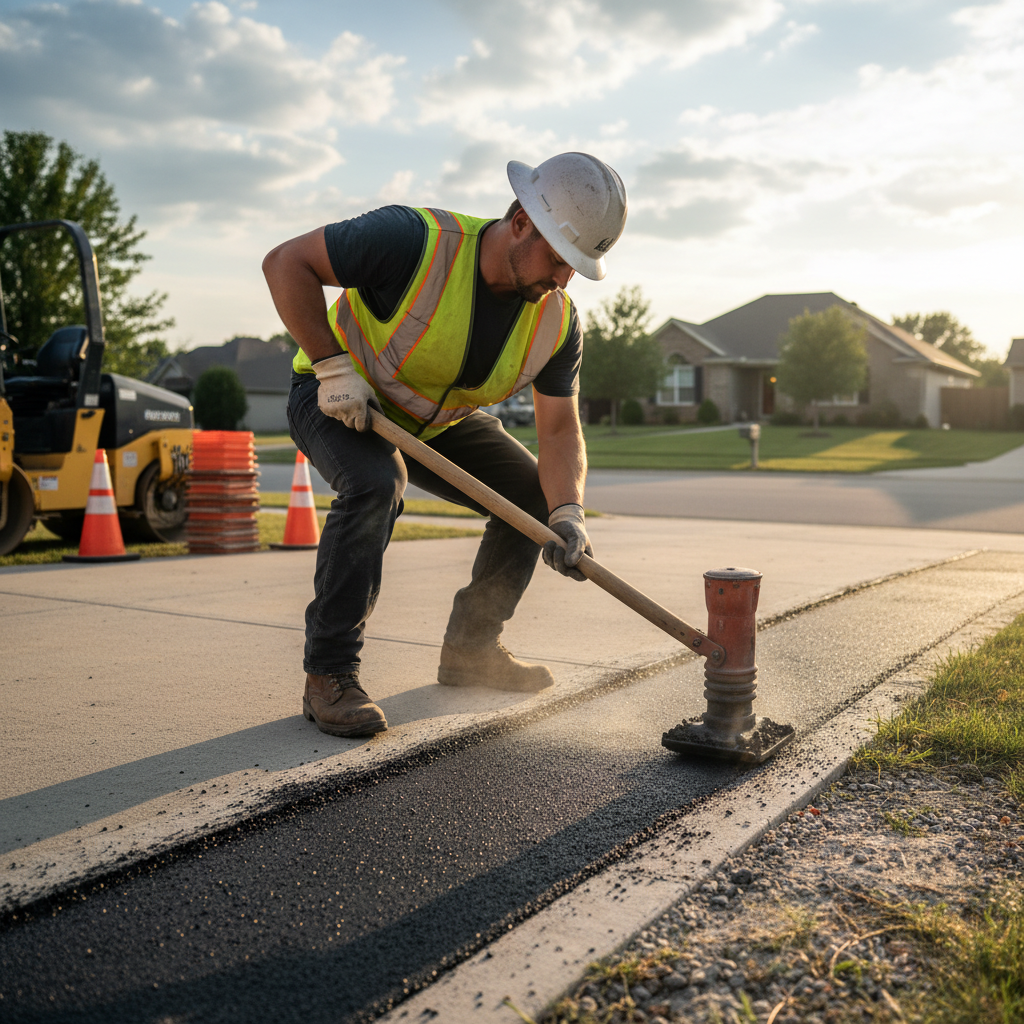
Driveway paving options and costs in Nanaimo
Nanaimo homeowners typically have a few clear choices for driveway paving: asphalt, interlocking concrete pavers, and concrete. On Vancouver Island, most private driveways serve single-detached homes—about 51.5% of dwellings are detached (Statistics Canada, 2021 Census)—so you’ll see steady demand across neighbourhoods with older housing stock. In the city, nearly 39.1% of homes were built before 1981 (Statistics Canada, 2021 Census), and that matters because many existing driveways were poured or graded for different drainage and soil conditions than we expect today.
Pricing on Vancouver Island and the Coast can differ from mainland British Columbia because frost and drainage still drive performance costs, even with a milder coastal climate. We rarely need the very deep granular bases common in colder provinces, but localized freeze-thaw cycles around Nanaimo, North Nanaimo, and parts of East Wellington can still cause heaving, edge movement, and cracking if the base and water management aren’t engineered properly. Asphalt also relies on a well-compacted granular foundation and correct drainage to prevent water pumping under load.
Labour availability and mobilization also influence quotes during the paving season—when conditions line up, crews can be booked. That’s why a well-prepared quote will separate base depth, excavation/haul-away, and material selection (for example, whether asphalt is installed new or over a suitable existing gravel base). Use the comparison below as a practical budget starting point for your quote, then we’ll fine-tune it after a site walk.
| Material |
Lifespan |
Maintenance |
Best For |
Price per sq ft |
| Asphalt (new installation, proper base) |
15–25 years |
Seal coating every 3–5 years; patch as needed |
Lowest upfront cost with a clean, uniform look when base/drainage are done right |
$10 – $20 |
| Asphalt (overlay on existing gravel base) |
10–18 years |
Seal coating; more frequent spot repairs if base has weak spots |
Sloped lots or partial upgrades where the base is still sound and accessible |
$12 – $22 |
| Interlocking concrete pavers |
25–40 years |
Re-level/replace individual stones as needed |
Best curb appeal and easier repairs; good for driveways with localized settling |
$25 – $45 |
| Poured concrete (broom finish) |
25–35 years |
Minimal; occasional crack sealing depending on movement/joints |
Clean lines and long runs with proper forming and reinforcement |
$18 – $35 |
| Exposed aggregate concrete |
25–35 years |
Low; occasional sealing if desired for appearance |
Decorative finish with strong slip resistance when properly finished |
$22 – $40 |
| Gravel / crushed stone (budget option) |
3–8 years |
Re-grade and top up every 1–3 years |
Short-term solution or overflow drainage areas |
$6 – $12 |
Prices are estimates only and vary by project scope, site access and material selection.
What affects the price of paving in Nanaimo
You can see the same driveway scope quoted 30–50% differently across Vancouver Island and the Coast because the real cost drivers aren’t just square footage—they’re excavation conditions, base design, haul distance, and how much time it takes to keep water away from the surface. On mild coastal sites, crews may spend fewer days battling extreme cold than in northern or Interior regions, but Nanaimo still experiences freeze-thaw cycles that punish a poorly drained base. That’s why asphalt jobs can swing in price when the base is weak, when we need additional granular depth, or when we have to correct drainage at the transition to the street.
Frost line depth and freeze-thaw behaviour are decisive cost factors. In colder provinces, we often see 6–12 inches of compacted granular thickness to reduce heaving; on Vancouver Island we commonly work with a shallower effective frost zone, but we still typically budget around 4–6 inches of quality compacted base (plus subgrade correction where needed). If a site is wet or the subgrade is organic/soft—common in some older lots—base thickness and haul-away costs rise fast. Also, asphalt mix design matters; freeze-thaw-rated mix and proper compaction are not the place to cut corners when you’re aiming for long life.
Two concrete examples from Nanaimo: (1) a driveway over older, poorly drained fill often requires extra excavation and re-compaction before asphalt, nudging you toward the upper end of $10 – $20 per sq ft; (2) if you have firm access for a paver crew and minimal tear-out, interlocking can stay closer to the $25 – $45 band, while constrained access can raise labour for forming, cutting, and edge restraints. With many homes older than 1981 (Statistics Canada, 2021 Census), we frequently see drainage patterns that need correction—this is often where dollars are best spent.
| Price Factor |
Why It Matters |
Cost Impact |
| Driveway area in sq ft |
Most material and labour scale directly with area |
High (primary driver of the total) |
| Base depth required |
Frost behaviour and subgrade strength determine granular thickness |
Medium to high |
| Grading and drainage work |
Slope corrections and water management reduce freeze-thaw damage |
Medium to high |
| Tear-out of existing surface |
Hauling and breaking concrete/asphalt can be labour-intensive |
Medium to high |
| Edge restraints and curbing |
Prevents paver spread and keeps asphalt from migrating |
Low to medium |
| Sealing requirement |
Asphalt relies on seal coating to slow oxidation and water entry |
Low to medium (adds cost but protects lifespan) |
| Site access |
Narrow gates, steep entries, or long push distance slows equipment |
Medium |
| Asphalt mix specifications |
Freeze-thaw-rated mixes and appropriate aggregate gradation cost more |
Low to medium |
Permits & regulations in British Columbia
In British Columbia, paving a private driveway within your own property usually does not require a building permit. Typically, the paving contractor will proceed as a private hardscape improvement as long as you’re not changing municipal services. However, work in the municipal right-of-way often needs municipal approval—this is where homeowners can get caught off guard.
Permit/approval scenarios that commonly DO require municipal involvement include: creating or changing a curb cut/driveway crossing in the boulevard, altering storm drainage patterns, adjusting catch basins/sidewalk interfaces, or any excavation that affects municipal infrastructure. In some neighbourhoods, there may also be lot-grading or drainage restrictions that limit how close hard surfaces can sit to property lines or how runoff is directed. Because requirements can vary locally on Vancouver Island, it’s worth confirming details with the City of Nanaimo or your local municipality before work starts.
Before excavation, you should always ensure utility locates are completed through BC 1 Call. After that, verify your contractor’s compliance: (1) check their British Columbia licence/registration status via the applicable provincial directory used by contractors in your trade; (2) request a certificate of liability insurance showing adequate limits for property damage and bodily injury; and (3) confirm their workers’ compensation coverage (WSIB/WCB equivalent in BC) so you aren’t exposed if a worker is injured. Many contractors will also provide a clearance letter or documentation upon request—ask for it in writing and keep a copy with your contract.
Asphalt vs pavers vs concrete for Nanaimo driveways
For Nanaimo driveways, the “best” material comes down to how you want the driveway to behave during freeze-thaw cycles and what kind of maintenance you’re willing to manage. Asphalt is usually the lowest upfront choice and can perform very well when installed on a proper compacted base with correct drainage; the trade-off is that it benefits from sealing every 3–5 years to protect against water penetration and oxidation. Interlocking concrete pavers cost more upfront, but they’re the easiest to repair—if one section settles due to drainage or subgrade, we can lift and re-level targeted areas instead of replacing the whole surface.
Poured concrete (and exposed aggregate) usually lands in the middle-to-upper range and can last decades if it’s built with air entrainment, reinforcement/joints, and a sound sub-base. In Nanaimo’s coastal climate, concrete can still crack from movement and freeze-thaw; when winters bring freeze-thaw around the driveway edges, poorly drained subgrades are what typically cause the most problems. For all options, good base preparation and water management are the real foundation of longevity—materials alone don’t fix weak drainage.
On a typical Vancouver Island site with a shallower frost influence than colder provinces, we still commonly see 4–6 inches of quality compacted granular base plus subgrade correction where needed. That’s why the biggest price differences often reflect excavation, disposal, and drainage correction—not just asphalt versus concrete. For example, if asphalt is quoted near $10 – $20 per sq ft, and pavers are in the $25 – $45 band, the extra cost is usually justified when you want easier repairs and a higher-end curb presence, especially for driveways that experience localized settling.
| Material |
Frost Resistance |
Curb Appeal |
Repair Method |
Lifespan |
Price Band |
| Asphalt (sealed regularly) |
Good when base and drainage are engineered |
Medium (clean and uniform) |
Cut out and patch; seal surrounding area |
15–25 years |
$10 – $20 |
| Interlocking concrete pavers |
Very good; tolerates re-leveling |
High |
Lift/replace individual units and reset grade |
25–40 years |
$25 – $45 |
| Poured concrete (air-entrained) |
Good when air-entrained and properly jointed |
Medium to high |
Crack sealing; localized patching |
25–35 years |
$18 – $35 |
| Exposed aggregate concrete |
Good when finished and cured correctly |
Very high |
Limited localized patching; blends required |
25–35 years |
$22 – $40 |
| Permeable pavers (drainage grid) |
Good; relies on underlying drainage layer |
High (modern look) |
Replace affected pavers; maintain infill system |
20–35 years |
$30 – $55 |
| Chip seal / tar-and-chip |
Moderate; more surface maintenance |
Low to medium |
Spot repairs and re-chip as needed |
7–15 years |
$8 – $14 |
How to choose a paving contractor in Nanaimo
Start by verifying that your Nanaimo contractor is operating properly and can stand behind the work. In British Columbia, ask for their proof of licensing/registration for the work they’re doing, and confirm their liability insurance certificate (ask for the coverage limits and whether it lists you as an interested party if applicable). Next, verify workers’ compensation coverage—ensure they have the BC equivalent of workers’ compensation coverage so you’re not responsible if someone is injured on your property. A reputable contractor can provide documentation on request and won’t pressure you to skip checks.
Then get 2–3 itemised written quotes, not lump sums. You want the quote to break down labour and materials separately, including excavation depth and base thickness, any geotextile/subgrade treatment, haul-away/disposal, and the paving material specified. Read the scope carefully: what’s excluded (for example, asphalt sealant prep, saw-cutting, or removal of unstable base)? Is permit help/municipal approval coordination included if your project touches a boulevard crossing? Confirm whether disposal and off-site hauling are included, and how far waste will be hauled.
Warranty matters too. Look for a workmanship warranty stated clearly (often covering settlement and failed compaction/instability) and understand what it covers versus what the manufacturer covers. Ask if the warranty is transferable to a new owner if you sell.
Payment schedule: never pay more than 10–15% upfront. Hold back an agreed amount until the job is complete and inspected. Also get your start date and completion estimate in writing so weather and scheduling changes don’t become a surprise.
- Confirm BC licence/registration details match the scope of work.
- Request certificate of liability insurance and verify coverage limits.
- Verify workers’ compensation coverage with documentation.
- Ask for at least two driveway references in Nanaimo (same material and scope).
- Require an itemised quote with excavation, base depth, and disposal clearly listed.
- Ensure drainage/grading is included (slope correction, water management, edge details).
- Check whether saw-cutting and removal of failing edges are included.
- Confirm compaction requirements and whether a test roller pass/compaction proof is discussed.
- For asphalt, confirm the plan for sealing timeline (typically after curing/traffic plan).
- Clarify warranty length for workmanship and how issues are handled.
- Agree on payment milestones tied to inspections and completion.
- Get start date, completion window, and weather contingencies in writing.
Red flags we see in Nanaimo include: quotes that don’t mention base depth or drainage corrections, asking for large deposits (beyond 10–15%) without an inspection milestone, vague warranties, skipping utility locates, and not providing insurance/coverage paperwork when requested.
Frequently asked questions — paving in Nanaimo
How deep should the base be for Nanaimo's frost?
In Nanaimo and the wider Vancouver Island and Coast region, the frost influence is generally less severe than colder Interior zones, so you typically don’t need the very deep granular bases seen elsewhere. That said, frost and freeze-thaw still affect driveways—especially where water sits or where soils are soft—so base depth is determined by your subgrade condition and drainage, not just a one-size number. A common starting point for well-prepared coastal sites is roughly 4–6 inches of quality compacted granular base, but if the subgrade is weak, wet, or disturbed (common on older lots), the contractor may need to excavate deeper and replace/compact more material. If your quote is only a surface overlay, ask what base verification and compaction approach they’re using to protect against heaving and cracking.
How often should I seal my asphalt driveway?
For Nanaimo asphalt, sealing is usually part of the long-term maintenance plan. Many homeowners aim for seal coating every 3–5 years after installation, depending on traffic, sun exposure, and how quickly water and oils are being tracked onto the surface. If the driveway is older or has visible raveling, you might seal earlier to slow further oxidation and water entry. The timing is also influenced by curing and weather: asphalt should be given adequate time to cure before sealing, and crews often schedule sealing based on drying conditions to avoid trapping moisture. Staying on top of sealing helps keep you closer to the expected lifespan in the asphalt budget range (often referenced around $10 – $20 per sq ft for new installation on a proper base).
Why does my driveway crack and heave in winter?
Cracking and heaving in a Nanaimo winter usually comes back to water and movement. In our coastal climate, you still get freeze-thaw cycles that expand and contract moisture in the base and subgrade. If drainage is off (poor slope, low spots, or water that can’t escape), water can collect under the driveway and pump during temperature swings. Older homes—Statistics Canada shows many in the city were built before 1981 (Statistics Canada, 2021 Census)—often have driveways on soils that were not designed for today’s hard-surface loads and drainage expectations. If the base wasn’t compacted uniformly, or if the base is too thin for the subgrade condition, the driveway can crack near edges and heave where the ground freezes and thaws first.
Do I need a permit to pave my driveway in British Columbia?
In British Columbia, paving within your private property typically does not require a building permit. The main exceptions are when your work affects municipal infrastructure or the boulevard. For example, creating or changing a curb cut, altering storm drainage, or excavation that impacts municipal services usually needs municipal approval (and sometimes specific conditions). On Vancouver Island, always confirm requirements locally for Nanaimo before you start. Also, call for utility locates through BC 1 Call before any digging, even for “small” upgrades. Your contractor should help you understand whether your scope stays entirely on private property or whether approvals are needed—especially if you’re changing grade at the road interface.
How long before I can drive on new asphalt?
It depends on the paving temperature, weather, and whether you’re doing a full driveway or a patch. Generally, after installation, contractors plan a curing period where light vehicle traffic may be restricted until the mix has cooled and stabilized. In Nanaimo, crews often manage this with schedule timing and surface temperature checks, so rain and overnight cooling can affect when you can drive on it safely. If you’re also installing edges, tack coat details, or doing a multi-lift job, that sequencing changes the timeline. Ask your contractor for an exact “access plan” in writing for your specific driveway. If you want the longest service life, don’t rush heavy loads or sharp turning immediately after placement—damage during early curing can shorten lifespan and lead to early patching, even if your material budget was in the $10 – $20 asphalt range.
What causes potholes and how are they repaired?
Potholes on Nanaimo driveways usually start with water. If water gets into a weak spot—often from a thin base, poor drainage, or small failed patches—it can soften the underlying material during wet stretches and then worsen during freeze-thaw. As vehicles repeatedly load the area, the softened base breaks down and the surface fails, turning into potholes. Repairs typically involve cutting out the damaged asphalt to stable material, cleaning it, then installing fresh base/asphalt and compacting properly. A good contractor should also address why the pothole formed in the first place (for example, grading correction or drainage adjustment), not just patch the top. If the driveway is repeatedly failing, you may need more than patching—sometimes an overlay becomes more cost-effective than frequent repairs.