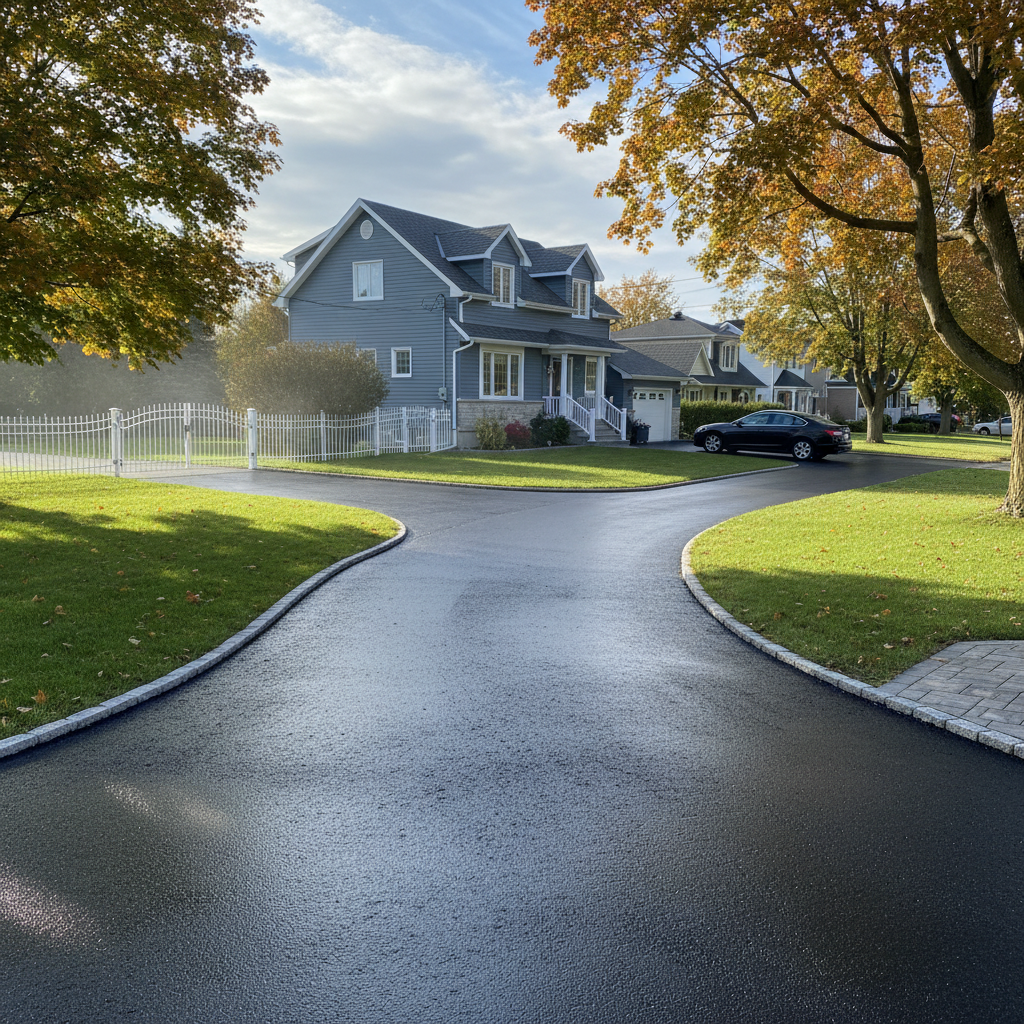
Driveway paving options and costs in Vanderhoof
Vanderhoof homeowners usually have three practical driveway paths: asphalt, interlocking pavers, or concrete. With single-detached houses making up 68.3% of dwellings in the area, most driveways here are residential lots that need a finish that can handle deep freeze conditions and frequent winter disturbance. In 2021, Vanderhoof had 4,346 residents and about 1,250 homeowner households (69.8% of households own), which keeps demand steady for resurfacing and full replacements—not just the occasional “fresh coat.”
In the Nechako region, cold continental winters and a frost-susceptible soil profile are the main reasons quotes can be higher than softer parts of BC. Freeze–thaw cycles drive moisture movement, so contractors typically plan for a deeper, well-compacted granular base, better crossfall, and positive drainage (ditching and/or subdrains). The short paving season also tightens scheduling, so small-job premiums and weather delays can show up in your final numbers. If you’re in an area with older housing stock—55.6% of homes were built before 1981—expect more frequent tear-out, more patching at transitions, and more time locating and replacing suspect base or organic material under the existing surface.
Driveway work is especially in demand around the older core and infill areas near downtown Vanderhoof, where access is tighter and existing driveways often show early alligator cracking, raveling edges, and settled ruts. Use the table below to compare typical material choices and what each option tends to include (and exclude) when contractors build an estimate.
| Material |
Lifespan |
Maintenance |
Best For |
Price per sq ft |
| Asphalt (new installation, proper base) |
15–25 years |
Sealcoat every 3–5 years depending on traffic and weather |
Lower upfront cost with a durable, weather-rated build-up |
$12–$18 |
| Asphalt (overlay on existing gravel base) |
8–15 years |
Sealcoat sooner; more frequent crack filling |
When the base is sound and you want to avoid full excavation |
$10–$16 |
| Interlocking concrete pavers |
20–30+ years |
Periodic joint sand top-up and re-leveling of small sections |
Curb appeal and easier spot repairs without replacing the whole driveway |
$18–$28 |
| Poured concrete (broom finish) |
25–35 years (with control joints and good drainage) |
Crack monitoring; minor patching as needed |
Long-lasting, smooth surfaces for plowing and snow storage |
$20–$30 |
| Exposed aggregate concrete |
25–35 years |
Sealer as recommended; patching limited to localized areas |
Enhanced texture for traction in winter and a more decorative finish |
$22–$34 |
| Gravel / crushed stone (budget option) |
3–7 years |
Annual top-ups, regrading, weed control |
Temporary solution or low-traffic access with tight budgets |
$6–$11 |
Prices are estimates only and vary by project scope, site access and material selection.
What affects the price of paving in Vanderhoof
In Nechako, two driveways that look the same on paper can land 30–50% apart once the contractor prices the frost, drainage, and excavation realities. In milder BC areas, you may see thinner granular sections and slower moisture movement, but in Vanderhoof the freeze–thaw cycle is decisive: repeated expansion and contraction pushes water through the pavement system. Deeper frost requires a thicker compacted granular base (often in the 6–12 inch range for residential builds, depending on existing conditions) to prevent heaving, settlement, and cracking. It’s also why asphalt mix design needs to be rated for local freeze-thaw conditions—using a less-specified mix can reduce cost today but increases the likelihood of early raveling and patching.
The paving season is shorter here, and hot-mix asphalt generally needs air temperatures above about 10°C to place and compact properly. That weather window concentrates demand into fewer weeks, which can raise scheduling premiums—especially for small driveways or projects needing extra haul time. In practice, this is why asphalt may still price in the $12–$18 per sq ft band when a full base build is required, even if material costs are similar across BC.
Concrete pricing also moves based on local site factors. For example, older sites (many homes built before 1981) often have organics or soft pockets that must be stripped and replaced, adding disposal and compaction costs. Conversely, if your existing base is already well-graded and well-draining, an asphalt overlay can stay closer to the lower end of the band. Paver projects can jump in cost when tight side setbacks or a steeper driveway force more retaining, edge restraint work, or additional excavation to rebuild the slope and sub-base.
| Price Factor |
Why It Matters |
Cost Impact |
| Driveway area in sq ft |
Most labour and material quantities scale directly with surface area |
Usually the biggest driver; changes can swing totals substantially |
| Base depth required |
Frost line and soil moisture risk determine granular thickness and compaction goals |
Deeper base can add major excavation and aggregate material costs |
| Grading and drainage work |
Crossfall, ditching, and subdrains control water movement that causes heave and cracking |
Often adds significant labour, especially on settled or ponding sites |
| Tear-out of existing surface |
Removing old asphalt/concrete requires breaking, hauling, and disposal handling |
Can add a mid-project cost bump, especially for thick slabs |
| Edge restraints and curbing |
Pavers need solid containment; asphalt needs stable edges to resist raveling |
More material and formwork/time increases total |
| Sealing requirement |
Asphalt needs sealcoat after cure (often 6–12 months) to protect the surface |
Adds a future cost item, typically in the $2–$4 per sq ft range |
| Site access |
Narrow lots or long carry distances slow equipment movement and increase labour hours |
Higher labour and extra handling/placement time |
| Asphalt mix specifications |
Freeze–thaw-rated mix resists cracking and surface deterioration in colder regions |
Usually nudges rates upward within the $12–$18 band |
Permits & regulations in British Columbia
In British Columbia, paving a private driveway within your own property usually does not require a building permit. In most Vanderhoof-area cases, homeowners are simply improving a surface on their lot. However, there are situations that typically do require municipal approval—especially when your driveway ties into city infrastructure. Work in the municipal right-of-way may need approval, including new curb cuts, changes to the boulevard, altered storm drainage connections, or any modification that affects how surface water leaves the property. Some municipalities also have lot-grading and drainage expectations (and bylaws) that restrict how close hard surfaces can be to property lines or how water must be managed.
Step-by-step, here’s how to keep it clean: (1) Call for utility locates before any excavation—BC 1 Call is the usual route in the province. (2) Confirm your driveway’s drainage plan with the contractor (crossfall, ditching direction, and whether a subdrain is required). (3) Ask the contractor whether any part of the work touches municipal assets (curb cut or storm connection). If it does, request the municipal approval process timeline.
To verify a contractor’s credentials in B.C., ask for: a clearance letter or proof of registration/eligibility (where applicable), a current certificate of liability insurance showing your property address, and clear confirmation of worker coverage (WSIB/WCB) for their employees. Then match the company name and address on their quote paperwork to the insurance documents you receive.
Asphalt vs pavers vs concrete for Vanderhoof driveways
For Vanderhoof’s freeze–thaw climate, your best choice usually comes down to balancing upfront cost with how easily you can maintain and repair the driveway after winters. Asphalt typically offers the lowest upfront price, but it relies on protective sealcoating—plan on sealing every 3–5 years to slow oxidation and raveling. Interlocking concrete pavers cost more at the start, yet they shine in cold climates because sections can be lifted, corrected for drainage or base settlement, and reset without replacing the entire driveway. Poured concrete lands in the mid-range; it can last a long time when air-entrained and properly placed with control joints, but it’s more prone to visible cracking if drainage is off or if freeze–thaw cycles move moisture through the base.
Regardless of material, Nechako conditions usually demand strong base preparation—often deeper granular base work than what people remember from milder BC areas—plus positive drainage. For plowing and winter sanding, pavers and properly textured concrete tend to hold traction better than smooth surfaces. If you’re dealing with salt exposure or frequent snow removal, a well-built asphalt system can perform well, but it’s still important to seal on schedule and maintain crack filling.
A simple dollar example: if asphalt is quoted around $12–$18 per sq ft (new installation with a proper base), a paver driveway might land closer to the $18–$28 per sq ft range. In Vanderhoof, that difference is often justified when you want repairable longevity—especially if you expect future base adjustments from frost movement—or when curb appeal is a priority in a visible area near downtown or your main approach.
| Material |
Frost Resistance |
Curb Appeal |
Repair Method |
Lifespan |
Price Band |
| Asphalt (sealed regularly) |
Good when built on a deep, well-compacted granular base and drained properly |
Moderate (clean edges and a good finish matter) |
Crack sealing and patching with localized milling/overlay |
15–25 years |
$12–$18 |
| Interlocking concrete pavers |
Excellent when bedding sand and base compaction are done correctly |
High (multiple colours/patterns) |
Lift-and-reset for sections; re-level and replace units as needed |
20–30+ years |
$18–$28 |
| Poured concrete (air-entrained) |
Very good with air entrainment, control joints, and drainage |
Moderate to high (finish options) |
Localized patching for spalls/cracks; sometimes partial slab replacement |
25–35 years |
$20–$30 |
| Exposed aggregate concrete |
Very good when the mix and finishing are controlled |
High (textured, decorative look) |
Patch and blend techniques for localized surface damage |
25–35 years |
$22–$34 |
| Permeable pavers (drainage grid) |
High with designed underdrain/bedding system; reduces surface water |
High (clean modern look) |
Unit replacement for localized settlement; system inspection and repair |
20–30 years (depends on design and maintenance) |
$24–$38 |
| Chip seal / tar-and-chip |
Fair to good; performance depends on base and binder quality |
Low to moderate |
Spot rework or re-spraying; heavier patches often needed later |
6–12 years |
$8–$14 |
How to choose a paving contractor in Vanderhoof
Choosing a contractor in Vanderhoof is mostly about confirming three things: credentials, a buildable scope, and a realistic schedule for our cold-weather window. First, verify British Columbia licensing/registration details when applicable and ask for proof of liability insurance (certificate of insurance). For worker coverage, request documentation that shows WSIB/WCB coverage for their employees (and that sub-trades, if any, are covered too). Then match the company name on the quote to the insurance certificate and any clearance letter—don’t accept verbal assurances only.
Second, get 2–3 itemised written quotes, not one lump sum. You want labour and material breakdowns that clearly show: excavation/haul, base thickness and aggregate type, geotextile (if used), asphalt/concrete quantities, forms or edge restraints, and finishing. Confirm what’s excluded—common exclusions include disposal fees, site regrading beyond a set area, removal of unsuitable subsoil deeper than expected, and any municipal approval work if the curb cut is involved.
Third, treat warranty like a contract detail: workmanship warranty length, what product/manufacturer warranty applies to, and whether coverage is transferable if you sell the home. For payment, never pay more than 10–15% upfront; use progress payments and hold back a portion until the final brooming/clean-up and any punch-list items are complete. Finally, ask for a written start date and an estimated completion window that accounts for weather and curing time.
- Ask for proof of liability insurance (certificate) and verify it matches the legal company name.
- Request confirmation of WSIB/WCB coverage for employees and proof coverage for any subcontractors.
- Get an itemised quote that lists excavation, base material, and compaction requirements—not just “paving.”
- Confirm whether utility locates are included in their process before digging.
- Ask who disposes of old asphalt/concrete and whether tipping fees are included.
- Make sure the quote states drainage plan items: crossfall, ditch restoration, or subdrains.
- Clarify edge restraint details (curbs, steel edging, paver containment) and who supplies them.
- Confirm asphalt cure and sealcoat timing (if included) and what happens if weather delays placement.
- Request a workmanship warranty duration and what it covers (voids vs. cosmetic issues).
- Ask about base depth targets and whether they’ll adjust based on on-site soil conditions.
- Review the payment schedule and require a signed contract before any work begins.
- Get a start date, staging plan, and a written completion estimate that reflects curing and inspections.
In Vanderhoof, red flags include: quotes that skip base thickness details, contractors who won’t discuss drainage or frost-protection approach, “low price” bids with lump-sum phrasing and no excavation/disposal line items, reluctance to provide insurance/coverage documentation, and payment demands that ask for large upfront deposits with no written schedule or warranty terms.
Frequently asked questions — paving in Vanderhoof
Is it worth sealing a new driveway right away in Vanderhoof?
In Vanderhoof, sealing is usually worth it, but not “immediately after paving.” Asphalt needs time to cure and release moisture; sealing too soon can trap water and weaken the surface. Many contractors schedule sealcoat after the asphalt has properly cured—often within a 6–12 month window depending on weather and product—so the seal can protect against oxidation, raveling edges, and winter surface wear. If you’re building an asphalt driveway in the $12–$18 per sq ft range, sealing is commonly budgeted as an additional line item later, often around the $2–$4 per sq ft band. The key is asking your contractor for the exact timing in writing, because our freeze–thaw cycles and short paving season affect cure schedules.
What is a chip seal driveway and is it suited to Vanderhoof?
A chip seal (tar-and-chip) is an asphalt binder sprayed onto a prepared surface, followed by aggregate broadcast and compacted. It can be suitable for some rural access roads and certain low-traffic lanes, but in Vanderhoof it’s usually not the first choice for a main residential driveway if you want a smooth, long-lived finish. Our deep frost line and freeze–thaw cycles can accelerate surface movement if the base isn’t built to a proper cold-climate standard. Performance is heavily dependent on base prep, binder quality, and consistent spring/summer placement. If you’re considering a lower-cost option (chip seal is often quoted in the $8–$14 per sq ft range), compare it against an asphalt driveway in the $12–$18 band and ask what maintenance schedule they expect over the next 5–10 years.
How much does driveway crack repair cost in Vanderhoof?
Crack repair in Vanderhoof typically starts with cleaning and routing/sealing the crack so water can’t migrate into the base. For small, localized cracks, pricing is often relatively modest; for larger cracks with edge failure or settlement, expect patching that extends beyond the crack line. Costs vary by how many metres of cracking you have and whether it’s purely asphalt sealing versus milling/patching. As a realistic planning range, many homeowners budget within the same general order of magnitude as the early maintenance work tied to asphalt protection—especially if you’re staying on top of sealing (often $2–$4 per sq ft for seal-related work). Ask your contractor to provide a per-sq-ft and per-liner-ft breakdown so you can compare bids fairly, and make sure they address drainage issues, not just the crack.
What base thickness do I need for pavers in Vanderhoof?
For pavers in Vanderhoof, the “right” base thickness depends on soil conditions, existing base condition (if you’re replacing vs. overlaying), and the drainage plan—because freeze–thaw cycles can move moisture through weak or thin sections. In cold-climate builds, contractors generally target a compacted granular base thickness in the range of several inches to about a foot total when you account for both sub-base and bedding layers (the exact depth can vary after an on-site assessment). The practical takeaway: a paver quote should include base depth targets and compaction testing/standards where possible, not just the paver cost. If your driveway is on older fill or shows pumping/soft spots, be prepared for deeper excavation and more granular replacement—one of the reasons quotes vary a lot across Nechako.
How do I get the most accurate paving quote in Vanderhoof?
To get an accurate paving quote in Vanderhoof, ask for an on-site assessment that includes drainage review and base evaluation. Tell the contractor if you’ve seen ponding, ruts, or repeated cracking patterns—those observations directly affect excavation depth and granular rebuild. Provide driveway measurements (width/length) and confirm access constraints (gate width, slope, where trucks can stage). Request 2–3 itemised quotes with line items for excavation/haul, base materials and depth, geotextile (if proposed), edge restraints, and disposal/tipping fees. Also confirm whether they include utility locates and whether municipal approval is required if any work touches right-of-way (like a curb cut). Finally, ask about schedule sensitivity to rain/cold snaps, since our short paving season can influence how much work they need to stage.
How much does it cost to pave a driveway in Vanderhoof?
The total cost depends on area, base condition, and whether you need full tear-out and reconstruction, but most homeowners can anchor expectations to local per-sq-ft bands. For asphalt driveway paving with a proper base build, quotes often land in the $12–$18 per sq ft range. Interlocking pavers commonly price higher, often in the $18–$28 per sq ft range, reflecting materials, base restraint, and installation labour. Poured concrete typically sits around $20–$30 per sq ft, again depending on thickness, reinforcement needs, and finishing. Because Vanderhoof’s freeze–thaw conditions can require deeper granular bases and more drainage corrections, similar-looking driveways can still vary by 30–50%. Use itemised quotes and ask what base depth and drainage details are included so you’re comparing like-for-like.