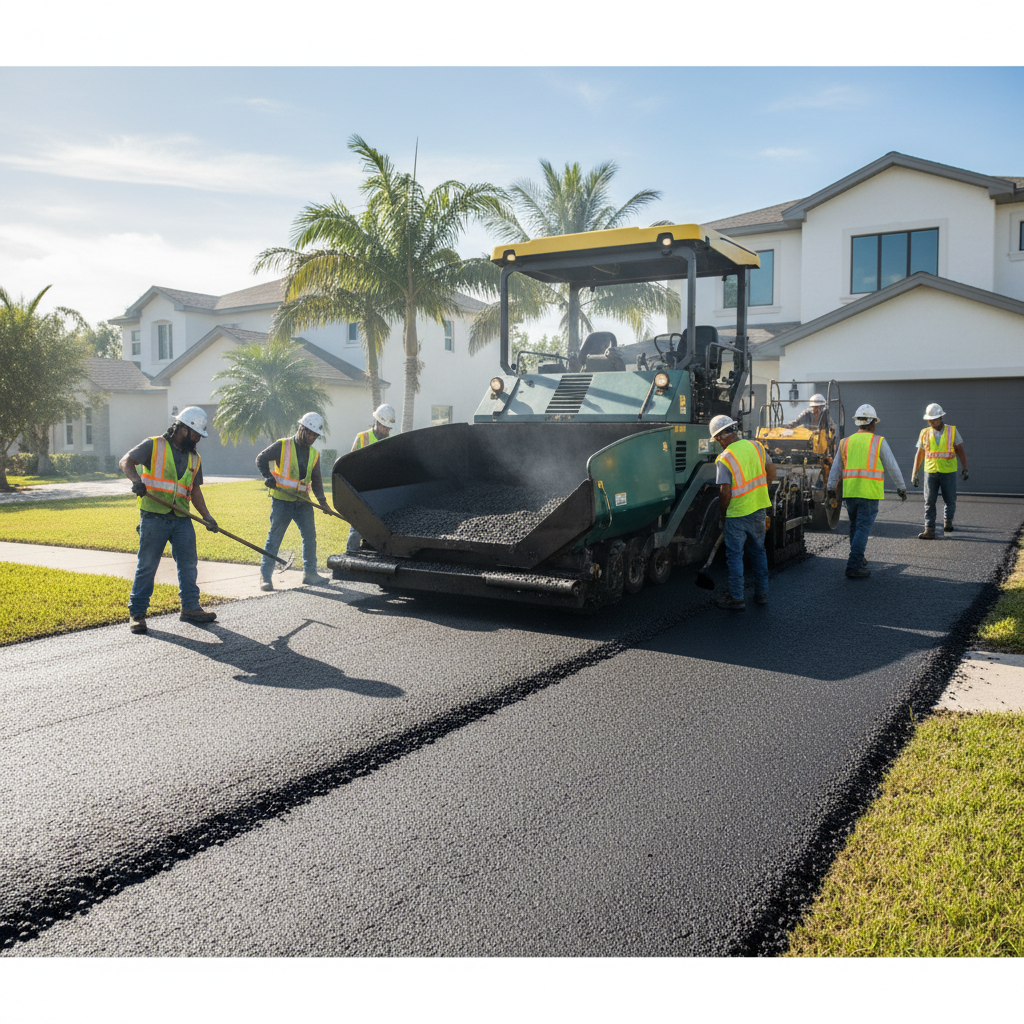
Driveway paving options and costs in Clearwater
In Clearwater, British Columbia, homeowners typically start by comparing driveway paving options that fit both our freeze–thaw winters and how long they want to go between repairs. Most driveways here are tied to single-detached homes—about 72.6% of dwellings are that type—so the addressable market is large and the competition between contractors is real, especially around the busiest spring and early-summer weeks. Clearwater also has an older housing stock: 50.5% of homes were built before 1981, and older lots often have legacy drainage patterns and soils that need more base work to prevent future heaving.
In the Thompson–Okanagan, costs are shaped by the need for a frost-resistant pavement structure. The frost line for structures is roughly about 18 inches in much of the interior, but for driveways and slabs the real challenge is moisture plus repeated freeze–thaw. That means we build thicker, well-compacted granular base than a minimal “thin lift” approach. Weather timing also matters: hot-mix asphalt requires warm air temperatures (commonly above 10°C), so crews in Clearwater schedule tighter, and pricing includes weather risk and mobilization.
Demand is especially steady around the Clearwater Valley / river-adjacent areas where lots can be flatter and drainage details are critical. If you’re getting quotes now, use the comparison below as a starting point, then match your option to your soil, access, and drainage plan.
| Material |
Lifespan |
Maintenance |
Best For |
Price per sq ft |
Price Range |
| Asphalt (new installation, proper base) |
15–25 years |
Seal coating every 3–5 years; patch as needed |
Smooth, quiet driving; best value when base is done right |
$6.50–$9.50 |
$4,500–$9,000 |
| Asphalt (overlay on existing gravel base) |
10–18 years |
Seal as required; more frequent patching if base settles |
Budget upgrade when the existing base is firm and stable |
$5.50–$8.00 |
$4,000–$7,500 |
| Interlocking concrete pavers |
25–35 years |
Re-sand joints; address spot movement early |
Curb appeal; easier repairs without full replacement |
$13.00–$20.00 |
$6,500–$14,000 |
| Poured concrete (broom finish) |
20–30 years |
Seal if desired; manage joints and patch hairline cracks |
Long straight runs; low annual maintenance |
$12.00–$18.00 |
$7,000–$15,000 |
| Exposed aggregate concrete |
25–35 years |
Seal periodically; spot repairs for pop-outs |
Slip-resistant surface; decorative upgrade |
$16.00–$24.00 |
$8,500–$16,500 |
| Gravel / crushed stone (budget option) |
3–10 years (varies widely) |
Re-grade and top up seasonally; weed control |
Short-term solution; minimal upfront cost |
$3.00–$6.00 |
$2,000–$5,000 |
Prices are estimates only and vary by project scope, site access and material selection.
What affects the price of paving in Clearwater
In Clearwater and across the Thompson–Okanagan, two quotes for what sounds like the same driveway can differ by 30–50% because the “hidden” work is different. The biggest driver is how much frost protection and drainage correction your site really needs. A contractor may price a minimal section that looks fine in summer, while another prices the full frost-resistant section with a deeper, better-compacted granular base and proper water control. On top of that, the short paving season in colder interior regions concentrates demand; hot-mix asphalt is typically produced and placed in warmer weather, so mobilization and weather risk can move labour and scheduling costs.
Freeze–thaw cycles are decisive here. Even though the BC Building Code frost line for structures is about 18 inches in much of the interior, paved surfaces see higher moisture exposure and traffic loading—so we commonly target a total asphalt or concrete structure in the ~8.5–9 inch range for residential asphalt, with around 6 inches of compacted base. If your soil is clayey, if the driveway is sloped, or if drainage is poor, the base depth and granular quality often increase. In many cases, you’ll see that reflected in asphalt going from “lower band” work to “upper band” work—using the local asphalt paving range of $4,500–$9,000 as the baseline—depending on whether deeper excavation and upgraded base are required.
Concrete costs also shift with local conditions. For example, a poured concrete driveway priced closer to $7,000–$15,000 may include saw-cut jointing and better sub-grade prep; if joints are skipped or the slab rides on unstable sub-base, hairline cracking and spalling tend to show up sooner, which can increase future patching. In older lots built before 1981, legacy fill and inconsistent compaction can mean a larger tear-out and more granular replacement, which pushes pricing upward.
| Price Factor |
Why It Matters |
Cost Impact |
| Driveway area in sq ft |
Most of the material and paving labour scales with square footage. |
High (often the difference between a lower and upper quote band) |
| Base depth required |
Frost protection relies on compacted granular thickness; deeper base reduces heaving and cracking. |
High (can change the job by thousands) |
| Grading and drainage work |
Correct slope and water shedding keep moisture out of the structure during winter freeze–thaw. |
Medium to High (especially on older lots with drainage issues) |
| Tear-out of existing surface |
Breaking and hauling concrete/asphalt adds disposal, labour, and equipment time. |
Medium (can be a large one-time swing) |
| Edge restraints and curbing |
Restraints keep pavers from spreading and help keep asphalt from migrating. |
Medium |
| Sealing requirement |
Asphalt typically needs sealing after installation (and then periodically) to protect from moisture and oxidation. |
Low to Medium (adds cost but extends service life) |
| Site access |
Narrow lanes and tight turning radiuses slow equipment movement and increase setup time. |
Low to Medium (can become Medium on complex sites) |
| Asphalt mix specifications |
Freeze–thaw-rated mix and binder design costs more than generic mixes but performs better long-term. |
Medium |
Permits & regulations in British Columbia
In British Columbia, paving a private driveway within your own property usually does not require a building permit—especially when you’re resurfacing existing pavement or placing a new surface on your lot. However, work that touches the municipal right-of-way (the area between your property line and the road) can require municipal approval. Examples that commonly require approval include new or modified curb cuts, changes to boulevard elevations, modifications to storm drainage (like altering a ditch flow path or catch basin tie-in), or any work that affects how water is directed toward the street system.
Some municipalities also have lot-grading bylaws that restrict how close hard surfaces can be to property lines or how runoff must be handled. Before you sign, ask your contractor to confirm whether your scope stays entirely on private property, and whether any right-of-way approvals or forms are needed.
To protect yourself in Clearwater, verify your contractor’s licensing and coverage before excavation starts:
- Check the contractor’s business profile and licence status through the appropriate BC online registry (and ensure the name matches the quote).
- Request a Certificate of Insurance and verify General Liability coverage includes property damage and ongoing operations.
- Confirm WCB coverage (or the contractor’s WCB clearance process) for workers on-site.
- Ask for a clearance letter or the most current WCB document, not just a verbal claim.
- Keep copies—quote, scope, and insurance documents—in your project file.
Asphalt vs pavers vs concrete for Clearwater driveways
Choosing between asphalt, interlocking pavers, and concrete in Clearwater is mostly about balancing upfront cost, winter durability, and how you want repairs handled. Asphalt usually offers the lowest upfront cost, and with a properly compacted base and a seal applied after the first season, it tends to perform well through Thompson–Okanagan freeze–thaw cycles. That said, asphalt wants routine maintenance: sealing every 3–5 years helps slow oxidation and moisture infiltration—important for preventing those early winter cracks.
Interlocking concrete pavers cost more up front, but they’re hard to beat for flexibility in our climate. Because individual units can be lifted and reset, pavers are often the best choice if you expect future utility work or if your soil/drainage might need careful correction during the first winter or two. For homeowners focused on curb appeal, pavers also look sharp on older, detached-home properties—an important consideration since many driveways here belong to established neighbourhoods and older lots.
Poured concrete sits in the middle on cost and can last a long time if it’s air-entrained and properly jointed. In interior BC, freeze–thaw and de-icing practices matter. If the concrete mix isn’t air-entrained and joints are poorly planned, cracking and spalling become more likely after cycles of thawing, freezing, and moisture migration.
On base prep: whether you choose asphalt or concrete, the depth of compacted granular base and drainage grading are what prevent heaving and rutting—not just the surface material. A concrete driveway can be justified over asphalt when you need a longer service life and low touch maintenance, but if your budget is tight and your site is stable, asphalt around $4,500–$9,000 often delivers strong value compared to pavers at $6,500–$14,000, especially when sealing is included in the plan.
| Material |
Frost Resistance |
Curb Appeal |
Repair Method |
Lifespan |
Price Band |
| Asphalt (sealed regularly) |
Good with proper base and drainage |
Moderate (clean, dark finish) |
Mill/patch or full-lane patch |
15–25 years |
$4,500–$9,000 |
| Interlocking concrete pavers |
Excellent with restrained edges and compacted base |
High (design options and crisp borders) |
Lift-and-reset localized panels/units |
25–35 years |
$6,500–$14,000 |
| Poured concrete (air-entrained) |
Good with air entrainment and joints |
Moderate to high (finish options) |
Patch; larger repairs may require section replacement |
20–30 years |
$7,000–$15,000 |
| Exposed aggregate concrete |
Good to excellent with proper finishing and curing |
Very high (decorative stone texture) |
Localized patching with specialty repair |
25–35 years |
$8,500–$16,500 |
| Permeable pavers (drainage grid) |
Excellent when base is built for infiltration and frost control |
High (modern look) |
Spot repairs by removing affected units and re-leveling |
20–30 years |
$7,500–$16,000 |
| Chip seal / tar-and-chip |
Moderate (surface wears; depends on prep) |
Low to moderate (texture finish) |
Re-chip/spot patching |
7–12 years |
$3,500–$7,000 |
How to choose a paving contractor in Clearwater
Choosing a contractor carefully matters in Clearwater because the most common “early failures” are usually base and drainage problems, not the final layer. Start by verifying British Columbia licensing (where applicable), then confirm liability insurance and WCB coverage. You should be able to see documentation before work begins: a current insurance Certificate of Insurance showing General Liability, and WCB clearance/coverage documents showing the contractor’s workers are protected for work on-site.
Next, request 2–3 itemised written quotes—not a single lump-sum number. Good quotes break out labour and materials so you can compare like-for-like: excavation amount, granular base depth, compaction method, asphalt thickness, type of mix, and any allowance for drainage corrections or tear-out/disposal. Be clear about exclusions: Is permit or municipal approval included if the scope touches right-of-way? Is disposal included for old asphalt or concrete? Are edge restraints included? If you want a seal coat, is it included after the appropriate cure period?
For warranty, look for a workmanship warranty (how long the installer stands behind compaction, grade, and installation) and separate any product/manufacturer warranty language. Confirm whether the warranty is transferable if you sell your home. Payment schedule should protect you: never pay more than 10–15% upfront; hold back the remaining balance until the job is complete and the grade/drainage is verified. Get a start date and completion estimate in writing so scheduling disputes don’t turn into season delays.
- Ask for proof of WCB coverage and keep the clearance/coverage document on file.
- Request a current Certificate of Insurance (liability) and confirm the insured business name matches the quote.
- Verify the address and scope in the contract match the work site in Clearwater.
- Get quotes that list excavation depth and granular base thickness, not just “proper base.”
- Confirm compaction requirements and whether a roller test or compaction testing is referenced.
- Ensure drainage/grading details are included (slope, ditch tie-ins, and water flow away from the structure).
- Ask what happens if weather delays the paving season—are dates updated in writing?
- Confirm tear-out and disposal costs are included if you’re replacing existing asphalt or concrete.
- For pavers, confirm edge restraints are included (tees/locks) and joint sand specs.
- For asphalt, confirm seal timing (after cure) and whether sealing is included in year one.
- Ask who will mark/locate utilities before excavation and whether they coordinate with BC 1 Call.
- Review warranty terms in plain language, including coverage for settlement and workmanship issues.
Red flags in Clearwater include: vague scopes that don’t specify base thickness or drainage grading, insisting on full payment upfront, quoting without site inspection, refusing to provide insurance/WCB proof, and starting excavation without utility locates or written confirmation of right-of-way limitations.
Frequently asked questions — paving in Clearwater
How often should I seal my asphalt driveway?
For Clearwater, seal coating is typically done after the asphalt has fully cured and then repeated based on wear, not just the calendar. Many homeowners plan for sealing every 3–5 years, because our Thompson–Okanagan freeze–thaw cycles drive moisture movement and accelerate surface aging if water gets into the binder. If your contractor installed new asphalt in a properly built section, sealing helps protect the surface from oxidation and reduces early cracking. If you’re planning a budget job, it’s wise to compare quotes that include the seal plan—lower upfront pricing can cost more later if sealing isn’t scheduled. As a reference, many residential asphalt installations fall into the $4,500–$9,000 range depending on base and drainage prep.
Why does my driveway crack and heave in winter?
The most common reason in Clearwater is moisture plus insufficient frost protection. If water can soak into the granular layers—or if the driveway base is thin or poorly compacted—freeze–thaw cycles can cause heaving and cracking. Older lots (and many homes built before 1981) may also have inconsistent fill or drainage that routes water toward the driveway instead of away from it. Slopes that don’t shed water, missing edge restraints, or drainage that routes runoff onto the slab can all worsen the problem. De-icing practices and plowing can add stress to weak spots. A properly designed frost-resistant structure with adequate compacted base depth and correct grading usually prevents the “early” cracking and heaving you’re seeing.
Do I need a permit to pave my driveway in British Columbia?
In most cases, paving a private driveway within your own property in British Columbia does not require a building permit. Where permits and approvals can come in is when your project affects the municipal right-of-way—such as changing a curb cut, altering boulevard elevations, or modifying storm drainage connections. Some municipalities also regulate lot grading and runoff direction, especially where drainage changes could affect neighbouring properties. Because each Clearwater lot is different, the safest approach is to ask your contractor to confirm whether any work touches the boulevard or drainage systems. If utility locates are needed, ensure BC 1 Call is used before excavation.
How long before I can drive on new asphalt?
After asphalt paving in Clearwater, your driveway generally needs time to cool and set before vehicles drive on it. Contractors typically instruct a short waiting period immediately after placement and then restrict heavy loads until the mat has cooled sufficiently. Weather matters: cooler, wetter days extend cure time, while warmer, dry conditions shorten it. If the job includes an early seal coat plan, the contractor will also follow manufacturer cure timing for the surface. A common issue is driving on fresh asphalt too early, which can mark the surface or create rutting—then you’re paying for patching later. Ask your paving contractor for the specific timeframe stated in your installation notes and the temperature conditions at placement.
What causes potholes and how are they repaired?
Potholes in Clearwater usually start with water infiltration. A small crack or failed joint allows water to enter the asphalt and base. When freeze–thaw cycles happen, the water expands and weakens the material underneath, pulling the surface apart into a pothole. Heavy vehicle loads, turning stresses, and plow impacts can also contribute by breaking down weak areas. Repair is most effective when it addresses the underlying failure: contractors typically cut out to sound material, clean and dry the area, then add new asphalt (and sometimes base) and compact properly. If the base is sound, patching can be quick; if settlement or moisture is recurring, you may need larger area rehabilitation rather than repeated small patches.
How do I prepare for a paving project?
Preparation makes a big difference in Clearwater because crews operate in a shorter paving window and weather can delay work. Start by clearing the driveway route: remove vehicles, trailers, and any items that limit equipment access. Mark sprinkler heads and any landscaping that you want protected, and confirm where you want spoil/disposal handled. If your scope involves excavation, utility locates should be arranged (your contractor should coordinate with BC 1 Call). Review the quote scope for tear-out, base depth, drainage/grading changes, and—if asphalt—whether a seal coat is included and when. Since many Clearwater driveways serve detached homes, consider whether your drainage plan will keep water away from the foundation. Finally, plan your budget: asphalt jobs often land in the $4,500–$9,000 range while paver and concrete options commonly run higher depending on base and finish.