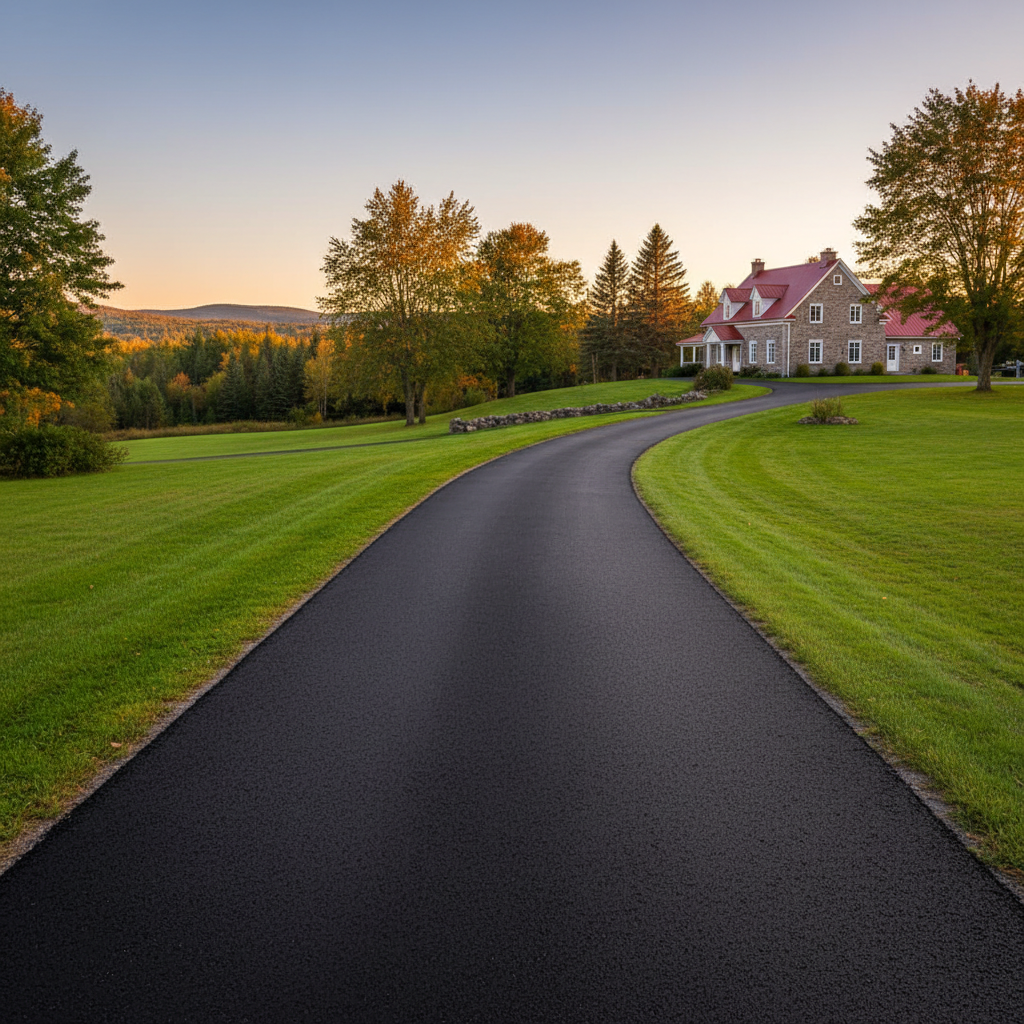
Driveway paving options and costs in Taylor
Taylor, British Columbia homeowners typically look at three driveway routes—new asphalt, interlocking concrete pavers, and concrete—because most local driveways serve single-detached homes (41.7% of dwellings), and a large share of households are owner-occupied (77.1% of households own) (Statistics Canada, 2021 Census). That matters because paving demand here isn’t just from rentals; it’s steady, long-term homeowner renewal.
In the Northeast economic region, pricing is pushed by deep frost and frequent freeze–thaw cycles. When frost penetrates deeply, the driveway needs a thicker, well-compacted granular base plus positive drainage so water doesn’t sit and expand during winter. Contractors also face a shorter effective paving season; hot-mix asphalt generally needs warm conditions (often air temps above 10°C) to place and compact properly, which tightens scheduling and can raise mobilization and labour costs. Freight and crew availability in and around northern communities can add further cost versus milder parts of BC.
Even within Taylor, contractors often see the highest demand in established residential pockets closer to core services, where driveways are already paved or gravel-to-hard transitions are common. If your existing surface is failing, a proper tear-out and rebuild tends to cost more up front—but it’s what reduces early cracking and edge failure.
Below is a realistic comparison of material choices for typical Taylor driveway projects. Use it as a starting point before you request an itemised quote.
| Material |
Lifespan |
Maintenance |
Best For |
Price per sq ft |
| Asphalt (new installation, proper base) |
15–25 years |
Sealcoat every 3–5 years |
Most common value option in Taylor |
$5.50–$11.00 |
| Asphalt (overlay on existing gravel base) |
10–18 years |
Sealcoat every 3–5 years; monitor edges |
When base can be improved without full rebuild |
$4.25–$9.50 |
| Interlocking concrete pavers |
25–35 years |
Occasional re-leveling; replace individual pavers if needed |
Curb appeal and modular repairs |
$8.50–$17.00 |
| Poured concrete (broom finish) |
20–30 years |
Limited; occasional crack seal |
Low-maintenance, smooth driving surface |
$9.00–$18.00 |
| Exposed aggregate concrete |
20–30 years |
Sealer as recommended by finish type |
Slip resistance and a textured look |
$10.00–$20.00 |
| Gravel / crushed stone (budget option) |
3–7 years |
Regrade and top up every 1–3 years |
Short budget window or transition period |
$2.25–$4.50 |
Prices are estimates only and vary by project scope, site access and material selection.
What affects the price of paving in Taylor
In Taylor, you can see the same driveway end up 30–50% apart between quotes because paving isn’t just the surface material—it’s the excavation, base build-up, drainage detailing, and the risk the contractor prices in for weather delays. Across Northeast BC, frost depth and freeze–thaw intensity are decisive cost factors. When frost penetration runs deeper, you typically need a thicker compacted granular base (often 6–12 inches equivalent build-up in colder inland conditions) rather than the thinner assemblies you’ll see in milder coastal BC, where freeze penetration is less severe and crews may move faster through longer seasons.
The paving season is also shorter. Hot-mix asphalt placement generally requires warm, dry conditions; if rain or cold snaps hit, crews may lose days and face overtime or rescheduling. That concentration of work in spring and summer can push labour rates and mobilization costs up. Asphalt mix design is another lever: freeze-thaw-rated asphalt blends and proper compaction practices cost more in materials and quality control than “generic” mix.
Concrete pricing shifts too. For example, a poured slab on well-prepped base can come in cleaner than one requiring extra undercut and re-compaction to stabilize soft subgrade. Meanwhile, older homes built before 1981 (28.4% of dwellings) often come with mature vegetation, unknown fill layers, or non-standard grading—any surprises during excavation can add disposal and base rework dollars. On larger driveways, even a small change in base depth and drainage corrections can push the project toward the higher end of asphalt’s typical range (for example, $4,500–$8,500 for driveways) and narrow the gap to pavers when long curb lengths are involved.
| Price Factor |
Why It Matters |
Cost Impact |
| Driveway area in sq ft |
Most costs scale with square footage (excavation, base, surface, labour) |
High |
| Base depth required |
Frost line conditions require thicker granular layers to prevent heaving and cracking |
High |
| Grading and drainage work |
Proper slope and positive drainage prevent water from freezing under the surface |
Medium to High |
| Tear-out of existing surface |
Breaking and hauling old concrete or old asphalt adds labour and disposal |
Medium to High |
| Edge restraints and curbing |
Restraints keep pavers and asphalt from spreading under freeze–thaw pressure |
Medium |
| Sealing requirement |
Asphalt needs sealing after placement and then periodically to protect from moisture and oxidation |
Low to Medium (recurring) |
| Site access |
Narrow lots slow equipment movement and may increase labour time |
Medium |
| Asphalt mix specifications |
Freeze-thaw-rated mix with correct binder selection performs better in northern winters |
Medium |
Permits & regulations in British Columbia
In British Columbia, paving a private driveway within your own property usually does not require a building permit, because you’re not changing the building itself. However, work that affects the municipal right-of-way typically needs municipal approval. In practice, that includes new or modified driveway access that changes curb lines (for example, a new curb cut), alterations to the boulevard/sidewalk interface, and any modifications that could affect storm drainage flow patterns. If your driveway ties into catch basins, culverts, or needs adjustments to existing drainage infrastructure, expect additional review.
Also check local lot-grading bylaws. Some communities restrict how close hard surfaces can be to property lines or require certain drainage grades to prevent water from impacting neighbouring lots. Even when a permit isn’t required, you still want your design to align with those grading and drainage expectations.
Before excavation, do utility locates every time. In BC that’s done through BC 1 Call. Have the contractor provide the locate reference and ensure marked utilities are respected during excavation.
To verify a Taylor-area contractor’s credentials, do this step-by-step: (1) confirm their business licence/registration where applicable using public records or the contractor’s listing details, (2) request a certificate of liability insurance and check it matches the work location and includes adequate coverage limits, and (3) confirm worker coverage through WCB/clearance documentation (ask for the current clearance letter or status). Don’t proceed without these documents—frost-season excavation can uncover surprises, and you want coverage in place before any dig begins.
Asphalt vs pavers vs concrete for Taylor driveways
For Taylor’s freeze–thaw climate, asphalt is usually the lowest upfront option and provides a smooth ride, but it depends on proper base construction and regular sealing. If you keep up with sealing every 3–5 years, asphalt tends to perform well where drainage is corrected and edges are properly restrained. Interlocking concrete pavers cost more to install, but they’re the most flexible: you can replace individual units after winter damage or spot repairs without tearing up the entire driveway. That matters when ploughing and traction sand break down corners and joints over time. Poured concrete sits in the middle for cost and is durable, yet it can crack if it isn’t air-entrained and properly detailed for frost movements; jointing, thickness, and base preparation are non-negotiable. Exposed aggregate can also help with slip resistance, but it doesn’t remove the need for the same freeze-ready base.
In Northeast BC, the base design is what makes or breaks performance. Expect contractors to build for deeper frost with thicker granular layers and strong compaction, plus a slope that sheds water instead of letting it pool. For winter maintenance, asphalt and concrete can both handle plowing, but de-icing salts can accelerate surface wear—concrete especially if it’s not properly air-entrained. Pavers typically tolerate salt impacts better at the unit level, though joints still need attention.
Dollar-wise, the difference is usually justified when you’re choosing pavers for long-term appearance and repairability. For instance, if a comparable asphalt driveway comes in around the top of its band at $8,500, pavers may land closer to the middle-upper paver range; that higher investment can be worth it if you want curb appeal and the ability to fix isolated areas rather than doing a full overlay or slab replacement.
| Material |
Frost Resistance |
Curb Appeal |
Repair Method |
Lifespan |
Price Band |
| Asphalt (sealed regularly) |
Good with thick base and drainage; depends on sealing cycle |
Good |
Patch and compact; sealcoat for broader wear |
15–25 years |
$4,500–$8,500 |
| Interlocking concrete pavers |
Very good when base is engineered and edges are restrained |
High |
Replace individual pavers; re-level localized areas |
25–35 years |
$8,000–$16,000 |
| Poured concrete (air-entrained) |
Good when air-entrained and jointed on correct base |
Medium |
Crack seal and patch; full slab replacement if severely heaved |
20–30 years |
$9,000–$18,000 |
| Exposed aggregate concrete |
Good with proper base and sealing considerations |
High |
Patch/grind localized sections; reseal as needed |
20–30 years |
$10,000–$20,000 |
| Permeable pavers (drainage grid) |
Very good for reducing trapped moisture under surface |
High (modern look) |
Replace affected units; maintain drainage joints |
25–35 years |
$9,500–$18,500 |
| Chip seal / tar-and-chip |
Moderate; best for certain base conditions and managed maintenance |
Lower to medium |
Spot re-chip and patch; periodic maintenance |
7–15 years |
$3,500–$7,500 |
How to choose a paving contractor in Taylor
Choosing the right contractor in Taylor, British Columbia is mostly about verifying coverage and comparing scopes. Start by confirming British Columbia credentials: ask for a current certificate of liability insurance and make sure the policy covers work at your address. For worker protection, request proof of WCB coverage/clearance (the contractor should be able to provide a current clearance letter or status). If the company does subcontract portions, ask who is responsible for pavement installation and who holds the insurance for those crews—don’t let liability get blurry.
Next, get 2–3 itemised written quotes. You want labour and materials broken down, not just a lump sum. A fair comparison should show excavation depth assumptions, base thickness, whether geotextile is included if needed, haul/disposal, compaction methodology, and the surface build (asphalt lift thickness, concrete thickness, and finish type). Clarify what’s excluded: permit pull (if any), utility locate fees, and disposal—those can swing pricing even when the driveway looks identical.
Warranty matters in our freeze-heavy climate. Ask for the workmanship warranty length and what it covers (for example, settlement, edge failure, or delamination). Confirm whether the manufacturer warranty (for pavers/asphalt systems/sealers where applicable) is transferable to future owners.
For payment, never pay more than about 10–15% upfront. Use a holdback until the job is fully complete, including cleanup and sealing requirements. Finally, require a written timeline with a start date and a completion estimate; in Northeast BC, weather changes can affect the paving window quickly, so schedule certainty is part of the value.
- Ask for 2–3 itemised quotes with labour/material breakdown.
- Confirm excavation depth and base build-up in writing (including drainage).
- Verify whether geotextile or insulation is included if subgrade is weak.
- Request compaction details (how many passes and which equipment).
- Make sure tear-out and disposal are clearly priced if there’s existing asphalt/concrete.
- Check that edges/curb restraints or forms are included for pavers/asphalt.
- For asphalt, confirm sealcoat timing and whether the first seal is included or required.
- Ask what cold-weather plan they use for scheduling setbacks (and what triggers postponement).
- Confirm concrete mix is air-entrained and that joints are included/design assumptions.
- Get the warranty in writing—workmanship and any product/system coverage.
- Confirm insurance certificate and WCB clearance/status before work starts.
- Agree on payment milestones: small deposit, progress payment, and holdback.
Red flags in Taylor: quotes that don’t specify base thickness or compaction, missing insurance/WCB clearance documentation, vague language like “proper prep” without measurements, no written warranty terms, and payment requests that ask for most of the money before asphalt is even placed.
Frequently asked questions — paving in Taylor
How long before I can drive on new asphalt?
In Taylor, British Columbia, the drive-on time for new asphalt depends on weather, thickness, and how the crew compacts the mat. Typically, light foot traffic is fine sooner, but vehicles are usually kept off until the asphalt has cooled and stabilized—often the same day for smaller placements when conditions are warm and dry. If the paving is placed later in the day or temperatures drop, it may require more waiting to avoid tire pickup or rutting. Always follow the contractor’s traffic plan and curing guidance, since our Northeast freeze–thaw cycles punish early surface damage. When contractors schedule within the shorter warm window, they’re protecting the placement quality; rushing traffic can undercut that. For driveway budgeting, remember that asphalt often needs a future sealcoat (commonly every 3–5 years), which is separate from the initial curing time.
What causes potholes and how are they repaired?
Potholes usually start with water getting under the surface. In Taylor’s Northeast BC conditions, that water freezes and expands, loosening the asphalt and granular base. Freeze–thaw cycling plus ploughing impacts can accelerate edge break-down, and if drainage isn’t corrected, the problem repeats. Common causes include weak subgrade, insufficient base depth, lack of proper slope, and delayed or omitted sealing. Repair typically involves cutting out the failed area to reach sound material, cleaning, then rebuilding the base and adding asphalt lifts to match height and compaction. The contractor should compact properly so the patch doesn’t re-crack. If the driveway has broad deterioration, an asphalt overlay may be more cost-effective than repeated patching—often the difference is reflected in quotes that land anywhere from the lower to upper end of the asphalt band (for example, $4,500–$8,500 depending on scope).
How do I prepare for a paving project?
Before your driveway job starts in Taylor, clear access and protect what you can. Move vehicles, plan for equipment access (tight lots slow production), and remove items like planters, hoses, and low fences from the work zone. Mark any utilities or sprinklers you know about so the contractor respects them—then ensure the contractor arranges BC 1 Call locates. Review the quote for what prep includes: removal of existing gravel, tear-out of old asphalt/concrete, and disposal. If there are trees or shrubs near the edges, ask how root-prone areas will be handled and whether stump removal or trimming is included. Weather also matters in Northeast BC; ask the contractor what they’ll do if conditions fall outside placement requirements. Finally, confirm your payment schedule and holdback plan in writing, so the site is cleaned and sealing steps are completed as promised.
How do I compare paving quotes fairly?
To compare quotes fairly in Taylor, British Columbia, focus on scope—not just the bottom-line number. Ask each contractor to itemise excavation, base thickness, drainage/grading corrections, edge restraints/curbs, and whether geotextile is included for soft subgrade. Confirm the surface spec: for asphalt, the lift thickness and mix suitability for freeze–thaw conditions; for concrete, that the mix is air-entrained and the finishing/jointing plan is included. Make sure tear-out and disposal are accounted for if you have existing asphalt or concrete. Also compare warranties (workmanship duration) and the first sealing/maintenance requirements—especially for asphalt, where sealing in the early period and then every few years can affect total lifecycle cost. If one quote is near the low end of $4,500–$8,500 for asphalt driveways while another is closer to the high end, the difference should usually show up in base depth, drainage, or compaction details.
Can asphalt be laid in cold weather in Taylor?
Asphalt can be laid in cooler conditions sometimes, but true cold weather increases risk. In Taylor and the Northeast BC region, hot-mix asphalt generally requires warm enough air and surface conditions to place and compact properly—often crews target conditions where air temperatures are above about 10°C. When it’s colder, compaction doesn’t lock in and early surface issues can form, especially under the stresses of freeze–thaw. Contractors may use heated materials, insulated blankets, or ground thawing for specific projects, but that adds cost and isn’t always practical for every driveway. The best quote should state temperature/conditions triggers and what happens if the season shifts (postponement vs cold-weather method). If you’re comparing quotes, avoid any proposal that promises “we’ll pave no matter what” without explaining placement conditions, curing time, and the added measures they’ll use.
What is a driveway apron and do I need one in Taylor?
A driveway apron is the transition section at the driveway entrance—typically where the driveway meets curb, sidewalk, or the end of a driveway approach. It’s used to create a smoother grade change, protect edges from impact, and reduce water intrusion at the entrance. In Taylor, an apron is often recommended when the driveway tie-in area is subject to heavy vehicle turning, plough impacts, or when drainage at the entrance needs correction to prevent water pooling. Whether you “need” one depends on your current geometry and the local right-of-way interface; if your work affects municipal right-of-way or driveway access/curb transitions, approvals may be required. Your contractor should assess your existing grades, provide a drainage-minded detail, and confirm whether an apron (and any related curb line modifications) is included in the scope.