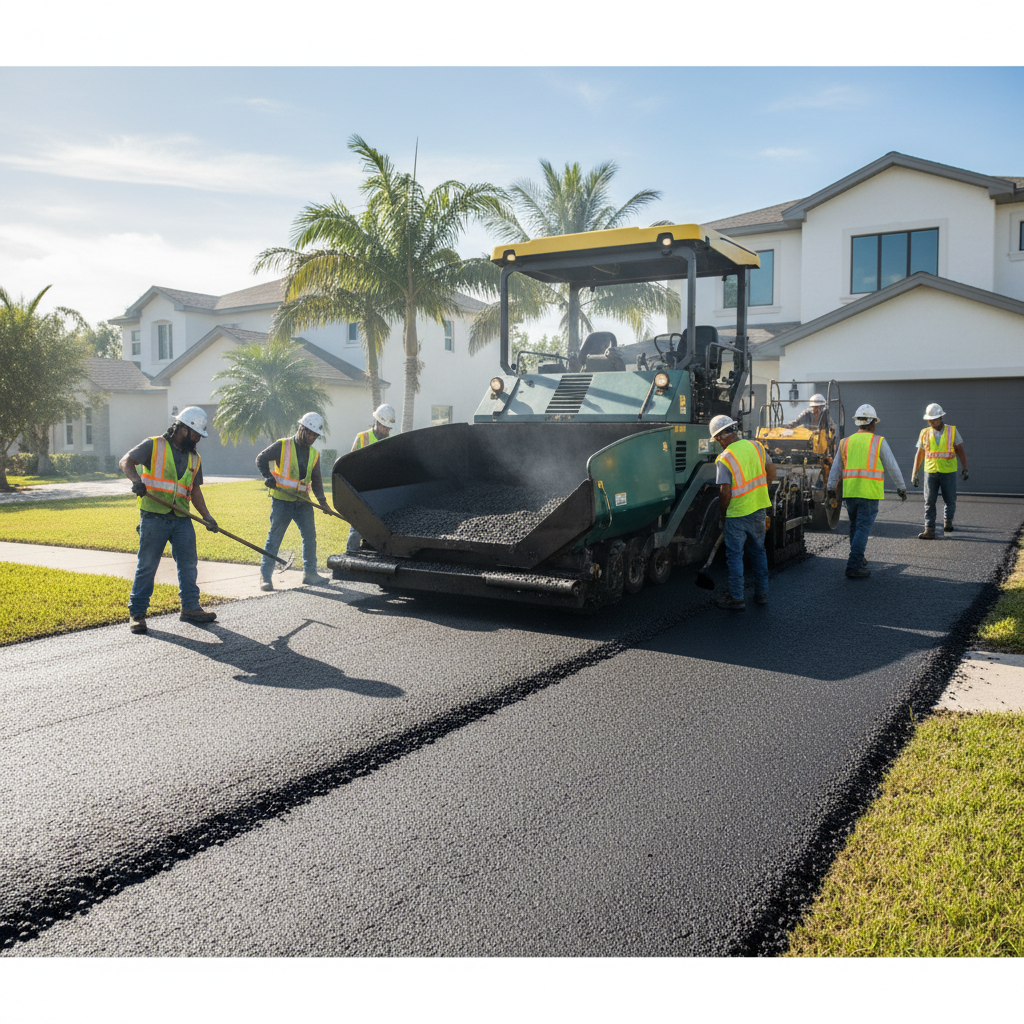
Driveway paving options and costs in Yonge-St.Clair
In Yonge-St.Clair, your driveway choice is mostly a balance between upfront cost, winter durability, and how quickly you want the surface to look “finished.” This neighbourhood cluster sits in the Toronto economic region, where many private driveways serve detached homes—homeowners here tend to want a tidy, long-wearing entrance that can handle heavy plough traffic and salty meltwater. With a local population of 12,528 (Statistics Canada, 2021 Census), demand is steady and contractor scheduling can get tight during prime spring and early summer.
Toronto’s frost depth and frequent freeze–thaw cycles are decisive cost drivers. Ground freezing to roughly 3–4 feet means you can’t “skip” base and drainage; the granular base and compaction are where savings usually disappear. In late fall, winter, and early spring, water trapped under pavement expands when it freezes, contributing to heaving and cracking. On top of the climate, the paving season effectively runs from late spring through early fall, so rush work can push pricing toward the top of the band.
This is especially noticeable around busy streets and well-established pockets like Yonge Street and the mid-block side streets where access can be tight and property lines are close to the driveway edge. If you’re getting quotes now, the quickest way to compare is by material type and how it’s installed—base, edging, and drainage are the difference between a “cheap” job and one that holds up.
Use the table below as a practical yardstick, then we’ll break down what drives the final number for your lot.
| Material |
Lifespan |
Maintenance |
Best For |
Price per sq ft |
| Asphalt (new installation, proper base) |
12–20 years |
Seal every 3–5 years; crack maintenance as needed |
Lowest upfront cost with good performance when base is engineered |
$5.50–$9.50 |
| Asphalt (overlay on existing gravel base) |
8–15 years |
Seal every 3–5 years; patch failures early to prevent spread |
Budget-minded improvements when existing base is salvageable |
$4.50–$7.50 |
| Interlocking concrete pavers |
20–30 years |
Re-sand joints; occasional re-laying of displaced stones |
High curb appeal and easy localized repairs |
$10.00–$18.00 |
| Poured concrete (broom finish) |
20–30 years |
Seal selectively; manage cracks with caulking/joint work |
Low-maintenance look with fewer joints than pavers |
$8.00–$14.00 |
| Exposed aggregate concrete |
20–30 years |
Seal every few years depending on finish and traction needs |
Premium surface texture and slip resistance |
$12.00–$18.00 |
| Gravel / crushed stone (budget option) |
3–7 years |
Top up annually; weed control; re-grade as needed |
Short-term driveway solution or informal access |
$3.00–$6.00 |
Prices are estimates only and vary by project scope, site access and material selection.
What affects the price of paving in Yonge-St.Clair
In Toronto and across Ontario, it’s common to see 30–50% differences between quotes for the “same” driveway because contractors may be pricing different realities: base engineering, drainage corrections, disposal, edging, and how much labour is required for a tight access lot. Two crews can quote similar asphalt or concrete square footage, yet one includes proper excavation and subgrade prep while the other assumes the existing base is already stable. With Yonge-St.Clair lots where property lines can be close and existing driveways may date back decades, that difference shows up fast.
In the Toronto economic region, the biggest driver is frost-related performance. Frost depth and freeze–thaw cycles are primary cost drivers; deeper frost requires a thicker compacted granular base so water can’t sit under the pavement and lift when it freezes. In colder provinces like Ontario, that generally means building up base thickness in the range of 6–12 inches depending on your subgrade condition and the design the contractor follows—less in mild coastal climates. The paving season is also compressed: hot-mix asphalt requires air temperatures above 10°C for best placement, and Ontario schedules become concentrated late spring through early fall. When crews are booked, prime dates cost more and the total installed price can drift toward the top of the band (for example, asphalt installed on engineered base is often closer to $3,500–$8,000 for typical driveway scopes).
Concrete costs can rise or fall based on drainage and jointing. A broom-finished slab without adequate slope to a catch basin can “pond” and crack sooner, while an air-entrained mix designed for freeze-thaw can hold up better. Similarly, if your existing driveway has buried drainage issues, the contractor may need to regrade and tie into the proper outlet before they pour, which can add material and labour dollars. For homeowners, older driveways often mean more tear-out and hauling than people expect—so a “mid-range” concrete price can climb when demolition and disposal are significant, particularly when the full removal is required rather than a partial patch.
| Price Factor |
Why It Matters |
Cost Impact |
| Driveway area in sq ft |
Most material and labour scale directly with surface area |
Highest impact; often determines the majority of total cost |
| Base depth required |
Frost protection depends on compacted granular thickness and condition |
Can add significant excavation, aggregate, and compaction cost |
| Grading and drainage work |
Correct slope and drainage prevent water pooling under pavement |
Moderate to high impact if regrading and outlet work is required |
| Tear-out of existing surface |
Removing old asphalt or concrete can require breaking and disposal |
Often a large swing factor, especially with full-depth removal |
| Edge restraints and curbing |
Prevents paver spread and asphalt edge breakdown |
Can increase material and layout time but improves longevity |
| Sealing requirement |
Asphalt needs protective sealing to slow oxidation and surface wear |
Low to moderate immediate cost; reduces long-term failure rates |
| Site access |
Narrow lots slow equipment movement and may require smaller loads |
Moderate impact on labour hours and equipment costs |
| Asphalt mix specifications |
Freeze-thaw-rated mix and binder selection improve performance in Ontario winters |
Moderate; can raise per-ton costs but lowers early cracking |
Permits & regulations in Ontario
For paving in Ontario, most homeowners are surprised by how much is “works on your property” versus “work affecting the road or storm system.” Typically, paving a private driveway within your own property—like resurfacing an existing driveway or installing asphalt/interlock/concrete on your lot—does not require a building permit. However, you should expect municipal approval in these situations: creating or changing a curb cut, altering the boulevard, modifying driveway access to the road allowance, or making changes that affect storm drainage (for example, changing where runoff goes or tying into a drainage system in the right-of-way).
In the Yonge-St.Clair area, contractors should also consider local lot-grading rules (often handled through municipal by-laws). Some municipalities restrict how close hard surfaces and grading changes can be to property lines or require that drainage be managed so water doesn’t run onto neighbours’ property or toward sidewalks.
Before any excavation, call for utility locates using Ontario One Call. Then verify your contractor—step-by-step. Ask for a current Ontario contractor licence number (if applicable for the work type), a Certificate of Insurance showing liability coverage, and proof of coverage for workers (WSIB). For documentation, look for an up-to-date certificate on the contractor’s site or via email, and request clearance/coverage letters when required. Don’t rely on verbal confirmation—paperwork should match the job scope and start date.
Asphalt vs pavers vs concrete for Yonge-St.Clair driveways
In Yonge-St.Clair, the best material is the one that survives Ontario’s freeze–thaw cycles with proper base preparation and drainage. Asphalt usually wins on upfront cost. When installed with a well-compacted granular base and correct slope, it’s a practical choice for many homeowners—just remember it typically needs sealing every 3–5 years to protect the binder from oxidation and to help resist surface wear. In Toronto winters where salt and slush are constant, a sealed asphalt surface holds up better than “sealing later” would suggest.
Interlocking concrete pavers have the highest upfront price, but they’re the most forgiving when something shifts. If an area ever needs localized repair, stones can be lifted, the base corrected, and the pattern re-laid—no full slab or full-field asphalt replacement. That’s a meaningful advantage in older neighbourhoods where subgrades can vary under existing driveways.
Poured concrete sits in the middle. With the right air-entrained mix and careful jointing and drainage design, it can perform well, but freeze–thaw can still create cracks if water is trapped and if joints and finishing aren’t done correctly. Exposed aggregate concrete can add slip resistance and looks premium, but it doesn’t remove the need for proper frost-protection base and drainage.
As a dollar example: an asphalt driveway scope might land somewhere in the $3,500–$8,000 range, while a comparable interlocking project often starts closer to $9,000–$20,000. That difference is justified when you want curb appeal and easier repairs, or when you expect the driveway to experience minor movement due to subgrade variability.
| Material |
Frost Resistance |
Curb Appeal |
Repair Method |
Lifespan |
Price Band |
| Asphalt (sealed regularly) |
Good with engineered base and drainage |
Medium (clean, uniform finish) |
Patch and re-surface; seal later |
12–20 years |
$3,500–$8,000 |
| Interlocking concrete pavers |
Very good when base is properly compacted |
High (visual detail and colours) |
Lift/replace individual pavers or re-sand joints |
20–30 years |
$9,000–$20,000 |
| Poured concrete (air-entrained) |
Good with air-entrainment and correct jointing |
Medium to high (finish-dependent) |
Crack repair/seal and localized patching |
20–30 years |
$6,000–$15,000 |
| Exposed aggregate concrete |
Good with proper mix design and base |
Very high (premium texture) |
Crack repair; limited full replacement if extensive |
20–30 years |
$7,500–$18,000 |
| Permeable pavers (drainage grid) |
Excellent water management if designed right |
High (modern drainage-friendly look) |
Lift/replace stones; clean and maintain drainage layer |
15–25 years |
$10,000–$22,000 |
| Chip seal / tar-and-chip |
Fair (more maintenance in heavy freeze–thaw) |
Low to medium (coarse texture) |
Spot patch and re-surface periodically |
5–10 years |
$3,000–$6,000 |
How to choose a paving contractor in Yonge-St.Clair
Choosing the right paving contractor in Yonge-St.Clair is mostly about confirming three things: legal coverage, a scope that matches your climate, and workmanship you can hold accountable. Start with licensing and insurance. In Ontario, request the contractor’s Ontario licence information where applicable for the work, and ask for a current Certificate of Insurance (liability) that names the correct insured parties. For worker coverage, verify WSIB—ask for the WSIB account information or a clearance letter so you’re not left exposed if there’s an incident. If a contractor can’t provide updated documents quickly, that’s a decision point.
Next, get 2–3 itemised written quotes. You want a labour and materials breakdown, not just a lump-sum. Ask for line items covering excavation, disposal, granular base depth, compaction method, geotextile (if used), drainage/outlet work, asphalt/concrete thickness, edging, and taxes. Confirm what’s included and what’s excluded: permit pull (if any municipal approval is required), saw-cutting, reinstatement, protection of landscaping, and hauling away spoils.
Warranty also matters in our freeze–thaw climate. Ask for the workmanship warranty length and what it covers (for example, separating/settling due to base issues). Clarify whether the manufacturer warranty transfers to you. For payment, keep it conservative: never pay more than 10–15% upfront, and use a holdback until the job is complete and final grade/clean-up are verified. Finally, insist on a written timeline with start date and an estimated completion date—Ontario’s short paving window makes scheduling changes common, and you want them documented.
- Ask for insurance (liability) and proof of WSIB coverage; verify dates are current.
- Confirm the quote includes subgrade evaluation and granular base design for frost protection.
- Require itemised costs: excavation, disposal, base, asphalt/concrete, edging/restraints, and finishing.
- Check whether drainage corrections are included (slope, ties to outlet/catch basin, regrading).
- Make sure tear-out scope is clear (full depth vs partial patch) and hauling is included.
- For asphalt, ask about sealcoat plan—when it’s applied and whether it’s included.
- For pavers, confirm joint sand specs and whether base is compacted in lifts.
- Confirm reinforcement/jointing details for concrete (air-entrained mix, contraction/expansion joints).
- Review warranty terms in writing: workmanship versus materials, duration, and exclusions.
- Ask how they protect landscaping, sidewalks, and nearby driveways during construction.
- Verify schedule: proposed start date, weather contingencies, and rescheduling policy.
- Do not accept “we’ll figure it out later” on base depth, drainage, or thickness.
Red flags I see in Yonge-St.Clair include: quotes that omit base depth and compaction steps, no mention of drainage/slope corrections, vague warranties (“materials only” or “as per manufacturer” with no workmanship coverage), requests for large upfront deposits, and contractors who won’t provide insurance/WSIB documentation or an itemised breakdown.
Frequently asked questions — paving in Yonge-St.Clair
How long before I can drive on new asphalt?
In Yonge-St.Clair, most new asphalt driveway installations allow light vehicle traffic after it cools and meets placement requirements—often within 24–48 hours. Full cure and best strength gain typically take longer, especially if nights are cold or damp during the late-spring to early-fall paving window. If crews use tack coat and place the asphalt in lift thicknesses designed for freeze–thaw performance, traffic control is usually straightforward. Avoid turning sharply, parking heavy loads, or making aggressive tire marks in the first few days. If your driveway ties into a busy street, ask the contractor when they expect it to be fully serviceable and whether they recommend a temporary barrier (cones or signage) until the surface is firm.
What causes potholes and how are they repaired?
Potholes in Ontario driveways are commonly caused by water getting under the asphalt, then freezing and expanding. Over repeated freeze–thaw cycles, small voids grow, the base loses support, and the asphalt breaks down—especially where there’s poor drainage, an area of soft subgrade, or an unsealed surface that allows water infiltration. In repairs, a good contractor removes the failing asphalt to stable material (not just the surface patch), corrects the base if needed, re-compacts, and then installs new asphalt to match thickness. Repairs should be sealed or feathered correctly to prevent reflective cracking. For existing driveways, a proper crack-seal plan and regular sealing help slow the cycle.
How do I prepare for a paving project?
Preparation makes the job faster and reduces change orders. Clear vehicles and trailers from the driveway and keep pathways accessible for workers and equipment. Move planters, décor, and anything that could be damaged by saw-cutting or compactors. If you have drainage concerns—water pooling, ice build-up, or runoff direction issues—tell the contractor before the quote is finalized so the plan includes grading corrections. If you’re replacing an old surface, confirm whether tear-out and disposal are included. In Yonge-St.Clair, utility locates are essential before excavation; reputable contractors coordinate this via Ontario One Call. Finally, confirm your preferred start date within the paving season window, because hot-mix asphalt placement depends on suitable temperatures.
How do I compare paving quotes fairly?
To compare quotes fairly in Yonge-St.Clair, line items matter more than the bottom-line number. Ask for the same scope in each estimate: base depth and granular thickness, compaction/lift description, drainage and slope corrections, edging/restraints, and whether tear-out is full-depth or partial. Ensure thicknesses are comparable and that asphalt mix specifications are freeze–thaw appropriate. For budget context, an asphalt driveway often falls around $3,500–$8,000, while interlocking pavers commonly start higher—roughly $9,000–$20,000 depending on site conditions. If one quote is drastically lower, look for what they’re skipping (base, drainage, disposal, or restraints). Also compare warranty terms and payment schedules—not just price.
Can asphalt be laid in cold weather in Yonge-St.Clair?
Asphalt work in Ontario is constrained by temperatures. Hot-mix asphalt placement generally requires air temperatures above about 10°C for the best compaction and adhesion. In Yonge-St.Clair, late fall and early spring often bring cold nights that can slow curing and increase the risk of early failures, especially with Toronto’s freeze–thaw cycles. If temperatures drop unexpectedly, reputable paving crews either reschedule or use appropriate weather controls where feasible—always based on manufacturer guidance and local practice. Ask your contractor how they handle cold snaps, what minimum temperatures they require for placement, and whether the base is dry and ready. If a contractor promises asphalt regardless of temperatures, that’s a major quality concern.
What is a driveway apron and do I need one in Yonge-St.Clair?
A driveway apron is the transition section between the driveway and the curb/road edge—essentially the area that helps vehicles enter and exit smoothly without breaking up at the driveway’s throat. In Yonge-St.Clair, whether you “need” one depends on where your driveway meets the municipal edge and whether there’s a curb cut or an uneven transition that’s contributing to water pooling or surface breakup. If the apron or curb area is failing, replacing it can reduce raveling at the edges and improve drainage performance. If the work involves changes in the boulevard/right-of-way, municipal approval is typically required. A contractor should explain if apron work is included in your scope and whether your project affects curb cuts or storm drainage.