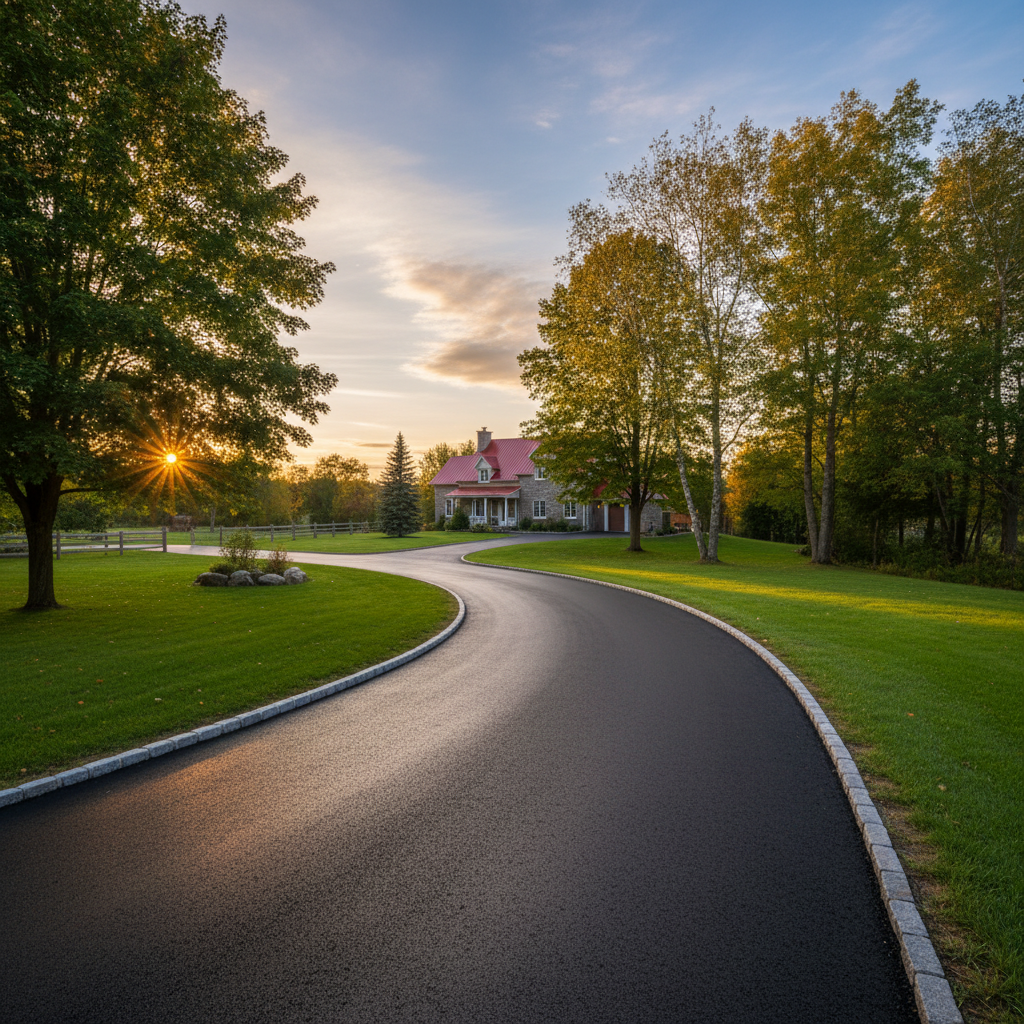
Driveway paving options and costs in Corso Italia-Davenport
In Corso Italia-Davenport, the right driveway surface usually comes down to how you balance upfront cost, winter durability, and how much maintenance you’re willing to do. With a local population of 14,133 residents (Statistics Canada, 2021 Census), you’ll see a steady mix of homeowner work every spring and fall, especially around the mid-block streets and side-lane corridors where lots are busy and access can be tight. In this neighbourhood, many drives serve detached homes—so driveway replacement is a frequent “whole project” for homeowners, not just a patch.
Toronto’s freeze–thaw cycle is the main reason paving quotes swing. Ground freezing can reach roughly 3–4 feet in the Toronto area, so crews must excavate, compact, and build a granular base that won’t hold water. That means more base material, more labour for grading/drainage, and more time-sensitive scheduling. The paving window is also tighter than in warmer markets: hot-mix asphalt placement is best when air/ground conditions are favourable (often above about 10°C), so prime dates in late spring through early fall can cost more.
Demand is especially strong around the Corso Italia/Dufferin corridor and nearby connecting streets, where older driveways are common and homeowners often want a cleaner edge line and better snow-plow performance. Use the table below to compare typical installed ranges for common options, then we’ll break down what drives the final price in Section 2.
| Material |
Lifespan |
Maintenance |
Best For |
Price per sq ft |
| Asphalt (new installation, proper base) |
15–25 years |
Sealcoat every 3–5 years; patch minor failures quickly |
Best value where you want a smooth, quiet ride |
$7–$12 |
| Asphalt (overlay on existing gravel base) |
10–18 years |
Sealcoat every 3–5 years; monitor for reflective issues |
Lower-cost resurfacing when the base is still sound |
$6–$10 |
| Interlocking concrete pavers |
25–35 years |
Re-level occasional sunken areas; replace single units if needed |
High curb appeal and easy spot repairs |
$12–$20 |
| Poured concrete (broom finish) |
25–35 years (if properly detailed) |
Keep edges drained; minimal sealing unless required |
Clean look with long-term stability |
$10–$18 |
| Exposed aggregate concrete |
25–35 years |
Sealer may be recommended every few years depending on finish |
Slip-resistant surface and premium appearance |
$12–$20 |
| Gravel / crushed stone (budget option) |
3–10 years |
Re-grade and add stone; weed control; maintain drainage |
Temporary/low-budget approach or low vehicle traffic |
$3–$7 |
Prices are estimates only and vary by project scope, site access and material selection.
What affects the price of paving in Corso Italia-Davenport
In Corso Italia-Davenport and across the Toronto economic region, the same driveway can come in 30–50% apart because contractors may build different base thicknesses, use different asphalt mixes, and handle excavation/disposal differently. One quote might assume “overlay only,” while another includes full-depth base replacement and drainage improvements to address water—big differences that show up on your final invoice, especially when frost depth and freeze–thaw cycles are involved.
Frost line depth is decisive here. In the Toronto area, deeper ground freezing (roughly 3–4 feet) requires a thicker compacted granular base—often about 6–12 inches depending on subgrade conditions and the final design—so the system can resist heaving and cracking. In coastal BC, crews can sometimes use thinner systems; in Ontario, you generally pay more for excavation, haul-off, and granular material.
Seasonality also concentrates demand. Asphalt typically needs air temperatures around 10°C for reliable compaction and placement, which compresses the workable window into late spring through early fall. That schedule pressure can push pricing toward the higher end of the asphalt bands (for many Toronto drives, asphalt is commonly within the $3,500–$8,000 range depending on size and base work). Concrete quotes can also move upward when crews are busy, particularly for well-detailed pours requiring proper reinforcement, jointing, and air-entrained concrete.
Concrete examples: (1) a driveway that ties into a garage slab or has a steep grade often needs more forming and joint detailing; (2) poor drainage can increase excavation scope before concrete is placed; and (3) if your current surface is already failing from water, full tear-out may be required rather than a simple patch. With older lots, you may also have more variable subgrade—meaning more testing and more base material, which can add hundreds to over a thousand dollars depending on the footprint.
| Price Factor |
Why It Matters |
Cost Impact |
| Driveway area in sq ft |
Most labour and material scale directly with square footage |
High impact (commonly 50–70% of total) |
| Base depth required |
Frost line determines granular thickness to prevent heaving |
Medium to high impact (+$800 to +$2,500 depending on conditions) |
| Grading and drainage work |
Slope corrections and drainage protection keep water away from base |
Medium impact (+$500 to +$2,000) |
| Tear-out of existing surface |
Breaking/haul-off increases time and disposal costs |
Medium impact (+$600 to +$3,000) |
| Edge restraints and curbing |
Edges prevent paver spread and asphalt raveling |
Low to medium impact (+$300 to +$1,500) |
| Sealing requirement |
Asphalt performs better with sealcoat after initial curing |
Ongoing (+$300 to +$1,500 each time, depending on area) |
| Site access |
Narrow/tight lots slow equipment movement and may add labour |
Low to medium impact (+$200 to +$1,200) |
| Asphalt mix specifications |
Freeze-thaw-rated mixes help resist cracking and moisture damage |
Low to medium impact (+$300 to +$1,200) |
Permits & regulations in Ontario
For most homeowners in Ontario, paving a private driveway on your own property typically does not require a building permit—especially when you’re replacing an existing surface within your lot lines and not changing municipal infrastructure. However, work that affects the municipal right-of-way does trigger municipal approval. In Corso Italia-Davenport, that usually means any new or modified curb cut, alterations to the boulevard area, or changes that could affect storm drainage, ditches, or municipal grading. If your project ties into drainage or you’re altering how water flows toward the street, confirm requirements with the city before work starts.
Another key Ontario consideration is lot-grading and drainage. Some municipalities enforce lot-grading bylaws that restrict where hard surfaces and grading can direct water, and they may require that runoff be handled on-site. Even where a permit isn’t required, a well-designed drainage plan is critical for Toronto’s freeze–thaw conditions so water can’t sit under pavement.
Step-by-step verification before you hire:
- Ask for the contractor’s Ontario business/contractor licensing details (where applicable) and confirm they can legally carry out paving in your area.
- Request a current certificate of insurance showing general liability with adequate limits for driveway-scale work.
- Confirm WSIB coverage if they have employees; if they’re subcontracting, require proof for each trade involved.
- Ask for a clearance letter or verification documentation for WSIB/WCB status and match the certificate name to the legal business entity on the quote.
- Call or check online registry resources for the contractor’s standing and insurance expiry dates.
- Confirm disposal/haul-off is included, especially when tear-out is required.
Also, always arrange utility locates before excavation using Ontario One Call so you don’t hit buried services during base prep.
Asphalt vs pavers vs concrete for Corso Italia-Davenport driveways
For Corso Italia-Davenport driveways, asphalt, interlocking pavers, and concrete all can work—if the base is engineered for Toronto’s frost and if drainage prevents water from sitting underneath. Toronto’s freeze–thaw cycles are hard on any pavement system, so the best choice depends on how you want the driveway to look and how you handle maintenance through winter (salt, sand, and plowing frequency).
Asphalt is typically the lowest upfront cost and gives a smooth, quiet surface. The trade-off is that asphalt should be sealed after the initial cure (commonly after about 6–12 months) and then typically every 3–5 years. In a well-built system, asphalt holds up well; in a poorly drained or shallow-base installation, it can crack and ravel sooner.
Interlocking concrete pavers cost more upfront (often the higher tier of driveway work) but they excel in repairs: if a section settles, a contractor can lift and re-level affected units rather than replacing the whole surface. That repairability is valuable in Toronto where freeze–thaw can expose minor base or drainage weaknesses over time.
Poured concrete sits in the middle to upper range. With air-entrained concrete and careful control joints, it can last decades, but it’s more sensitive to freeze–thaw and de-icing salt if not detailed correctly—especially if water can reach the slab edges.
On Toronto-style base work, a common design goal is a full-depth granular system capable of resisting heaving; homeowners often pay more for proper excavation and compaction, which is why “cheap” installs can be short-lived. As an example of price justification: if your driveway is eligible for asphalt at the $3,500–$8,000 range but pavers land closer to the $9,000–$20,000 band, pavers can be worth it when you care about curb appeal and want the ability to repair one damaged area instead of resurfacing entirely after a few winters.
| Material |
Frost Resistance |
Curb Appeal |
Repair Method |
Lifespan |
Price Band |
| Asphalt (sealed regularly) |
Good when base is deep and well-drained |
Moderate |
Cut & patch with localized resurfacing |
15–25 years |
$3,500–$8,000 |
| Interlocking concrete pavers |
Very good with proper edging and compaction |
High |
Lift/re-level and replace affected units |
25–35 years |
$9,000–$20,000 |
| Poured concrete (air-entrained) |
Good if jointing and drainage are engineered |
Moderate to high |
Patch/reseal or targeted slab repair (limits apply) |
25–35 years |
$6,000–$15,000 |
| Exposed aggregate concrete |
Good with proper finishing and drainage |
High |
Patch using matching mix/finish (can be visible) |
25–35 years |
$7,500–$16,500 |
| Permeable pavers (drainage grid) |
Very good where you can manage subsurface drainage |
High (designer look) |
Replace units and maintain drainage layers |
20–30 years |
$10,500–$22,000 |
| Chip seal / tar-and-chip |
Variable; best as a maintenance-style surface |
Low to moderate |
Re-surface cycles or localized recoating |
7–12 years |
$2,500–$6,000 |
How to choose a paving contractor in Corso Italia-Davenport
Choosing the right contractor in Corso Italia-Davenport starts with verification. In Ontario, ask for the contractor’s proof of liability insurance (so you’re not exposed if someone is injured or if there’s property damage during excavation), and confirm WSIB coverage if they employ workers. If they use subcontractors, require each trade’s coverage as well, not just the paving company’s certificate.
How to check:
- Insurance certificate: ensure the name matches the legal business, expiry is current, and limits are appropriate for construction work.
- WSIB/WCB status: request clearance/verification documents; don’t accept “we have it” without documentation.
- Any Ontario business/contractor registration details: confirm the entity that will invoice is the entity you verify online.
- Ask for their WSIB number and insurance policy number and verify both align with the quote and invoice.
Next, get 2–3 itemised written quotes with a breakdown of labour and materials (base, asphalt/pavers/concrete, edging/curbs, disposal, and any drainage adjustments). A quote that’s “lump sum only” makes it hard to compare apples-to-apples, especially in freeze–thaw conditions where base thickness decisions change the cost.
Read the scope: what’s excluded (winter shutdown, saw cutting, tree root removal), is permit handling included if needed, and is haul-away/disposal covered for tear-out? For warranties, ask for the workmanship warranty length and confirm whether the product warranty (asphalt supply, paver/polymer restraint systems, concrete materials) is manufacturer-backed and whether it transfers if you sell your home.
On payment schedule, never pay more than 10–15% upfront. Hold back remaining funds until you have a completed walk-through, punch list items finished, and the site cleaned up. Also, request a start date and an estimated completion timeline in writing—prime summer slots can move quickly in Toronto.
- Confirm the planned base build-up (depth and materials) and ask how they handle wet subgrade.
- Request compaction testing approach (at least “how they verify compaction” on site).
- Check if edging/curb restraints are included to prevent migration and raveling.
- Ask whether drainage corrections (slope, outlets, weeping/drainage provisions) are included.
- Verify tear-out scope: what thickness they break and what disposal they include.
- Confirm the asphalt mix design meets freeze–thaw requirements for Ontario.
- For pavers, ask about bedding sand gradation and joint sand type.
- For concrete, ask for air-entrained mix confirmation and how joints/control cuts will be done.
- Request a site protection plan for garage floors, landscaping, and sidewalks.
- Make sure the quote includes mobilization, traffic control if required, and cleanup.
- Ask about winter planning if the project spans temperature drop-offs.
- Confirm warranty start date ties to substantial completion, not deposit payment.
Red flags in Corso Italia-Davenport include: vague scope (“we’ll do what’s needed”), refusing to provide insurance/WSIB proof, quoting low without discussing base thickness or drainage, pressuring you for large upfront payments, and skipping a written timeline for start/completion.
Frequently asked questions — paving in Corso Italia-Davenport
When is the best time of year to pave in Corso Italia-Davenport?
The best time to pave in Corso Italia-Davenport is typically late spring through early fall, when temperatures support proper placement and compaction. Asphalt production and placement are sensitive to conditions—hot-mix asphalt generally performs best when air and base temperatures are favourable, often around or above 10°C. If you book too early, crews can’t always guarantee compaction quality, and if you wait too late, freeze–thaw risk rises as you head toward colder nights. Because Toronto’s paving season is compressed, scheduling in May to early October can be competitive; earlier bookings usually help you avoid rush pricing. If you’re comparing quotes, ask each contractor what date they plan to pour/place and how they protect the base during rain.
How deep should the base be for Corso Italia-Davenport's frost?
For Corso Italia-Davenport, base depth is driven by the local frost depth and drainage performance. In the Toronto area, freezing can reach roughly 3–4 feet, so contractors typically design a thicker compacted granular base to resist heaving and cracking. In Ontario projects, a common range for granular base thickness is about 6–12 inches for driveway builds, depending on your subgrade condition and how much excavation is needed. The exact depth should come from the contractor’s site assessment, including how wet or variable the soil is and whether drainage improvements are required. A practical rule for homeowners: if one quote assumes minimal excavation while another includes full base build-up and drainage correction, the difference can be a major reason prices diverge—often thousands of dollars on the final outcome.
How often should I seal my asphalt driveway?
For asphalt in Ontario, sealing is part of keeping it performing through freeze–thaw. Most contractors recommend waiting until the asphalt cures, commonly about 6–12 months after installation, then applying a sealcoat. After that, plan on sealing roughly every 3–5 years depending on traffic, sun exposure, and how harsh winter maintenance is (plowing and de-icing habits). If you’re in a cycle where you maintain sealing, asphalt is often one of the better long-term values within the $3,500–$8,000 installed range for many driveway projects. If you skip sealing, you can still get a usable surface, but oxidation and surface raveling can accelerate, leading to more costly patching or resurfacing sooner.
Why does my driveway crack and heave in winter?
Cracking and heaving usually come from water movement and frost cycling under the driveway. In Corso Italia-Davenport, freeze–thaw cycles can expand and contract pavement layers, and if the granular base is too shallow, improperly compacted, or can’t drain, water can migrate upward. When that water freezes, it can push the surface (heave), and repeated cycles then translate into cracks. Common contributors include missing or weak edge restraints, insufficient slope/drainage correction, and “overlay” work done without confirming the base is still stable. If you’re seeing cracking near edges or low spots, it often points to drainage. A professional quote should discuss base thickness, drainage grading, and how the contractor prevents water from sitting beneath asphalt or concrete.
Do I need a permit to pave my driveway in Ontario?
In Ontario, paving your private driveway within your own property typically does not require a building permit when you’re replacing an existing surface and not changing municipal infrastructure. However, permits/municipal approvals may be required if your work affects the municipal right-of-way—such as creating or modifying a curb cut, changing the boulevard, or altering storm drainage patterns. In Corso Italia-Davenport, this can matter when the driveway transitions into street drainage or when the work changes how runoff leaves your property. Even without a permit, you should verify lot-grading and drainage expectations with the local municipality, and always ensure utility locates are done before excavation. A good contractor will clearly state whether permits are required for your scope before you sign.
How long before I can drive on new asphalt?
After asphalt placement in Ontario, you can typically drive on the surface once it has cooled sufficiently and isn’t disturbed—often within 24–48 hours, depending on weather and mix type. Contractors also plan around Toronto’s late spring to early fall conditions because compaction and cooling depend on temperature and wind. If the job includes multiple lifts or tack coat applications, you may have to wait longer for full set-up. Your contractor should provide a specific “driveable time” for your day’s conditions. If you want to compare expectations with paving costs, sealing is separate: asphalt sealing usually happens after curing (often 6–12 months later). For homeowners budgeting repairs, remember that sealing/repair line items can add another $300–$1,500 depending on area and condition.