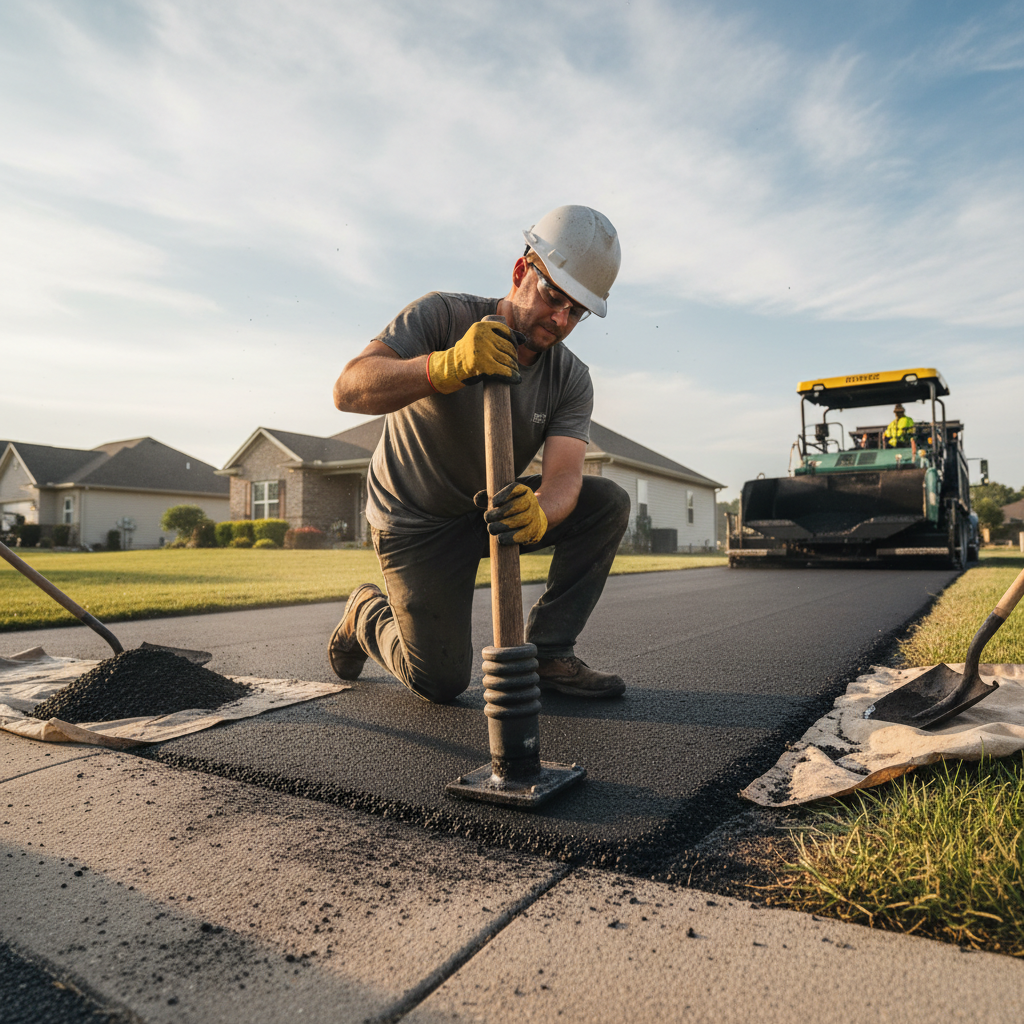
Driveway paving options and costs in Wexford/Maryvale
In Wexford/Maryvale, your driveway choice usually comes down to a balance of upfront budget, curb appeal, and how well the surface survives Toronto’s freeze–thaw winters. With a population of 27,917 in the area (Statistics Canada, 2021 Census), you’ll see steady demand from homeowners—especially in pockets like the Wexford area where driveways are often part of larger residential renovations. Many properties here are set up for a single-car or double-wide private approach, and that matters because driveway area is one of the biggest cost drivers in any quote.
Toronto’s climate shapes the price right away. Freeze depths in the broader Toronto region commonly reach about 3–4 feet, so contractors design a deeper, well-compacted granular base and rely on drainage that keeps water from sitting under the pavement. That engineering is one reason paving in late fall or early spring costs more or gets postponed: hot-mix asphalt typically requires air temperatures above about 10°C, and work is best scheduled when soil and surface conditions are stable. The active paving season is effectively late spring through early fall, which tightens contractor availability for prime weeks.
Below is a practical comparison of the most common driveway materials you’ll hear about around Wexford/Maryvale. Use it as a starting point, then expect your final price to reflect base thickness, drainage corrections, and whether there’s tear-out involved.
| Material |
Lifespan |
Maintenance |
Best For |
Price per sq ft |
Price Range |
| Asphalt (new installation, proper base) |
15–25 years |
Seal every 3–5 years |
Most cost-effective, smooth driving surface |
$6–$11 |
$3,500–$8,000 |
| Asphalt (overlay on existing gravel base) |
10–18 years |
Seal regularly; monitor for base settlement |
Upgrading a gravel driveway without full excavation |
$7–$12 |
$4,000–$7,500 |
| Interlocking concrete pavers |
25–40 years |
Periodic re-screeding; joint sand top-ups |
High curb appeal and easier localized repairs |
$18–$30 |
$9,000–$20,000 |
| Poured concrete (broom finish) |
20–30 years |
Limited maintenance; manage joints and drainage |
Durable, clean look with fewer surface seams |
$14–$22 |
$6,000–$15,000 |
| Exposed aggregate concrete |
20–30 years |
Low maintenance; keep surface free of trapped water |
Slip-resistant texture and premium appearance |
$18–$28 |
$8,000–$16,500 |
| Gravel / crushed stone (budget option) |
3–8 years |
Re-grade and top up annually |
Lowest initial cost and temporary solutions |
$3–$6 |
$2,000–$4,500 |
Prices are estimates only and vary by project scope, site access and material selection.
What affects the price of paving in Wexford/Maryvale
In the Toronto economic region, two driveways that look identical can come in 30–50% apart when you compare the hidden work beneath the surface. A contractor’s quote isn’t just asphalt or concrete—it’s excavation, granular base thickness, compaction testing, drainage corrections, and labour rates during peak months. That’s especially true in Wexford/Maryvale because the area falls under the same freeze–thaw realities as the rest of Toronto and surrounding communities: deeper frost and frequent winter movement force more engineered prep.
Frost depth and freeze–thaw cycles are decisive cost factors. Where freezing reaches roughly 3–4 feet in the region, the base build typically needs more granular thickness and a dependable drainage layer so water can’t remain under the slab or mat. In practice, deeper frost means contractors often plan a thicker, well-compacted granular base (commonly in the 6–12 inch range for many Ontario driveway assemblies), whereas milder coastal areas can get by with less. If base prep is shallow or water management is weak, you’ll see heaving, edge failures, and cracking sooner—so quotes that feel “cheap” usually cost more later.
The shortened paving season also tightens scheduling. Hot-mix asphalt generally needs air temperatures above about 10°C, so work clusters into late spring through early fall, pushing prime-date pricing toward the upper end of the asphalt band (often closer to $3,500–$8,000). Concrete and pavers still require good base conditions, but demand surges for interlock and concrete finishes during the busiest windows.
Concrete examples in this area: a broom-finished slab can cost less than exposed aggregate, but your final price can rise if you need saw-cut joint planning and added drainage for runoff. Similarly, if your driveway has older, frost-damaged asphalt that needs full break-out and hauling, that tear-out can push concrete from the lower end of $6,000–$15,000 toward the upper range depending on thickness and access.
| Price Factor |
Why It Matters |
Cost Impact |
| Driveway area in sq ft |
Labour and material quantities scale directly with square footage |
High (biggest driver) |
| Base depth required |
Frost line determines granular thickness to resist heaving and cracking |
High (more excavation/material) |
| Grading and drainage work |
Correct slope and add drainage so water can’t pool under the surface |
Medium–High |
| Tear-out of existing surface |
Breaking, loading, hauling, and disposal of old asphalt or concrete |
Medium–High (varies widely) |
| Edge restraints and curbing |
Keeps pavers from spreading and supports asphalt/concrete edges |
Medium |
| Sealing requirement |
Asphalt needs sealant after installation and periodic re-sealing |
Low–Medium (ongoing maintenance) |
| Site access |
Narrow/tight lots slow equipment movement and can increase labour time |
Medium |
| Asphalt mix specifications |
Freeze–thaw-rated mixes cost more but perform better in Toronto winters |
Medium |
Permits & regulations in Ontario
In Ontario, paving a private driveway within your own property typically does not require a building permit. Where things change is when the work affects the municipal right-of-way or city infrastructure. If you plan new curb cuts, alterations to the boulevard, changes to storm drainage (like rerouting or improving catch basins), or modifications that require municipal infrastructure work, you’ll generally need municipal approval before construction begins. Some areas also enforce lot-grading rules that control how close hard surfaces can come to property lines and how runoff must be managed.
For Wexford/Maryvale homeowners, the practical approach is: confirm your driveway boundaries and whether any portion touches the municipal area (boulevard/road allowance). Step one is requesting Ontario One Call locates before any excavation so utility lines are identified. Step two is asking the contractor whether they anticipate any curb/boulevard adjustments; if yes, you want clarity on who handles the municipal approval and timeline.
To verify your contractor is properly set up in Ontario, do three checks. First, confirm licensing through the appropriate Ontario contractor registration/registry process your contractor provides (many trades will show a registration number or business listing). Second, ask for a certificate of insurance showing liability coverage and that it names you as an additional insured if applicable. Third, verify WSIB/WCB coverage: request documentation directly and ensure the coverage is current for the construction period. A reputable driveway contractor should provide these documents without hesitation, before you sign.
Asphalt vs pavers vs concrete for Wexford/Maryvale driveways
For Wexford/Maryvale driveways, asphalt, interlocking pavers, and concrete all can work well—but each responds differently to Toronto’s freeze–thaw cycles, plowing impacts, and winter maintenance (salt, sand, and snow removal). Asphalt is usually the lowest upfront choice and provides a smooth surface, but it depends on proper base prep and sealing. In this region, asphalt performance improves significantly when it’s sealed after installation (commonly after the first season), then resealed every 3–5 years to protect the binder from winter cycling.
Interlocking concrete pavers cost the most up front, but they’re a smart fit for homeowners who value curb appeal and want the option to repair just a section if there’s localized settlement. If one area heaves or a drainage spot needs correction, pavers can be lifted, regraded, and relaid without replacing the entire driveway—important in a freeze-prone region where drainage is never a “set it and forget it” task.
Poured concrete sits in the middle on cost, but it needs the right mix design (typically air-entrainment) and thoughtful jointing to manage movement. In Toronto winters, concrete that’s not properly detailed can crack and spall faster when freeze–thaw stresses and de-icing chemicals are present. Exposed aggregate adds texture and slip resistance, but it’s still concrete—so the base and drainage engineering are just as important.
Where the price difference is justified: if your asphalt quote falls near $3,500–$8,000 but you expect heavy plowing, high visibility curb appeal, and you want long-term patchability, spending toward the interlock band of $9,000–$20,000 can be worth it. On the other hand, if your priority is a strong, clean surface with good joint planning and you’re prepared to maintain drainage, a concrete driveway in the $6,000–$15,000 range can be a practical middle ground.
| Material |
Frost Resistance |
Curb Appeal |
Repair Method |
Lifespan |
Price Band |
| Asphalt (sealed regularly) |
Good with deep base and drainage |
Medium |
Patch-and-taper or full resurfacing |
15–25 years |
$3,500–$8,000 |
| Interlocking concrete pavers |
Very good with proper bedding and edging |
High |
Lift, regrade, replace affected units |
25–40 years |
$9,000–$20,000 |
| Poured concrete (air-entrained) |
Good with joints and drainage |
Medium–High |
Crack repair/patching; sometimes section replacement |
20–30 years |
$6,000–$15,000 |
| Exposed aggregate concrete |
Good with correct finishing and curing |
High |
Localized patching and resurfacing where needed |
20–30 years |
$8,000–$16,500 |
| Permeable pavers (drainage grid) |
Very good where engineered for infiltration |
Medium–High |
Lift-and-reset with bedding/media refresh |
20–30 years |
$11,000–$22,000 |
| Chip seal / tar-and-chip |
Fair to good; sensitive to base quality |
Low–Medium |
Spot repair; periodic recoat |
7–12 years |
$3,000–$6,500 |
How to choose a paving contractor in Wexford/Maryvale
Choosing the right contractor in Wexford/Maryvale is mostly about verification and clarity. In Ontario, start by confirming licensing/registration for the work they perform (ask for their business information and registration details). Next, request proof of liability insurance—your contractor should provide a current certificate of insurance showing coverage limits and the effective dates. Third, verify WSIB/WCB coverage: ask for documentation that confirms coverage is active and that it matches the company doing the work. Don’t accept “we’re covered” without seeing the certificate details; it should be provided before scheduling.
Then get 2–3 written, itemised quotes. You want labour and materials broken out—base excavation and disposal, granular base materials, asphalt or concrete supply, edging/restraints, saw cutting/jointing, and any sealing products. Avoid quotes that lump everything into one number with no scope description; in Toronto’s freeze–thaw environment, the base and drainage line items can be the difference between a driveway that performs for 15–25 years and one that starts failing much sooner.
Read the exclusions and inclusions carefully: is permit work (if needed) included, is disposal of concrete/asphalt included, and are utility locates included or passed through? Ask about warranty terms: workmanship warranty length, product/manufacturer warranty details, and whether coverage is transferable if you sell the home. For payment, never pay more than about 10–15% upfront; hold a portion until completion and final cleanup. Finally, insist on a written start date and a realistic completion estimate, since Ontario’s paving season is compressed and delays can affect contractor scheduling.
- Verify Ontario business details and registration/licensing relevant to their paving scope
- Request current liability insurance certificate before work begins
- Confirm WSIB/WCB coverage with documentation, not verbal confirmation
- Ask for an itemised quote: excavation, base, drainage, material supply, placement
- Confirm if tear-out and disposal are included (especially for existing concrete)
- Get details on drainage corrections: slope, subdrain where required, and tie-ins
- Ask what base build is proposed and whether compaction testing is performed
- For asphalt, confirm when sealing will be applied (and which product system)
- Ensure edge restraints/curb are included so material doesn’t migrate
- Check warranty: workmanship duration, what defects are covered, and response timeline
- Clarify payment schedule and any holdback percentage until final acceptance
- Confirm project schedule: start date, weather contingencies, and completion window
Red flags I see around Wexford/Maryvale include: quotes that omit base depth and drainage details, refusal to show insurance/WSIB documentation, a “no warranty” pitch or vague warranty wording, pushing for large upfront payments (more than 10–15%), and promising installation dates without discussing temperature/season constraints that affect asphalt curing and base conditions.
Frequently asked questions — paving in Wexford/Maryvale
How long does a paved driveway last in Wexford/Maryvale?
In Wexford/Maryvale, a well-built driveway can last a long time, but Toronto’s freeze–thaw cycles and winter maintenance mean the base and drainage design matter as much as the surface. Asphalt installed with proper excavation, compacted granular base, and drainage typically lasts about 15–25 years, assuming you seal it every 3–5 years. Interlocking pavers commonly reach 25–40 years because individual sections can be lifted and corrected if settlement or water issues show up. Poured concrete often sits in the 20–30 year range when the mix is air-entrained and joints are properly executed. If you’re comparing budgets, many driveways priced around the asphalt band of $3,500–$8,000 can perform well, but only if the contractor doesn’t cut corners on base prep.
When is the best time of year to pave in Wexford/Maryvale?
The best time is late spring through early fall in Ontario, because paving requires stable soil and air temperatures. For asphalt, hot-mix placement generally needs air temperatures above about 10°C so the asphalt can be properly placed and compacted. Toronto’s winters bring freeze–thaw activity that can disrupt grading and drainage work if you try to pour or pave too early. In practice, contractors in Wexford/Maryvale try to complete base prep and concrete work before the coldest months, then finish paving when the ground is workable and dry enough to compact. If you’re aiming for the lowest disruption, schedule your project during the middle of the season; peak dates often carry higher demand-related pricing as schedules tighten.
How deep should the base be for Wexford/Maryvale's frost?
Because frost in the Toronto region can reach roughly 3–4 feet, driveway assemblies are designed around preventing water from freezing under the pavement. That typically means a deeper, well-compacted granular base with reliable drainage so the subgrade doesn’t hold moisture and swell. Exact thickness depends on soil conditions, the existing grade, and whether you’re rebuilding from scratch or installing over an existing surface. For many Ontario driveway builds, you’ll commonly see granular base thickness planning in the 6–12 inch range for frost-resistance performance, but your contractor should confirm based on site conditions and the proposed drainage strategy. A quote should explain the base build-up and how compaction is achieved—if it doesn’t, ask before you sign.
How often should I seal my asphalt driveway?
For asphalt driveways in Wexford/Maryvale, sealing is usually the key to extending life during Ontario winters. Most homeowners plan the first seal after the asphalt has cured (often after the first season, depending on installation conditions), then reseal every 3–5 years. If your driveway sees heavy traffic, frequent snowplowing, or more exposure to road salt and sand, you may lean closer to the 3-year interval. If you skip sealing, the binder can harden and oxidize faster under freeze–thaw cycling, leading to surface cracking and faster deterioration. When you compare quotes, ask whether the initial sealing is included or excluded, because maintenance timing affects long-term cost—even if the upfront asphalt price looks similar.
Why does my driveway crack and heave in winter?
Cracking and heaving in Wexford/Maryvale is usually a sign that water and frost are finding a weak point. Toronto’s freeze–thaw cycles expand and contract materials, and if moisture gets trapped under asphalt or beside the edges, it can push upward (heave) and create fractures. Common causes include insufficient base depth for the site, poor drainage or grading that allows water to pond, inadequate edge restraints (especially with pavers), and compaction issues during installation. De-icing salt and repeated plowing can also accelerate surface wear, particularly on asphalt if it isn’t sealed. If you’re seeing problems, it’s often worth investigating drainage and base condition rather than just patching the surface.
Do I need a permit to pave my driveway in Ontario?
In most cases, paving a private driveway within your property limits does not require a building permit in Ontario. However, permits or municipal approvals can be required when the work affects the municipal right-of-way—such as creating a new curb cut, changing boulevard features, or altering storm drainage systems. Some municipalities also have lot-grading rules that control how close hard surfaces can be to property lines and how runoff must be handled. In Wexford/Maryvale, the first step is confirming whether any portion of your project touches the boulevard/road allowance, then asking your contractor whether any municipal approval is anticipated. Regardless, you should always have utility locates done before excavation through the Ontario One Call process so you don’t hit buried services.