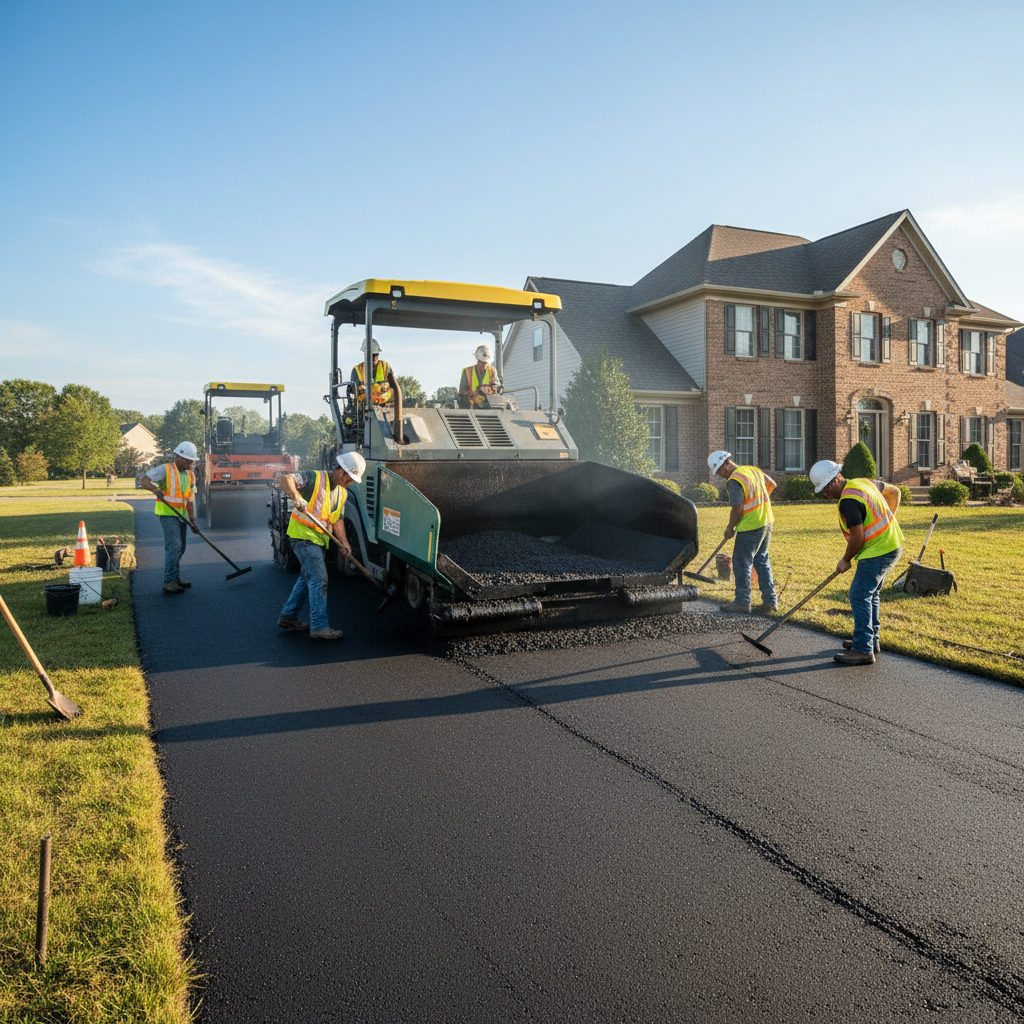
Driveway paving options and costs in Glenfield-Jane Heights
In Glenfield-Jane Heights, your driveway is often more than “just pavement” — it’s part of how your home handles the Toronto winter. With a 2021 population of 30,491 in the local area (Statistics Canada, 2021 Census), there’s steady demand for resurfacing and full rebuilds, especially around older streets where foundations and drainage have aged. Most private driveways here are tied to detached-home neighbourhoods, where drive space tends to be larger and more visible from the street, so homeowners usually want both performance and curb appeal.
Toronto-area pricing is shaped by frost depth and the long freeze–thaw season. Ground freezing to roughly 3–4 feet means contractors must build a deeper, well-compacted granular base and make sure water drains away from the subgrade. That adds excavation, haul-off, and labour — particularly if your existing driveway is uneven or has poor slope. On top of that, the paving season is effectively late spring through early fall, so scheduling tightens and prime dates can command a premium when many crews are booking the same weeks. This is especially true in high-turnover pockets like around Jane Street corridors and the Glenfield area side streets, where access and reconstruction jobs cluster.
Below are realistic homeowner price ranges for Glenfield-Jane Heights, using current Toronto market tiers and the local climate requirements. Use them as a starting point, then confirm your site conditions and base thickness with an itemised quote before deciding.
| Material |
Lifespan |
Maintenance |
Best For |
Price per sq ft |
Price Range |
| Asphalt (new installation, proper base) |
15–25 years |
Seal every 3–5 years; patch as needed |
Solid value and smooth ride if base and drainage are engineered |
$7–$14 |
$3,500–$8,000 |
| Asphalt (overlay on existing gravel base) |
10–18 years |
Seal every 3–4 years; monitor for settlement |
When the existing base is still sound and drainage is adequate |
$6–$12 |
$3,000–$6,500 |
| Interlocking concrete pavers |
20–30 years |
Occasional joint sand top-up; re-level select sections |
High curb appeal and repairable surface without full replacement |
$18–$30 |
$9,000–$20,000 |
| Poured concrete (broom finish) |
20–30 years |
Crack monitoring; sealing may extend life |
Clean look and long-term durability with proper reinforcement and joints |
$15–$25 |
$6,000–$15,000 |
| Exposed aggregate concrete |
20–30 years |
Seal periodically; manage minor surface spalls |
Texture and slip resistance for Toronto winters |
$18–$28 |
$7,500–$16,500 |
| Gravel / crushed stone (budget option) |
3–8 years |
Rake level; add stone annually |
Lowest upfront cost when drainage is the priority |
$4–$8 |
$1,200–$3,500 |
Prices are estimates only and vary by project scope, site access and material selection.
What affects the price of paving in Glenfield-Jane Heights
In Toronto and the wider Ontario market, two homeowners can receive quotes that differ by 30–50% for the “same” driveway simply because the underlying conditions aren’t the same. One site might need only asphalt and a few spot repairs; another may require full tear-out, granular replacement, and drainage correction before any paving can last. Labour availability also changes through the season: spring and early summer can be busy when crews are trying to complete base prep and asphalt placement within temperature windows, which pushes demand into a shorter workable period.
For Glenfield-Jane Heights, the biggest decisive cost factor is frost depth and the freeze–thaw cycle. With ground freezing to roughly 3–4 feet in the Toronto area, driveways need a deeper, well-compacted granular base to resist heaving and cracking. In Ontario, that generally means engineered base thickness and compaction rather than “thin and hope for the best.” The shorter paving season also matters because hot-mix asphalt placement is typically done when air/ground temperatures are above about 10°C; that compresses scheduling and can increase costs for prime dates. Asphalt also needs freeze–thaw-rated mix design, which slightly increases material cost compared with less specialized mixes.
Concrete costs can swing too. For example, if your existing slab is badly spalled or the subgrade is pumping under load, a full replacement with air-entrainment and properly spaced control joints will cost more than a simple resurfacing plan. On the other hand, a driveway with good drainage and minimal height adjustment might allow a more efficient scope. In practical terms, a well-prepped asphalt job in Toronto typically falls within the $3,500–$8,000 band, while interlocking pavers often land in the $9,000–$20,000 band when proper edge restraints, bedding sand, and re-installation of borders are included.
| Price Factor |
Why It Matters |
Cost Impact |
| Driveway area in sq ft |
Material and labour scale directly with square footage |
Largest driver; can swing budgets by thousands |
| Base depth required |
Frost line determines granular thickness and compaction effort |
Higher base can add major excavation and material haul |
| Grading and drainage work |
Proper slope and subdrainage prevent water pooling under pavement |
Can add cost when crowns, dips, or soft spots are found |
| Tear-out of existing surface |
Breaking/hauling concrete or old asphalt increases labour and disposal |
Often the difference between “patch” and “full rebuild” |
| Edge restraints and curbing |
Prevents paver spread and helps asphalt resist raveling |
More forms/rebar or extra materials increase totals |
| Sealing requirement |
Asphalt seals slow oxidation and help manage Toronto winters |
Ongoing budget item; usually done after 6–12 months |
| Site access |
Narrow lots slow equipment movement and raise crew time |
May increase labour hours and staging costs |
| Asphalt mix specifications |
Freeze–thaw-rated mixes cost more but reduce early breakdown |
Materials up; performance usually up too |
Permits & regulations in Ontario
For Glenfield-Jane Heights homeowners, paving a driveway within your own property typically does not require a building permit. In most cases, you can resurface or replace a driveway on private property without pulling a permit, as long as you’re not changing utility connections or work that affects the municipal road/servicing area.
Where approval can be required is when work moves into the municipal right-of-way (the area between your property line and the road). For example, new curb cuts, changes to the boulevard, altering storm drainage, or modifying municipal catch basins/drainage that impacts runoff generally needs municipal authorization. Some areas also regulate lot grading, which can restrict how close hard surfaces are to property lines and how drainage must be handled.
Before excavation, always confirm utility locations. In Ontario you can use Ontario One Call for locates so your contractor can mark buried services. Then verify three contractor basics step-by-step: (1) Ontario licensing/registration for the relevant contractor category (check through the appropriate provincial and business registry sources), (2) liability insurance with a current certificate of insurance listing the job site, and (3) WSIB/WCB coverage. Look for WSIB clearance letters (where applicable) or documentation that coverage is active. Ask for the certificate before work starts, and keep copies in your homeowner file.
Asphalt vs pavers vs concrete for Glenfield-Jane Heights driveways
Choosing between asphalt, interlocking concrete pavers, and poured concrete in Glenfield-Jane Heights comes down to how each material handles Toronto’s freeze–thaw routine, how much curb impact you want, and how you prefer repairs later. Asphalt is usually the lowest upfront cost and can look clean and modern, but it relies on a properly built base and requires sealing every 3–5 years to maintain flexibility through winter. Interlocking pavers are typically the highest upfront, yet they’re repairable: if a section settles or a utility repair occurs, you can lift and replace individual stones rather than tearing out the entire surface. Poured concrete sits in the middle on cost, but it must be air-entrained and controlled for cracking risk with the right mix, joints, and finishing timing.
Because frost depth in the Toronto area can reach roughly 3–4 feet, all options depend on drainage and base thickness — especially keeping water from sitting under the driveway. In day-to-day winter use, ploughing, salt, and meltwater can be hard on surfaces. Pavers tend to tolerate minor movement better because the system can shift slightly without catastrophic failure, assuming edge restraints and proper bedding are installed. Concrete can perform very well with proper reinforcement and jointing, but it’s more sensitive to workmanship and subgrade preparation. Asphalt, when built for freeze–thaw and sealed on schedule, is often the best “value-to-life” choice for homeowners who want a smooth ride and can budget for maintenance.
For a concrete example: if your 450 sq ft driveway lands at the lower end of the asphalt market tier, you might be in the $3,500–$8,000 band. The same footprint in interlocking could land in the $9,000–$20,000 band; that extra cost is justified when you want the long-term curb appeal and the ability to replace localized areas without full reconstruction.
| Material |
Frost Resistance |
Curb Appeal |
Repair Method |
Lifespan |
Price Band |
| Asphalt (sealed regularly) |
Good with engineered base and freeze–thaw-rated mix |
Moderate (smooth, clean finish) |
Patch and re-seal localized areas |
15–25 years |
$3,500–$8,000 |
| Interlocking concrete pavers |
Excellent when edge restraints and bedding are correct |
High (multiple colours/patterns) |
Lift stones and re-base a section |
20–30 years |
$9,000–$20,000 |
| Poured concrete (air-entrained) |
Good with air-entrainment, joints, and proper subgrade |
Moderate to high (clean, uniform look) |
Crack repair and patching; re-surfacing sometimes |
20–30 years |
$6,000–$15,000 |
| Exposed aggregate concrete |
Good when properly finished and sealed |
High (textured, premium look) |
Spot repairs plus seal maintenance |
20–30 years |
$7,500–$16,500 |
| Permeable pavers (drainage grid) |
Good to excellent if drainage design is engineered |
High (modern look; functional) |
Reset and replace select units |
15–25 years |
$10,000–$22,000 |
| Chip seal / tar-and-chip |
Moderate; more sensitive to base and traffic |
Low to moderate (texture, rustic finish) |
Spot re-chip and topping |
7–15 years |
$2,500–$6,000 |
How to choose a paving contractor in Glenfield-Jane Heights
Start by confirming the contractor can legally and safely work in Ontario. Ask for proof of liability insurance (certificate of insurance with the project address listed), and verify WSIB/WCB coverage: a clearance letter or coverage confirmation shows whether the company is properly registered to cover workers. For licencing, look up the contractor’s business registration/credentials through official online sources and ensure the company name matches the invoice and insurance certificate. If something doesn’t match, don’t proceed.
Next, get 2–3 itemised written quotes rather than a single lump sum. A strong quote breaks down excavation, base material (type and thickness), compaction, forms/edge restraints, asphalt thickness or concrete design details, finishing, and disposal/haul-off. Pay attention to exclusions: is permit work included (if required), is grubbing/landscaping restoration included, and is snow/ice removal required for scheduling? Ask whether tear-out and concrete/asphalt disposal are included or billed separately.
Warranty matters in Toronto’s freeze–thaw environment. Request the workmanship warranty length and what it covers (settlement, cracking, joint failure, premature breakdown). Also ask whether any product/manufacturer warranty applies and whether it’s transferable to you as the homeowner. For payment, never pay more than 10–15% upfront; use a holdback until substantial completion and final clean-up. Get a start date and completion window in writing—late spring delays are common, but timelines should still be documented.
- Verify liability insurance certificate before signing.
- Confirm WSIB/WCB coverage (clearance letter or active documentation).
- Ask for proof of Ontario registration/credentials matching the invoice.
- Require itemised breakdown (materials, thickness, labour, disposal).
- Confirm base design: excavation depth, compacted granular thickness, and drainage plan.
- Ask how they handle freeze–thaw: asphalt mix specs or concrete air-entrainment/joints.
- Get written details on edge restraints/curbing for pavers or asphalt termination.
- Clarify what’s included for tear-out and hauling away old material.
- Check whether sealing (asphalt) is recommended after curing (6–12 months) and whether it’s offered.
- Review warranty scope for workmanship and materials; ask what triggers warranty service.
- Confirm payment schedule: 10–15% max upfront; holdback until completion.
- Ensure protection plans: hose-down, site cleanup, and restoration of adjacent landscaping.
Concrete red flags I see around Glenfield-Jane Heights: contractors who will “estimate” base thickness without seeing the subgrade, quotes that don’t address drainage or slope, missing insurance/WSIB paperwork, vague warranties (“lifetime” with no details), and rushing asphalt placement without discussing temperature timing and curing/sealing expectations.
Frequently asked questions — paving in Glenfield-Jane Heights
How do I prepare for a paving project?
For Glenfield-Jane Heights paving work, preparation starts with access and utilities. Clear the driveway and remove vehicles so equipment can stage safely, especially if your contractor needs to excavate several feet for a frost-resistant granular base. If you have landscaping or fences near the driveway edge, protect or temporarily relocate items so crews can work efficiently. Before excavation, ensure utility locates are requested through Ontario One Call, and ask your contractor to show you the locate plan and confirm all marked utilities are respected. If you’re replacing asphalt or concrete, expect break-out and haul-off; keep gates unlocked and plan for truck traffic. Finally, decide on your timeline for sealing (if asphalt) so you’re not surprised later—Toronto weather windows can affect curing and scheduling.
How do I compare paving quotes fairly?
Compare quotes side-by-side by scope, not just price. Ask each contractor for an itemised breakdown including excavation quantity, base depth and material type, compaction method, asphalt/concrete thickness, drainage or slope corrections, and disposal. Make sure inclusions match: if one quote includes tear-out and haul-off and another does not, the “cheaper” option will likely cost more later. Confirm whether edge restraints and curbing are included (critical for interlocking and driveway terminations). For asphalt, check whether they specify freeze–thaw-rated mix and whether sealing is recommended after curing. You can also use the market bands as a reality check—typical asphalt driveway paving often falls around $3,500–$8,000 in the Toronto tier, while interlocking frequently lands in $9,000–$20,000. If one quote is far outside these ranges without clear explanation, ask questions.
Can asphalt be laid in cold weather in Glenfield-Jane Heights?
Asphalt placement in cold conditions is limited in Ontario because hot-mix asphalt needs suitable air and surface temperatures to compact properly. In Glenfield-Jane Heights, crews generally aim for conditions where air temperatures are above about 10°C (and the base surface isn’t overly wet or frozen). If temperatures drop, asphalt can cool too quickly, compaction can be inconsistent, and you may see early raveling or accelerated cracking after freeze–thaw cycles begin. Good contractors will plan scheduling to fit late spring through early fall and will also check ground moisture before placing. If a job must happen near the edge of the season, ask what heating/placement controls they use and how they will protect the work until it cures. Don’t accept a plan that assumes “it’ll be fine” without addressing temperature and compaction requirements.
What is a driveway apron and do I need one in Glenfield-Jane Heights?
A driveway apron is the paved transition area at the bottom where your driveway meets the street boulevard/road interface (often involving curb cut areas). Whether you need one depends on what currently exists and whether your driveway ties into drainage properly. In many Toronto-area setups, an apron helps provide a smooth, stable ramp and reduces the chance of washouts or crumbling at the connection. It’s also common when improving drainage so water doesn’t track under the driveway. If your apron work affects the municipal right-of-way—such as changes to a curb cut, boulevard, or storm drainage—municipal approval may be required. If your driveway is entirely on private property with no boulevard changes, it typically won’t trigger the same level of approval. Ask your contractor to explain your exact tie-in plan and whether it involves municipal interfaces.
How do I maintain my driveway through Glenfield-Jane Heights winters?
Winter maintenance is about limiting water intrusion and protecting the surface from mechanical damage. For asphalt, plan to keep the surface as free of standing meltwater as possible; avoid piling heavy snow in the same spot where it will melt and refreeze. Remove snow promptly without scraping too aggressively—deep metal contact can damage the surface layer. For pavers, be mindful of joint sand: if sand is washed out, re-sand as recommended so stones don’t shift. Across all materials, salt and de-icers are sometimes unavoidable in Ontario, but use them appropriately (avoid over-salting) because repeated salt exposure plus freeze–thaw can accelerate deterioration, especially on unsealed or improperly prepared surfaces. If your driveway has any low spots or poor slope, address drainage early—Toronto’s freeze–thaw makes small drainage problems become larger structural ones.
Is it worth sealing a new driveway right away in Glenfield-Jane Heights?
Typically, it’s not “right away” with asphalt. In Glenfield-Jane Heights, the common best practice is to allow the new asphalt to cure before applying a seal coat, often after about 6–12 months depending on the contractor’s product and weather conditions. Sealing too early can trap moisture or prevent proper curing of the surface, which can lead to premature failure. If your quote includes asphalt installation, ask whether the contractor recommends sealing and when they plan to schedule it given Toronto’s late spring to early fall paving rhythm. Sealing is usually a value-add because it helps slow oxidation and reduces water sensitivity—important in a region with heavy freeze–thaw cycles. If you’re budgeting, remember that asphalt driveway projects are commonly in the $3,500–$8,000 band; sealing is a relatively small added cost compared with the risk of early cracking if you skip the maintenance cycle.