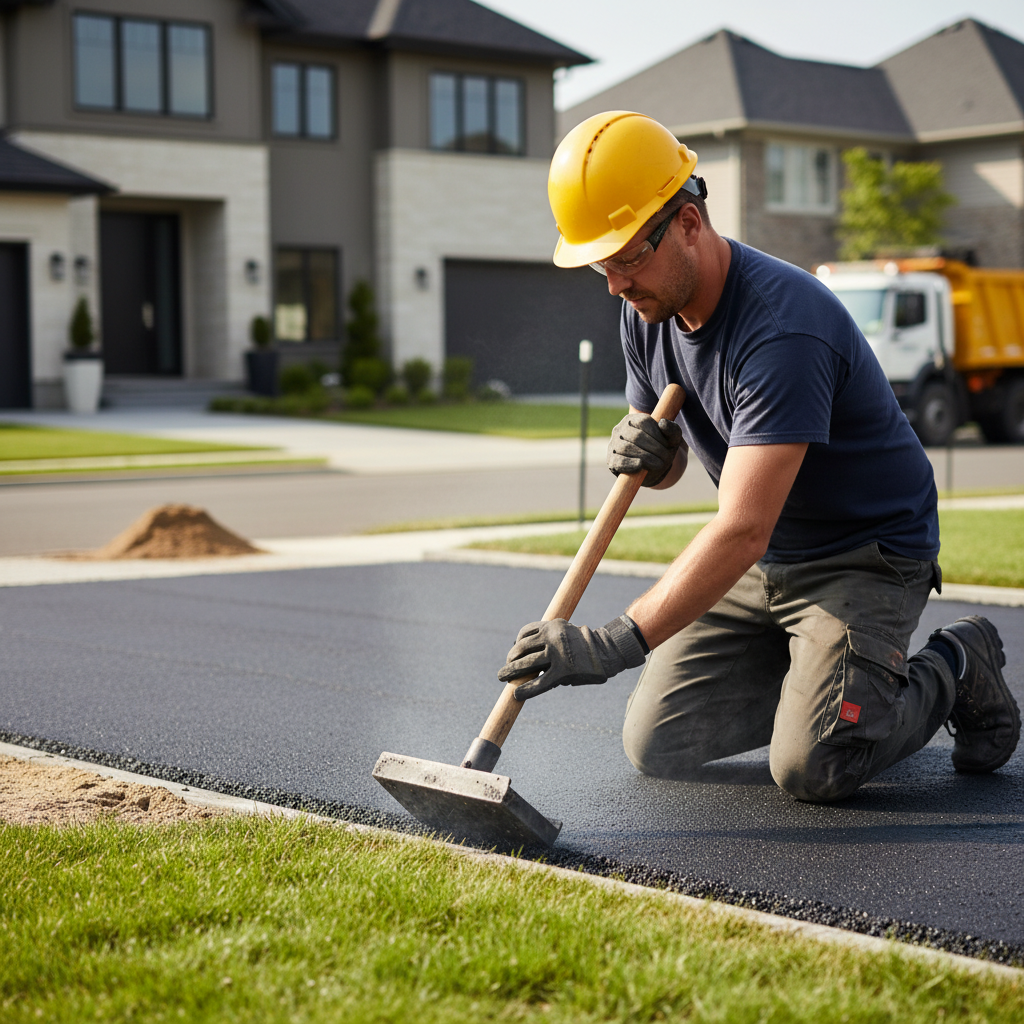
Driveway paving options and costs in Bayview Woods-Steeles
Bayview Woods-Steeles driveways are a mix of established homes and newer builds, and the right paving choice depends on how your lot drains and how the freeze–thaw cycle hits your base. In this community of 13,154 people (Statistics Canada, 2021 Census), many properties have private driveways serving single-family neighbourhood streets where vehicles park year-round—so small base or drainage mistakes show up quickly in Ontario winters. Toronto’s frost depth is commonly around 3–4 feet, which means contractors often have to excavate deeper, install a properly compacted granular base, and protect the system so water can’t sit under the asphalt or concrete. That deeper base and extra labour are a big reason Toronto-area driveway quotes can land at the top end of typical provincial ranges.
In Bayview Woods-Steeles—especially around Bayview Avenue and the busy corridor in the north end near local school and park traffic—contractors see strong demand for driveway upgrades because residents want a smooth surface before the snow season and during the late spring through early fall paving window. Asphalt is usually the lowest upfront route, while interlocking pavers are a premium choice with better curb appeal and easier spot repairs. Concrete sits in between but needs careful mix design and joints to manage movement. Your final price will come down to driveway size, removal of existing material, and how your base and drainage are engineered for frost. Use the table below to compare typical cost ranges and how long each option usually performs when built correctly.
| Material |
Lifespan |
Maintenance |
Best For |
Price per sq ft |
Price Range |
| Asphalt (new installation, proper base) |
15–25 years |
Sealcoat after 6–12 months, then every 3–5 years |
Value, smooth ride, good overall performance in freeze–thaw |
$6–$12 |
$3,500–$8,000 |
| Asphalt (overlay on existing gravel base) |
8–15 years |
Sealcoat; monitor for settlement where base is weak |
When existing depth/grade are acceptable and you’re reducing scope |
$5–$10 |
$3,500–$7,000 |
| Interlocking concrete pavers |
25–35 years |
Re-sand joints as needed; lift-and-relay localized repairs |
Premium curb appeal, easy repair without replacing the whole driveway |
$12–$22 |
$9,000–$20,000 |
| Poured concrete (broom finish) |
20–30 years |
Seal (optional); keep drainage controlled near edges |
Clean modern look, straightforward maintenance |
$10–$18 |
$6,000–$15,000 |
| Exposed aggregate concrete |
20–30 years |
Seal to reduce staining; manage de-icing strategy |
Texture and slip resistance with higher visual impact |
$12–$22 |
$7,000–$16,000 |
| Gravel / crushed stone (budget option) |
3–7 years |
Re-grade and top up annually; maintain drainage |
Short-term budget, low barrier to install |
$2–$6 |
$1,500–$4,000 |
Prices are estimates only and vary by project scope, site access and material selection.
What affects the price of paving in Bayview Woods-Steeles
In Bayview Woods-Steeles and across the Toronto economic region, even “same-size” driveways can come back with 30–50% differences between quotes. The most common reasons are deeper excavation needs for frost protection, how much of the existing surface must be removed, and whether the contractor includes drainage corrections and proper edge restraints (often the hidden work that makes a driveway last). In Toronto, the frost depth and freeze–thaw cycles are decisive cost factors: with ground freezing roughly 3–4 feet, contractors typically build a thicker, properly compacted granular base so water doesn’t sit under the pavement and expand when it freezes. That often means more material, more labour, and more compaction passes than in milder regions. Asphalt mix design also matters—Toronto-area specifications focus on performance through repeated freeze–thaw, which can push costs higher than “generic” mixes.
Season timing is another driver. Hot-mix asphalt generally needs air temperatures above about 10°C to place and compact correctly, which concentrates work into a late spring through early fall window. When prime dates are tight, scheduling pressure can increase labour rates and minimum job sizes—so an asphalt driveway that could land near $3,500–$8,000 may feel closer to the higher end if you’re booking rushed work. Concrete pricing can shift too: a straight broom-finish pour can be competitive around $6,000–$15,000, but exposed aggregate or complex base/drainage upgrades add cost. Locally, older lots (common across established parts of Bayview Woods-Steeles) sometimes have soft spots or inconsistent grading, which means extra excavation and re-compaction before any new surface goes down. Conversely, newer builds with better original slopes can reduce drainage rework and keep costs more stable.
| Price Factor |
Why It Matters |
Cost Impact |
| Driveway area in sq ft |
Most material and labour scale directly with surface area |
Often the largest swing; +1,000 sq ft can significantly change totals |
| Base depth required |
Frost protection depends on thicker, well-compacted granular layers in colder ground |
More excavation and base stone; can add substantial cost in Toronto |
| Grading and drainage work |
Proper slope and drainage prevent water pooling and edge failures |
May add excavation, sub-drain rock, and re-levelling time |
| Tear-out of existing surface |
Breaking concrete/old asphalt and hauling affects disposal and crew time |
Can increase the job by a meaningful percentage vs. overlay work |
| Edge restraints and curbing |
Restraints keep pavers/asphalt from spreading during freeze–thaw |
Adds formwork or block/curb material and labour |
| Sealing requirement |
Asphalt needs sealcoat after curing, then periodic re-seal to protect it |
Lower cost upfront for the base job, higher long-term upkeep |
| Site access |
Narrow lots slow equipment and may require smaller pours or manual movement |
Extra labour hours and equipment limitations |
| Asphalt mix specifications |
Freeze-thaw-rated mixes perform better under Ontario winter conditions |
Premium to ensure proper binder/aggregate for durability |
Permits & regulations in Ontario
In Ontario, paving a private driveway within your own property typically does not require a building permit—especially when you’re resurfacing existing driveway areas or replacing the surface without changing how it drains into the municipal right-of-way. However, permits and approvals may be required when the work affects municipal infrastructure or drainage. Common examples that usually DO require municipal approval include new curb cuts, changes to the boulevard, any alteration of storm drainage flow, work within the municipal right-of-way, or modifications that could redirect runoff toward neighbouring properties or sidewalks. Some municipalities also enforce lot-grading or stormwater-related by-laws that restrict how close a hard surface can come to property lines and how you can manage water near the foundation.
Step-by-step for Bayview Woods-Steeles homeowners: first, call Ontario One Call before any excavation so utility locates are marked. Next, verify the contractor’s credentials—ask for (1) their Ontario licence details if applicable to the scope they’re doing, (2) a current certificate of insurance with liability coverage, and (3) confirmation they’re properly registered for worker coverage (WSIB/WCB coverage). Then ask for a clearance letter or proof package—many reputable contractors can provide certificates on request. Finally, confirm the local lot-grading rules with the municipality (or your city’s building/engineering contacts) before work begins, especially if you’re changing elevations, adding catch basins, or adjusting drainage patterns.
Asphalt vs pavers vs concrete for Bayview Woods-Steeles driveways
For Bayview Woods-Steeles, the decision usually comes down to how you want the driveway to behave through winter and what you’re willing to maintain. Asphalt is the lowest upfront option and offers a smooth, quiet ride. In a freeze–thaw climate like Toronto’s, asphalt’s long-term performance depends heavily on a properly compacted granular base, good drainage, and a sealcoat schedule. With interlocking concrete pavers, the upfront cost is higher, but individual stones can be lifted and reset if a section ever needs repair—useful on older lots where minor base settlement might occur. Poured concrete is a mid-range choice but is more sensitive to cracking if control joints, air entrainment, and drainage aren’t handled correctly. In late fall and winter, salt and repeated wetting/drying can accelerate surface deterioration when concrete isn’t built for freeze–thaw.
Base preparation typically needs to account for the roughly 3–4 feet frost depth in Toronto. That means excavating to create a deeper, compacted granular foundation and ensuring the surface drains away from your garage and foundation. In practical terms, a well-built asphalt driveway can be a smart value near $3,500–$8,000. If you’re considering pavers, you might pay closer to $9,000–$20,000—that difference is justified when you want curb appeal, easier spot repairs, and a more forgiving surface for minor movement. Concrete can be a good option when you want a clean finish, plan for jointing, and keep drainage consistent; it’s often competitive around $6,000–$15,000.
| Material |
Frost Resistance |
Curb Appeal |
Repair Method |
Lifespan |
Price Band |
| Asphalt (sealed regularly) |
Good with proper base and seal maintenance |
Low to mid (clean, modern look) |
Cut-out and patch, or full overlay when aged |
15–25 years |
$3,500–$8,000 |
| Interlocking concrete pavers |
Excellent when base is engineered and edging is tight |
High (custom patterns and colour) |
Lift, re-level base, replace only affected stones |
25–35 years |
$9,000–$20,000 |
| Poured concrete (air-entrained) |
Good with air entrainment and correct jointing |
Mid (depends on finish) |
Crack repair/seal; localized patching where feasible |
20–30 years |
$6,000–$15,000 |
| Exposed aggregate concrete |
Good with correct mix, finishing, and sealing |
High (texture and colour depth) |
Patching is possible but more visible; often requires matching finish |
20–30 years |
$7,000–$16,000 |
| Permeable pavers (drainage grid) |
Very good for controlling water, if base drainage is designed |
Mid to high (clean lines) |
Targeted stone replacement and sand bed adjustments |
20–30 years |
$10,000–$22,000 |
| Chip seal / tar-and-chip |
Moderate; depends on maintenance and traffic load |
Mid to low (more utilitarian) |
Spot repairs and periodic re-chipping |
7–12 years |
$2,800–$6,000 |
How to choose a paving contractor in Bayview Woods-Steeles
Choosing the right paving contractor in Bayview Woods-Steeles starts with proof, not promises. In Ontario, confirm they carry current liability insurance—ask for a certificate of insurance showing your property as a possible job site, and ensure coverage matches the scope (asphalt, pavers, concrete, excavation). For worker protection, request confirmation of WSIB/WCB coverage (or equivalent worker coverage documentation depending on their setup). Reputable contractors can provide these documents quickly; if they hesitate, that’s a real warning sign.
Next, get 2–3 itemised written quotes. Not just a single “total price,” but a breakdown showing labour and materials: excavation and grading, base stone and compaction lifts, geotextile (if used), edging/curb restraints, the asphalt or concrete placement, and disposal/haul-away. Also ask what’s excluded: is demo of existing asphalt/concrete included? Is sub-drain work included if water is present? Is permit pull included where needed (especially if the work touches municipal drainage or right-of-way)? Warranty should be in writing with workmanship length (often 1–3 years depending on scope), plus the manufacturer/product warranty details for materials. Ask whether warranty is transferable if you sell your home.
For payment, avoid large upfront payments. A good rule is no more than 10–15% at start, with staged payments tied to completed milestones, and a holdback until the final inspection and cleanup. Finally, ask for a clear timeline: written start date and completion estimate, and what happens if weather delays the work in Ontario’s compressed paving season.
- Confirm liability insurance certificate is current (and covers your job site).
- Request proof of WSIB/WCB coverage for their workers.
- Verify they’re experienced specifically with freeze–thaw base design in Toronto.
- Get quotes itemised by excavation, base, compaction, and surface material.
- Ask for section-by-section pricing (demo, base rebuild, drainage corrections).
- Ensure disposal/haul-away is included and not an “extra” later.
- Check whether edges/curbing/restraints are included (critical for pavers and long asphalt edges).
- Confirm asphalt sealcoat timing and whether it’s included or scheduled.
- Ask for compaction method details (number of lifts/passes) for the base.
- Review the warranty terms in writing, including exclusions and transferability.
- Set payment milestones: small deposit, staged progress, holdback until completion.
- Get a written start date and completion window, plus weather-delay plan.
Concrete red flags I look for in Bayview Woods-Steeles: quotes that skip base thickness details, vague drainage promises (“we’ll just grade it”), no mention of edging/curbs (especially for pavers), warranties that exclude freeze–thaw or workmanship without specifics, and contractors who won’t provide insurance/WSIB documentation before you sign. If they only want a large upfront deposit or won’t put the scope and timeline in writing, walk away and get another quote.
Frequently asked questions — paving in Bayview Woods-Steeles
Why does my driveway crack and heave in winter?
Cracking and heaving usually come from water problems plus inadequate frost protection. In Bayview Woods-Steeles, the freeze–thaw cycle is tough on driveways because moisture can expand when it freezes, pushing the surface up (heave) and stressing it later (cracking). Common causes are a base that’s too thin, poor compaction, inadequate drainage/slope, or missing geotextile and proper drainage layers. If your driveway wasn’t sealed (for asphalt) or didn’t have air entrainment/control joints (for concrete), surface deterioration can also start earlier. A lot of “mystery” failures are really base-related—especially when existing soil or old gravel wasn’t properly rebuilt before resurfacing.
Do I need a permit to pave my driveway in Ontario?
In Ontario, most driveway paving on your own property typically doesn’t require a building permit when you’re replacing the surface within the private driveway area and not changing municipal drainage. However, approvals are often required when the work affects the municipal right-of-way—such as a new curb cut, changes to the boulevard, or alterations to storm drainage. Some municipalities also have lot-grading rules that restrict how water is managed and how close hard surfaces can be to certain property edges. For Bayview Woods-Steeles homeowners, the safest approach is to ask your contractor to confirm whether your scope touches the boulevard or drainage system, and to check lot-grading requirements with the municipality. Also, always arrange utility locates before excavation through Ontario One Call.
How long before I can drive on new asphalt?
With properly placed hot-mix asphalt, you can often drive on it within about 24–48 hours depending on weather, thickness, and whether there’s any surface oiling. In spring and early fall, Ontario temperatures can slow curing because asphalt compaction and cooling rates change. If sealcoat is planned, it’s typically applied after the asphalt cures (often after 6–12 months for a new driveway, depending on the product and installer’s schedule), and then it’s re-applied every 3–5 years. If you paid for an asphalt driveway in the typical range of $3,500–$8,000, make sure your quote includes curing/placement expectations and that the contractor explains access restrictions for the first couple of days.
What causes potholes and how are they repaired?
Potholes are usually a water-and-base failure: water gets into small cracks or weak spots, undermines the base, and then traffic breaks the surface into a larger crater. Toronto’s winter amplifies this because wetting/freezing expands voids under the pavement. Common “pothole starters” are poor drainage, lack of edge restraint, or an asphalt surface that wasn’t sealed on schedule. Repairs typically involve cutting out to sound material, removing weak base, rebuilding with compacted granular material, and then patching the asphalt to match thickness. If the pavement is generally aged across the whole driveway, a localized patch may not last—an overlay can be more cost-effective.
How do I prepare for a paving project?
Preparation is mostly about access and decisions. Clear vehicles and plan for equipment access along your driveway (narrow lots can slow crews). Mark any landscaping you want protected and discuss whether fencing, gates, or garden beds need shielding. If you’re removing existing surfaces, confirm disposal/haul-away is included. Make sure your contractor knows where downspouts drain so we can avoid new water pathways toward your garage or foundation. Before excavation, utility locates must be done through Ontario One Call to prevent surprises. For homeowners comparing budgets in Bayview Woods-Steeles, it also helps to understand what “scope” means: an asphalt job near $3,500–$8,000 may not include drainage corrections unless specified, while pavers can reach $9,000–$20,000 when full base rebuild and edging are included.
How do I compare paving quotes fairly?
Compare apples to apples by insisting on itemised quotes and identical assumptions. Ask every contractor for a breakdown of excavation/demolition, base depth and stone type, compaction lifts, drainage/grading corrections, edging/curbs, and the final surface work. Check whether disposal is included and whether a permit or municipal approval is mentioned where needed (especially if the driveway ties into the boulevard or storm drainage). Also compare warranty terms: workmanship duration, exclusions, and whether it’s transferrable. Finally, verify their insurance and WSIB/WCB coverage before you sign. In Bayview Woods-Steeles, pricing can vary by 30–50% when base and drainage are handled differently—so don’t choose the lowest number until the scope is fully matched.