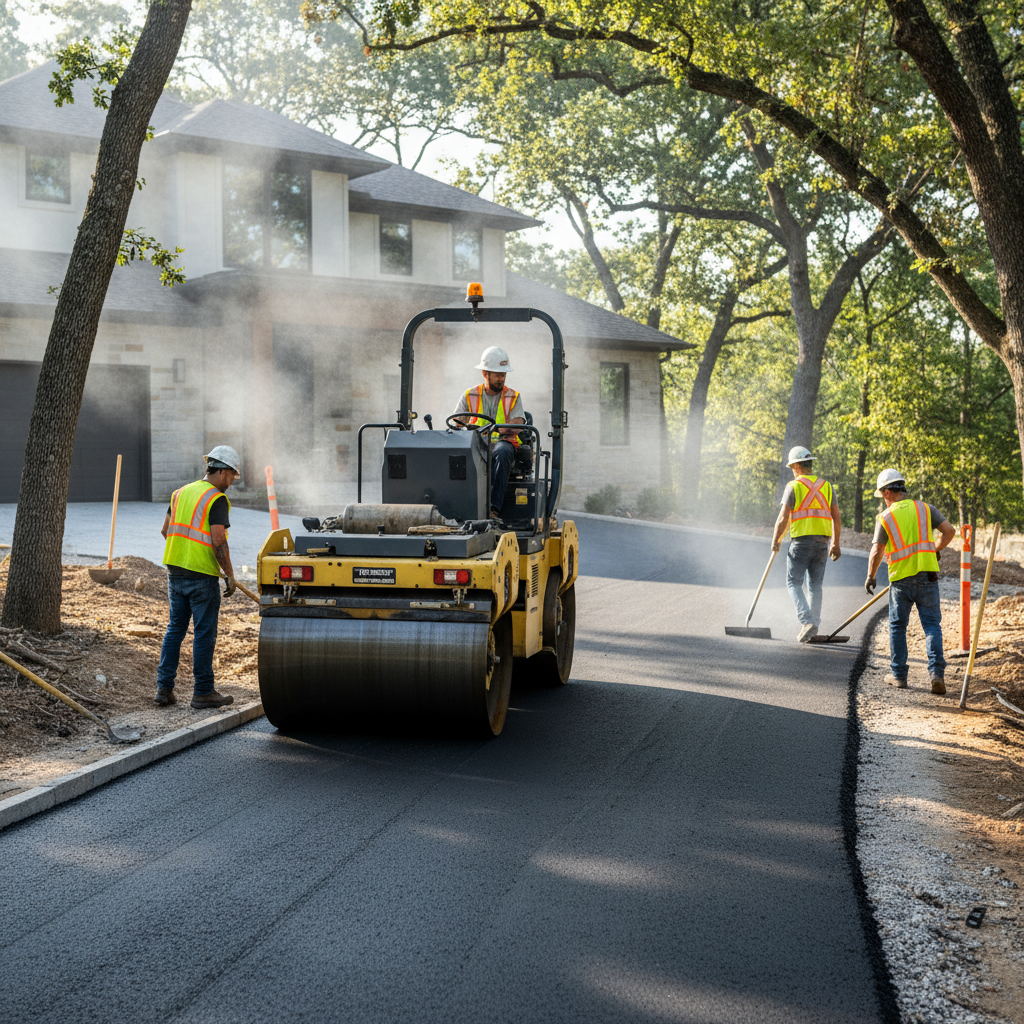
Driveway paving options and costs in Tobermory
Tobermory homeowners typically have a straightforward choice of materials: asphalt, interlocking concrete pavers, or concrete. With a 2021 population of 1,427 (Statistics Canada, 2021 Census), the town is small, but the surrounding cottage-and-residential traffic pattern still creates real demand for driveways around the harbour and along Highway 6. In this market, many private driveways serve single-family homes; for a neighbourhood example, areas closer to Tobermory Harbour and the main waterfront approach tend to see more paving and upgrade work because access, aesthetics, and winter traction all matter.
Pricing in the Toronto economic region is heavily shaped by frost depth and freeze–thaw cycles. Even though Tobermory is more “local” than downtown Toronto, contractors still price with the same Ontario climate realities: ground freezing to roughly 3–4 feet drives the need for a deeper, well-compacted granular base and drainage that keeps water from sitting under pavement. That engineering increases installed cost, but it’s what prevents heaving and cracking when temperatures swing in late fall, winter, and early spring.
At the same time, the paving season is effectively compressed from late spring through early fall, so work for prime dates can land in a tighter schedule—especially for asphalt and prep crews. The result is that like-for-like projects can land far apart in price, depending on base excavation, tear-out, edging, and how quickly you need the job done. Use the table below as a practical starting point for comparing options.
| Material |
Lifespan |
Maintenance |
Best For |
Price per sq ft |
Price Range |
| Asphalt (new installation, proper base) |
15–25 years |
Seal 3–5 years after install; minor crack fill as needed |
Lower upfront cost with good long-term performance when drainage is correct |
$6–$11 |
$3,500–$8,000 |
| Asphalt (overlay on existing gravel base) |
10–18 years |
Seal after 6–12 months; crack seal and patching if needed |
When you want to improve traction without full tear-out |
$5–$9 |
$3,200–$6,500 |
| Interlocking concrete pavers |
25–35 years |
Joint sand refresh; occasional resetting of small areas |
Curb appeal and easy repairs without replacing the whole driveway |
$18–$30 |
$9,000–$20,000 |
| Poured concrete (broom finish) |
25–35 years |
Seal selectively; repair hairline cracks; maintain drainage |
Clean, simple look; strong surface if air-entrainment and joints are right |
$14–$22 |
$6,000–$15,000 |
| Exposed aggregate concrete |
25–35 years |
Less staining control than some finishes; periodic sealing if desired |
Higher-end texture for traction and appearance |
$16–$26 |
$7,500–$18,000 |
| Gravel / crushed stone (budget option) |
3–10 years (varies by grading and traffic) |
Top up annually; regrade; manage washboarding |
Temporary solution or low-budget access before full paving |
$3–$6 |
$1,500–$4,000 |
Prices are estimates only and vary by project scope, site access and material selection.
What affects the price of paving in Tobermory
In the Toronto economic region, it’s common to see the same “driveway size” quote vary by 30–50%. The difference usually isn’t the asphalt or paver unit price—it’s what’s underneath and what’s needed to keep water out when Ontario freezes and thaws. A properly engineered base (excavation, geotextile, granular layers, and compaction) can swing costs dramatically versus a lighter preparation plan.
Frost line depth and freeze–thaw cycles are decisive cost factors here. With ground freezing to roughly 3–4 feet, Toronto-area work typically needs a thicker compacted granular base—often around 6–12 inches in Ontario for the paving system design—so the surface doesn’t heave and crack. If drainage is poor, meltwater and rain can sit near the subgrade; that means more base, more excavation, and more labour to correct grading and slope, which is why frost-safe drainage planning adds cost.
Season timing matters too. Hot-mix asphalt placement depends on suitable air/road temperatures (commonly above about 10°C), so the short workable season from late spring to early fall concentrates demand and pushes up pricing for prime dates and rush work. That also affects scheduling availability for crews who do both base work and paving.
Concrete costs in Tobermory can rise or fall based on details homeowners feel “small” at first glance: air-entrained mix and correct control joints can prevent freeze-thaw damage, but they require proper mix design and finishing time. Also, if you’re coming off an old slab with depth and rebar issues, tear-out and disposal can add substantially; conversely, if your existing base is stable and well-drained, an asphalt overlay can reduce excavation. As a reference point, many complete asphalt installs land in the $3,500–$8,000 band, while interlocking projects frequently start closer to the $9,000–$20,000 band depending on restraints and edging.
| Price Factor |
Why It Matters |
Cost Impact |
| Driveway area in sq ft |
Material and labour scale directly with surface area; base and edging also increase proportionally |
High impact (often 40–70% of total) |
| Base depth required |
Frost line determines granular thickness; deeper frost needs more excavation and compaction |
High impact (can change price by 15–30%) |
| Grading and drainage work |
Slope corrections and drainage channels prevent water from pooling under pavement |
Medium to high (commonly +10–25%) |
| Tear-out of existing surface |
Concrete breaking and hauling add equipment time, dump fees, and labour hours |
Medium to high (commonly +10–40%) |
| Edge restraints and curbing |
Restraints keep pavers from spreading and help asphalt perform without edge failures |
Medium (+5–15%) |
| Sealing requirement |
Asphalt sealcoating after the proper curing window protects against oxidation and water intrusion |
Low to medium (+1–5% now; reduces repair later) |
| Site access |
Narrow driveways, tight turns, or limited staging slow equipment movement and increase labour time |
Medium (+5–20%) |
| Asphalt mix specifications |
Freeze–thaw-rated mixes cost more and require correct placement temperatures and compaction |
Medium (+5–15%) |
Permits & regulations in Ontario
In Ontario, paving a private driveway within your own property usually does not require a building permit when you’re simply replacing an existing surface and keeping the same general footprint. However, you do need municipal approval in the municipal right-of-way if your project affects the boulevard area or any drainage patterns. Common examples that typically require a permit/approval include installing or altering a curb cut, changing the boulevard approach, modifying storm drainage (for example, tie-ins, interceptors, or redirecting water), or making changes that could affect municipal infrastructure. Your municipality may also have lot-grading rules that restrict how close hard surfaces can be to property lines and how runoff must be handled.
Before excavation anywhere in Tobermory, call for utility locates through Ontario One Call. That’s non-negotiable for safety and for avoiding expensive utility strikes. Next, verify your contractor’s credentials before they mobilize: (1) check their Ontario licence/registration status via the appropriate provincial resources or trade registry listings they provide; (2) request a certificate of liability insurance and confirm it covers driveway/asphalt/paving work; and (3) confirm their workers’ coverage (WSIB/WCB) for employees—ask for the clearance letter or proof of account coverage documentation.
A good homeowner workflow is: start with the scope that may touch boulevard/drainage, confirm whether permits are needed, then ensure the contractor is insured and properly covered before you schedule the excavation. That prevents delays and protects your investment when frost-season rainwater and winter salt start testing the base.
Asphalt vs pavers vs concrete for Tobermory driveways
For Tobermory and the wider Toronto climate zone, the “best” driveway material depends on how you want to balance upfront cost, winter maintenance, and how easily you can repair problem areas. Asphalt is typically the lowest upfront option, and when it’s built on a correctly compacted granular base and proper drainage, it handles freeze–thaw well. The trade-off is ongoing care: asphalt generally needs sealcoating every 3–5 years to protect the surface from water intrusion and oxidation.
Interlocking concrete pavers cost more at the start, but they offer the most homeowner-friendly repair approach. If a section ever settles or needs rework, contractors can remove and reset pavers without tearing out the whole driveway—useful in Ontario where seasonal expansion and contraction can reveal weak spots in drainage. Pavers also deliver strong curb appeal near the waterfront approach where presentation matters.
Poured concrete sits in the middle price tier, but it’s more sensitive to mix design and detailing. In freeze–thaw conditions, air-entrainment and correctly planned joints are critical; without that, hairline cracking can widen over cycles, and de-icing salt plus moisture can accelerate surface wear. Exposed aggregate concrete adds texture and traction, but it still relies on correct air-entrainment and curing.
Base preparation depth and drainage design are where these materials meet reality: with Ontario frost depth around 3–4 feet, you need engineered granular support and slope so water doesn’t sit under the slab or asphalt. For a dollar example, moving from asphalt in the $3,500–$8,000 range to pavers in the $9,000–$20,000 band can be justified if you value easy repairs and higher curb appeal—or if your driveway has a complex edge/border that benefits from restraint and segmented replacement. If you mainly want the best initial price and can commit to sealing, asphalt often makes the most financial sense.
| Material |
Frost Resistance |
Curb Appeal |
Repair Method |
Lifespan |
Price Band |
| Asphalt (sealed regularly) |
Good with deep granular base and drainage; freeze–thaw rated mix recommended |
Moderate (clean, dark finish) |
Patch and resurface; localized crack repair and sealing |
15–25 years |
$3,500–$8,000 |
| Interlocking concrete pavers |
Excellent when bedding sand thickness and restraint are done correctly |
High (wide design choices) |
Remove affected pavers, relevel bed, replace and resand joints |
25–35 years |
$9,000–$20,000 |
| Poured concrete (air-entrained) |
Good when air-entrainment and joints are engineered for Ontario freeze–thaw |
Moderate to high (finish options) |
Crack repair seal; patching; full replacement if widespread failures occur |
25–35 years |
$6,000–$15,000 |
| Exposed aggregate concrete |
Good with proper mix, curing, and drainage |
Very high (textured, premium look) |
Localized grinding/patch or replacement of sections (site-dependent) |
25–35 years |
$7,500–$18,000 |
| Permeable pavers (drainage grid) |
Very good where you want to reduce pooled water; depends on base design |
High for modern/custom builds |
Remove sections, clean, and reset grid/pavers as needed |
20–30 years |
$10,000–$22,000 |
| Chip seal / tar-and-chip |
Fair to good; best for low-speed areas and stable base |
Low to moderate (more utilitarian) |
Rechip or spot repairs |
5–10 years |
$4,000–$9,000 |
How to choose a paving contractor in Tobermory
Choosing the right contractor in Tobermory is mostly about verifying coverage, clarity of scope, and whether they design for Ontario’s freeze–thaw reality—not just the surface finish. Start by verifying Ontario credentials: ask for their Ontario trade licence/registration details (as applicable), then request a certificate of liability insurance and make sure the coverage is current and matches the kind of paving work they’ll do on your driveway. For workers, confirm WSIB/WCB coverage and ask for the clearance letter or proof of active account coverage; don’t accept “we’re insured” without paperwork.
Then request 2–3 itemised written quotes (labour + materials breakdown). A proper quote should show excavation and base materials, granular depth, geotextile use (if specified), edging/restraints, asphalt mix or concrete air-entrainment, and whether tear-out and disposal are included. Confirm what’s excluded: permits (if required), utility locate costs, topsoil/grading beyond the pavement limits, and whether you get reinstatement of sod or gravel areas.
Warranty matters in Ontario because winter cycles can reveal base issues early. Look for a workmanship warranty length stated in writing, plus any product/manufacturer warranty. Ask whether warranties are transferable if you sell your home. For payment, keep it safe: never pay more than about 10–15% upfront and hold back a portion until the job is complete and cleaned up. Finally, insist on a start date and completion estimate in writing—short seasons can change schedules, but your timeline should still be documented.
- Ask for itemised quotes with base depth and compaction method stated.
- Verify Ontario licensing/registration and confirm it matches the work.
- Request certificate of liability insurance and confirm active dates.
- Confirm WSIB/WCB coverage with a clearance letter or proof of account.
- Check whether utility locates are included in their scope and schedule.
- Ensure tear-out and disposal are explicitly included if you have old asphalt/concrete.
- Confirm drainage plan: slope, outlet points, and how runoff is handled.
- For asphalt: ask when they will seal (and whether sealing is included or recommended).
- For pavers: confirm edging restraints and joint sand specs.
- For concrete: confirm air-entrained mix and joint/control strategy.
- Get warranty details in writing (workmanship duration and what’s covered).
- Use a payment schedule with small upfront deposit and retainage until completion.
Red flags I see in Tobermory include: a contractor who won’t provide insurance/WSIB paperwork, quotes that only list “asphalt” without granular/base layers, promises to pave outside the suitable weather window, no mention of drainage/curb restraints, and payment terms that require large upfront deposits or refuse retainage.
Frequently asked questions — paving in Tobermory
What base thickness do I need for pavers in Tobermory?
In Tobermory (Ontario) and the broader Toronto climate pattern, paver performance depends on having enough engineered base to handle freeze–thaw. For most driveway paver installs, contractors typically design around a deeper compacted granular base—often in the Ontario 6–12 inch range depending on subgrade conditions, traffic load, and drainage. The key is that the base must be well-compacted and sloped so water doesn’t collect under the bedding sand. If your driveway subgrade is soft or you have poor drainage, expect deeper excavation and additional granular layers before any pavers go down. The most accurate thickness comes from a site assessment—especially if you’re replacing an old asphalt or concrete driveway that left irregular subgrade.
How do I get the most accurate paving quote in Tobermory?
For the most accurate quote in Tobermory, ask for an on-site measurement and a written, itemised scope—not a “ballpark” based only on square footage. Ensure the quote includes excavation, granular base depth, geotextile (if used), compaction, edging/restraints, and what happens to existing material (tear-out and disposal). With Ontario frost depth around 3–4 feet, drainage corrections and grading can add real cost, so the contractor should describe slope and where runoff will go. Also confirm what’s included for sealing (asphalt) or joint sand/restraint (pavers). If you’re comparing options, use the local price bands as a check: for example, asphalt installs often land around the $3,500–$8,000 range, while pavers can start around $9,000–$20,000 depending on layout and edging.
How much does it cost to pave a driveway in Tobermory?
Cost depends mainly on driveway size, base preparation, tear-out/disposal, and how complex the edging and drainage details are. In Tobermory, many complete asphalt driveway projects fall within $3,500–$8,000 when the base is built properly for Ontario freeze–thaw conditions. Interlocking pavers are typically higher, often in the $9,000–$20,000 band due to labour intensity, bedding materials, and restraints. Concrete usually sits between them, commonly around $6,000–$15,000 for driveway pours, broom finish, and proper jointing strategy. If you’re going from a gravel driveway with stable material, costs can be lower; if you need major excavation and drainage corrections or full tear-out of existing concrete/asphalt, costs rise. Your best estimate comes from comparing itemised quotes with the same base depth and drainage plan.
Asphalt vs interlocking pavers vs concrete — which is best in Tobermory?
In Tobermory, asphalt, pavers, and concrete can all perform well if the base and drainage are designed for Ontario freeze–thaw. Asphalt is usually the best fit when you want the lowest upfront cost and you’re willing to maintain it—sealcoating after the proper curing window is important for longevity. Interlocking pavers are often the best choice if curb appeal matters and you value repair flexibility; if a section settles, it can be reset without replacing the whole driveway. Concrete is a good mid-range option, but it must be properly air-entrained and jointed to manage freeze–thaw and winter salt exposure. If you’re trying to justify the price difference, a driveway that’s likely to need localized repairs or complex edging may make pavers worth the higher $9,000–$20,000 budget versus asphalt in the $3,500–$8,000 band.
How long does a paved driveway last in Tobermory?
Typical driveway lifespans in Tobermory depend on base preparation, drainage, and maintenance—not just the top layer. With correct granular base and proper sealing, asphalt commonly lasts about 15–25 years. Interlocking pavers often provide 25–35 years because repairs can be localized and the system is more forgiving if small areas shift. Poured and exposed aggregate concrete are also commonly in the 25–35 year range when air-entrainment, curing, and control joints are done correctly for Ontario winter cycles. However, freeze–thaw problems can shorten any lifespan if water is trapped under the pavement. That’s why drainage corrections and edging restraints are worth paying for upfront. A contractor who only discusses surface finish (and not base depth and runoff control) is the biggest risk to your timeline.
When is the best time of year to pave in Tobermory?
The best time to pave in Tobermory is typically late spring through early fall—when soil and air temperatures are suitable for installation and compaction. Asphalt placement generally needs warm enough air/road temperatures (often around and above 10°C), and paving crews avoid cold, wet conditions because proper compaction and curing are harder. Ontario freeze–thaw cycles also make spring an important window for scheduling drainage work and base stabilization before the ground starts acting up again. If you plan a driveway project, aim for a start date after the ground firms up in spring and before the fall weather becomes unpredictable. If you wait too long, you may get pushed into a tighter schedule, and pricing can rise for prime dates because demand concentrates into a shorter workable season.