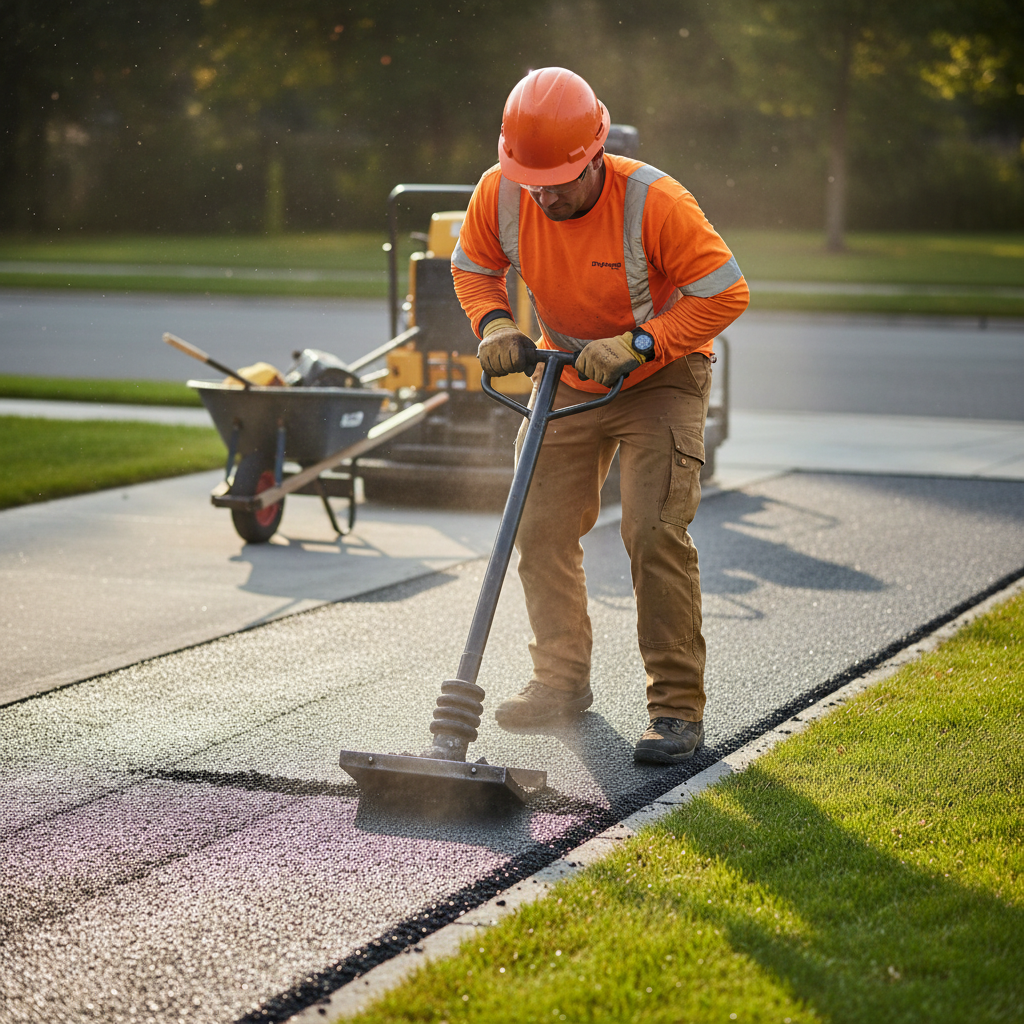
Driveway paving options and costs in East Gwillimbury
East Gwillimbury is a classic Ontario driveway market: lots of single-detached homes, and most households rely on a dedicated private driveway for daily access. In the 2021 Census, the community counted 34,637 people and 9,640 homeowner households, and single-detached dwellings make up 81.2% of the housing stock—so for many homeowners, driveway surfacing is one of the most-used exterior upgrades. Pricing is closely tied to Toronto-region frost and freeze–thaw cycles. In this area, ground freezing to roughly 3–4 feet pushes contractors to over-excavate and build a deeper, well-compacted granular base with reliable drainage so water can’t sit under the pavement and create heaving and cracking.
You also feel the market pressure: the paving season is effectively late spring through early fall, and hot-mix asphalt placement is best when air temperatures are reliably above about 10°C. That compresses contractor schedules in peak months, particularly around high-demand pockets such as Mount Albert and the Holland Landing area, which can nudge costs toward the higher end of the bands—especially for rush work or projects needing extensive base repairs.
Below is a practical cost comparison for the most common driveway choices in East Gwillimbury, assuming proper subgrade and drainage engineering. Use it to sense-check proposals before you commit—then we’ll break down what drives each quote.
| Material |
Lifespan |
Maintenance |
Best For |
Price per sq ft |
Price Range |
| Asphalt (new installation, proper base) |
15–25 years |
Sealcoat every 3–5 years |
Value + smooth ride with correct drainage |
$6–$12 |
$3,500–$8,000 |
| Asphalt (overlay on existing gravel base) |
10–18 years |
Sealcoat and targeted patching as needed |
Budget upgrade when grading and base are sound |
$7–$14 |
$3,800–$7,500 |
| Interlocking concrete pavers |
25–40 years |
Re-sanding joints; occasional spot re-leveling |
Best curb appeal; repairable surface |
$20–$36 |
$9,000–$20,000 |
|
| Poured concrete (broom finish) |
20–30 years |
Seal and maintain drainage; crack monitoring |
Low maintenance look with proper air-entrainment |
$15–$25 |
$6,000–$15,000 |
| Exposed aggregate concrete |
20–30 years |
Sealcoat; keep de-icing practices careful |
Upscale finish without a paver grid |
$18–$30 |
$7,000–$16,500 |
| Gravel / crushed stone (budget option) |
3–8 years |
Re-grade and top up every 1–3 years |
Short-term access while planning full paving |
$3–$7 |
$2,000–$5,500 |
Prices are estimates only and vary by project scope, site access and material selection.
What affects the price of paving in East Gwillimbury
In the Toronto economic region, two quotes for the “same driveway” can swing 30–50% because the big-cost drivers aren’t always visible at first glance. One contractor may design the base around the local frost depth and manage drainage properly; another may under-excavate, rely on a thinner base, or skip certain prep steps that only show up as failure during the first winter. In Ontario, frost is a deciding factor: freezing to about 3–4 feet typically means a deeper, well-compacted granular base so the pavement doesn’t heave when moisture freezes and thaws repeatedly. That often translates to more excavation, more granular material, more trucking, and more labour time—especially where old driveways have failed due to water pooling.
Scheduling also matters. Hot-mix asphalt needs suitable air and pavement temperatures (commonly above about 10°C), so the workable season is compressed into late spring through early fall. When prime dates fill up, pricing tends to land closer to higher band values—for example, asphalt projects often land around the $3,500–$8,000 range depending on base repair scope. Concrete and pavers can be priced with more variables too, but if you’re comparing to $9,000–$20,000 interlock, the justification usually comes from long-term repairability and curb appeal.
Concrete examples from East Gwillimbury: older homes built before 1981 (27.9% of the housing stock) may have older drainage patterns, flatter slopes, or underground services that require extra investigation before pouring. Also, driveways widened to accommodate a wider vehicle can push costs up quickly because the contractor must re-establish proper drainage grades; conversely, a well-drained site with good fall to a storm connection can lower excavation and reduce the amount of base replacement required.
| Price Factor |
Why It Matters |
Cost Impact |
| Driveway area in sq ft |
Most materials and labour scale directly with square footage |
Major driver |
| Base depth required |
Frost line determines granular thickness to prevent heaving and cracking |
Major driver |
| Grading and drainage work |
Slope corrections and drainage prevent water sitting under the surface |
Moderate to major |
| Tear-out of existing surface |
Breaking, hauling and disposal add labour and dump fees |
Moderate to major |
| Edge restraints and curbing |
Prevents paver spread and asphalt migration at the perimeter |
Moderate |
| Sealing requirement |
Asphalt typically needs sealcoat after installation and periodically after |
Low to moderate (timing-dependent) |
| Site access |
Narrow lots slow equipment movement and can require smaller loads |
Moderate |
| Asphalt mix specifications |
Freeze–thaw-rated mix costs more but improves durability in Ontario winters |
Low to moderate |
Permits & regulations in Ontario
For most East Gwillimbury homeowners, paving within your own property line typically does not require a building permit. Where the rules change is when the project touches municipal infrastructure or alters how water leaves your property. Work in the municipal right-of-way—such as a new or modified curb cut, changes to the boulevard, alterations to storm drainage connections, or any modification that affects municipal easements—normally requires municipal approval before work begins.
Also keep an eye on lot-grading bylaws. Even if you don’t need a permit to replace the driveway surface, your municipality may restrict how close to property lines a hard surface can sit, and it may require that you maintain proper drainage so runoff doesn’t shift onto neighbours. The safety step for every project is the same: arrange utility locates before any excavation (Ontario One Call). That’s critical because driveway base work often involves digging deeper than homeowners expect.
To verify your contractor, ask for three things and check them in writing:
- Ontario licence/registration (as applicable): confirm their status on the relevant Ontario business registry/contractor listing they use in their proposals.
- Liability insurance: request a certificate of insurance naming you as a certificate holder where possible, and confirm the coverage amount matches the project size.
- WSIB/WCB coverage: request evidence of coverage/clearance letter so you’re not exposed if a worker is injured on site.
If municipal approval is needed for your curb cut or drainage tie-in, a reputable contractor should clearly state who pulls permits/approvals and schedule it before excavation.
Asphalt vs pavers vs concrete for East Gwillimbury driveways
When you compare asphalt, interlocking pavers, and concrete in East Gwillimbury, you’re really comparing how each surface handles Toronto-region freeze–thaw, winter maintenance, and long-term repairs. Asphalt usually has the lowest upfront cost and a smooth finish, but it performs best with a properly engineered base and drainage, plus sealcoat roughly every 3–5 years. Interlocking concrete pavers cost more up front, yet they’re extremely repairable—if a base spot fails or a utility trench is reopened later, only the affected sections typically need removal and re-laying. Poured concrete often lands in the middle for installation cost, but it’s more sensitive to cracking if air-entrainment, control joints, and drainage aren’t handled correctly. Under repeated freezing and thawing, water movement is what usually drives deterioration for all three materials.
For a Toronto frost depth environment (around 3–4 feet), the base design is non-negotiable. Contractors typically need deeper, compacted granular layers and careful slope/grading so water can’t sit under the surface. With winter realities—plowing, de-icing salts, and sand—pavers can better tolerate surface-level movement because individual units are flexible on the bedding layer. Concrete can hold up well, but de-icing chemistry and poorly placed joints can accelerate surface spalling and cracking.
A practical example: if your driveway is sized so you’d expect asphalt to land around $3,500–$8,000, moving to interlocking at $9,000–$20,000 is often justified when you want maximum curb appeal, long-term repairability, and you anticipate possible future access/utility work. If you don’t want to plan sealcoat and ongoing joint maintenance, asphalt may feel less ideal—while pavers typically win for homeowners who value tidy appearance and easier spot repairs.
| Material |
Frost Resistance |
Curb Appeal |
Repair Method |
Lifespan |
Price Band |
| Asphalt (sealed regularly) |
Good with deep base + drainage + freeze–thaw-rated mix |
Medium |
Patch and resurface (overlay if needed) |
15–25 years |
$3,500–$8,000 |
| Interlocking concrete pavers |
Excellent when base bedding and edge restraints are correct |
High |
Remove/re-lay affected stones (spot repair) |
25–40 years |
$9,000–$20,000 |
| Poured concrete (air-entrained) |
Good with air-entrainment, joints, and drainage |
Medium |
Patch repairs or full replacement if extensive cracking |
20–30 years |
$6,000–$15,000 |
| Exposed aggregate concrete |
Good with correct mix design and curing |
Very High |
Patch matching surface texture/colour as needed |
20–30 years |
$7,000–$16,500 |
| Permeable pavers (drainage grid) |
Very good for water management if subbase is designed properly |
High |
Spot replacement of affected pavers/grid sections |
25–35 years |
$10,000–$22,000 |
| Chip seal / tar-and-chip |
Moderate; best for certain driveway types and maintained sites |
Low to Medium |
Re-chip/recoat and patch aggregate loss areas |
8–15 years |
$3,000–$6,500 |
How to choose a paving contractor in East Gwillimbury
Choosing the right contractor in East Gwillimbury is mostly about proof and clarity. Start by verifying their Ontario coverage and track record. Ask for:
- Liability insurance: request a current certificate and confirm it’s valid during the job window.
- WSIB/WCB clearance or coverage documentation: a “clearance letter” or equivalent proof should be available on request.
- Workmanship warranty: confirm duration in writing and whether it’s tied to conditions like sealcoat schedules (for asphalt) or base compliance.
Then get 2–3 itemised written quotes—not just a lump-sum number. Itemisation should separate excavation, hauling/disposal, base materials (type and depth), compaction, drainage/grading corrections, geotextile (if used), surface course, and any mobilization/access costs. Ask whether permits are included (if any are required) and whether disposal and tipping fees are included in the price.
For payment, a common safe approach is: never pay more than 10–15% upfront, and hold back the final payment until the job is complete and cleaned up. If a contractor wants a large deposit to “reserve materials” without a detailed schedule, that’s a red flag. Finally, get a start date and estimated completion timeline in writing—Ontario’s short paving window means scheduling delays can leave your base exposed to freeze–thaw.
- Confirm who will do utility locates and how excavation depth will be managed.
- Request base depth and compaction specs (and whether they’re based on your site conditions).
- Ask how they handle drainage away from the house and any low spots.
- Make sure edging/restraints are included where needed (especially pavers).
- For asphalt, confirm sealcoat plan and timing (often after cure, then periodically).
- Check that disposal/tipping fees are included if tear-out is part of the scope.
- Ask for photos of similar nearby projects (Mount Albert/Holland Landing work is common).
- Review warranty terms for workmanship and the product/manufacturer coverage.
- Verify whether warranties are transferable if you sell your home.
- Confirm the schedule for weather dependencies and what happens if temperatures drop.
- Ensure they’ll protect landscaping and restore disturbed areas.
- Ask for a written cleanup and final site walkthrough process.
Red flags in East Gwillimbury include: quotes that skip excavation depth details, “we’ll pour/lay and see” base planning, no proof of WSIB/WCB coverage or insurance, vague timelines that ignore the late spring–early fall window, and refusing to itemise scope (especially drainage/grading and disposal).
Frequently asked questions — paving in East Gwillimbury
Why does my driveway crack and heave in winter?
In East Gwillimbury and the wider Toronto region, the usual cause is moisture plus freeze–thaw. Water works its way under the pavement or sits in low spots, then freezes and expands—pushing the surface up (heaving) and stressing joints and edges until you see cracking. Another common contributor is an underbuilt granular base: with ground freezing to roughly 3–4 feet, you generally need deeper excavation and proper subgrade compaction, plus reliable drainage so water can move away. Homes with older drainage patterns (27.9% of housing stock built before 1981) may have grading issues that only surface once winter starts. If your current surface was placed without proper slope or drainage corrections, repairs may need base work, not just patching.
Do I need a permit to pave my driveway in Ontario?
Typically, paving within your own property line on a private driveway in Ontario does not require a building permit. Where permits/approvals often come into play is when the work touches the municipal right-of-way or storm drainage, such as changing a curb cut, altering boulevard areas, or modifying how runoff is handled. In East Gwillimbury, a contractor should confirm whether your project scope includes any municipal interface before excavation. Regardless of permits, you must arrange utility locates through Ontario One Call before digging. For a fair check, ask your contractor to spell out what’s included in the scope: excavation depth, disposal, and whether any municipal approval is being pulled.
How long before I can drive on new asphalt?
For asphalt in Ontario, most homeowners can usually drive on it once it has cooled and initial compaction/rolling is complete—commonly within the same day—though heavy loads may need to wait longer depending on temperature and mix. The surface can be marked or damaged if it’s not fully stabilized. More importantly, asphalt performance in our freeze–thaw climate improves when the base is engineered and when sealcoat timing is respected. For budgeting, asphalt projects in East Gwillimbury commonly fall around $3,500–$8,000 depending on base repairs; sealing is often scheduled after the pavement cures (often after 6–12 months) and then every 3–5 years. Your contractor should provide a written cure/drive guidance sheet.
What causes potholes and how are they repaired?
Potholes form when water infiltrates the asphalt or underlying layers and undermines the base, especially where drainage is poor or edges are weak. Toronto-region winters accelerate this because freeze–thaw cycles expand and contract moisture in the pavement structure, turning small failures into larger voids. In practice, repair is not only “dump hot mix and smooth it.” A proper repair usually involves cutting out to sound material, drying where possible, addressing any base instability, compacting the repaired granular layer, then paving to match grade. If the base or drainage is the root issue, patching alone will come back. In East Gwillimbury, reputable crews will document whether the repair is a patch or signals deeper base reconstruction needed.
How do I prepare for a paving project?
Preparation starts before the first load arrives. Clear vehicles and move items away from access paths. Mark sprinkler lines, and ensure landscaping can be protected or temporarily relocated. Arrange utility locates through Ontario One Call so excavation is safe and compliant. Measure your driveway area and note any existing problems: ponding near the house, low spots, cracking that follows a joint line, or drainage that runs toward the garage. Then ask your contractor for itemised scope that includes grading/drainage corrections and tear-out/disposal if needed. If you expect sealcoat on asphalt, ask the timing and confirm that it’s part of the plan. Finally, coordinate plowing schedules—Toronto-area spring weather can hit the base hard if the job is delayed.
How do I compare paving quotes fairly?
To compare quotes fairly in East Gwillimbury, avoid focusing only on the total price. Look for what’s included in the “hidden work”: excavation depth, base thickness/type, compaction, drainage/grading corrections, geotextile use (if applicable), and disposal/tipping fees for tear-out. Confirm how they’ll handle edges and restraints—especially for pavers. Ask whether the asphalt mix is freeze–thaw rated and whether sealcoat is scheduled after cure. For cost context, asphalt often falls within $3,500–$8,000 and interlocking commonly sits around $9,000–$20,000; a low quote that cuts base depth or drainage usually fails early in Ontario winters. Finally, verify contractor coverage: liability insurance and WSIB/WCB proof, and request a workmanship warranty in writing.