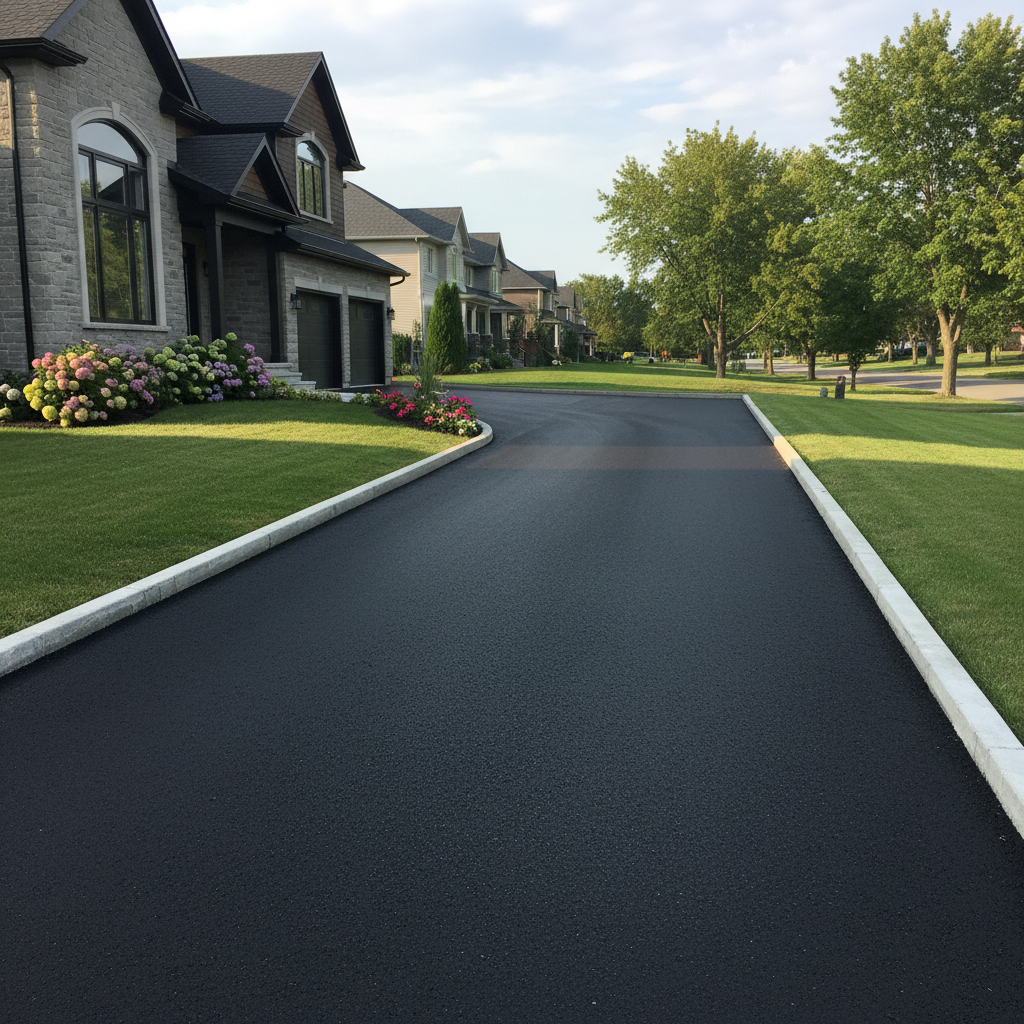
Driveway paving options and costs in Hanover
In Hanover, choosing a driveway surface is a practical decision—between plough schedules, salt, and the kind of freeze–thaw cracking we see across southern Ontario. With Hanover’s housing profile skewing toward single-detached homes (64.2% of dwellings), most private driveways are attached to detached properties, which keeps demand steady for contractors year after year. It also helps explain why many bids you’ll see in town focus on durable, base-driven designs rather than “top-surface only” repairs. In 2021, Hanover had 7,967 residents (Statistics Canada, 2021 Census), and the steady mix of older homes—64.2% built before 1981—often means existing driveways have had decades of settlement, soil moisture pumping, and patchwork, all of which affects excavation and base prep scope.
In the Stratford–Bruce Peninsula economic region, driveway and small commercial paving is priced around cold-climate ground conditions and a compressed construction window. Frost can reach roughly 1.2 m (about 4 ft), so any structure that resists movement—driveway bases included—has to be designed to prevent saturated subgrade from freezing and lifting the pavement. That typically means deeper, well-compacted granular base, more meticulous grading, and sometimes sub-drainage. Availability can also tighten because contractors prefer to schedule full-depth work during late May through September when air temperatures support proper asphalt compaction.
Below is a homeowner-friendly cost comparison you can use when you’re weighing options from asphalt to concrete and pavers—then use the quote table to line up scope differences.
| Material |
Lifespan |
Maintenance |
Best For |
Price per sq ft |
| Asphalt (new installation, proper base) |
12–20 years |
Seal every 3–5 years |
Lower upfront cost, smooth ride, quick install |
$6,00 – $10,00 |
| Asphalt (overlay on existing gravel base) |
10–16 years |
Seal every 3–5 years |
When you can improve base without full tear-out |
$7,00 – $11,00 |
| Interlocking concrete pavers |
25–35 years |
Occasional joint sand refresh; targeted repairs |
High curb appeal, easy localized repairs |
$18,00 – $28,00 |
| Poured concrete (broom finish) |
20–30 years (with proper joints) |
Seal selectively; monitor cracking/joints |
Clean look, straightforward maintenance |
$14,00 – $22,00 |
| Exposed aggregate concrete |
20–30 years |
Less surface wear; still seal for stains |
Better traction and premium appearance |
$16,00 – $26,00 |
| Gravel / crushed stone (budget option) |
3–7 years |
Regrade; top up annually in wet years |
Temporary solution or very low budget |
$3,00 – $6,00 |
Prices are estimates only and vary by project scope, site access and material selection.
What affects the price of paving in Hanover
You can absolutely see 30–50% differences in quotes for what sounds like the “same driveway” across Stratford–Bruce Peninsula and Ontario. The usual reason is scope: one contractor prices full-depth excavation and correct base thickness; another assumes existing base is “good enough,” or excludes drainage correction, hauling, and disposal. Labour availability also swings in a colder region with a shorter paving window—when late May through September weather is tight, schedules compress and pricing firms up.
Two cost factors dominate here: frost line depth and the freeze–thaw cycle. Frost is roughly 1.2 m (about 4 ft). Where soil holds water (clay and silty soils are common in parts of the region), saturated subgrade can freeze and lift the pavement. The fix is deeper, properly compacted granular base—often in the 6–12 inch range in Ontario for the granular layers plus adequate preparation below, rather than a shallow “top-up.” Hot-mix asphalt also needs air temperatures above about 10°C for proper placement and compaction; that means scheduling pressure and more conservative workmanship planning. Mix design matters too—freeze-thaw-rated asphalt performs better in our cycles.
Concrete costs can rise in Hanover when older driveways have settled unevenly and require more tear-out, subgrade correction, and thicker support. For example, if your driveway is cracked and pumping water along one edge, adding drainage correction can push the job from a mid-range concrete price band (often around $14,00 – $22,00 per sq ft) toward the upper end. On asphalt, a well-prepared base helps keep you closer to the lower end of the driveway paving band ($6,00 – $10,00 per sq ft); if the base is marginal and the contractor ends up excavating more stone and doing more compaction, the price climbs.
| Price Factor |
Why It Matters |
Cost Impact |
| Driveway area in sq ft |
Material and labour scale directly with surface area |
High (major driver of total cost) |
| Base depth required |
Frost control depends on granular thickness and compaction |
Medium to high (can change total scope) |
| Grading and drainage work |
Cross-slope and drainage prevent water from freezing under the surface |
Medium (frequent in older homes) |
| Tear-out of existing surface |
Breaking, loading, hauling, and disposal increase labour and equipment time |
Medium to high (especially with concrete) |
| Edge restraints and curbing |
Prevents paver movement/spread and asphalt edge failure |
Low to medium (but critical for longevity) |
| Sealing requirement |
Asphalt needs sealing after placement (often after initial curing window) |
Low per visit; medium across lifecycle |
| Site access |
Narrow lots slow equipment movement and increase hand-labour |
Low to medium (can become high on tight sites) |
| Asphalt mix specifications |
Freeze-thaw rated mixes cost more but reduce cracking and raveling |
Low to medium (often worth it) |
Permits & regulations in Ontario
For paving a private driveway within your own property in Ontario, a building permit is often not required. Typical examples that usually fall under “private property work” include resurfacing an existing driveway, installing a new driveway surface where you are not changing municipal infrastructure, and placing asphalt or concrete on your lot after proper base preparation. However, permit/approval requirements change when the work affects the municipal right-of-way or drainage system.
Work that typically does require municipal approval in Hanover includes: creating or changing a curb cut/driveway entrance within the boulevard, altering storm drainage connections (including any modifications that change how water flows from the road), and changes to municipal sidewalk/curb infrastructure. Some municipalities also have lot-grading rules that restrict how close a hard surface can be to property lines or how water can be directed. Because these rules can vary by area and specific site conditions, confirm with the municipal office before excavation if your driveway ties into the boulevard.
Before signing with a contractor, have your Hanover contractor provide: (1) proof of Ontario licensing/registration where applicable (and any applicable category/endorsement for the work), (2) a current certificate of liability insurance showing adequate coverage, and (3) WSIB coverage details (or the appropriate clearance letter/coverage status). Then verify it by: checking the contractor’s online business profile/registry information (as provided by Ontario or the contractor’s own documentation), reviewing the certificate for coverage dates and limits, and confirming the WSIB status is active. Utility locates are also essential—use Ontario One Call so excavators can avoid buried services.
Asphalt vs pavers vs concrete for Hanover driveways
In Hanover, your driveway choice comes down to how the surface handles freeze–thaw cycling, how it looks after winters with ploughing and de-icing, and how easy repairs are when cracks eventually appear. Asphalt is usually the lowest upfront option (commonly in the $6,00 – $10,00 per sq ft band) and gives a smooth ride, but it does require sealing every 3–5 years to slow oxidation and moisture penetration. When base prep is done correctly—especially in a colder region with frost depth around 1.2 m—an asphalt driveway can perform well, but water control and proper cross-slope remain non-negotiable.
Interlocking concrete pavers cost more up front (often $18,00 – $28,00 per sq ft), yet they offer the best repair flexibility. If a winter frost heaves a section or a spot settles, pavers can be lifted, the base corrected, and the area reset without replacing the entire driveway. That’s a meaningful advantage in Hanover’s older housing stock (64.2% pre-1981), where inconsistent subgrade is common.
Poured concrete is mid-range, but freeze–thaw performance depends heavily on proper air entrainment, correct joint spacing, and a base that drains. Without those details, concrete can crack from restrained movement and the repeated water freeze cycle. A practical example: if your driveway needs full tear-out and you’re comparing asphalt vs pavers, the extra paver cost may be justified if you value “repairable by section” longevity. If you want the lowest initial spend and are comfortable budgeting for sealing, asphalt can be the better value—provided the base thickness and drainage are right for the frost line.
| Material |
Frost Resistance |
Curb Appeal |
Repair Method |
Lifespan |
Price Band |
| Asphalt (sealed regularly) |
Good with proper granular base and drainage |
Moderate |
Patch and re-tack/seal; localized overlay if needed |
12–20 years |
$6,00 – $10,00 |
| Interlocking concrete pavers |
Very good; movement can be corrected without full replacement |
High |
Lift/replace individual units and re-sand joints |
25–35 years |
$18,00 – $28,00 |
| Poured concrete (air-entrained) |
Good when air-entrained and properly jointed |
Moderate to high |
Crack repair/patches; major failures may require sections or full replacement |
20–30 years |
$14,00 – $22,00 |
| Exposed aggregate concrete |
Good with correct base and jointing |
High |
Patch/repair by section; aesthetic matching matters |
20–30 years |
$16,00 – $26,00 |
| Permeable pavers (drainage grid) |
Very good when subdrain is designed correctly |
High (modern look) |
Targeted unit replacement; periodic maintenance of joints |
25+ years (system dependent) |
$20,00 – $34,00 |
| Chip seal / tar-and-chip |
Moderate; depends on binder quality and traffic load |
Low to moderate |
Spot patch and re-treat when aged |
6–10 years |
$4,00 – $8,00 |
How to choose a paving contractor in Hanover
Start by verifying Ontario coverage and licensing details before you compare prices. Ask for your paving contractor’s certificate of liability insurance and confirm it is current (look for expiry dates and appropriate coverage limits for concrete/asphalt work). For WSIB/WCB coverage, request proof of active coverage or a clearance letter where applicable; then confirm the letter references the correct legal business name. For licensing/registration, ask which Ontario category applies to the work they’re doing and check the online registry information tied to the business you’re hiring.
Next, request 2–3 written quotes that are itemised—ideally showing labour and material as separate lines and breaking out excavation/haul, base stone, geotextile (if used), asphalt or concrete thickness, and any drainage corrections. Avoid lump-sum quotes without scope detail because you can’t easily compare apples to apples when frost issues force deeper work. Read exclusions carefully: is tear-out disposal included, is topsoil/stripping included, and is permit/municipal approval support included if a curb cut or drainage change is needed? Warranty terms should be in writing: workmanship warranty length, product/manufacturer warranty details, and whether the warranty transfers if you sell your home.
For payment, never pay more than 10–15% upfront. Use a holdback until the job is fully complete and surfaces are accepted. Get the start date and completion estimate in writing too—weather and the late May to September window can affect scheduling, but your contractor should still commit to a realistic timeline.
- Provide a written itemised scope (materials, thickness, and quantities).
- Show evidence of liability insurance (coverage limits and expiry).
- Confirm WSIB/WCB status with a clearance letter or active proof.
- List crew and equipment plan for tight Hanover access points.
- Include base design details (compaction method and granular thickness).
- State drainage plan: cross-slope and any sub-drain needs.
- Specify edge restraints (paver edging, asphalt tack coat/edge support).
- For asphalt, confirm sealing timing and who applies it.
- For concrete, confirm air entrainment and joint spacing plan.
- Confirm tear-out and disposal are included (and hauling distances if relevant).
- Warranty in writing: workmanship duration and product warranty terms.
- Payment schedule with a holdback until final walkthrough acceptance.
In Hanover, a few red flags to watch for: quotes that don’t mention base thickness or compaction, no written drainage plan for a wet subgrade, refusal to provide insurance/WSIB proof, vague warranties (“we’ll fix it” without dates), or insisting on doing asphalt/concrete over poor existing base without excavation or moisture correction.
Frequently asked questions — paving in Hanover
What is a chip seal driveway and is it suited to Hanover?
Chip seal (tar-and-chip) is a surface treatment where a binder (asphalt/tar emulsion) is sprayed, then stone chips are broadcast and rolled into place. It can be used on low-speed, lower-traffic surfaces, but for many Hanover homeowners it’s a “budget stopgap” rather than a long-term driveway solution. Hanover’s freeze–thaw cycling and winter salt can age binders faster than on milder coasts, and ploughing can dislodge loose chips if the application isn’t exact. If you’re comparing price bands, chip seal is often lower than full-depth asphalt—commonly in the $4,00 – $8,00 range per sq ft—however you should plan for earlier re-treatments than asphalt sealing cycles. If you have heavy vehicle load or want a smoother ride, full asphalt with correct base is usually the better value.
How much does driveway crack repair cost in Hanover?
Crack repair cost depends on how wide the cracks are, whether water is getting into the base, and how many locations need work. In Hanover, repairs are often priced by linear foot for saw-cut sealing/filling, or by square area for patching asphalt. If cracks are minor and you’re sealing to keep water out, costs typically stay low compared to a full repaving. Where cracks have widened due to base movement or frost heave, “spot repairs” may only hold temporarily unless the underlying drainage and base are corrected. A common homeowner decision is whether to repair first (to extend service life) or to budget for a full resurfacing. Use your contractor’s quote to confirm whether they recommend crack sealing only (maintenance) or excavation/base correction (repair).
What base thickness do I need for pavers in Hanover?
For pavers in Hanover, base thickness should be designed for frost control and drainage, not just aesthetics. Because frost depth is around 1.2 m (about 4 ft) in this region, you need a granular system that resists heaving and keeps saturated soil from freezing. In practice, contractors typically build a compacted granular base and then a leveling bedding layer; the exact thickness depends on your current subgrade condition (clay/silty soils usually need more attention), site drainage, and whether sub-drainage is required. The key is proper compaction testing and consistent cross-slope so water doesn’t sit under the edges. If your existing driveway is older (64.2% of Hanover homes were built before 1981), it’s common to find settlement spots where thicker base correction is needed. Ask your contractor to show the proposed section detail and compaction plan in writing.
How do I get the most accurate paving quote in Hanover?
To get the most accurate paving quote in Hanover, make sure the estimator sees your site and measures the driveway accurately, including any slope, curves, and access constraints. Provide photos of current conditions—especially areas with standing water, pumping soil, or settled edges. Ask for an itemised quote that breaks down excavation/tie-in work, base stone depth and materials, geotextile (if used), removal and hauling, and the final surface thickness. For asphalt, confirm mix specs and whether the quote includes surface sealing (usually after the initial curing window). For concrete, confirm air entrainment and joint spacing plan. Finally, request two or three quotes and compare scope, not just price per sq ft. This is the fastest way to avoid surprises when cold-climate base requirements expand the work scope.
How much does it cost to pave a driveway in Hanover?
In Hanover, driveway paving costs commonly fall within regional price bands that reflect cold-climate frost risk and the shorter construction window. For asphalt driveways, many installs land around $6,00 – $10,00 per sq ft when a proper base is included. Interlocking concrete pavers are typically higher, often around $18,00 – $28,00 per sq ft, mainly due to base prep, bedding, restraints, and material quantity. Poured concrete often comes in around $14,00 – $22,00 per sq ft depending on thickness, finishing, and jointing. If you need sealing on asphalt, budget a separate maintenance step later in the lifecycle (sealing is usually priced in the $0,00 – $3,00 per sq ft band, depending on scope and timing).
Asphalt vs interlocking pavers vs concrete — which is best in Hanover?
For most Hanover homeowners, “best” depends on how you handle winter wear and how you prefer repairs. Asphalt is usually the best balance of upfront cost and a smooth surface—provided the granular base and drainage are designed for frost and freeze–thaw. Plan on sealing every 3–5 years; without that, moisture can work its way down and accelerate cracking. Interlocking concrete pavers are the top choice when curb appeal and repairability matter most—if an area heaves or settles, pavers can be lifted and the base corrected without replacing the entire driveway. Poured concrete can be a strong option too, but its success depends on air entrainment, jointing, and a base that drains; otherwise freeze–thaw movement can create cracking. If you want an easy comparison, asphalt sits closer to $6,00 – $10,00 per sq ft, while pavers land around $18,00 – $28,00 per sq ft.