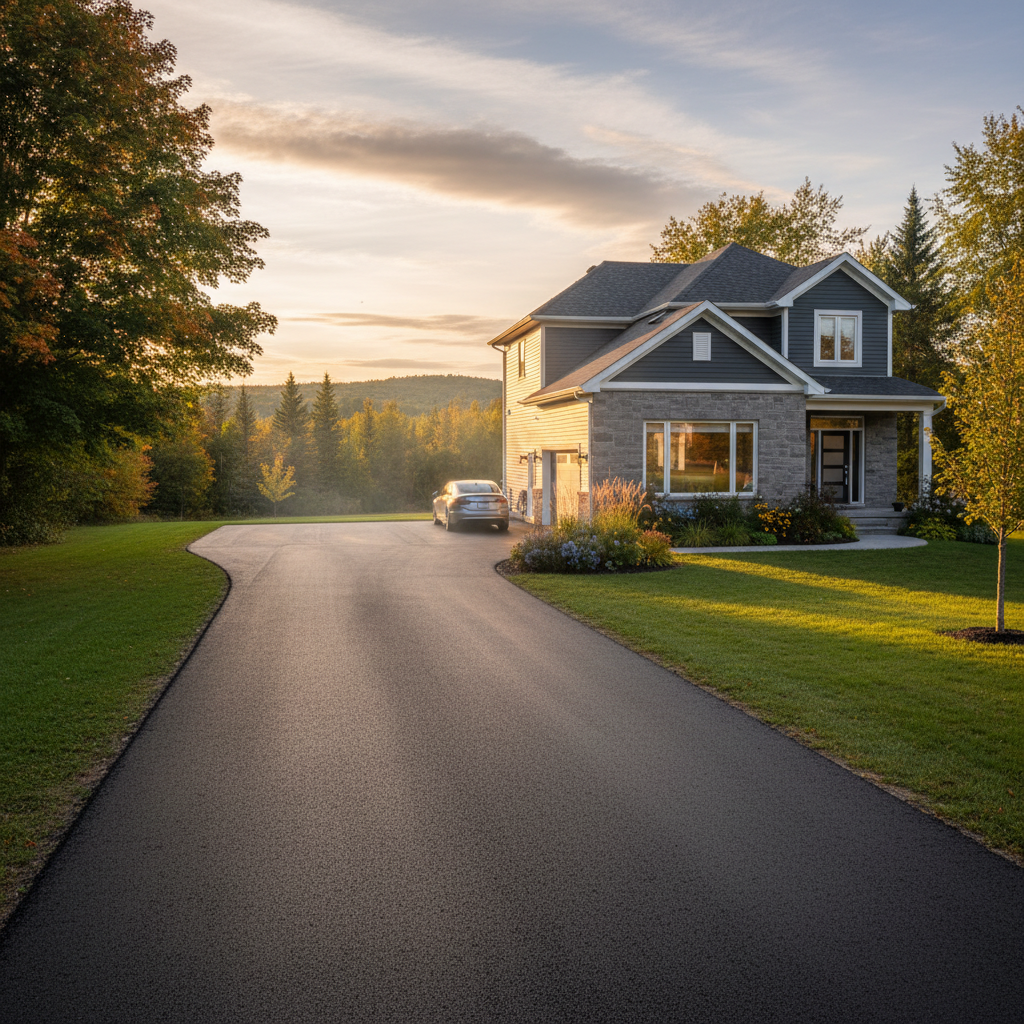
Driveway paving options and costs in Junction Area
In Junction Area, Ontario, choosing the right driveway surface is mostly about balancing upfront cost with long-term performance through Toronto’s freeze–thaw cycles. As a reference point, the local population is 14,366 (Statistics Canada, 2021 Census), and most residential lots here are developed with single-family housing—meaning driveways are a major maintenance concern for a large share of homeowners. That matters because a driveway is not just “paving”: in our climate, the engineering base and drainage determine whether the asphalt or concrete stays flat over repeated winter movement.
Toronto-area frost depth and spring freeze are primary cost drivers. Ground freezes to roughly 3–4 feet in the region, so contractors plan for a deeper, well-compacted granular base and reliable runoff management. Late-fall, winter, and early-spring temperature swings also compress the effective paving season into late spring through early fall. In practice, that schedule pressure can push pricing for prime dates—particularly around busy pockets like the Junction Triangle area, where residential turnover and infill projects keep crews booked.
Below are realistic cost ranges for common driveway solutions in Junction Area. Use them as a starting point; your final number will depend on footprint size, base depth, tear-out, and access for skid-steer, pavers, or haul trucks.
| Material |
Lifespan |
Maintenance |
Best For |
Price per sq ft |
Price Range |
| Asphalt (new installation, proper base) |
15–25 years |
Seal every 3–5 years; spot patching as needed |
Best value for long-term performance with routine sealing |
$8.50–$14.00 |
$3,500–$8,000 |
| Asphalt (overlay on existing gravel base) |
10–18 years |
Seal every 3–5 years; more frequent crack control |
When you have a reasonably solid granular base and want to upgrade |
$7.00–$12.50 |
$3,500–$7,500 |
| Interlocking concrete pavers |
25–40 years |
Re-sand joints as needed; replace individual stones |
High curb appeal and easier repairs without full replacement |
$14.00–$22.00 |
$9,000–$20,000 |
| Poured concrete (broom finish) |
20–30 years |
Seal when recommended; manage surface water |
Low-maintenance look when properly air-entrained and reinforced |
$11.00–$18.00 |
$6,000–$15,000 |
| Exposed aggregate concrete |
20–30 years |
Seal every few years; occasional patching |
Slip-resistant texture and upgraded appearance |
$14.00–$22.00 |
$7,500–$16,500 |
| Gravel / crushed stone (budget option) |
3–10 years |
Re-grade and top up; weed control and edging upkeep |
Shorter-term solution or areas with limited access/foot traffic |
$3.50–$7.00 |
$1,500–$5,000 |
Prices are estimates only and vary by project scope, site access and material selection.
What affects the price of paving in Junction Area
In Junction Area, Ontario, two homeowners can receive quotes for what looks like the “same” driveway—and still see a 30–50% difference across Toronto and the wider province. The biggest reason is that contractor pricing isn’t just material; it’s the total build-up required to survive Toronto’s 3–4 foot frost depth and the frequent freeze–thaw cycles from late fall through early spring. When you need deeper excavation and a thicker compacted granular base, the job becomes more labour- and haul-truck-intensive. That directly increases total installed cost.
In colder regions, hot-mix asphalt needs air temperatures above about 10°C for proper placement and compaction, which helps explain the compressed paving season from late spring to early fall. Limited workable days can concentrate demand, meaning crews prioritize projects with clear access and complete site readiness. On top of that, asphalt must be built with freeze–thaw-rated mix design so it resists early rutting, bleeding, and cracking; in practice, better mix specs can move an asphalt project toward the higher end of the $3,500–$8,000 range.
Concrete pricing can rise or fall depending on drainage and detailing. For example: (1) a driveway that slopes toward the garage often requires more grading and sub-drain considerations to reduce freeze-related movement; (2) if expansion joints and control joints aren’t planned early, you may pay later for saw-cut corrections or patching. Meanwhile, pavers can sometimes cost more upfront (often within the $9,000–$20,000 band), but replacement of a few stones after settlement is usually cheaper than re-pouring a full slab.
Also remember housing age: older lots commonly need more tear-out and hauling of existing base, and that added demo time can push total costs upward by thousands rather than hundreds.
| Price Factor |
Why It Matters |
Cost Impact |
| Driveway area in sq ft |
Most materials and labour scale directly with surface area |
Often the largest driver; can swing final price by 2–3x |
| Base depth required |
Frost line demands a thicker, compacted granular base to prevent heaving |
Extra excavation/stone can add hundreds to several thousand |
| Grading and drainage work |
Correct slope and water diversion reduce freeze damage |
Commonly adds 5–25% depending on site conditions |
| Tear-out of existing surface |
Breaking concrete or removing old asphalt/gravel affects disposal and labour time |
Can add 10–40% if full removal is required |
| Edge restraints and curbing |
Prevents paver spread and asphalt edge failure under freeze movement |
May add a few hundred to over a thousand |
| Sealing requirement |
Asphalt needs sealing after curing to protect from moisture and cracking |
Ongoing cost; usually planned for every 3–5 years |
| Site access |
Narrow lots slow equipment movement and increase manual handling |
Can add 5–20% due to extra labour/placement time |
| Asphalt mix specifications |
Freeze–thaw-rated mixes improve resilience in Toronto winters |
Can push asphalt toward the higher end of its band |
Permits & regulations in Ontario
In Ontario, paving a private driveway within your own property usually does not require a building permit. However, permit and approval requirements can apply when the work touches the municipal right-of-way (the area between the property line and the road) or affects municipal infrastructure. In practical terms, Junction Area homeowners should expect municipal approval if you’re planning a new or modified curb cut, changing boulevard conditions, altering storm drainage, or doing any work that impacts water flow toward a city catch basin.
Some municipalities also enforce lot-grading or surface-water rules that restrict how close hard surfaces can be to property lines and how you manage runoff. That’s why good contractors plan drainage before asphalt or concrete goes down—especially in winter, when trapped moisture expands and accelerates cracking.
Before excavation, always arrange utility locates through Ontario One Call (and confirm any other utilities on site). Then verify your contractor’s credentials step-by-step:
- Ontario licence: check the contractor’s valid registration (as applicable) via the relevant online registry for Ontario trades/business credentials.
- Certificate of insurance: request a current certificate of liability insurance naming you as an additional insured where appropriate.
- WSIB/WCB coverage: confirm workers’ compensation coverage is active; ask for a clearance letter or current proof from the contractor.
- Written scope: ensure the quote states who handles disposal, saw-cutting, excavation, base install, and compaction testing.
Doing these checks upfront helps you avoid mid-project delays—an issue that’s more common during the short paving season in Toronto.
Asphalt vs pavers vs concrete for Junction Area driveways
For Junction Area driveways, asphalt, interlocking pavers, and concrete each respond differently to Toronto’s freeze–thaw climate. Asphalt is usually the lowest upfront option and performs well when the base is engineered for frost depth and the driveway is properly edged. The trade-off is maintenance: you’ll want asphalt sealed regularly (typically every 3–5 years). Without sealing, moisture can penetrate and accelerate deterioration under winter salt, plowing, and expanding ice.
Interlocking concrete pavers are the premium upfront choice in most Toronto bids, often landing within the $9,000–$20,000 band. Where they shine locally is repairs: if a section settles or a utility needs future access, pavers can be lifted, corrected, and reset without replacing the whole driveway. That matters on older lots where subgrade conditions can vary.
Poured concrete sits in the middle to upper range (often within the $6,000–$15,000 band), but it must be correctly air-entrained and detailed with proper control joints to manage freeze-related movement. If the drainage plan is weak or de-icing salt exposure is heavy, concrete can crack sooner—even when it initially looks fine.
In a typical Toronto scenario, asphalt may be justified if you’re staying within a $3,500–$8,000 budget for a standard-sized driveway and you’re willing to seal on schedule. Choosing pavers makes more sense if curb appeal is a priority or if your driveway is likely to see future underground work.
| Material |
Frost Resistance |
Curb Appeal |
Repair Method |
Lifespan |
Price Band |
| Asphalt (sealed regularly) |
Good with deep, compacted base and proper drainage |
Medium (clean, uniform finish) |
Mill/patch localized areas or overlay in sections |
15–25 years |
$3,500–$8,000 |
| Interlocking concrete pavers |
Excellent; flexible joints handle slight movement |
High (custom patterns, colour options) |
Lift-and-reset individual stones |
25–40 years |
$9,000–$20,000 |
| Poured concrete (air-entrained) |
Moderate to good with joints and drainage control |
Medium to high (simple, clean finish) |
Patch cracks; full replacement if widespread |
20–30 years |
$6,000–$15,000 |
| Exposed aggregate concrete |
Moderate to good when correctly mixed and drained |
High (texture and decorative look) |
Patch/patch-and-overlay; replacement if extensive |
20–30 years |
$7,500–$16,500 |
| Permeable pavers (drainage grid) |
Excellent where engineered drainage is designed correctly |
High (modern look) |
Lift-and-reset plus drainage system inspection |
20–35 years |
$10,000–$22,000 |
| Chip seal / tar-and-chip |
Fair; depends on base quality and maintenance |
Low to medium (functional) |
Re-chipping or recoat after wear |
6–12 years |
$3,000–$6,500 |
How to choose a paving contractor in Junction Area
Choosing the right contractor in Junction Area comes down to verification, clear scope, and realistic schedules during the short Toronto paving season. Start by confirming Ontario licensing/registration where required for the business, then check liability insurance and workers’ compensation coverage (WSIB/WCB) before any work begins. Ask for a current certificate of liability insurance—make sure it’s not expired—and request proof of WSIB/WCB clearance or coverage documents. If a contractor can’t provide paperwork quickly, that’s a warning sign.
Next, request 2–3 itemised written quotes, not vague lump sums. A proper quote breaks labour and materials line-by-line: excavation, disposal, granular base (with compaction), geotextile if used, asphalt or concrete quantities, and surface finishing details. Confirm what’s included and what’s excluded—especially disposal, permits/approvals for right-of-way impacts, and any reinstatement of landscaping.
Warranty matters. Ask for: (1) workmanship warranty length, (2) product/manufacturer warranty specifics, and (3) whether warranties are transferable if you sell the home. For payment, never pay more than about 10–15% upfront—holdback should remain until completion and final cleanup. Finally, get the start date and an estimated completion window in writing, because freeze–thaw timing affects curing and scheduling; crews often work around weather to hit proper temperatures.
- Verify WSIB/WCB coverage with a clearance letter or current proof.
- Confirm liability insurance and ask for the certificate before signing.
- Request Ontario business/contractor details and check registration status.
- Ensure the quote is itemised (base, stone, asphalt/concrete, edging, disposal).
- Confirm base depth and compaction method/testing if offered.
- Ask how drainage and slope are handled (where water goes matters in Toronto).
- Check whether tear-out and hauling are included (demo surprises are common).
- Clarify edge restraints/curbing inclusion for pavers and asphalt edges.
- Verify jointing details for concrete (control joints and curing plan).
- Confirm sealing requirements for asphalt and the recommended timing.
- Use a payment schedule with a holdback until final walkthrough passes.
- Get start/end dates and weather contingency plans in writing.
Red flags I see in Junction Area include: quoting “asphalt over anything” without base prep details, missing insurance/WSIB paperwork, vague timelines with no weather plan, refusal to itemise disposal and tear-out, and warranties that only cover materials (not workmanship).
Frequently asked questions — paving in Junction Area
Can asphalt be laid in cold weather in Junction Area?
In Ontario, asphalt placement is temperature-sensitive, and Junction Area winters are a big reason crews avoid “cold weather” paving. Hot-mix asphalt generally needs air temperatures around 10°C or more for proper placement and compaction, plus asphalt needs to be kept hot enough to achieve correct density. If it’s too cold, compaction targets won’t be met, which increases the risk of early cracking and raveling when freeze–thaw cycles hit. That’s why the usable paving season in Toronto is typically late spring through early fall. If weather is borderline, reputable contractors may schedule a specific heat and placement plan or postpone until conditions are suitable rather than pushing an end date.
What is a driveway apron and do I need one in Junction Area?
A driveway apron is the transition area at the street/curb line (or at the edge where your driveway meets the municipal sidewalk/curb cut area). Its purpose is to create a smooth, durable connection and manage water runoff and settling where the driveway slope changes. Whether you “need” one depends on your existing curb cut condition, grading, and how water is currently draining. In Junction Area, if you’re modifying a curb cut or changing drainage flow, approvals may be required because work can touch municipal right-of-way. In many cases, we recommend an apron and proper edge restraints because it helps reduce early edge break-up from plowing, salt, and frost movement.
How do I maintain my driveway through Junction Area winters?
Winter maintenance is critical in Ontario because moisture + freeze–thaw cycles cause the most damage. For asphalt, keep the surface clean of loose sand and debris, and use de-icing products responsibly (more aggressive salt use can shorten asphalt life). Avoid scraping aggressively at the edges; edge failures start small and quickly turn into bigger repairs. For concrete and pavers, try to prevent standing water by keeping drainage paths clear near the driveway. After heavy snowfalls in Junction Area, plow from the driveway edge inward with consistent passes so you don’t gouge the surface. If you see small cracks or joint gaps opening, address them early with patching or re-sanding to stop water intrusion.
Is it worth sealing a new driveway right away in Junction Area?
Yes, sealing can be worth it, but timing matters. Asphalt sealing is typically done after the surface has cured and moisture levels are appropriate—often within the first season, commonly after about 6–12 months depending on product and weather conditions. Sealing right away (before the asphalt has set) can trap moisture and create adhesion or curing problems. In Junction Area, where freeze–thaw cycling is constant and roads are salted, sealing earlier rather than later helps protect against water penetration, which is a major trigger for cracking. If you’re planning for a standard asphalt driveway in the $3,500–$8,000 range, ask your contractor to include the cure/seed/prime and sealing plan so you protect the initial investment.
What is a chip seal driveway and is it suited to Junction Area?
Chip seal (tar-and-chip) is a surface treatment that uses a binder followed by aggregate chips. It can be a cost-effective option for some properties, but it’s more dependent on base quality and ongoing maintenance. In Junction Area, the repeated freeze–thaw cycles and plowing/salt exposure can wear chip seal faster than asphalt or pavers, especially if the base isn’t engineered for frost depth. It’s sometimes suitable for low-speed or budget-focused applications, or where aesthetics are secondary. If you want the most durable long-term performance through Toronto winters, asphalt installed on a proper base or pavers with edge restraint usually make more sense than chip seal.
How much does driveway crack repair cost in Junction Area?
Crack repair costs vary mainly by crack type, driveway thickness, and how much crack needs routing/sealing. In practice, small sealed crack repairs are often relatively affordable compared to full resurfacing. Budget ranges in Ontario commonly start in the hundreds, while more extensive prep (routing, clean-out, patching) and larger areas can climb quickly. A realistic planning figure for many residential spots tends to fall in the $300–$1,500 range for sealing and repair work, while bigger failures—like edge break-up or settlement—may require patching or resurfacing rather than “just sealing.” Because Junction Area experiences deep frost and freeze–thaw movement, early intervention usually costs less than waiting for cracking to spread and water to migrate under the surface.